English New Year Parties vs Hindu New Year Rituals: What Do We Lose & Gain?
English New Year Parties vs Hindu New Year Rituals: What Do We Lose & Gain?

English New Year Parties vs Hindu New Year Rituals: What Do We Lose & Gain?
In a world where January 1st lights up with global fireworks, countdowns, and lavish parties, many Hindus quietly observe their own New Year — rooted in ancient wisdom, cosmic alignment, and profound spiritual intent. The English New Year (Gregorian, January 1) brings excitement, social bonding, and personal resolutions, while the Hindu New Year — celebrated as Ugadi, Gudi Padwa, Vishu, Baisakhi, and other regional names in March-April — offers renewal through rituals, dharma, and harmony with nature.
This comparison isn't about choosing one over the other. It's about understanding what each brings to our lives — and what we might lose if one completely overshadows the other.
The Essence of English New Year: Celebration & Global Unity
The Gregorian New Year on January 1 traces its roots to ancient Rome, named after Janus, the two-faced god of beginnings and transitions. Standardized through the Julian and later Gregorian calendars, it became a global standard for practicality, business, and international synchronization.
Modern celebrations emphasize:
- Midnight countdowns and fireworks
- Lavish parties, alcohol, music, and dancing
- New Year's resolutions for self-improvement
- Global unity — billions welcoming the same moment (staggered by time zones)
It's a high-energy, outward-focused event symbolizing fresh starts in a linear, progressive way.
The Depth of Hindu New Year: Rituals & Cosmic Renewal
Hindu New Year follows the lunisolar calendar, aligning with the Sun's entry into Aries (Mesha Sankranti) or the first day of Chaitra month (Chaitra Shukla Pratipada). In 2026, this falls around March 19 (Ugadi/Gudi Padwa), marking the start of Vikram Samvat 2083 or the Shalivahana Shaka era.
It commemorates:
- The creation of the universe by Lord Brahma
- Lord Rama's victory and return to Ayodhya
- The triumph of good over evil and the arrival of spring
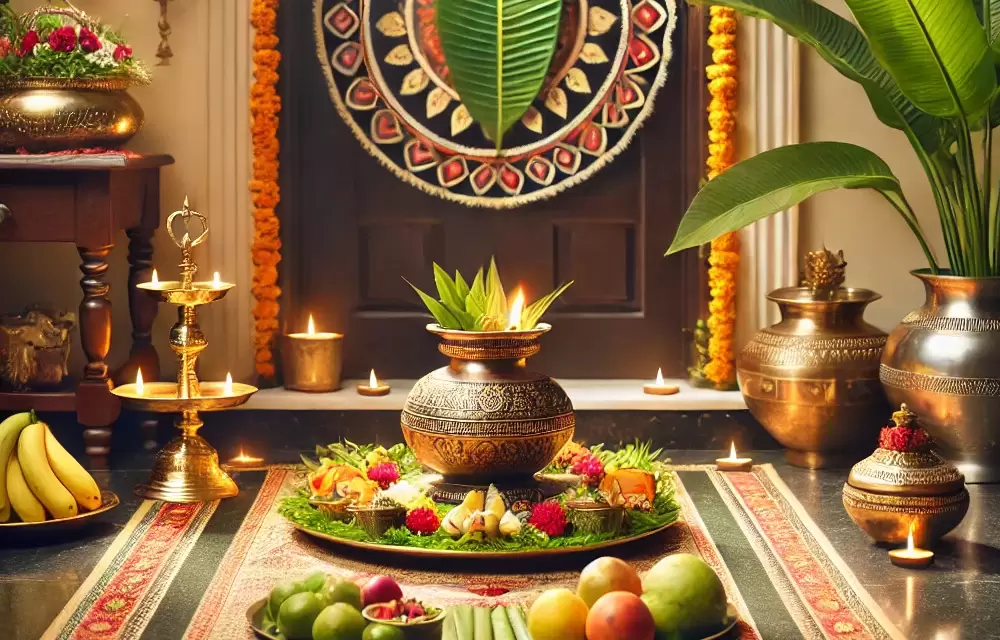
Rituals include early morning oil baths, home cleaning, rangoli/muggu designs, mango leaf torans, temple visits, Panchanga Shravan (almanac reading), and special foods symbolizing life's flavors.
Ugadi Pachadi (in Telugu/Kannada regions) mixes six tastes: sweet (jaggery), sour (tamarind), bitter (neem), salty, spicy, and astringent (raw mango) — a powerful reminder that life brings all experiences, and we must embrace them with equanimity.
Gudi Padwa (Maharashtra) features hoisting the Gudi (victory flag) — a bamboo pole with bright cloth, neem-mango leaves, and inverted kalash — symbolizing prosperity and divine victory.
These rituals foster introspection, gratitude to nature, family bonding, and spiritual alignment.
Comparative Table: English New Year vs Hindu New Year
What Do We Gain by Prioritizing Hindu New Year Rituals?
- Cultural & Spiritual Depth — Reconnects us to thousands of years of Vedic wisdom, dharma, and cosmic understanding. It strengthens identity and civilizational pride.
- Harmony with Nature — Spring alignment brings renewal energy, agricultural relevance, and biological rhythm sync (unlike January's winter).
- Balanced Life Perspective — Symbolic foods like Ugadi Pachadi teach acceptance of life's ups and downs, promoting mental resilience.
- Family & Community Bonds — Rituals involve elders, home puja, and charity — fostering continuity and emotional support.
- Inner Renewal — Emphasis on purification, gratitude, and divine blessings over fleeting excitement.
What Do We Lose if We Only Celebrate English New Year?
- Erosion of Indigenous Wisdom — Prioritizing a colonial/administrative calendar over our astronomical one can lead to cultural disconnection.
- Missed Seasonal & Spiritual Alignment — Ignoring spring renewal and cosmic timings means losing opportunities for deeper harmony.
- Superficial vs Profound Intentions — Resolutions often fade quickly; Hindu rituals encourage sustained dharma and reflection.
- Dilution of Regional Identity — Unique traditions like Gudi hoisting or Pachadi tasting risk being forgotten in urban/global party culture.
What Do We Gain from English New Year Parties?
- Global Connection — Participation in a worldwide event builds unity and social joy.
- Fun & Release — The high-energy celebration provides stress relief and excitement.
- Practical Resolutions — Goal-setting in a modern context aids personal and professional growth.
- Inclusivity — Easy to share with diverse friends and colleagues.
A Balanced Path Forward
Many Hindus today enjoy both — greeting friends on January 1 socially while reserving deeper rituals for their traditional New Year. This approach honors global citizenship without losing roots.
True cultural confidence comes from knowing both worlds: celebrating the world's shared joy on January 1, but prioritizing the profound renewal of Ugadi/Gudi Padwa for spiritual depth.
In reclaiming our Hindu New Year, we don't reject the modern — we enrich it with timeless wisdom.
For More Devotional Journey, Follow
- Temples
/temples/ - Tirumala Updates
/tirumala/ - Sabarimala Yatra
/category/sabarimala-yatra/ - Pooja, Slokas & Mantras
/pooja-slokas-and-mantras/ - Hindu Gods
/hindu-gods/
Wishing you a meaningful renewal — whether in parties or rituals. Happy English New Year & Shubh Ugadi / Gudi Padwa!s [image: 🌿] [image: 🪔] [image: 🎆]
Frequently Asked Questions
When is the Hindu New Year in 2026?
Ugadi and Gudi Padwa fall around March 19, 2026, the first day of Chaitra month (Chaitra Shukla Pratipada). It marks the start of Vikram Samvat 2083 or the Shalivahana Shaka era.
What is Ugadi Pachadi and why does it have six tastes?
Ugadi Pachadi, made in Telugu and Kannada regions, mixes sweet jaggery, sour tamarind, bitter neem, salt, spice and astringent raw mango. It reminds people that life brings all experiences and should be met with equanimity.
What rituals are performed on Hindu New Year?
Common rituals include an early morning oil bath, home cleaning, rangoli or muggu designs, mango leaf torans, temple visits and Panchanga Shravan, the reading of the almanac. Special foods symbolising life's flavours are also prepared.
What is the Gudi hoisted on Gudi Padwa?
In Maharashtra, the Gudi is a bamboo pole topped with bright cloth, neem and mango leaves and an inverted kalash. It symbolises prosperity and victory.
Can Hindus celebrate both January 1 and the Hindu New Year?
Yes. Many Hindus greet friends socially on January 1 and reserve deeper rituals for Ugadi or Gudi Padwa, honouring global citizenship without losing their roots.
What does the Hindu New Year commemorate?
As commonly told, it commemorates the creation of the universe by Lord Brahma, Lord Rama's victory and return to Ayodhya, and the triumph of good over evil with the arrival of spring.
Share this with family and friends
Send it on WhatsApp, post it, or copy the link.
More from Hinduism
- AI and the Sanskrit Revival in 2026: Language Models, Manuscript OCR, Translation Tools and What AI Still Gets Wrong
- Can a Robot Perform Puja? Robot Aarti, AI in Rituals and What Hindu Tradition Says
- GitaGPT and AI Bhagavad Gita Chatbots: How Accurate Are They, and What Does Hindu Tradition Say?
- Robotic Elephants and AI in Hindu Temples: Kerala's Mechanical Tuskers, Tirumala's AI Command Centre and the Debate
- Quantum Computing Explained for Hindus: Qubits, Superposition and Entanglement, with Vedanta Analogies (Not Equivalences)
You might also like

Hindu New Year 2026 vs English New Year 2026: A Complete Comparison Guide
Worldwide Hindu New Year 2026: Regional Names, State-Wise Traditions and Global Dates

How Hindus in USA, UK & Australia Celebrate Hindu New Year