How Old is Hinduism? Mind-Blowing Insights into the World’s Oldest Religion
Hinduism is often regarded as the oldest living religion in the world.
Hinduism is often regarded as the oldest living religion in the world. Known as Sanatana Dharma, meaning “The Eternal Way,” its roots stretch back thousands, even millions of years, defying conventional timelines of history and civilization. With profound stories and scientific research verifying its age, Hinduism’s origins are awe-inspiring. Here are some fascinating data points that might just give you goosebumps:
- Krishna’s Birth: 7,500 Years Ago
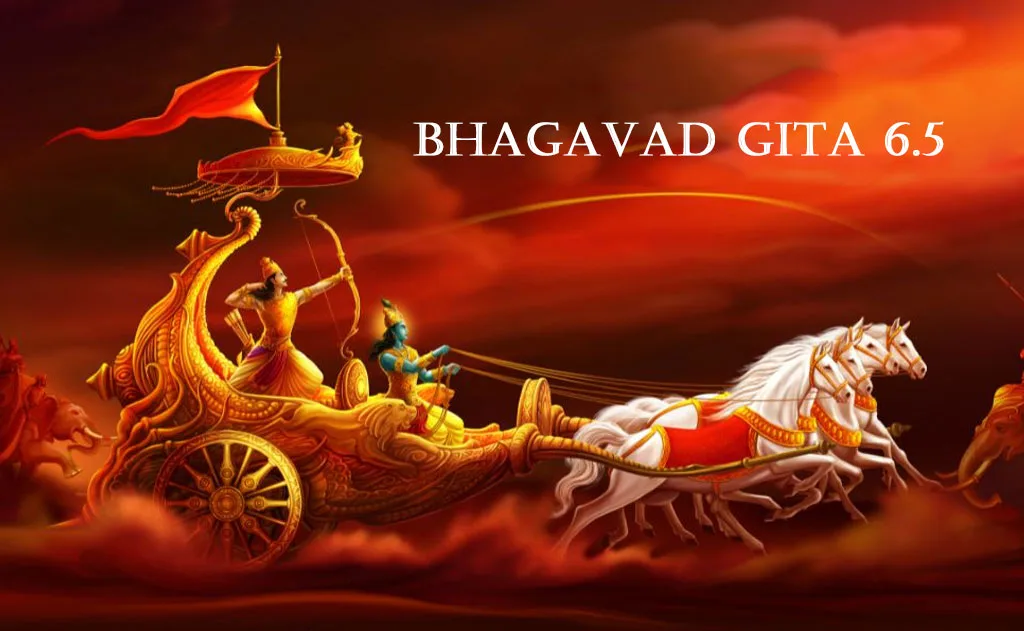
Lord Krishna, one of the most beloved deities in Hinduism, is believed to have been born around 7,500 years ago, during the Dwapara Yuga. The Mahabharata, where Krishna’s life and teachings are recorded, has been analyzed using astronomical data, leading scientists to date events like the Kurukshetra War to approximately 5,000 BCE. His teachings in the Bhagavad Gita continue to guide humanity today, proving their timeless relevance.
- Lord Ram’s Era: 14,000 Years Ago
The Ramayana, one of the greatest epics of Hinduism, tells the story of Lord Ram, who walked this earth around 14,000 years ago during the Treta Yuga. This timeline has been corroborated by modern research using astronomical alignments and archaeological evidence, such as the existence of the legendary Ram Setu (Adam’s Bridge) between India and Sri Lanka. Ram’s life embodies dharma, devotion, and the triumph of good over evil.
- Manu’s Time: 60,000 Years Ago
Manu, the progenitor of humanity in Hindu texts, is said to have lived approximately 60,000 years ago. Known as the first man and lawgiver, his teachings are compiled in the Manusmriti. Interestingly, researchers have linked Manu’s story of the great flood with ancient flood myths, suggesting a shared memory of a cataclysmic event that predates recorded history.
- The Rig Veda: 200,000 Years Ago
The Rig Veda, the oldest known text of humanity, contains hymns and wisdom that date back to a staggering 200,000 years ago, according to some interpretations of Hindu timelines. While this may challenge conventional historical narratives, advanced linguistic and astronomical studies suggest that the Vedas were composed long before what is traditionally accepted. The Rig Veda’s scientific, spiritual, and philosophical depth remains unparalleled.
Scientific Verification Modern researchers have used advanced methods like satellite imagery, geological studies, and astronomical software to validate these timelines. For instance, the dating of submerged cities like Dwarka and the alignments of planetary positions described in Hindu scriptures provide compelling evidence of the antiquity of these events.
Why It Matters
Understanding the true age of Hinduism is not just about history but about acknowledging the depth and sophistication of ancient Indian civilization. Hinduism’s teachings, rooted in cosmic laws, ecology, and spiritual evolution, hold invaluable lessons for humanity. They emphasize the eternal nature of the soul, the interconnectedness of all life, and the pursuit of truth.
Hinduism’s age defies modern perceptions of history, reminding us of the advanced knowledge and wisdom possessed by our ancestors. It’s more than a religion – it’s a timeless guide for living in harmony with oneself and the universe.
Closing Thoughts The timelessness of Hinduism is a testament to its universal truths and resilience. From Krishna and Ram to the Vedas and Manu, each thread of this intricate tapestry reminds us of humanity’s ancient and divine origins. Let us honor and explore these profound teachings that continue to inspire and enlighten us.
For more such insights into Sanatana Dharma, visit HinduTone.com. Jai Sanatana Dharma!
What Do the Four Yugas Tell Us About the True Age of Dharma?
Hindu cosmology organises cosmic time into four cyclical ages — Satya Yuga, Treta Yuga, Dwapara Yuga, and Kali Yuga — collectively forming one Mahayuga of 4,320,000 human years. The Vishnu Purana and the Surya Siddhanta both detail this framework with remarkable mathematical precision, assigning 1,728,000 years to Satya Yuga alone. Far from being mythological metaphor, these numbers encode an understanding of civilisational rise and decline that modern archaeology is only beginning to appreciate.
We currently live in Kali Yuga, which according to traditional reckoning began on 18 February 3102 BCE — a date astronomically verifiable through planetary positions described in the Aryabhatiya. If Sanatana Dharma was revealed at the very dawn of Satya Yuga, its origins recede into a timeframe that dwarfs every other living tradition on Earth. The sheer mathematical grandeur of Yuga cosmology is itself evidence of an extraordinarily sophisticated early civilisation.
How Does the Sarasvati River Connect Archaeology to Vedic Civilisation?
The Rig Veda describes the Sarasvati as a mighty river flowing 'from the mountains to the sea' — naditame, devitame, ambitame, meaning 'greatest of rivers, greatest of goddesses, greatest of mothers.' For decades, scholars dismissed this as poetic invention. Satellite imagery from ISRO and geological studies of Rajasthan and Haryana have since confirmed a massive paleo-channel running through precisely the region described in the Vedic hymns, indicating the river was active and massive during an era well before 3000 BCE.
More than 2,000 sites of the Indus-Sarasvati Civilisation have been discovered along this dried riverbed, outnumbering Indus Valley sites by a significant margin. This archaeological reality suggests that the heartland of early Hindu civilisation was the Sarasvati basin, lending extraordinary geographical credibility to Vedic literature. The drying of the river, caused by tectonic shifts around 1900 BCE, may itself be reflected in late Vedic texts where references to the Sarasvati diminish — a real-time record of ecological catastrophe embedded in scripture.
What Is the Significance of the Vedic Oral Tradition in Preserving Ancient Knowledge?
One of the most astonishing features of Sanatana Dharma is that its most sacred texts — the four Vedas, comprising over 20,000 mantras — were preserved orally for millennia before being written down. The discipline governing this transmission is called Svaradhyaya, and it employs eleven distinct recitation modes, including Jata, Mala, and Ghana patha, which cross-check every syllable against multiple memorisation patterns. This redundancy system makes textual corruption virtually impossible, functioning as a biological hard drive for sacred knowledge.
UNESCO recognised the Vedic chanting tradition in 2008 as an Intangible Cultural Heritage of Humanity. Gurukula-trained Vedic pandits in places such as Sringeri, Kanchipuram, and Varanasi still transmit these exact phonetic patterns today, maintaining an unbroken chain of oral custody that may be the longest continuous educational tradition in human history. The fidelity of this transmission means that the Vedic hymns recited in a modern yagna are, in all likelihood, phonetically identical to those heard thousands of years ago.
How Does the Bhagavad Gita's Philosophical Depth Point to an Ancient Intellectual Civilisation?
The Bhagavad Gita, situated within the sixth book of the Mahabharata known as the Bhishma Parva, condenses six classical schools of Indian philosophy — Samkhya, Yoga, Nyaya, Vaisheshika, Mimamsa, and Vedanta — into eighteen chapters of approximately 700 verses. The fact that Krishna presents these as established frameworks of thought, already familiar to his audience, implies that each of these darshanas had been developed and refined over vast stretches of preceding time. The Gita is thus not the origin of Hindu philosophy but its summit as of the Dwapara Yuga.
Concepts such as the indestructibility of the Atman (BG 2.20: 'nainam chindanti shastrani'), the doctrine of Nishkama Karma, and the three gunas (sattva, rajas, tamas) represent levels of psychological and metaphysical analysis that parallel — and in many ways anticipate — frameworks explored by Kant, Schopenhauer, and modern cognitive science. Schopenhauer himself acknowledged his debt to the Upanishads, calling them 'the consolation of my life.' The sophistication of these ideas demands an intellectual civilisation of considerable antiquity and stability.
What Do Underwater Discoveries Near Dwarka Reveal About Hinduism's Historical Timeline?
Marine archaeological surveys conducted by the National Institute of Ocean Technology (NIOT) off the coast of Dwarka in Gujarat have uncovered structural remains submerged approximately 40 metres below the current sea level. Stone walls, geometric foundations, and anchors have been recovered from this site, which lies in the Gulf of Khambhat. The stratigraphic and artefact evidence has led researchers to suggest these structures predate the conventionally accepted timeline of the Indus Valley Civilisation.
In Hindu tradition, Dwarka — also called Dwaraka or Dvаravati — was the golden city built by the divine architect Vishvakarma at Krishna's request and is described in the Harivamsa and the Skanda Purana as a city of immense architectural grandeur. The submergence of coastal settlements following post-glacial sea-level rise between 10,000 and 6,000 BCE is a well-established geological fact globally. If the submerged structures at Dwarka correspond even partially to the civilisation described in these texts, the historical window for Sanatana Dharma extends dramatically further back than mainstream historiography has thus far accepted.
Why Does the Concept of Sristi and Pralaya Make Hinduism Uniquely Compatible with Modern Cosmology?
While most ancient religious traditions describe a single linear creation event, Sanatana Dharma presents an endlessly cycling cosmos. The Brahma Purana and the Vishnu Purana describe Srishti (creation), Sthiti (sustenance), and Pralaya (dissolution) as eternal rhythmic processes presided over by Brahma, Vishnu, and Shiva respectively. One day of Brahma, called a Kalpa, lasts 4.32 billion human years — strikingly close to the currently accepted scientific age of the Earth at approximately 4.54 billion years.
Carl Sagan, in his television series Cosmos, noted that Hinduism is the only ancient tradition whose time scales correspond to those of modern astrophysics, pointing specifically to the Kalpa as evidence of prescient cosmological intuition. The concept of Mahapralaya, the grand dissolution at the end of Brahma's life span of 311 trillion human years, mirrors Big Bang–Big Crunch models of an oscillating universe. Whether viewed as theological truth or philosophical metaphor, this framework reveals a civilisation that was thinking at cosmological scales long before the invention of the telescope.
Frequently Asked Questions
Why is Hinduism called Sanatana Dharma?
Sanatana Dharma means "The Eternal Way." Hinduism is often regarded as the oldest living religion, with roots said to stretch back thousands of years.
How long ago did Krishna and Ram live in Hindu tradition?
Krishna is believed to have been born around 7,500 years ago in the Dwapara Yuga, and Lord Ram is said to have lived around 14,000 years ago in the Treta Yuga. Manu is placed approximately 60,000 years ago.
What are the four Yugas in Hindu cosmology?
They are Satya Yuga, Treta Yuga, Dwapara Yuga and Kali Yuga, which together form one Mahayuga of 4,320,000 human years. Traditional reckoning places the start of Kali Yuga at 18 February 3102 BCE.
How were the Vedas preserved for thousands of years?
The four Vedas, with over 20,000 mantras, were preserved orally through a discipline called Svaradhyaya using eleven recitation modes such as Jata, Mala and Ghana patha. UNESCO recognised Vedic chanting in 2008 as an Intangible Cultural Heritage of Humanity.
What does the Sarasvati river say about early Hindu civilisation?
Satellite imagery and geological studies show a large paleo-channel in Rajasthan and Haryana matching the Rig Veda's description. More than 2,000 sites of the Indus-Sarasvati Civilisation have been found along the dried riverbed.
What was found off the coast of Dwarka?
NIOT marine surveys found stone walls, geometric foundations and anchors about 40 metres below sea level. Researchers suggest these structures predate the accepted timeline of the Indus Valley Civilisation.
Share this with family and friends
Send it on WhatsApp, post it, or copy the link.
More from Hinduism
- AI and the Sanskrit Revival in 2026: Language Models, Manuscript OCR, Translation Tools and What AI Still Gets Wrong
- Can a Robot Perform Puja? Robot Aarti, AI in Rituals and What Hindu Tradition Says
- GitaGPT and AI Bhagavad Gita Chatbots: How Accurate Are They, and What Does Hindu Tradition Say?
- Robotic Elephants and AI in Hindu Temples: Kerala's Mechanical Tuskers, Tirumala's AI Command Centre and the Debate
- Quantum Computing Explained for Hindus: Qubits, Superposition and Entanglement, with Vedanta Analogies (Not Equivalences)
You might also like
10 Mind-Blowing Concepts in Hinduism That Science Is Just Catching Up To
Instant Karma and Mindfulness: How Meditation Enhances Awareness of Karma
Bhagavad Gita 6.5: Mastering the Mind for Inner Transformation