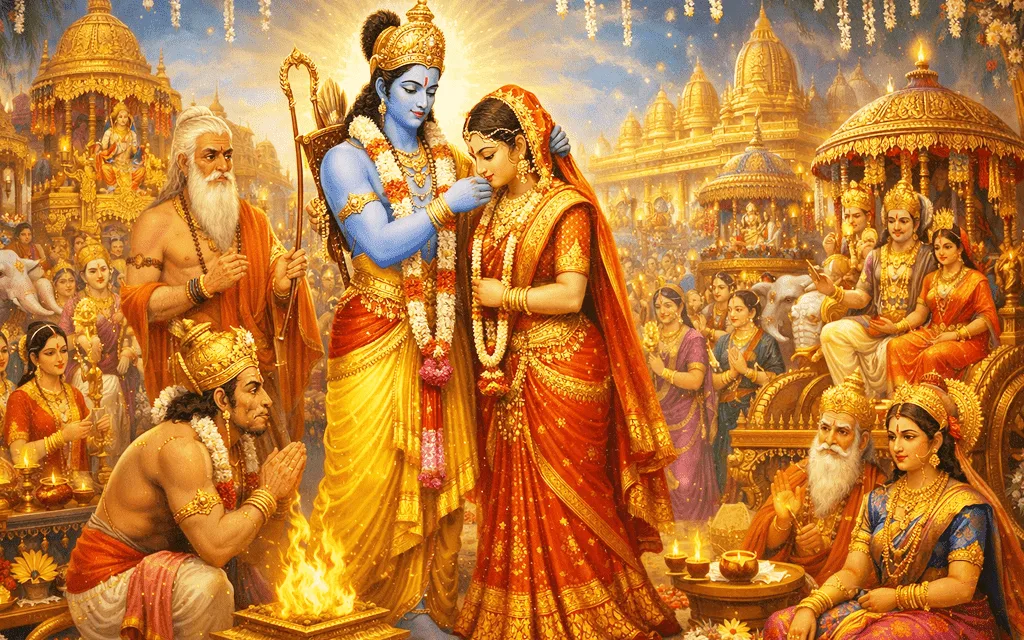
Pakistani Theater Group Earns Acclaim for Ramayana Performance
Bridging Cultures: Karachi’s ‘Mauj’ Theater Group Captivates with a Unique Rendition A local theater group from Karachi, ‘Mauj,’ is garnering global attention…
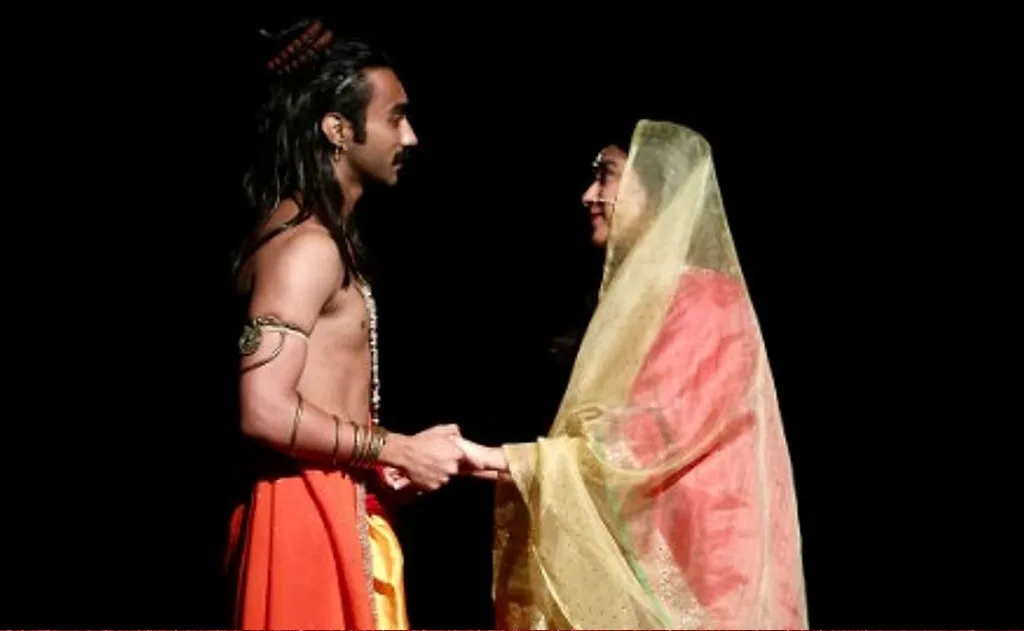
Bridging Cultures: Karachi’s ‘Mauj’ Theater Group Captivates with a Unique Rendition
A local theater group from Karachi, ‘Mauj,’ is garnering global attention by transcending cultural boundaries with its dramatic rendition of the Hindu epic, Ramayana. This timeless saga, revolving around key characters like Rama, Sita, and Ravana, has been adapted for contemporary audiences while preserving its traditional essence. Notably, the entire cast comprises Pakistani artists, whose performances have received resounding applause from audiences.
Debut Performance in Karachi
The play was first staged at the Arts Council of Pakistan in Karachi. The group respectfully adapted the essence of the Ramayana, incorporating local cultural nuances. The music and costumes reflect Pakistani aesthetics, yet the team ensured the epic’s core narrative and moral teachings remained intact.
In an interview, the director stated:
“The Ramayana is a universal story that transcends borders and resonates with all. By presenting it to Pakistani audiences, we aim to use it as a cultural bridge.”
Critical Acclaim
A prominent critic described the production as “a bold and balanced endeavor.” Another praised the emotional depth of the performances and the visual splendor, particularly commending the actor portraying Ravana. However, staging a Hindu epic like the Ramayana in Pakistan also sparked some criticism. Addressing this, one of the producers remarked:
“Our intent is not to provoke anyone. Stories have the power to unite people across borders.”
Future Plans
Following the success of the performance, the ‘Mauj’ theater group plans to stage the play in Lahore and Islamabad. Additionally, they aspire to take the production to international platforms, particularly in South Asia and the Middle East, to showcase Pakistan’s artistic talent and cultural diversity.
Conclusion
Through its rendition of the Ramayana, the ‘Mauj’ theater group has demonstrated that art and stories can transcend boundaries. This performance highlights the creativity and cultural openness of Pakistani artists, fostering a message of unity through storytelling.
What are your thoughts on this production? Share your views!
For more cultural insights, visit Hindutone.com.
What is the Ramayana, and why does it resonate across cultures?
The Ramayana is one of the two great Sanskrit itihasas (historical epics) of the Hindu tradition, composed by the sage Valmiki in approximately 24,000 shlokas (verses) across seven kandas (books). Its central narrative follows Rama, crown prince of Ayodhya and an avatar of Vishnu, through his fourteen-year exile, the abduction of his wife Sita by the Lankan king Ravana, and his eventual victory over adharma (unrighteousness). The Yuddha Kanda and Sundara Kanda in particular have been recited, performed, and meditated upon for millennia across the Indian subcontinent and Southeast Asia.
What gives the Ramayana its cross-cultural power is precisely what the Mauj director identified: its themes of loyalty, sacrifice, righteous conduct, and the enduring struggle between dharma and adharma are not regionally confined. The Ramacharitmanas, composed by the poet-saint Tulsidas in Awadhi in the sixteenth century, spread the epic's reach even deeper into the Hindi-speaking world and beyond. Southeast Asian nations including Indonesia, Thailand, and Cambodia developed their own living performance traditions — the Kecak of Bali and the Ramakien of Thailand being prominent examples — demonstrating that the epic's moral universe speaks to human experience regardless of religious boundary.
A long history of Ramayana performance traditions across South Asia
Dramatic performance of the Ramayana predates modern theater by centuries. The Ramlila tradition — large-scale, open-air re-enactments of the epic — has been documented in cities like Varanasi, Ayodhya, and Ramnagar since at least the sixteenth century, and the Ramnagar Ramlila near Varanasi is recognized by UNESCO as an Intangible Cultural Heritage of Humanity. These performances could last up to thirty days and drew audiences numbering in the tens of thousands, functioning simultaneously as devotional practice and community celebration.
Within the subcontinent that now comprises Pakistan, the Ramayana was also deeply embedded in regional culture before Partition in 1947. The Sindhi, Punjabi, and Saraiki literary traditions all contain retellings and references to Rama's story. Sites associated with the epic's geography — including the ancient city of Taxila (Takshashila) where, according to tradition, Valmiki himself may have taught — lie within present-day Pakistan. The Mauj group's production thus reconnects, in a sense, with a cultural inheritance that has deep roots in the very soil of modern Pakistan.
How does the Ramayana portray Ravana, and why is his character dramatically compelling?
Critics specifically praised the actor portraying Ravana in the Mauj production, and this is unsurprising: Ravana is among the most psychologically complex antagonists in world literature. The Valmiki Ramayana describes him as a Brahmin by birth (son of the sage Vishrava), a master of the Vedas, a devoted worshipper of Shiva, and the author of the Shiva Tandava Stotram. His ten heads (Dashanana) are traditionally interpreted as representing his mastery of the four Vedas and six shastras, or alternatively as his towering but uncontrolled ego.
The Uttara Kanda of the Valmiki Ramayana provides Ravana's backstory — his severe tapasya (austerities), his boons from Brahma, and his gradual slide from a just and capable king into a ruler consumed by desire and pride. This arc makes him genuinely tragic. Several Sanskrit dramatic works, including Bhavabhuti's eighth-century play Mahaviracharita, grapple with this ambiguity. In South Indian traditions, particularly in Kerala's Koodiyattam (the oldest surviving Sanskrit theater form), Ravana is sometimes portrayed with a kind of grandeur that acknowledges his greatness even as his adharma is condemned. A theater group willing to explore this complexity is engaging with the full depth of the tradition.
Art as a vehicle for interfaith and intercultural dialogue: precedents and principles
The Mauj group's stated intention — to use the Ramayana as a cultural bridge — has meaningful precedent in South Asian history. The Mughal emperor Akbar commissioned a Persian translation of the Ramayana, the Razmnama of the Ramayana, in the sixteenth century as part of his broader effort to understand and synthesize the diverse traditions of his empire. Court poets and musicians across the medieval Deccan sultanates freely drew on the imagery of Rama and Sita in their Urdu and Dakhni verse, reflecting a shared aesthetic world that crossed communal lines.
Hindu philosophy itself, particularly the concept of Vasudhaiva Kutumbakam — 'the world is one family,' found in the Maha Upanishad — offers a scriptural foundation for the idea that sacred stories belong to all of humanity. The Bhagavata Purana similarly teaches that the divine pervades all beings and all cultures. When art is offered in a spirit of respect and understanding rather than appropriation, it becomes a form of seva (service) to the broader human community, a principle that resonates with the Mauj group's stated ethos.
What challenges does staging Hindu sacred epics in a non-Hindu context present, and how are they navigated?
Adapting a sacred narrative like the Ramayana for a secular theatrical context requires careful navigation between artistic freedom and reverence for the tradition. For practicing Hindus, characters like Rama, Sita, and Hanuman are not fictional; they are murtis (sacred presences) who are worshipped in millions of homes and temples — from the Shri Ram Janmabhoomi Mandir in Ayodhya to the Kalikambal Temple in Chennai. Any portrayal that diminishes their dignity, even unintentionally, can cause genuine religious hurt, and this concern is legitimate regardless of the artist's good intentions.
Responsible adaptations typically consult with scholars familiar with the Valmiki Ramayana and other authoritative versions such as the Adhyatma Ramayana. They distinguish between the narrative core — which carries the epic's dharmic teaching — and incidental cultural detail, which can be adapted to local aesthetics without distortion. The Mauj group's approach of preserving 'the epic's core narrative and moral teachings' while incorporating Pakistani music and costume suggests an awareness of this distinction. Future productions traveling to South Asia and the Middle East would benefit from continuing dialogue with Hindu scholars and community representatives to ensure that the spirit of the sacred text is honored as much as its dramatic power.
Why Lahore, Islamabad, and the Middle East matter as the next stages for this production
The Mauj group's planned tour of Lahore and Islamabad carries symbolic significance beyond logistics. Lahore, historically a center of Punjabi cultural and literary life, was home to a vibrant Hindu and Sikh population before 1947, and the city's older quarters still contain Valmiki temples that serve the small scheduled-caste Hindu community that remained. A Ramayana performance in such a city quietly acknowledges a shared history that Partition sought to divide.
The Middle East, particularly the Gulf region, is home to large South Asian diaspora communities — including a significant Hindu population from India, Nepal, and elsewhere — who often have limited access to performances rooted in their own cultural heritage. Staging the Ramayana in that context, performed by Pakistani artists, would simultaneously serve the devotional and cultural needs of the Hindu diaspora and introduce non-Hindu audiences to one of humanity's richest literary traditions. This kind of people-to-people cultural exchange reflects what the ancient concept of the Ramayana as a loka-kriti (a work belonging to all people) has always implied.
Frequently Asked Questions
Who is staging the Ramayana in Karachi?
The Mauj theater group of Karachi staged the Ramayana, and the entire cast comprises Pakistani artists. Their performance has received resounding applause from audiences.
Where was the Mauj Ramayana first performed?
The play was first staged at the Arts Council of Pakistan in Karachi. Its music and costumes reflect Pakistani aesthetics while the epic's core narrative and moral teachings remain intact.
How did critics react to the Pakistani Ramayana production?
A prominent critic called it a bold and balanced endeavor, and another praised the emotional depth and visual splendor, especially the actor portraying Ravana. Staging a Hindu epic in Pakistan also drew some criticism.
Why did the Mauj group choose the Ramayana?
The director described the Ramayana as a universal story that transcends borders, and the group uses it as a cultural bridge. A producer said the intent is not to provoke anyone, because stories can unite people across borders.
What are Mauj's future plans for the production?
The group plans to stage the play in Lahore and Islamabad. It also hopes to take the production to international platforms, particularly in South Asia and the Middle East.
Share this with family and friends
Send it on WhatsApp, post it, or copy the link.
More from Hinduism
- AI and the Sanskrit Revival in 2026: Language Models, Manuscript OCR, Translation Tools and What AI Still Gets Wrong
- Can a Robot Perform Puja? Robot Aarti, AI in Rituals and What Hindu Tradition Says
- GitaGPT and AI Bhagavad Gita Chatbots: How Accurate Are They, and What Does Hindu Tradition Say?
- Robotic Elephants and AI in Hindu Temples: Kerala's Mechanical Tuskers, Tirumala's AI Command Centre and the Debate
- Quantum Computing Explained for Hindus: Qubits, Superposition and Entanglement, with Vedanta Analogies (Not Equivalences)
You might also like
Valmiki Ramayana: The Complete Story of Lord Rama — Chapter by Chapter | HinduTone
Lord Rama: The Ideal Man, King & Avatar — Complete Spiritual Biography
Top 15 Sri Rama Temples in India 2026: Complete Guide to History, Darshan Timings, Rama Navami Celebrations & Pilgrim Tips