Rename Victoria Memorial Station to Asta lakshmi Temple Station
A VHP delegation has requested HMRL MD N.VS. Reddy to rename Victoria Memorial Station to Astalakshmi Temple Station.
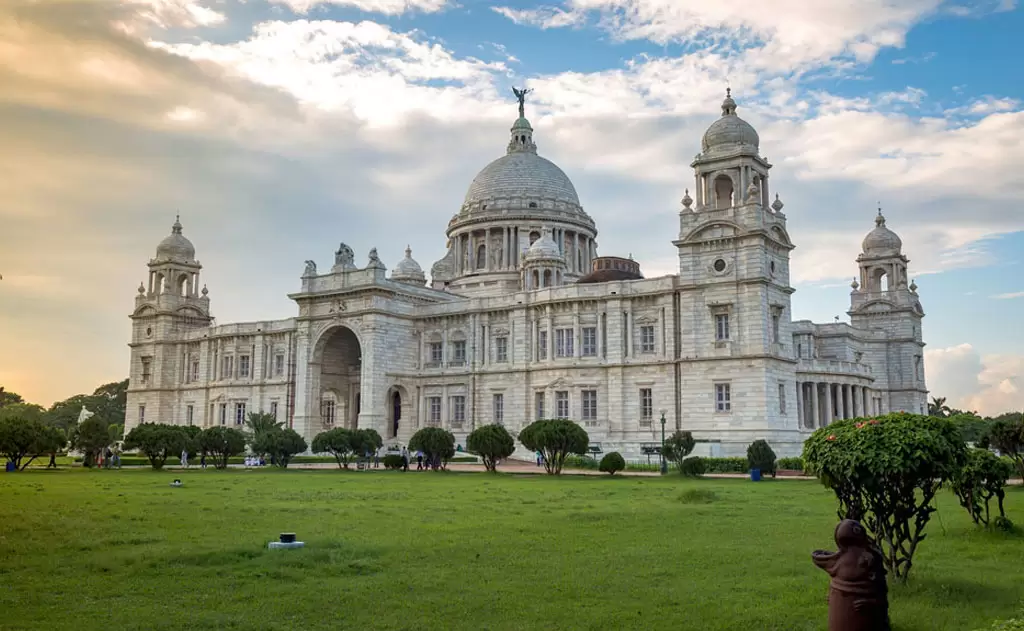
A VHP delegation has requested HMRL MD N.VS. Reddy to rename Victoria Memorial Station to Astalakshmi Temple Station. The metro station steps are directly located on the main road to the Astalakshmi Temple. Renaming the metro station to Astalakshmi Temple will directly inform devotees from all over the country about the metro rail service, which will also benefit the metro.
The VHP delegation has requested to change the name, which symbolizes the cruelty of British colonial rulers. The VHP delegation includes national spokesperson Dr. Ravinutala Shashidhar, state committee members H. Nageshwar Rao, Padmashri, Vivekananda Nagar district (Dilsukhnagar) president T. Purushotham Reddy, and secretary Pulimaddi Sudhakar.
Who is Astalakshmi and why does the temple carry special significance?
Astalakshmi refers to the eight principal forms of Goddess Lakshmi, each embodying a distinct dimension of divine abundance. These eight forms are Adi Lakshmi (primordial wealth), Dhana Lakshmi (material prosperity), Dhanya Lakshmi (agricultural abundance), Gaja Lakshmi (power and royalty), Santana Lakshmi (progeny and continuity), Veera Lakshmi (courage), Vijaya Lakshmi (victory), and Vidya Lakshmi (knowledge). Together they represent the complete spectrum of human flourishing as understood in Vedic thought.
The Astalakshmi Temple in Neelankarai, Chennai, is one of the most well-known shrines dedicated to all eight forms under one roof. The Hyderabad Astalakshmi Temple on the Necklace Road, situated near Hussain Sagar lake, similarly brings all eight manifestations together in a single consecrated space, making it a rare and spiritually significant tirtha for devotees in Telangana. The Rigveda's Sri Sukta hymn, which extols Lakshmi across her many forms, is regularly chanted at such shrines as the foundational liturgical text for her worship.
What is the historical and colonial legacy behind the name 'Victoria Memorial'?
Queen Victoria was declared Empress of India in 1876 under the Royal Titles Act, a political act that formalized British sovereignty over the Indian subcontinent. Naming public infrastructure after her was a deliberate colonial strategy to embed imperial authority into the everyday geography of Indian cities. Streets, stations, hospitals, and public halls bearing her name served as constant reminders of British dominance in a land that was not their own.
Post-independence India undertook significant renaming of colonial landmarks — Bombay became Mumbai, Madras became Chennai, and Calcutta became Kolkata. Many streets once named after British viceroys and monarchs were rechristened with names honoring Indian freedom fighters, saints, and cultural heritage. The VHP's request follows this well-established national practice of de-colonizing public nomenclature, arguing that retaining 'Victoria Memorial' in a metro station name is inconsistent with the spirit of cultural self-determination.
How does renaming metro stations after temples align with urban heritage policy in India?
Across India, metro networks have increasingly adopted names of prominent temples and cultural landmarks to aid navigation and reflect local identity. In Chennai, stations near the Kapaleeshwarar Temple in Mylapore and the Tiruvallikkeni Parthasarathy Temple are identified by those religious landmarks in local parlance. In Hyderabad itself, the HMRL network already carries station names rooted in local geography and heritage, demonstrating institutional precedent for the kind of renaming the VHP delegation is requesting.
From a practical standpoint, naming a transit stop after a well-known religious site functions as a wayfinding tool for millions of pilgrims and tourists who may not be familiar with colonial-era nomenclature. The Astalakshmi Temple on Necklace Road attracts a large and consistent footfall of devotees, particularly during Fridays, Navratri, and Diwali. A station name that directly references this landmark reduces confusion and makes public transport more accessible to first-time visitors coming from other parts of Telangana and Andhra Pradesh.
What role does the Vishwa Hindu Parishad play in cultural and heritage advocacy?
The Vishwa Hindu Parishad, founded in 1964 at Sandipani Ashram in Porbandar, Gujarat, has historically pursued a dual mandate of social service and the protection of Hindu cultural heritage in the public sphere. Beyond its work in tribal welfare and education, the organization has consistently raised its voice on matters of temple rights, decolonization of place names, and the preservation of sacred geography in urban planning.
The delegation that approached HMRL MD N.V.S. Reddy included figures with organizational standing at the national and state levels, lending the request institutional weight beyond a casual petition. National spokesperson Dr. Ravinutala Shashidhar and state committee members represent a coordinated effort to bring the renaming question through official channels, reflecting the VHP's strategy of engaging government bodies directly rather than through public agitation alone.
What scriptural and Puranic basis supports honouring Lakshmi in public civic spaces?
The Vishnu Purana describes Lakshmi as inseparable from the fabric of creation itself — 'Yada Vishnus, tada Lakshmi' — present wherever Vishnu is worshipped and wherever righteousness prevails. The Padma Purana further elaborates that communities that honour Lakshmi in their public and domestic life are blessed with collective prosperity, social harmony, and freedom from adversity. These texts establish a theological foundation for making her presence visible in civic life.
The Sri Sukta of the Rigveda, one of the oldest surviving hymns in praise of Lakshmi, calls upon her as Hiranyavarna — golden-complexioned — and invokes her to take up permanent residence in the household, the village, and the land. Naming a public landmark after her eight forms can therefore be seen not merely as a political or administrative act, but as a conscious invocation aligned with ancient Vedic aspiration: that the goddess's grace extend over the city and all who pass through it.
What are the next steps in the renaming process and who has authority to approve it?
Renaming a metro station in Hyderabad falls under the administrative authority of the Hyderabad Metro Rail Limited, which operates under the Telangana state government. The Managing Director of HMRL, N.V.S. Reddy, who received the delegation, would need to take the proposal through internal review and potentially seek approval from the state government before any formal change is gazette-notified.
Such renaming proposals in India typically pass through a defined process: the operating authority reviews the request, consults relevant departments including municipal corporations and heritage bodies, and in some cases invites public comment. Similar proposals in other cities have been resolved within a few months when there is clear political will and community consensus. The VHP's formal delegation approach, rather than a public demonstration, is designed to initiate precisely this administrative process in an orderly manner.
Frequently Asked Questions
Where is Rename Victoria Memorial Station to Asta lakshmi located?
A VHP delegation has requested HMRL MD N.VS. Reddy to rename Victoria Memorial Station to Astalakshmi Temple Station.
Who is the presiding deity of Rename Victoria Memorial Station to Asta lakshmi?
The presiding deity is Goddess Lakshmi.
What are the timings and how do I reach Rename Victoria Memorial Station to Asta lakshmi?
Temples typically open early morning and evening; confirm current darshan timings before visiting. The nearest airport, railway station and road routes are covered in the guide above.
What is the best time to visit Rename Victoria Memorial Station to Asta lakshmi?
Major festival days and the cooler months are popular, though weekday mornings offer a calmer darshan. Plan around the temple's key festivals for the most vibrant experience.
Share this with family and friends
Send it on WhatsApp, post it, or copy the link.
More from Hinduism
- AI and the Sanskrit Revival in 2026: Language Models, Manuscript OCR, Translation Tools and What AI Still Gets Wrong
- Can a Robot Perform Puja? Robot Aarti, AI in Rituals and What Hindu Tradition Says
- GitaGPT and AI Bhagavad Gita Chatbots: How Accurate Are They, and What Does Hindu Tradition Say?
- Robotic Elephants and AI in Hindu Temples: Kerala's Mechanical Tuskers, Tirumala's AI Command Centre and the Debate
- Quantum Computing Explained for Hindus: Qubits, Superposition and Entanglement, with Vedanta Analogies (Not Equivalences)
You might also like
The Resolve of a Monk – A Divine Incident Showcasing Kanchi Paramacharya’s Compassion
Importance of Telugu Pronunciation, Grammar & Pedda Bala Siksha – Let Us Preserve Our Mother Tongue

Secrets of Rahu and Ketu Dashas | Rahu & Ketu Results According to Parashara Astrology