
New DNA Analysis Suggests That Shroud Of Turin May Have Indian Origins: A Hindu Perspective on Ancient Civilizational Links
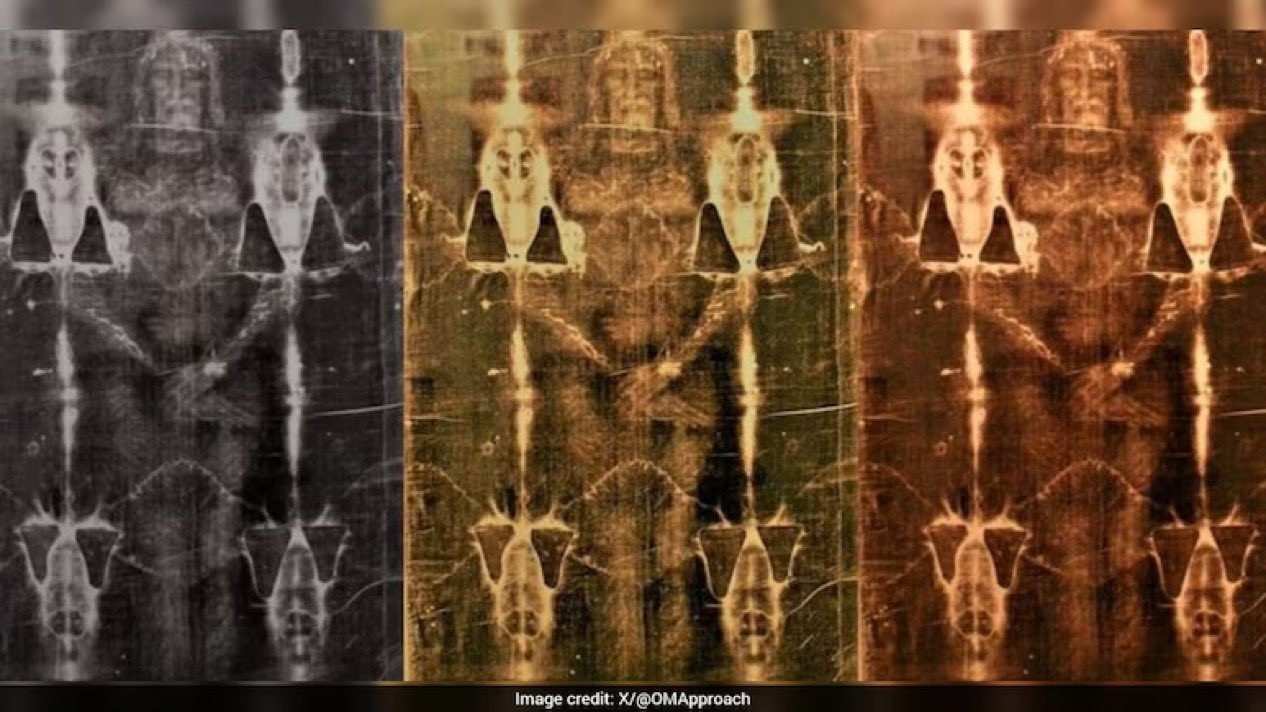
In a development that has captured global attention, a recent DNA study from researchers at the University of Padova, Italy, has reignited interest in the famous Shroud of Turin—the linen cloth long venerated by many Christians as the burial shroud of Jesus Christ. The yet-to-be-peer-reviewed study, building on earlier 2015 research by the same team led by Gianni Barcaccia, analyzed dust and material samples collected from the shroud in 1978.
In a development that has captured global attention, a recent DNA study from researchers at the University of Padova, Italy, has reignited interest in the famous Shroud of Turin—the linen cloth long venerated by many Christians as the burial shroud of Jesus Christ. The yet-to-be-peer-reviewed study, building on earlier 2015 research by the same team led by Gianni Barcaccia, analyzed dust and material samples collected from the shroud in 1978. It reveals a surprising genetic footprint: nearly 40% (specifically around 38.7%) of the human DNA traces on the cloth belong to Indian lineages, with strong suggestions that the yarn or linen may have originated in ancient India’s Indus Valley region.
From a Hindu perspective, this finding is profoundly significant. It underscores the immense reach and influence of ancient Bharatiya (Indian) civilization, its advanced textile traditions, and its extensive trade networks that connected the Indian subcontinent to the Mediterranean world long before the common era. India’s sacred land, known for its spiritual depth, scientific ingenuity, and cultural exports, appears once again as a silent contributor to world history—even in an artifact central to another faith.
What the DNA Analysis Reveals
The researchers examined mitochondrial DNA (mtDNA) and other genetic material embedded in the shroud’s fibers. Key highlights include:
- Dominant Indian genetic signatures: Approximately 38.7% of the human genomic data points to South Asian (Indian subcontinent) lineages, including haplogroups like M39, M56, R7, and R8, which are characteristic of Indian populations. Earlier 2015 findings had already noted these rare haplotypes typical of the Indian subcontinent.
- Mixed global traces: Over 55% of the DNA links to Near Eastern origins, with smaller contributions from Western Europe, the Middle East, and other regions—consistent with the shroud’s documented history of handling, veneration, and possible travel across centuries.
- Plant and environmental clues: DNA from various plants, some associated with Mediterranean or later introductions, alongside the textile evidence, supports the idea of ancient trade.
- Linen origin hypothesis: The team proposes that the yarn was likely produced in India, near the Indus Valley (often called the cradle of one of the world’s earliest urban civilizations, with sophisticated craftsmanship). The cloth may have been imported or traded into the Mediterranean region, possibly by Romans or through earlier trade routes.
The study notes that the term “Sindôn” (Greek for the fine linen shroud mentioned in the Gospels) may etymologically link to Sindh—a historic region in the Indian subcontinent renowned for its high-quality textiles since ancient times. Some scholars have long suggested that “Sindôn” referred to Indian-origin fabric prized for its fineness. Rabbinic texts even mention “Hindoyin” in connection with linen or yarn from areas near the Indus Valley.
This is not entirely new. The 2015 study by Barcaccia’s team had already floated the possibility of Indian manufacture based on DNA and plant evidence, suggesting the cloth could have been woven in India before traveling through Jerusalem, Turkey, and Europe.
Hindu Perspective: Pride in Bharatiya Heritage and Timeless Trade
For Hindus, this news evokes pride in Sanatana Dharma’s civilizational continuum. The Indus Valley Civilization (Harappan era, circa 3300–1300 BCE) was a pinnacle of urban planning, metallurgy, and especially textile production. Archaeological finds from sites like Mohenjo-Daro and Lothal reveal evidence of cotton cultivation, dyeing, and weaving techniques that were extraordinarily advanced for their time. Cotton (“karpasa” in Sanskrit) was a key Indian export, and fine linens or fabrics from the region were traded across the known world.
Ancient India maintained robust maritime and overland trade with the Roman Empire, Mesopotamia, Egypt, and the Hellenistic world. Roman texts (like those of Pliny the Elder) mention the high demand for Indian textiles, spices, and goods, with ports like Bharuch (ancient Barygaza) and Lothal facilitating exchanges. The Periplus of the Erythraean Sea documents this vibrant Indo-Roman trade. It is entirely plausible that superior Indian linen or cotton yarn made its way westward, perhaps even used in significant cultural or religious contexts.
The linguistic connection is equally compelling. The word “Sindh” or “Sindhu” (the river that gives the name “India” or “Hind” in many languages) symbolizes purity and sacred geography in Hindu tradition. The Shroud’s possible link to “Sindôn” from Sindh textiles resonates with how Bharatiya knowledge and craftsmanship influenced distant lands—whether through trade, migration, or cultural diffusion.
This finding also invites reflection on how artifacts can carry layered histories. While the Shroud is central to Christian veneration as a possible witness to the Passion of Christ, its material origins in ancient India highlight interconnectedness rather than division. Hindus have long viewed the world through the lens of Vasudhaiva Kutumbakam (the world is one family). Ancient rishis and traders carried not just goods but ideas, and vice versa. The presence of Indian DNA traces could reflect centuries of handling by diverse pilgrims or simply the global journey of an exceptional fabric born from Indian looms.
Importantly, the DNA is highly mixed and contaminated from centuries of veneration, handling, and environmental exposure. Scientists emphasize it does not allow identification of any single “original” individual’s DNA, nor does it prove or disprove the Shroud’s association with a specific historical figure. The 1988 radiocarbon dating suggested a medieval origin (though contested by some), creating ongoing debate. The new genetic data adds nuance but does not resolve questions of authenticity.
Broader Implications and Call for Further Exploration
This study deepens the Shroud’s mystery while shining light on India’s forgotten role in global history. It challenges Eurocentric narratives that sometimes overlook the contributions of Eastern civilizations to Mediterranean and Abrahamic contexts. For Hindus, it is a reminder to reclaim and celebrate our heritage—from the Vedic emphasis on purity and ritual textiles to the Harappan mastery of crafts that influenced faraway regions.
As the scientific community debates the findings (the paper is on bioRxiv and awaits peer review), Hindus can appreciate the evidence of ancient Bharat’s soft power. Indian textiles were not mere commodities; they were embodiments of skill, often tied to spiritual practices like yajnas or temple rituals, where fine cloths held sacred value.
Further interdisciplinary research—combining genetics, archaeology, linguistics, and ancient trade studies—could reveal more. Indian scholars and institutions might consider engaging with such relics to explore these connections respectfully.
In the end, whether the Shroud is a medieval artifact, a genuine relic, or something in between, its possible Indian material roots affirm a timeless truth: civilizations have always been linked through knowledge, trade, and shared human endeavor. From the banks of the Sindhu to the cathedrals of Europe, the threads of history weave a richer tapestry when we recognize India’s ancient contributions.
Jai Hind. Om Shanti.
You might also like
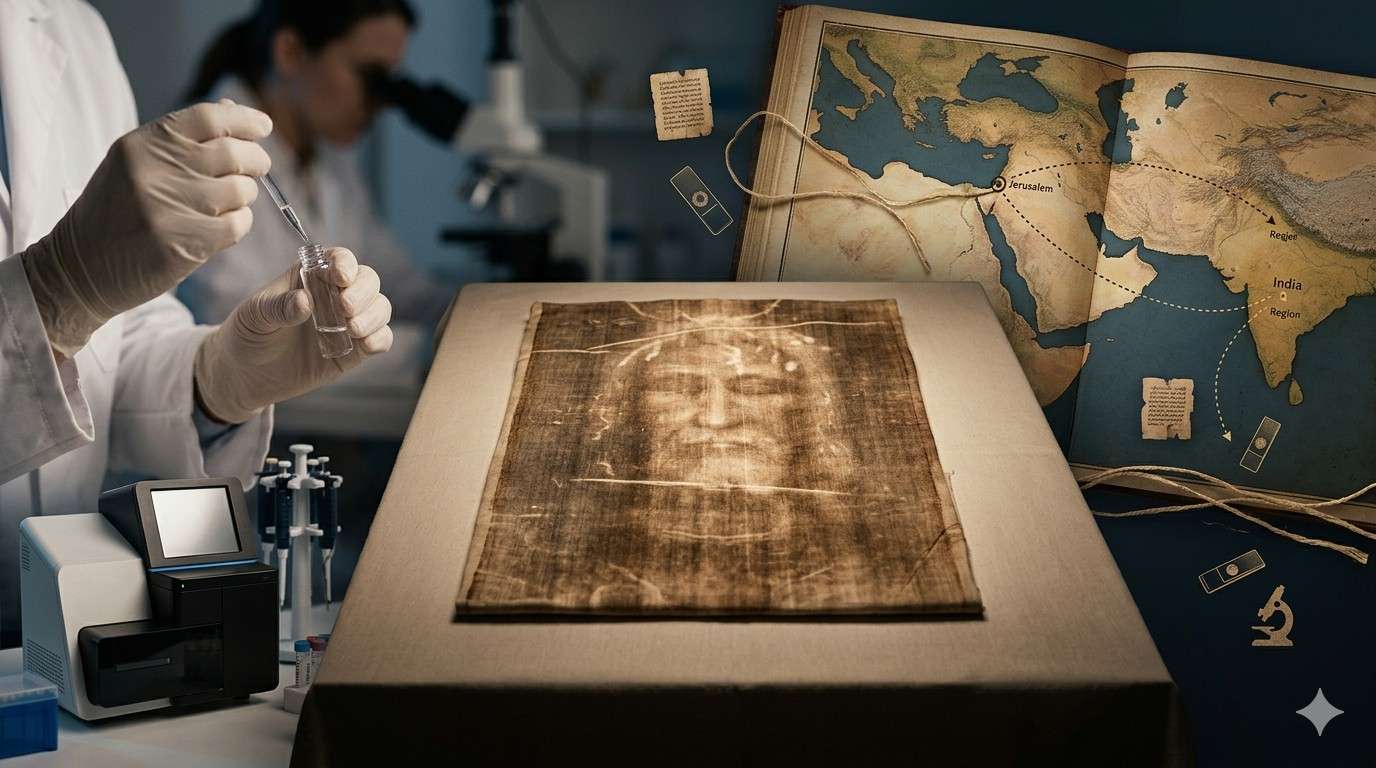
Shroud of Turin DNA Study Revives Debate: Nearly 40% Human DNA Traces Linked to Indian Lineages – But Does It Mean Jesus Had Indian Origins?

Hindu Priest Jobs in Canada 2026: Pandit Vacancy Guide for Toronto, Vancouver & Calgary

Hindu Priest Jobs in South Africa 2026: Pandit Vacancy Guide for Durban & Johannesburg