Ayurveda Beyond Herbs: Exploring the Complete Science of Life and Cosmic Alignment
IntroductionIn today’s wellness world, Ayurveda is often reduced to popular herbs like turmeric and tulsi.
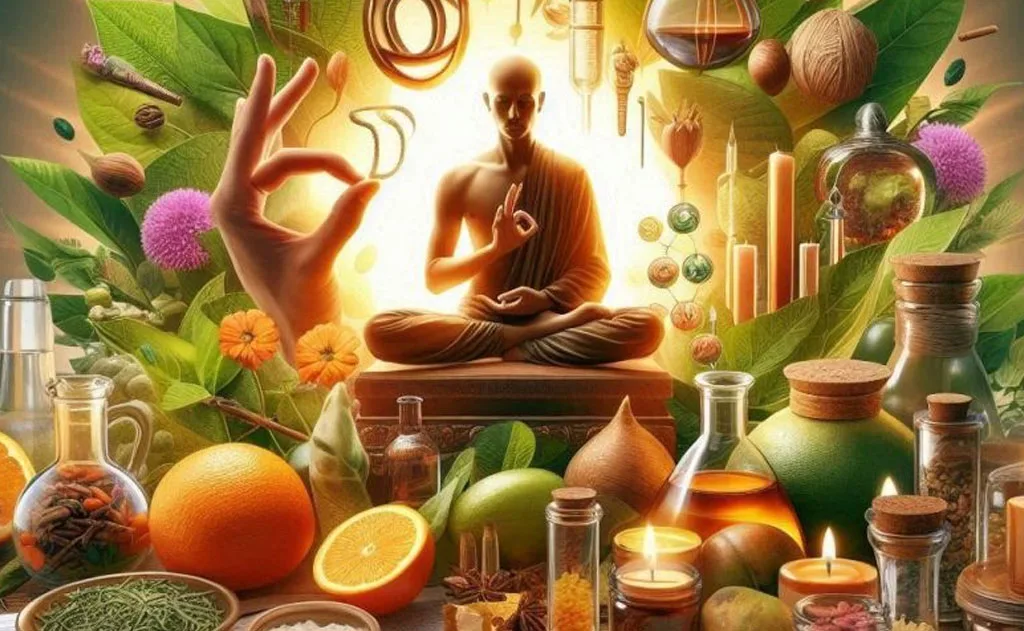
IntroductionIn today’s wellness world, Ayurveda is often reduced to popular herbs like turmeric and tulsi.
Introduction
In today’s wellness world, Ayurveda is often reduced to popular herbs like turmeric and tulsi. While these herbs are beneficial, they are just the tip of the iceberg. Ayurveda is a profound, holistic system of health and spiritual alignment that goes far beyond herbal remedies. It encompasses everything from daily rituals to sacred eating, all designed to align your life with ṛta—the cosmic order. At www.hindutone.com, we take you deep into the true essence of Ayurveda.
1. Dinacharya: The Power of Daily Routine
Dinacharya is the Ayurvedic discipline of structuring your day in harmony with nature’s cycles. From waking before sunrise to practicing oil pulling, yoga, and proper meal timings—Dinacharya helps you:
- Optimize digestion and energy
- Balance doshas (Vata, Pitta, Kapha)
- Reduce stress and build resilience
2. Rasāyana: The Science of Longevity and Rejuvenation
Rasāyana is one of the eight branches of Ayurveda focused on rejuvenation. It involves:
- Specialized herbal formulations
- Lifestyle recommendations for vitality
- Mental clarity and emotional balance
These therapies promote ojas—the subtle essence that governs immunity and youthfulness.
3. Pañcakarma: The Ultimate Detox and Reset
Pañcakarma is a deep purification process involving five therapeutic treatments:
- Vamana (emesis)
- Virechana (purgation)
- Basti (enema)
- Nasya (nasal therapy)
- Raktamokshana (bloodletting)
It clears toxins (ama), resets the digestive fire (agni), and restores systemic balance.
4. Mantra Therapy: Healing Through Sacred Sound
Ayurveda recognizes sound as medicine. Mantra therapy uses vibrational frequencies to heal the body and mind:
- Balances subtle energies (prana, tejas, ojas)
- Enhances mental clarity and emotional harmony
- Supports spiritual growth through meditative focus
Mantras are chosen based on individual constitution and imbalances.
5. Bhojana Vidhi: Sacred Eating Practices
Ayurveda doesn't just teach what to eat—it teaches how to eat:
- Eating mindfully and in silence
- Avoiding distractions and negative emotions while eating
- Offering gratitude before meals
Proper Bhojana Vidhi transforms food into nourishment for body, mind, and soul.
Cosmic Alignment with Ṛta
At the core of Ayurveda lies the principle of ṛta—the cosmic rhythm that governs seasons, planetary movements, and biological cycles. When you live in sync with ṛta:
- You experience vitality and mental clarity
- Your body naturally detoxifies and regenerates
- Life becomes an effortless flow of wellness
Conclusion
Ayurveda is not just a system of medicine—it’s a way of living in harmony with the universe. From Dinacharya and Rasāyana to Pañcakarma and Mantra therapy, each practice is designed to help you live your dharma with strength and serenity. At Hindutone, we are committed to reviving this timeless wisdom for modern seekers.
What Are the Eight Classical Branches of Ayurveda Beyond Diet and Herbs?
Ayurveda is formally organized into eight branches known as Ashtānga Āyurveda, first systematized in the Charaka Samhitā and the Sushruta Samhitā. These eight divisions are: Kāyachikitsā (internal medicine), Bālachikitsā (pediatrics), Graha Chikitsā (psychiatry and spirit-related illness), Ūrdhvāṅga Chikitsā (ENT and ophthalmology), Shalya Tantra (surgery), Agada Tantra (toxicology), Rasāyana Tantra (rejuvenation), and Vājīkaraṇa (reproductive vitality). This breadth alone reveals that Ayurveda was never merely an herbal compendium but a complete clinical system.
Sushruta, venerated as the father of surgery, performed procedures described in the Sushruta Samhitā including rhinoplasty, cataract removal, and the removal of bladder stones—millennia before modern surgical science codified such techniques. His instruments, the Shastra and Yantra sets, numbered over 100 in description. Recognizing this surgical legacy corrects the modern misconception that Ayurveda is purely a soft, preventive tradition.
How Does Ayurveda Map the Cosmos onto the Human Body Through the Tridosha Theory?
The Tridosha framework—Vāta (space and air), Pitta (fire and water), and Kapha (water and earth)—is not merely a physiological classification. It is a cosmological one. The Charaka Samhitā states that the Pañcha Mahābhūta, the five great elements that constitute the universe, also constitute every living body. This direct correspondence between the macrocosm and the microcosm is expressed by the Sanskrit maxim 'Yat piṇḍe tat brahmāṇḍe'—what is in the body is in the universe.
Each dosha governs specific tissue layers (dhātus), waste products (malas), and subtle energies. Vāta, for instance, governs the nervous system and all movement, from cellular transport to thought itself. Pitta governs metabolism, digestion, and the liver's transformative functions. Kapha governs structural cohesion, lubrication, and the immune matrix. A practitioner assessing a patient through pulse diagnosis (nāḍī parīkṣā) is therefore reading the body's relationship to cosmic rhythms, not simply checking a clinical biomarker.
What Role Does Jyotisha Play in Ayurvedic Treatment Planning?
Classical Ayurvedic texts acknowledge a deep relationship between Jyotisha (Vedic astrology) and health. The Ashtāṅga Hṛdayam of Vāgbhaṭa advises that the physician consider the position of the planets and the lunar cycle when scheduling Pañcakarma procedures and administering Rasāyana therapies. The waxing moon (Shukla Paksha) is considered conducive to building and nourishing therapies, while the waning moon (Krishna Paksha) is favored for purification and elimination.
Each planet in the Jyotisha system corresponds to a specific dosha and bodily system: the Sun governs vitality and the heart; the Moon governs the mind and fluid balance; Mars governs bile and Pitta; Saturn governs the nervous system and Vāta. A practitioner trained in both sciences—called a Vaidya with Jyotisha literacy—would time the intake of specific herbs or the commencement of therapies to align with planetary dignities. This integration reflects Ayurveda's foundational intention of aligning the individual with ṛta, the cosmic order.
What Is Sattva and Why Does Mental Constitution Matter as Much as Physical Dosha?
Ayurveda assesses health across three dimensions: Sharira (body), Manas (mind), and Ātma (spirit). The mental constitution is evaluated through the lens of the three Guṇas—Sattva (clarity and harmony), Rajas (activity and restlessness), and Tamas (inertia and heaviness)—a framework shared with Sāṅkhya philosophy and elaborated in the Bhagavad Gītā (Chapters 14 and 17). A person may have a balanced physical constitution yet suffer from Rājasic or Tāmasic mental tendencies that generate psychosomatic disease.
The Charaka Samhitā devotes an entire section to Sattva Parīkṣā—the examination of mental resilience and spiritual clarity. Patients with high Sattva are described as having superior capacity to withstand disease, respond well to treatment, and recover quickly. Ayurvedic mental therapy (Satvāvajaya Chikitsā) employs disciplined thought, scriptural study, association with wise persons (satsaṅga), and regulated breath (prāṇāyāma) as primary interventions—no plant remedy alone substitutes for cultivating Sattva.
How Does Ayurveda Approach Seasonal Living Through the Practice of Ritucharya?
Ritucharya is the Ayurvedic science of seasonal regimen, outlining how diet, sleep, exercise, and conduct should shift across the six seasons recognized in the Indian classical calendar: Vasanta (spring), Grīshma (summer), Varshā (monsoon), Sharad (autumn), Hemanta (early winter), and Shishira (late winter). The Ashtāṅga Hṛdayam dedicates a full chapter to Ritucharya, emphasizing that ignoring seasonal transitions is a primary cause of disease accumulation.
During Vasanta, for example, the accumulated Kapha of winter begins to liquefy with rising temperatures, increasing vulnerability to respiratory and allergic conditions. Ayurveda prescribes lighter foods, vigorous exercise, dry massage (udvartana), and specific herbs like Pippalī (Piper longum) during this period to pre-empt imbalance. Conversely, Sharad—associated with aggravated Pitta—calls for cooling foods, moonlight exposure, and avoidance of pungent or fermented substances. This anticipatory, preventive orientation is what distinguishes Ritucharya from reactive medical treatment.
The underlying logic mirrors the Vedic understanding that the human body is not a sealed unit but a dynamic field continuously exchanging energy with its environment. The Taittirīya Upanishad describes the human being as layered within the Pañchakosha model—Annamaya, Prāṇamaya, Manomaya, Vijñānamaya, and Ānandamaya—each responsive to environmental, seasonal, and cosmic inputs. Ritucharya is the practical application of this philosophy in daily and seasonal life.
Which Sacred Pilgrimage Sites and Temples Have Historical Connections to Ayurvedic Knowledge?
The city of Varanasi (Kashi) holds a unique position in both Ayurvedic and spiritual history. It was here that Punarvasu Ātreya, the great teacher of Charaka's tradition, is said to have taught medicine at one of the world's earliest known educational centers. The Kashi Vishwanath Temple complex, dedicated to Lord Shiva—who is venerated as Vaidyanātha, the Lord of Physicians—served as a living nexus between temple worship and medical learning for centuries.
In South India, the Thiruvananthapuram Sri Padmanabhaswamy Temple in Kerala is located in a region historically renowned as the heartland of Ashtāvaidya families—eight hereditary lineages of Ayurvedic physicians who preserved classical Kerala Āyurveda (Keralīya Pañchakarma traditions). The Nelliyampathy and Kottakkal regions of Kerala continue to be living repositories of this knowledge. In Tamil Nadu, the Siddha tradition, closely allied with Ayurveda, honors the sage Agastya Muni as its progenitor, with temples dedicated to him found across the Pothigai Hills. These geographical and spiritual connections underscore that Ayurveda was never practiced in isolation from the sacred landscape of Bhārata.
Frequently Asked Questions
What is Ayurveda Beyond Herbs?
Introduction In today’s wellness world, Ayurveda is often reduced to popular herbs like turmeric and tulsi. While these herbs are beneficial, they are just the tip of the iceberg.
What are the key points about Ayurveda Beyond Herbs?
Ayurveda is a profound, holistic system of health and spiritual alignment that goes far beyond herbal remedies. It encompasses everything from daily rituals to sacred eating, all designed to align your life with ṛta—the cosmic order.
Why does Ayurveda Beyond Herbs matter in Hinduism?
It reflects core values of Sanatana Dharma and offers practical and spiritual guidance that remains relevant across generations.
How can devotees apply Ayurveda Beyond Herbs in daily life?
By reflecting on its teaching, incorporating the related practices or observances into daily routine, and approaching it with sincere devotion and understanding.
You might also like

Purushottam Maas 2026: Lord Vishnu's Sacred Gift of Spiritual Multiplication & Divine Grace
Shani Jayanti 2026: Date, Significance, Rituals & Powerful Mantras

Hindu Priest Jobs New Zealand 2026 — Auckland, Wellington, Christchurch Vacancies & NZ Religious Worker Visa Guide