Nila Saraswati Stotra Mahima — Benefits, 12 Shlokas, Parayana Schedule & How to Recite
The complete Nila Saraswati Stotra guide — the full 12-shloka stotra with phalashruti, the practice schedule (Ashtami/Navami/Chaturdashi tithis for 6 months), benefits for academic success / financial growth / business prosperity / weak Mercury remediation, and the proper way to begin a 108-day parayana.
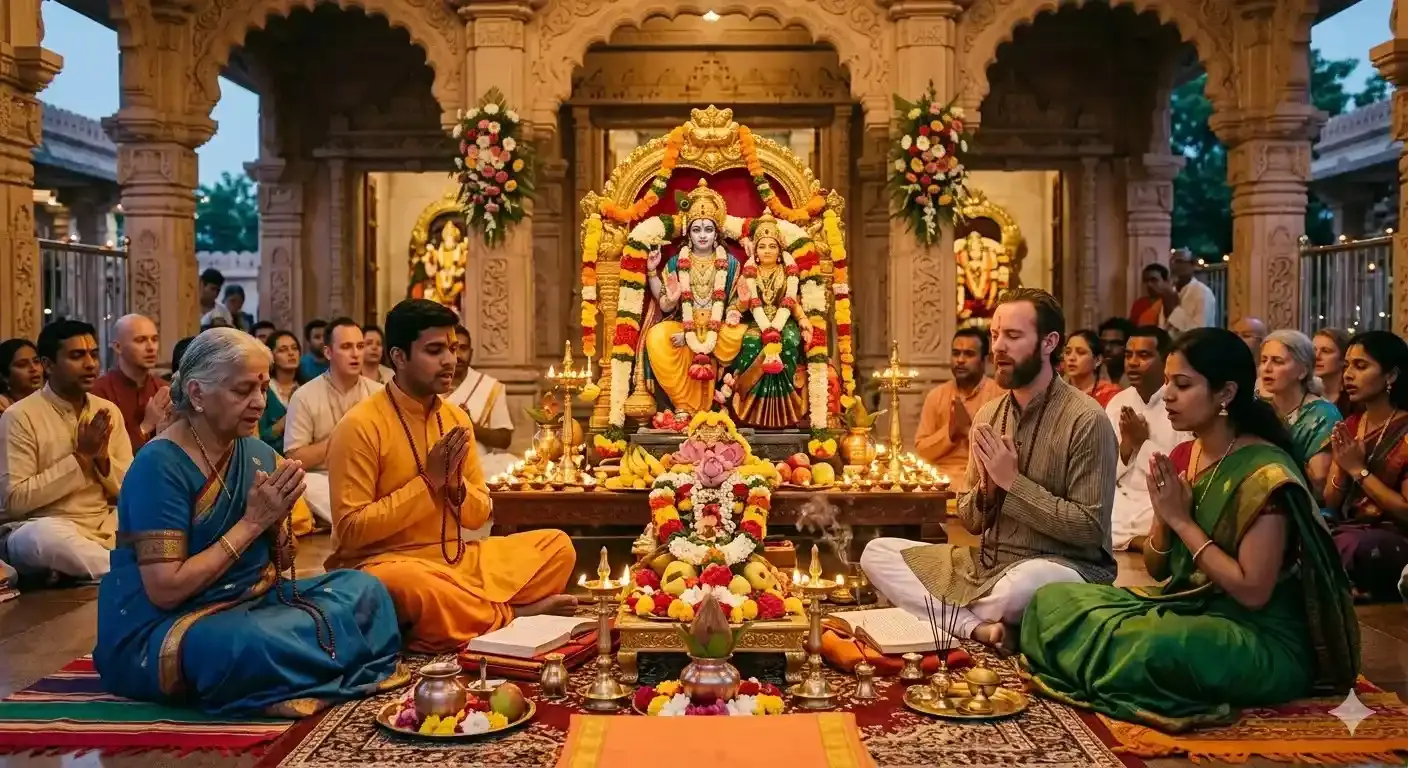
The complete Nila Saraswati Stotra guide — the full 12-shloka stotra with phalashruti, the practice schedule (Ashtami/Navami/Chaturdashi tithis for 6 months), benefits for academic success / financial growth / business prosperity / weak Mercury remediation, and the proper way to begin a 108-day parayana.
Nila Saraswati — the blue (Nila) form of Saraswati, also worshipped as Tara Devi in many traditions — is the goddess invoked for academic success, freedom from financial troubles, protection of businessmen from losses, and remediation of a weak Mercury (Budha) in the birth chart. This complete guide to the Nila Saraswati Stotra covers the full 12-shloka text, the traditional practice schedule, the categories of devotees most benefited, and the proper way to begin a 108-day daily parayana.
Who Benefits from Nila Saraswati Stotra
- Students who study hard but cannot recall what they read in exams.
- Those facing financial difficulties or recurring monetary problems.
- Businessmen wanting protection from losses.
- Anyone with a weak Mercury (Budha) in their birth chart, or running through a Mercury dasha (Budha dasha).
- Those seeking financial growth and material prosperity through divine grace.
The Traditional Practice Schedule
The Nila Saraswati Stotra is most powerful when recited on the traditional auspicious tithis:
- Ashtami (8th lunar day) — both Shukla + Krishna paksha.
- Navami (9th lunar day) — both pakshas.
- Chaturdashi (14th lunar day) — both pakshas.
Recite the stotra on these tithis for 6 continuous months. Tradition holds that the devotee achieves siddhi — any undertaken work proceeds without obstacles.
Daily Parayana Method
- Shlokas 1-8 — the main stotra body. Recite
- 5 times daily.
- Shlokas 9-12 — the phalashruti (declaration of benefits). Recite
- once after the main 5 rounds.
- Once you have memorised the stotra comfortably, recite the full text 21 times daily for 108 days for the proper parayana siddhi.
- Advanced devotees commit to 108 times daily recitation — many have reported significant life transformations from this practice.
The Full Nila Saraswati Stotra (12 Shlokas)
Main Stotra — Shlokas 1 to 8
घोररूपे महारावे सर्वशत्रुक्षयङ्करी। भक्तेभ्यो वरदे देवि त्राहि मां शरणागतम् ॥ १॥
Ghorarūpe mahārāve sarvaśatrukṣayaṅkarī | Bhaktebhyo varade devi trāhi māṃ śaraṇāgatam || 1 ||
सुरासुरार्चिते देवि सिद्धगन्धर्वसेविते। जाड्यपापहरे देवि त्राहि मां शरणागतम् ॥ २॥
Surāsurārcite devi siddhagandharvasevite | Jāḍyapāpahare devi trāhi māṃ śaraṇāgatam || 2 ||
जटाजूटसमायुक्ते लोलजिह्वानुकारिणी। द्रुतबुद्धिकरे देवि त्राहि मां शरणागतम् ॥ ३॥
Jaṭājūṭasamāyukte lolajihvānukāriṇī | Drutabuddhikare devi trāhi māṃ śaraṇāgatam || 3 ||
सौम्यरूपे क्रोधरूपे चण्डरूपे नमोऽस्तु ते। सृष्टिरूपे नमस्तुभ्यं त्राहि मां शरणागतम् ॥ ४॥
Saumyarūpe krodharūpe caṇḍarūpe namo'stu te | Sṛṣṭirūpe namastubhyaṃ trāhi māṃ śaraṇāgatam || 4 ||
जडानां जडतां हंसि भक्तानां भक्तवत्सला। मूढतां हर मे देवि त्राहि मां शरणागतम् ॥ ५॥
Jaḍānāṃ jaḍatāṃ haṃsi bhaktānāṃ bhaktavatsalā | Mūḍhatāṃ hara me devi trāhi māṃ śaraṇāgatam || 5 ||
ह्रूं ह्रूंकारमये देवि बलिहोमप्रिये नमः। उग्रतारे नमस्तुभ्यं त्राहि मां शरणागतम् ॥ ६॥
Hrūṃ hrūṃkāramaye devi balihomapriye namaḥ | Ugratāre namastubhyaṃ trāhi māṃ śaraṇāgatam || 6 ||
बुद्धिं देहि यशो देहि कवित्वं देहि देवि मे। मूढत्वं च हरेर्देवि त्राहि मां शरणागतम् ॥ ७॥
Buddhiṃ dehi yaśo dehi kavitvaṃ dehi devi me | Mūḍhatvaṃ ca harerdevi trāhi māṃ śaraṇāgatam || 7 ||
इन्द्रादिदेव सद्वृन्दवन्दिते करुणामयी। तारे ताराधिनाथास्थे त्राहि मां शरणागतम् ॥ ८॥
Indrādideva sadvṛndavandite karuṇāmayī | Tāre tārādhināthāsthe trāhi māṃ śaraṇāgatam || 8 ||
Phalashruti — Shlokas 9 to 12
अष्टम्यां च चतुर्दश्यां नवम्यां च पठेन्नरः। षण्मासैः सिद्धिमाप्नोति नात्र कार्या विचारणा ॥ ९॥
Aṣṭamyāṃ ca caturdaśyāṃ navamyāṃ ca paṭhennaraḥ | Ṣaṇmāsaiḥ siddhimāpnoti nātra kāryā vicāraṇā || 9 ||
मोक्षार्थी लभते मोक्षं धनार्थी लभते धनम्। विद्यार्थी लभते विद्यां तर्कव्याकरणादिकम् ॥ १०॥
Mokṣārthī labhate mokṣaṃ dhanārthī labhate dhanam | Vidyārthī labhate vidyāṃ tarkavyākaraṇādikam || 10 ||
इदं स्तोत्रं पठेद्यस्तु सततं श्रद्धयान्वितः। तस्य शत्रुः क्षयं याति महाप्रज्ञा प्रजायते ॥ ११॥
Idaṃ stotraṃ paṭhedyastu satataṃ śraddhayānvitaḥ | Tasya śatruḥ kṣayaṃ yāti mahāprajñā prajāyate || 11 ||
पीडायां वापि सङ्ग्रामे जप्ये दाने तथा भये। य इदं पठति स्तोत्रं शुभं तस्य न संशयः ॥ १२॥
Pīḍāyāṃ vāpi saṅgrāme japye dāne tathā bhaye | Ya idaṃ paṭhati stotraṃ śubhaṃ tasya na saṃśayaḥ || 12 ||
॥ इति श्री नील सरस्वती स्तोत्रं सम्पूर्णम् ॥
|| Iti Śrī Nīla Sarasvatī Stotraṃ Sampūrṇam ||
Translation of the Phalashruti
- Shloka 9:
- Whoever recites this stotra on Ashtami, Chaturdashi, or Navami achieves siddhi in 6 months. There is no doubt about this.
- Shloka 10:
- The seeker of moksha gains moksha; the seeker of wealth gains wealth; the seeker of knowledge gains knowledge — including logic and grammar.
- Shloka 11:
- Whoever recites this stotra continuously with faith — their enemies are destroyed, great wisdom is born in them.
- Shloka 12:
- In affliction, in battle, in japa, in giving, in fear — whoever recites this stotra, auspiciousness comes to them without doubt.
Frequently Asked Questions
Who is Nila Saraswati?
Nila Saraswati is the blue (Nila) form of Saraswati, also worshipped as Tara Devi in many tantric traditions. She is the goddess of knowledge, wisdom, and the remedy for those whose Mercury (Budha) is weak in their birth chart.
On which tithis should I recite the Nila Saraswati Stotra?
The traditional practice tithis are Ashtami (8th lunar day), Navami (9th), and Chaturdashi (14th) — in both Shukla paksha and Krishna paksha. Reciting on these tithis for 6 continuous months grants siddhi per the phalashruti.
How many times should I recite the stotra daily?
Beginners: recite shlokas 1-8 (the main stotra body) 5 times daily + shlokas 9-12 (phalashruti) once. After memorising, advance to 21 times daily for 108 days. Advanced devotees commit to 108 times daily.
What is the benefit for students?
The stotra is specifically powerful for students who study hard but cannot recall material in exams. Shloka 10 explicitly says 'vidyārthī labhate vidyāṃ' — the seeker of knowledge gains knowledge, including logic and grammar.
Can businessmen benefit from this stotra?
Yes — the stotra is traditionally recommended for businessmen seeking protection from losses and for those seeking financial growth. Shloka 10 says 'dhanārthī labhate dhanam' — the seeker of wealth gains wealth.
Does this help with a weak Mercury (Budha) in the horoscope?
Yes. Mercury (Budha) governs intellect, communication, and commerce. When Mercury is weak in the birth chart or during a Mercury dasha, the Nila Saraswati Stotra is traditionally prescribed as the upaya (remedial measure) — Mercury's domains map exactly to what Nila Saraswati grants.
🙏 ॥ ॐ ह्रीं स्त्रीं हुं फट् ॐ नमो भगवती तारिणी स्वाहा ॥ 🙏
You might also like

Hare Krishna Mahamantra Complete Guide: Meaning, Japa Method, ISKCON, 16 Rounds & Spiritual Benefits

Miraculous Stories of Hanuman Puja on Tuesday: Real Devotee Experiences of Faith & Blessings

Things You Should Never Do on Tuesday as per Hindu Beliefs: Taboos & Positive Tips