Deepavali 2026 in Sri Lanka: Date, Jaffna & Colombo Celebrations, Temples
Deepavali 2026 in Sri Lanka falls on the Tamil day (Naraka Chaturdashi), Saturday 7 November. A guide to the date, how Jaffna, Colombo and hill-country Tamils celebrate, and the temples at its heart.
Deepavali 2026 in Sri Lanka falls on the Tamil day (Naraka Chaturdashi), Saturday 7 November. A guide to the date, how Jaffna, Colombo and hill-country Tamils celebrate, and the temples at its heart.
Deepavali — the Tamil festival of lights that North India calls Diwali — is one of Sri Lanka's most cherished celebrations, observed with deep devotion by the island's Tamil Hindu community. From the temple town of Jaffna in the north to the kovils of Colombo and the hill-country estates of the Central Province, homes fill with oil lamps, kolam and the fragrance of sweets. This guide covers the 2026 date, how Sri Lankan Tamils celebrate, and the temples at the heart of it.
When is Deepavali 2026 in Sri Lanka?
Sri Lanka's Tamil Hindus follow the South Indian (Tamil) reckoning, observing Deepavali on Naraka Chaturdashi — the day commemorating Krishna's victory over the demon Narakasura — rather than the North Indian Lakshmi Puja night. By Drik Panchang, Naraka Chaturdashi in 2026 falls on Saturday, 7 November 2026, a day before the North Indian Diwali / Lakshmi Puja on Sunday, 8 November 2026.
Deepavali is a public holiday in Sri Lanka. The official holiday date is set by the government's gazette each year and follows the Tamil observance, so confirm it on the official holiday calendar before making plans.
How Sri Lankan Tamils celebrate Deepavali
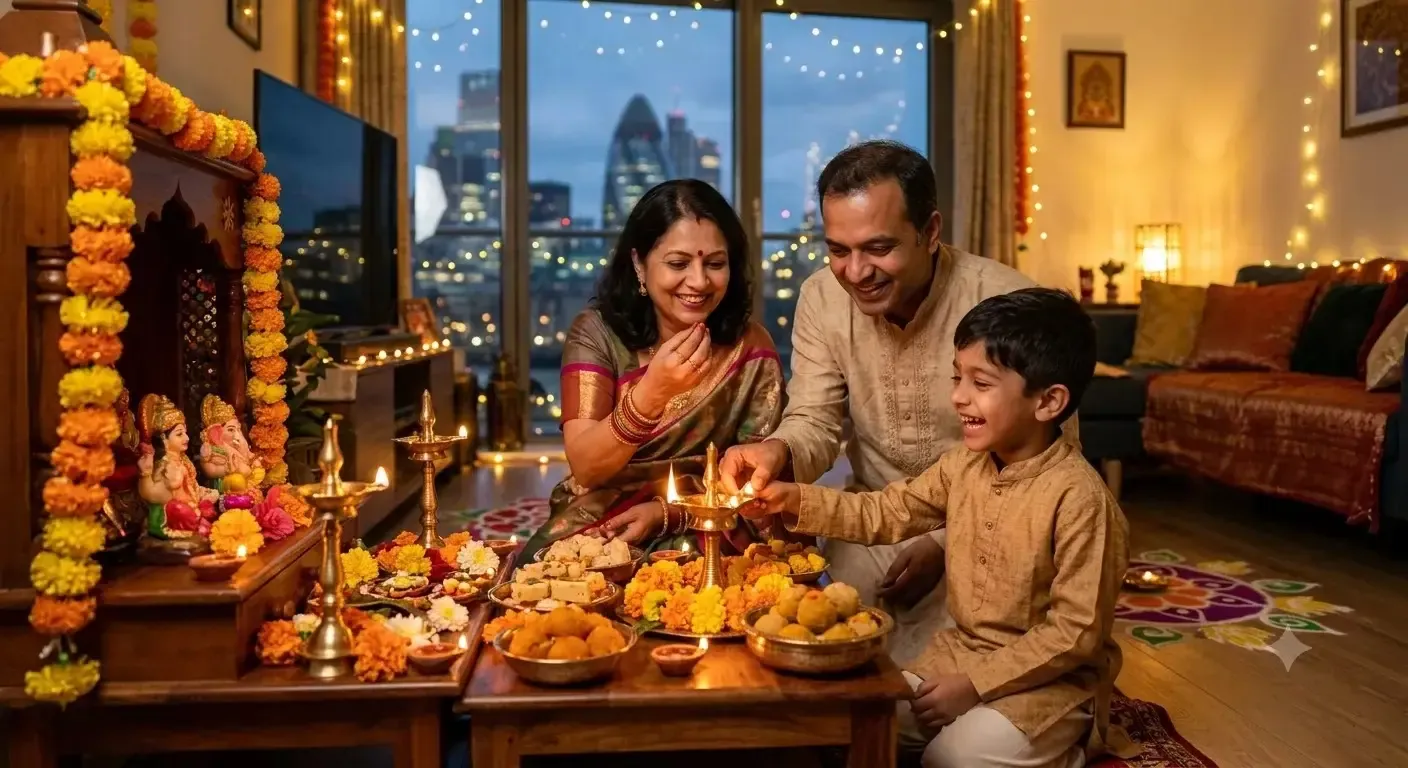
For Tamil Hindus in Sri Lanka, the day begins before dawn with the ganga snanam — a ritual oil bath (ennai kuliyal) symbolising purification — followed by wearing new clothes and visiting the family kovil. Doorsteps are decorated with kolam, and rows of oil lamps are lit at dusk.
- Ritual oil bath (ennai kuliyal) at dawn, then new clothes and temple darshan
- Kolam at the doorway and oil lamps lit through the evening
- Deepavali sweets and savouries — murukku, adhirasam, mysore pak, athirasam and laddu
- Family visits and the exchange of sweets and greetings
- Prayers to Ganesha and Goddess Lakshmi at home and at the kovil
Temples to visit for Deepavali in Sri Lanka
Sri Lanka's historic kovils hold special Deepavali pujas. Confirm each temple's timings and arrangements directly with the temple before visiting:
- Nallur Kandaswamy Kovil, Jaffna — the island's most celebrated Murugan temple and the spiritual centre of the Tamil north
- Sri Ponnambalawaneswaram Kovil, Colombo — a landmark Shiva temple in the capital
- Sri Kailawasanathan Swami Devasthanam (Captain's Garden Kovil), Colombo
- Sri Muthumariamman Thevasthanam, Matale — a major hill-country temple
- Munneswaram Temple, Chilaw, and Maviddapuram Kandaswamy Kovil in the north
Deepavali across Sri Lanka's Tamil communities
Deepavali is celebrated wherever Tamil Hindus live on the island. The Northern Province around Jaffna and the Eastern Province towns of Batticaloa and Trincomalee are the Tamil heartland; Colombo has a large and long-established Tamil Hindu community; and the Malaiyaha (hill-country) Tamils of the Central Province tea districts — around Nuwara Eliya, Hatton and Badulla — mark the festival with their own warmth. In Colombo, the Pettah and Kotahena kovil areas come alive with festive shopping in the days before.
Deepavali puja at home
A simple home observance needs no priest: clean the house, draw a kolam, light oil lamps at dusk, and offer prayers to Ganesha and Goddess Lakshmi with fruit, sweets and flowers. Many families honour their ishta devata and elders on the day, keep the food sattvic, and focus on the festival's meaning — the victory of light over darkness and good over evil.
Tips for families in Sri Lanka
- Deepavali is a public holiday — confirm the exact gazetted date and plan temple visits early
- Kovils are busiest at dawn and dusk; arrive early for a calmer darshan
- Buy festive clothes, oil lamps and sweets ahead of the rush in Pettah, Jaffna and the local markets
- Check your kovil's notices for special Deepavali puja timings
- Dress modestly and remove footwear at the temple
Related Deepavali guides
Explore Deepavali across the Tamil diaspora:
- Deepavali 2026 in Colombo — complete city guide
- Deepavali 2026 in Singapore
- Deepavali 2026 in Malaysia
- Deepavali 2026 — dates, significance and rituals
Frequently asked questions
When is Deepavali 2026 in Sri Lanka?
Sri Lanka's Tamil Hindus observe Deepavali on the Tamil day (Naraka Chaturdashi), which in 2026 falls on Saturday, 7 November 2026 by Drik Panchang — a day before the North Indian Diwali on 8 November. Confirm the gazetted public-holiday date on the official calendar.
Is Deepavali a public holiday in Sri Lanka?
Yes. Deepavali is a public holiday in Sri Lanka, reflecting the island's large Tamil Hindu community. The official date is gazetted by the government each year and follows the Tamil observance.
Where is Deepavali celebrated most in Sri Lanka?
The Tamil heartland of the Northern Province around Jaffna, the Eastern Province towns of Batticaloa and Trincomalee, the capital Colombo, and the hill-country Malaiyaha Tamil districts of the Central Province all celebrate Deepavali with great devotion.
Which temples are important for Deepavali in Sri Lanka?
Nallur Kandaswamy Kovil in Jaffna is the most famous, along with Sri Ponnambalawaneswaram and the Captain's Garden Kovil in Colombo, Sri Muthumariamman in Matale, and Munneswaram near Chilaw. Confirm special Deepavali puja timings with each temple.
How do Sri Lankan Tamils celebrate Deepavali at home?
The day begins with a pre-dawn oil bath (ennai kuliyal), followed by new clothes, kolam at the doorway, oil lamps at dusk, prayers to Ganesha and Lakshmi, and the sharing of sweets such as murukku, adhirasam and mysore pak with family and neighbours.
You might also like
Deepavali 2026 in Singapore: Date, Little India Celebrations & Temple Guide
Vinayagar Chaturthi in Sri Lanka 2026: Pillaiyar Worship & Immersion
Thaipusam Guide: Meaning, Kavadi, Murugan & Batu Caves Celebrations