

Janmashtami Fasting Rules (Vrat Vidhi): A Complete Guide
A complete guide to the Janmashtami vrat — types of fasting (nirjala, phalahar, jalahar), what to eat and avoid, when to break the fast (parana), and health-conscious guidance for every devotee.

A complete guide to the Janmashtami vrat — types of fasting (nirjala, phalahar, jalahar), what to eat and avoid, when to break the fast (parana), and health-conscious guidance for every devotee.
Fasting on Janmashtami is one of the most sacred ways devotees express love for Sri Krishna. It is not merely abstaining from food — it is a spiritual discipline that purifies the body, calms the mind and opens the heart to receive the Divine Infant at midnight. The vrat is observed on Bhadrapada Krishna Ashtami; in 2026 Krishna Janmashtami falls on Friday, 4 September (India reference), with diaspora dates varying by local tithi. Tradition emphasises shraddha — faith and sincerity — far more than severity.
Types of fasting observed on Janmashtami
Nirjala Vrat (strictest)
Complete abstinence from both food and water from the start of the vrat until after the Nishita Kaal puja or the formal parana. It is undertaken only by those who are physically strong and experienced, and is not recommended for children, the elderly, pregnant women, nursing mothers, diabetics, or anyone on regular medication.
Phalahar / Phalahari Vrat (most common)
Fruits, milk and dairy, nuts and permitted vrat foods are allowed. This is the form most householders follow, especially working professionals and NRI families — it maintains energy while keeping the spirit of the fast.
Jalahar or partial fast
Only water, coconut water or fresh fruit juice is taken. Some observe ek-bhukta — a single sattvic meal before sunset.
Modified / health-conscious vrat
Those with medical conditions may take prescribed medicines with light food, or simply keep a sattvic diet without grains, onion or garlic while focusing on japa, kirtan and puja. Intention and devotion count far more than physical hardship.
What you can eat during the vrat (phalahar guidelines)
- Fresh seasonal fruits — banana, apple, papaya, pomegranate, grapes, melon
- Dry fruits and nuts — almonds, cashews, walnuts, raisins, dates, makhana
- Dairy — milk, curd, buttermilk, paneer in moderation, ghee and makhan
- Sabudana (sago) dishes — khichdi, vada, kheer
- Vrat flours — kuttu (buckwheat), singhara (water chestnut), rajgira (amaranth)
- Potatoes, sweet potatoes and raw banana in moderation
- Rock salt (sendha namak) in place of table salt
- Coconut water, fresh juices, and mishri, jaggery or honey in limited amounts
What to strictly avoid
- All regular grains and cereals — wheat, rice, oats, maize, barley
- Pulses and legumes — dal, beans, chickpeas
- Onion and garlic (considered tamasic)
- Regular table salt and sea salt
- Non-vegetarian food, eggs, alcohol and tobacco
- Excessive tea or coffee, and heavily fried or spiced foods
- Processed or packaged snacks with prohibited ingredients
When to begin and break the fast (Parana)
Begin after a morning bath and Sankalp — the formal resolve — usually from sunrise on the observance day. There are two accepted ways to break the fast (parana):
- Common modern practice — after the Nishita Kaal midnight aarti and the distribution of prasad, often beginning with makhan-mishri offered to Krishna
- Strict Dharmashastra rule — after both the Ashtami tithi and the Rohini nakshatra have ended, usually after sunrise the next morning
In 2026, by the India reference panchang, Ashtami ends around 12:13 am on 5 September and Rohini a little earlier, so the strict traditional parana falls after sunrise on Saturday, 5 September. Timings shift by location — always confirm the exact parana with a reliable panchang for your city, and diaspora observers should convert to their local tithi endings. Many families break the fast with the midnight prasad for practicality, especially before a working day, while keeping the spirit of the vrat.
Guidelines for special groups
- Pregnant women, nursing mothers, children, the elderly and those with health conditions — prefer a light phalahar or a simple sattvic diet; do not attempt nirjala, and consult a doctor if needed. The puja and chanting, done with devotion, are fully valid.
- Working professionals and students — a phalahar with small, spaced portions of fruit, milk and nuts works well, with an early-evening family puja and a short Nishita aarti.
- General advice — stay hydrated if not observing nirjala, avoid overeating fried vrat foods, and keep the mind pure through japa, bhajan and reading the Janma Katha or Bhagavad Gita.
The spiritual essence of the vrat
The purpose of the Janmashtami fast is to remember that the Lord who was born in a prison cell comes to free us from the prison of material existence. By controlling the senses for one day and offering everything to Him at midnight, the devotee invites Krishna to take birth in the heart. Whether the fast is strict or gentle, whether you are in Mathura or Melbourne, the Lord accepts every offering made with love.
Related Janmashtami guides
Complete your observance with:
- Krishna Janmashtami 2026: date, muhurat & puja vidhi
- Bala Krishna leelas: the stories to tell on Janmashtami
- Janmashtami prasad recipes: makhan, panchamrit & more
Frequently asked questions
When is the Janmashtami 2026 fast observed?
The vrat is kept on Bhadrapada Krishna Ashtami. In 2026 Krishna Janmashtami falls on Friday, 4 September by the India reference panchang; some Vaishnava and ISKCON communities observe the following day, and diaspora dates vary by local tithi — confirm your local panchang.
What can I eat during the Janmashtami fast?
Fruits, milk and dairy, nuts, sabudana, and vrat flours such as kuttu, singhara and rajgira, along with potatoes and sendha namak. Avoid all grains, lentils, onion and garlic.
When do you break the Janmashtami fast (parana)?
Many break it after the midnight Nishita aarti with prasad. The strict tradition breaks it only after both the Ashtami tithi and Rohini nakshatra have ended — usually after sunrise the next morning. Confirm the exact time with your local panchang.
Can I take medicine during the fast?
Yes. Anyone on regular medication should take it as prescribed, with light food if required, and keep a phalahar or sattvic fast rather than nirjala. Health always comes first.
Is nirjala vrat necessary on Janmashtami?
No. Nirjala — no food or water — is the strictest and entirely optional form. Phalahar is the most common and fully valid observance. The tradition values sincerity over severity.
This guide describes Janmashtami fasting as devotional tradition and is not medical advice. Fasting should be adapted to your health; anyone who is pregnant, nursing, elderly, diabetic or on regular medication should consult a doctor before observing a strict fast.
You might also like
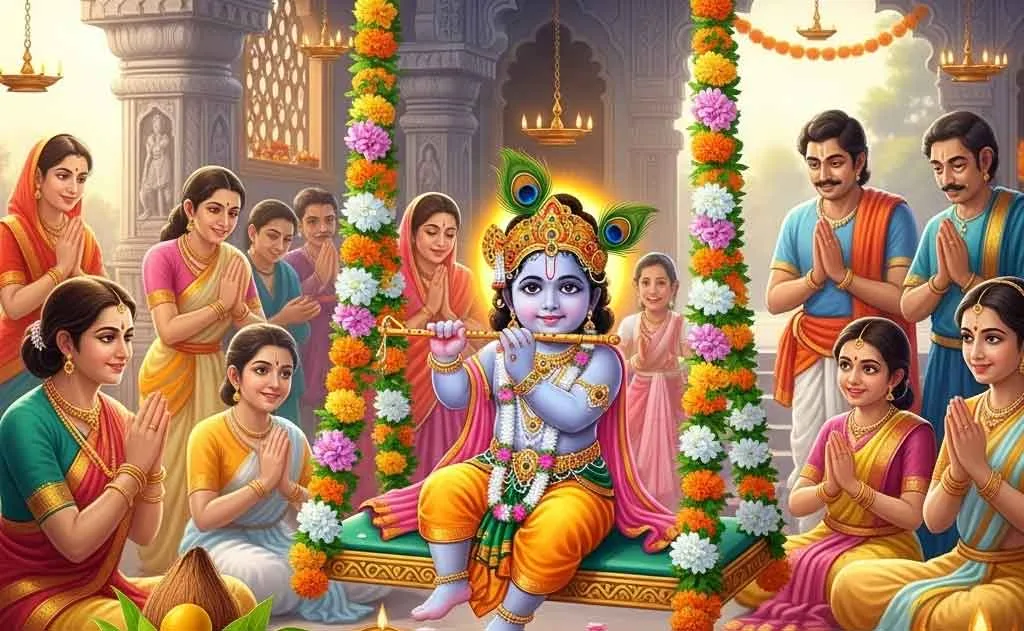
Bala Krishna Leelas: The Stories Every Heart Remembers on Janmashtami

Mantras to Chant on Raksha Bandhan: Complete Guide with Meaning & Pronunciation
ISKCON Temples Worldwide Celebrate Krishna Janmashtami 2026: A Global Guide