

Mantras to Chant on Raksha Bandhan: Complete Guide with Meaning & Pronunciation
Every mantra worth chanting on Raksha Bandhan — in Sanskrit, transliteration and simple phonetics, with meanings and instructions on when to use each, from the essential Raksha Sutra rakhi-tying mantra to the sibling shanti mantra Om Sahana Vavatu.
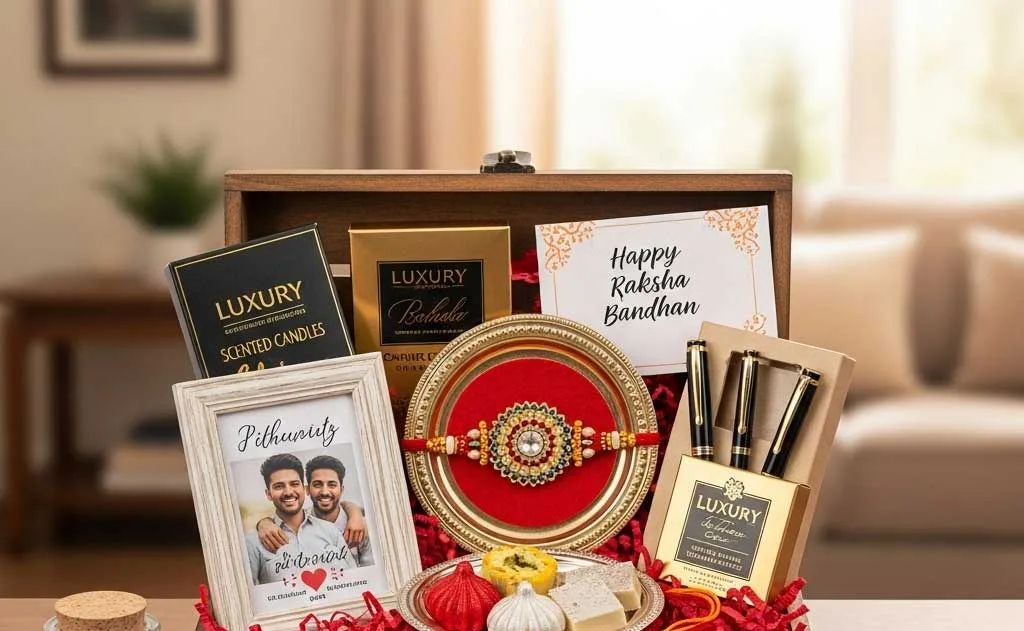
Every mantra worth chanting on Raksha Bandhan — in Sanskrit, transliteration and simple phonetics, with meanings and instructions on when to use each, from the essential Raksha Sutra rakhi-tying mantra to the sibling shanti mantra Om Sahana Vavatu.
Quick answer: The essential mantra to chant while tying the rakhi is the Raksha Sutra mantra: Yena baddho balī rājā dānavendro mahābalaḥ, tena tvām anubadhnāmi rakṣe mā cala mā cala — chant it three times as the thread is bound to the right wrist. Enrich the ceremony with the Ganesha mantra to begin, Om Sahana Vavatu (the sibling shanti mantra) after tying, the Mahamrityunjaya mantra for long life, and Hanuman, Krishna, Lakshmi, Shiva and Gayatri mantras through the day. For Raksha Bandhan 2026 the morning muhurat runs roughly 5:57 AM to 9:48 AM IST on Friday, 28 August.
A rakhi tied in silence is a decoration. A rakhi tied with mantra is a Raksha Sutra — an armour.
The difference is not sentimental. In Vedic practice, sound is the instrument that consecrates. The thread does not become protective because of what it is made of; it becomes protective because of what is spoken over it. This is why every traditional Raksha Bandhan ceremony has words at its centre. Here is every mantra worth chanting on Raksha Bandhan — in Sanskrit, in Roman transliteration, in simple phonetics for those who read neither, with meanings and instructions on when to use each.
Quick Answer: Which Mantra Do I Chant While Tying the Rakhi?
The essential one is the Raksha Sutra mantra:
Yena baddho balī rājā dānavendro mahābalaḥ, tena tvām anubadhnāmi rakṣe mā cala mā cala.
Chant it three times as you tie the thread on the right wrist. Everything else in this guide is enrichment. This one is the ritual itself. For Raksha Bandhan 2026, the ceremony falls on Friday, 28 August, with the morning muhurat running roughly 5:57 AM to 9:48 AM IST.
1. The Essential Mantra: The Raksha Sutra
This is the verse recited at the exact moment the thread is bound. If you learn only one thing on this page, learn this.
येन बद्धो बली राजा दानवेन्द्रो महाबलः। तेन त्वामनुबध्नामि रक्षे मा चल मा चल॥
Advertisement
yena baddho balī rājā dānavendro mahābalaḥ / tena tvām anubadhnāmi rakṣe mā cala mā cala
Simple phonetics: YEH-na BUD-dho BUH-lee RAA-jaa, DAA-na-VEN-dro ma-haa-BUH-lah / TEH-na TVAAM a-nu-BUDH-naa-mi, RUK-sheh MAA cha-la MAA cha-la
Meaning, word by word:
| Sanskrit | Meaning |
|---|---|
| yena baddho | by which (thread) was bound |
| balī rājā | King Bali |
| dānavendro | lord of the danavas |
| mahābalaḥ | of immense strength |
| tena tvām anubadhnāmi | by that same thread I now bind you |
| rakṣe | O Raksha (the protective power itself, addressed directly) |
| mā cala mā cala | do not waver, do not waver |
Full sense: By that very thread which bound Bali — the mighty lord of the danavas — I now bind you. O protective power, do not waver. Do not waver.
Notice who is being addressed in the second line. Not the brother. The Raksha itself — the protective force — is spoken to directly and instructed to hold. The mantra does not request protection. It commands it into place. Chant it three times, slowly, while making the knot: begin the first repetition as you place the thread on the wrist and complete the third as the knot is tied.
On the variant reading: you will encounter tena tvām abhibadhnāmi and pratibadhnāmi in some printed panchangas alongside anubadhnāmi. All three are in circulation and all are accepted. Use whichever your family tradition uses; do not let the variation stop you from chanting.
Advertisement
2. To Begin: The Ganesha Mantra
No auspicious act begins without invoking the remover of obstacles. Chant this before the puja starts, while offering durva grass or a sweet.
वक्रतुण्ड महाकाय सूर्यकोटि समप्रभ। निर्विघ्नं कुरु मे देव सर्वकार्येषु सर्वदा॥
vakratuṇḍa mahākāya sūryakoṭi samaprabha / nirvighnaṃ kuru me deva sarvakāryeṣu sarvadā
Meaning: O curved-trunked, mighty-bodied one, radiant as ten million suns — make all my endeavours free of obstacles, always. Shorter alternative: Oṃ gaṃ gaṇapataye namaḥ, chanted 11 or 21 times. When: at the very start, before touching the rakhi.
3. The Mantra Made for Siblings: Oṃ Sahanā Vavatu
This is the most underused mantra of the entire festival, and arguably the most appropriate one in the whole canon.
ॐ सह नाववतु। सह नौ भुनक्तु। सह वीर्यं करवावहै। तेजस्वि नावधीतमस्तु मा विद्विषावहै॥ ॐ शान्तिः शान्तिः शान्तिः॥
oṃ saha nāv avatu, saha nau bhunaktu / saha vīryaṃ karavāvahai, tejasvi nāv adhītam astu mā vidviṣāvahai / oṃ śāntiḥ śāntiḥ śāntiḥ
Meaning: May we be protected together. May we be nourished together. May we work together with great vigour. May our learning be radiant. May we never quarrel with one another. Om, peace, peace, peace.
Read that fifth line again — mā vidviṣāvahai, may we not hate each other. This is a shanti mantra from the Taittiriya Upanishad, traditionally chanted by a teacher and student before study. But every phrase of it is written in the dual — the grammatical form Sanskrit reserves for exactly two people. Protected together. Nourished together. Never quarrelling. There is no more precise prayer in the Hindu tradition for two siblings sitting opposite each other. Chant it together, out loud, in unison after the rakhi is tied.
4. For Long Life and Health: The Mahamrityunjaya Mantra
If your prayer is for your sibling's longevity and protection from harm, this is the one.
ॐ त्र्यम्बकं यजामहे सुगन्धिं पुष्टिवर्धनम्। उर्वारुकमिव बन्धनान् मृत्योर्मुक्षीय मामृतात्॥
oṃ tryambakaṃ yajāmahe sugandhiṃ puṣṭivardhanam / urvārukam iva bandhanān mṛtyor mukṣīya māmṛtāt
Meaning: We worship the three-eyed one, fragrant, the increaser of nourishment. As a ripe cucumber is freed from its stalk, may we be freed from the bondage of death — but not from immortality.
There is a beautiful resonance here that makes it especially fitting for this festival. The mantra turns on the word bandhana — the very word in Raksha Bandhan. On a day devoted to a binding that protects, this verse prays for release from the binding that does not. When: during the puja, before tying. How many: 11 times as a minimum; 108 on a japa mala if you have the time.
5. For Courage and Protection: The Hanuman Mantra
Traditional for brothers, and for anyone facing a difficult year ahead.
मनोजवं मारुततुल्यवेगं जितेन्द्रियं बुद्धिमतां वरिष्ठम्। वातात्मजं वानरयूथमुख्यं श्रीरामदूतं शरणं प्रपद्ये॥
Advertisement
manojavaṃ mārutatulyavegaṃ jitendriyaṃ buddhimatāṃ variṣṭham / vātātmajaṃ vānarayūthamukhyaṃ śrīrāmadūtaṃ śaraṇaṃ prapadye
Meaning: Swift as thought, fleet as the wind, master of the senses, foremost among the intelligent, son of the wind-god, chief of the vanara host, messenger of Sri Rama — I take refuge in him. Shorter alternative: Oṃ haṃ hanumate namaḥ, 11 or 108 times. When: if you are tying the first rakhi to Hanuman, or if protection is the specific prayer. The full Hanuman Chalisa is an excellent choice for the evening of Raksha Bandhan.
6. For the Krishna-Draupadi Bond
Sri Krishna is the classical recipient of the first rakhi, in memory of the cloth Draupadi tore for his wounded finger.
ॐ कृष्णाय वासुदेवाय हरये परमात्मने। प्रणतः क्लेशनाशाय गोविन्दाय नमो नमः॥
oṃ kṛṣṇāya vāsudevāya haraye paramātmane / praṇataḥ kleśanāśāya govindāya namo namaḥ
Meaning: To Krishna, son of Vasudeva, to Hari, to the Supreme Self — I bow to Govinda, destroyer of the suffering of those who surrender.
For contemplation, a verse worth adding — Bhagavad Gita 7.7, which gives the thread its deepest philosophical meaning:
मयि सर्वमिदं प्रोतं सूत्रे मणिगणा इव॥ — mayi sarvam idaṃ protaṃ sūtre maṇigaṇā iva
All this is strung upon Me, as pearls are strung upon a thread. Chant this once while holding the rakhi before tying it, and the object in your hand stops being a piece of string.
7. For Prosperity and Harmony: The Lakshmi Mantra
Doubly apt in 2026. The Lakshmi-Bali episode is the origin of the Raksha Sutra itself, and this year Shravana Purnima falls on a Friday, the day governed by Shukra, traditionally associated with abundance and domestic harmony.
ॐ श्रीं ह्रीं श्रीं कमले कमलालये प्रसीद प्रसीद। ॐ श्रीं ह्रीं श्रीं महालक्ष्म्यै नमः॥
oṃ śrīṃ hrīṃ śrīṃ kamale kamalālaye prasīda prasīda / oṃ śrīṃ hrīṃ śrīṃ mahālakṣmyai namaḥ
Meaning: O lotus-dweller, seated upon the lotus — be pleased, be pleased. Salutations to Mahalakshmi. When: early morning, before the family rakhis are tied.
8. For the Close of Shravana: The Shiva Panchakshari
Raksha Bandhan is the last day of Shravana Masam, the month most sacred to Lord Shiva. Do not let it pass without acknowledgement.
ॐ नमः शिवाय — oṃ namaḥ śivāya
Meaning: Salutations to the auspicious one. Five syllables, the most complete mantra in the Shaiva tradition. When: 108 times on a mala at any point during the day. Pair it with an offering of water, bilva leaves or white food items at a Shiva temple.
9. For Devi's Protection
Where the prayer is for a sister's safety and strength, the Devi Mahatmyam offers the definitive verse.
सर्वमङ्गलमाङ्गल्ये शिवे सर्वार्थसाधिके। शरण्ये त्र्यम्बके गौरि नारायणि नमोऽस्तु ते॥
sarvamaṅgalamāṅgalye śive sarvārthasādhike / śaraṇye tryambake gauri nārāyaṇi namo'stu te
Meaning: Auspiciousness of all auspiciousness, benevolent one, accomplisher of every purpose, refuge of all, three-eyed Gauri — salutations to you, O Narayani.
10. The Gayatri Mantra
Shravana Purnima is the day of Upakarma, the annual renewal of the sacred thread, and Gayatri Japam follows immediately after it. Even in families that do not perform Upakarma, this is one of the most auspicious days of the year for Gayatri.
ॐ भूर्भुवः स्वः। तत्सवितुर्वरेण्यं। भर्गो देवस्य धीमहि। धियो यो नः प्रचोदयात्॥
oṃ bhūr bhuvaḥ svaḥ, tat savitur vareṇyaṃ / bhargo devasya dhīmahi, dhiyo yo naḥ pracodayāt
Meaning: We meditate upon the adorable radiance of the divine Savitr. May that light illumine our understanding. When: at sunrise, before the rakhi ceremony. 10, 27 or 108 repetitions.
11. To Close: The Universal Peace Prayer
End the ceremony by widening the circle beyond your own household.
ॐ सर्वे भवन्तु सुखिनः सर्वे सन्तु निरामयाः। सर्वे भद्राणि पश्यन्तु मा कश्चिद्दुःखभाग्भवेत्॥ ॐ शान्तिः शान्तिः शान्तिः॥
oṃ sarve bhavantu sukhinaḥ sarve santu nirāmayāḥ / sarve bhadrāṇi paśyantu mā kaścid duḥkhabhāg bhavet / oṃ śāntiḥ śāntiḥ śāntiḥ
Meaning: May all beings be happy. May all be free from illness. May all see what is good. May no one suffer.
A Suggested Chanting Sequence (About 25 Minutes)
If you want a complete order for the morning, use this.
| Step | Mantra | Repetitions |
|---|---|---|
| 1 | Gayatri Mantra (at sunrise) | 10 |
| 2 | Vakratunda Mahakaya (Ganesha) | 3 |
| 3 | Om Namah Shivaya | 108 on a mala |
| 4 | Lakshmi Mantra | 11 |
| 5 | Mahamrityunjaya Mantra | 11 |
| 6 | Gita 7.7, holding the rakhi | 1 |
| 7 | Raksha Sutra mantra, while tying | 3 |
| 8 | Om Sahana Vavatu, chanted together | 1 |
| 9 | Sarve Bhavantu Sukhinah | 1 |
Compress it freely. Steps 2, 7 and 8 alone make a complete and dignified ceremony in under five minutes.
How to Chant Correctly
- Sit facing east or north, with a straight spine, after bathing.
- Chant aloud, or at least at a whisper. Sanskrit mantra works through vibration. Silent reading is contemplation, which is valuable — but it is not japa.
- Use a mala for counts of 108. Move bead by bead with the thumb and middle finger of the right hand. Do not cross the meru bead; reverse direction instead.
- Lengthen where the transliteration shows a macron — ā, ī, ū are held roughly twice as long as the short vowels. This single habit corrects most pronunciation errors.
- Do not rush. A mantra chanted eleven times with attention outweighs a hundred and eight rattled off.
- If the Sanskrit defeats you, chant it imperfectly anyway. The tradition is unanimous: bhava — sincerity of feeling — is the qualifying condition, not phonetic precision. Learn one line correctly this year and another next year.
For Families Abroad, and for Children
Diaspora families face a real difficulty here: children who cannot read Devanagari and often cannot read IAST either. A few things that work.
- Start with Oṃ gaṃ gaṇapataye namaḥ. Five words, impossible to mangle badly, and it gives a child a genuine sense of participation.
- Teach Oṃ Sahanā Vavatu as the sibling song. Children learn it faster than adults do, and its meaning — may we never quarrel — is one they understand instantly.
- Chant in call-and-response. An adult chants a line, the children repeat. This is how mantra has been transmitted for three thousand years.
- Record a grandparent chanting it during the video call and keep the file. It becomes both a pronunciation guide and, in time, something else entirely.
- Do not wait for perfection. A child chanting an approximate Gayatri is participating in an unbroken tradition. A child chanting nothing is not.
Common Mistakes to Avoid
- Tying the rakhi first, chanting afterwards. The mantra must accompany the binding, not follow it. Sound is what consecrates.
- Chanting from a phone screen without ever memorising it. Learn the Raksha Sutra mantra by heart. It is two lines.
- Skipping the consecration of the thread. Place the rakhi before the deity and chant over it before it touches anyone's wrist.
- Chanting mechanically while distracted. Attention is not optional — it is the active ingredient.
- Counting on the fingers of the left hand. Use the right hand or a mala.
- Believing that mispronunciation invalidates the mantra. It does not. Nervousness about Sanskrit keeps far more people from chanting than bad Sanskrit ever harmed.
Closing Thought
There is a reason the tradition put words at the centre of this ritual rather than objects. A gift can be given absent-mindedly. A mantra cannot. To chant is to be present, to say something out loud that you must then mean, in front of your family and in front of God. The Sanskrit slows you down and makes you deliberate at precisely the moment the festival needs you to be.
Say the words. Say them slowly. Then tie the thread. Shubh Raksha Bandhan from all of us at Hindutone.
Frequently Asked Questions
Which mantra should be chanted while tying the rakhi?
The Raksha Sutra mantra: Yena baddho balī rājā dānavendro mahābalaḥ, tena tvām anubadhnāmi rakṣe mā cala mā cala. Chant it three times as the thread is bound to the right wrist.
What does yena baddho balī rājā mean?
By that very thread which bound King Bali, the mighty lord of the danavas, I now bind you. O protective power, do not waver. It invokes the thread Goddess Lakshmi tied on King Bali.
How many times should the rakhi mantra be chanted?
Three times, timed so that the third repetition ends as the knot is completed.
Can the mantra be chanted in Hindi, Telugu or English instead of Sanskrit?
Yes. Chant the Sanskrit if you can, and follow it with the meaning in your own language so the family understands what was said. Understanding deepens the vow; it does not weaken it.
Which mantra should I chant for my brother's long life?
The Mahamrityunjaya Mantra, 11 or 108 times. It is the traditional Vedic prayer for longevity and protection from harm.
Is there a mantra specifically for siblings?
Oṃ Sahanā Vavatu from the Taittiriya Upanishad. Every line is in the Sanskrit dual — the form used for exactly two people — and it includes the prayer mā vidviṣāvahai, may we never quarrel.
Can women chant the Gayatri Mantra on Raksha Bandhan?
Yes. The practice is widely observed today, and Shravana Purnima — with Gayatri Japam following Upakarma — is among the most auspicious days of the year for it.
What if I mispronounce the Sanskrit?
Chant anyway. Sincerity of intention is the qualifying condition in every traditional account. Improve the pronunciation over time rather than waiting for it.
You might also like
Vaikuntha Ekadashi 2026 — Wed 30 December: Vaikuntha Dwaram, Vrat Rules, Gita Jayanti & NRI Guide
Guru Nanak Jayanti 2026 — Wed 25 November: 557th Prakash Utsav, Gurpurab Celebrations, Langar & NRI Guide
Ganesh Mandapam Permission for Illinois 2026: Temporary Pavilions, Festival Permits & Permanent Temple Construction