

Ganesh Mandapam Permission for New Jersey 2026: Temporary Pavilions, Festival Permits & Permanent Temple Construction
A 2026 guide to Ganesh Mandapam permissions in New Jersey — municipal special-event permits, NJ Uniform Fire Code tent rules and Uniform Construction Code permits, the "inherently beneficial use" zoning doctrine, and legal visarjan — for temporary Ganesh Chaturthi pandals and permanent temple halls across Edison, Robbinsville, Bridgewater and beyond.
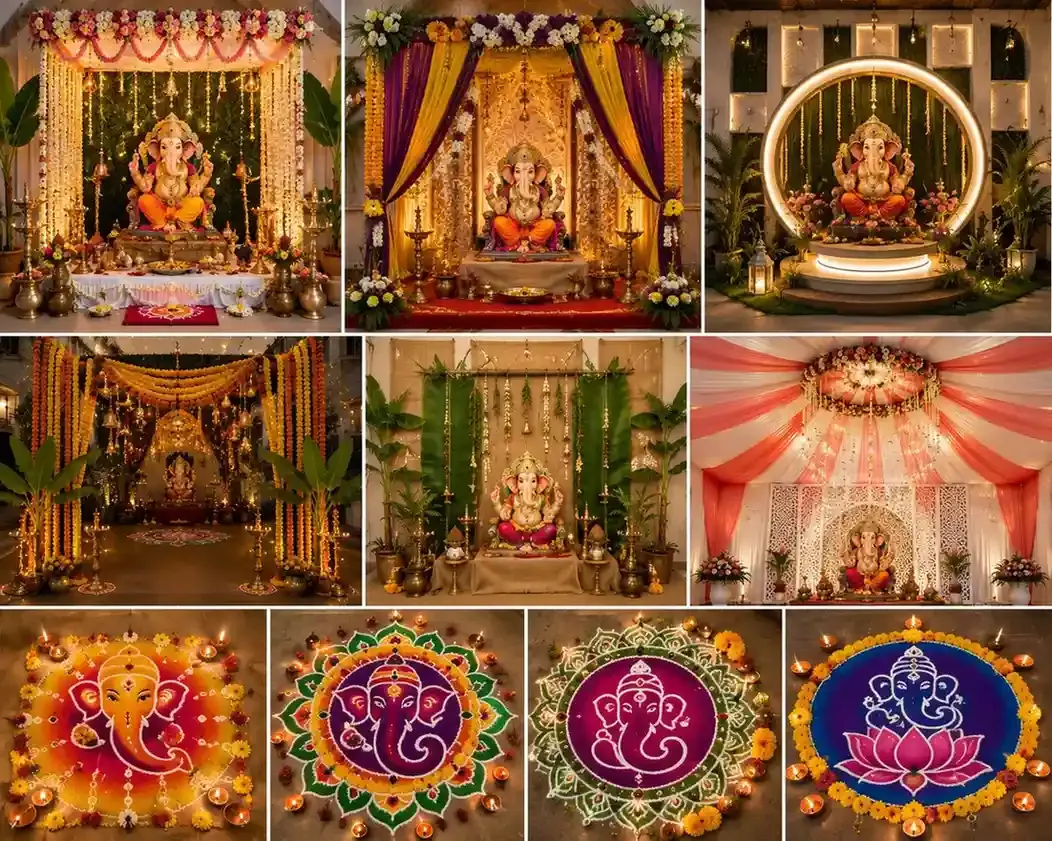
A 2026 guide to Ganesh Mandapam permissions in New Jersey — municipal special-event permits, NJ Uniform Fire Code tent rules and Uniform Construction Code permits, the "inherently beneficial use" zoning doctrine, and legal visarjan — for temporary Ganesh Chaturthi pandals and permanent temple halls across Edison, Robbinsville, Bridgewater and beyond.
Quick answer: A home Ganesh puja in New Jersey needs no permit. A temporary public pandal typically needs a municipal special-event permit, a fire permit for tents/membrane structures over 400 sq ft (NJ Uniform Fire Code), a Uniform Construction Code permit for larger structures, and liability insurance. Permanent temples follow the NJ Uniform Construction Code with zoning/site-plan approval, aided by the "inherently beneficial use" doctrine for houses of worship. Ganesh Chaturthi 2026 is Monday, 14 September.
New Jersey has one of the densest Indian and Hindu populations in the United States — Edison and Iselin’s Oak Tree Road, Jersey City, Woodbridge, Parsippany and beyond — and is home to the largest Hindu temple in the country, the BAPS Swaminarayan Akshardham in Robbinsville. Whether you are organising a temporary Ganesh Mandapam (pandal) for Ganesh Chaturthi or planning a permanent temple hall, this 2026 guide covers the permit landscape under New Jersey’s statewide codes.
Quick answer: Ganesh Chaturthi 2026 is Monday, 14 September (visarjan Friday 25 September). A private home puja needs no permit. A temporary public pandal typically needs a municipal special-event permit, a fire permit for tents/membrane structures over 400 sq ft (NJ Uniform Fire Code) and a Uniform Construction Code permit for larger temporary structures, plus liability insurance. A permanent temple follows the NJ Uniform Construction Code with municipal land-use (zoning/site-plan) approval — eased by New Jersey’s treatment of houses of worship as an "inherently beneficial use." Always confirm exact thresholds with your municipal construction and fire officials (the AHJ).
What "Ganesh Mandapam" means in New Jersey
- Temporary mandapams / pandals — short-term tents, canopies, stages or platforms (usually 5–11 days) on private property, temple grounds, parking lots or community spaces.
- Permanent mandapams / temple halls — covered multi-purpose halls within a temple complex used for daily worship, pujas, cultural programmes and festivals.
New Jersey is unusual in having statewide uniform codes administered locally, which brings consistency across municipalities — though each town’s special-event and zoning processes still differ.
The legal framework in New Jersey
- NJ Uniform Construction Code (UCC, N.J.A.C. 5:23) — governs building and temporary-structure construction permits statewide, administered by each municipality’s construction official.
- NJ Uniform Fire Code (N.J.A.C. 5:70) — governs fire safety, including permits for tents and membrane structures, enforced by the local fire official.
- NJ Municipal Land Use Law (MLUL) — governs zoning and site-plan approval; New Jersey case law treats houses of worship as an "inherently beneficial use," which weighs strongly in favour of temple projects seeking variances.
- Federal RLUIPA — protects religious land use against discriminatory or unduly burdensome zoning.
Together, these make both festival setups and permanent temple construction achievable, with the "inherently beneficial use" doctrine giving New Jersey temples a meaningful advantage in zoning matters.
Permissions for a temporary Ganesh Mandapam (festival pandal)
1. Municipal special-event permit
Larger public gatherings, use of public property or streets, amplified sound, or food/merchandise sales generally require a special-event permit from the municipality (e.g., Edison, Woodbridge, Jersey City, Parsippany). Apply typically 30–60 days ahead; requirements and thresholds vary by town, so contact the municipal clerk or special-events office early. Private, on-temple-grounds events are simpler than street or park events.
2. Tent / temporary structure permits (UCC + Fire Code)
- Under the NJ Uniform Fire Code, tents and membrane structures over 400 sq ft generally require a fire permit; confirm the exact size threshold and any exceptions (open-sided tents) with your local fire official.
- Larger temporary structures typically require a Uniform Construction Code permit from the municipal construction official, with a site plan, means of egress, occupant load and (for larger tents) structural documents prepared by a NJ-licensed architect or engineer.
- Flame-retardant certification for the fabric, fire extinguishers, clear exits and minimum separations from buildings and property lines are standard requirements.
3. Fire, police, sound & health
- A fire-official inspection before the event opens; no cooking under the tent without additional approvals.
- Amplified music or dhol-tasha may need a municipal noise/sound permit; processions or visarjan trips require street-use/parade permits and possible police coordination.
- Serving prasadam to the public may require a temporary retail food establishment permit from the local health department; provide portable toilets and a trash/recycling plan for larger gatherings.
4. Insurance
Municipalities and private venues almost always require general-liability insurance (commonly $1 million per occurrence) naming the town/venue as additional insured. Practical tip: begin 45–90 days before Ganesh Chaturthi, form an organising committee with a single permit applicant, and hold pre-application conversations with the construction and fire officials for larger setups.
Permissions for a permanent Ganesh Mandapam or temple
- Zoning & site-plan review — houses of worship are permitted in many zones; where a use or bulk variance is needed, New Jersey’s "inherently beneficial use" doctrine strongly supports the application before the municipal planning or zoning board. Site-plan approval covers parking, drainage, landscaping and buffers.
- Architectural & engineering design — plans by NJ-licensed professionals must meet the Uniform Construction Code (building, structural, electrical, mechanical, plumbing, fire protection) and accessibility (barrier-free) subcode.
- UCC construction permit — filed with the municipal construction official; plan review covers all subcodes.
- Fire subcode & life-safety review — exits, fire suppression and assembly-occupancy classification.
- Inspections & Certificate of Occupancy — pass all required inspections before opening for public worship.
Timeline: from land acquisition to opening commonly takes 2–4 years or more, depending on zoning-board hearings, fundraising and design complexity. Shikhara (spire) height and parking are the most common variance issues — the inherently-beneficial-use analysis helps here.
City & county considerations across New Jersey
- Edison & Middlesex County (Iselin/Oak Tree Road, Woodbridge) — one of the largest Indian communities in the US; active temples and generally experienced municipal offices.
- Robbinsville (Mercer County) — home to the BAPS Swaminarayan Akshardham, the largest Hindu temple in the US, which hosts major festival programmes.
- Bridgewater (Somerset County) — the Sri Venkateswara Temple is a major regional festival destination.
- Jersey City & Hudson County — dense urban context; street/park events need earlier coordination.
- Parsippany, Franklin, Monroe and other townships — growing communities with active temple projects.
Ganesh Visarjan in New Jersey
Immersion in the ocean, rivers, lakes, bays or reservoirs is regulated under the federal Clean Water Act and by the NJ Department of Environmental Protection (NJDEP), and should be assumed restricted without authorization. The standard, recommended practice is a home immersion in a tub or bucket with a small natural clay murti (clay water to the garden), or a temple-organised immersion tank — several NJ temples arrange these during the festival. Remove all non-biodegradable decorations first, and never use storm drains. Contact your temple early for its 2026 visarjan arrangement.
Best practices
- Start early, document every application and approval, and engage NJ-licensed professionals for larger structures.
- Prefer eco-friendly clay idols; prepare clean-up and traffic/parking plans; keep amplified sound moderate and neighbourly.
- Lean on the "inherently beneficial use" doctrine and RLUIPA where zoning obstacles arise, ideally with a New Jersey land-use attorney.
- Coordinate with established temples and community organisations for shared experience and, where possible, group visarjan.
Obtaining Ganesh Mandapam permission in New Jersey is very achievable: the statewide uniform codes bring predictability, and the state’s favourable treatment of houses of worship helps both festival setups and permanent temples. Start early, respect the fire and construction thresholds, and confirm current forms, fees and contacts with your municipal construction official, fire official, clerk and health department, and with the AHJ for your town. May Vighnaharta remove every obstacle. Ganpati Bappa Morya.
This guide is general information, not legal advice. Requirements vary by municipality and change over time — always verify with the relevant officials before finalising plans.
Frequently Asked Questions
Do I need a permit for a home Ganesh Chaturthi puja in New Jersey?
No — a private religious observance in your home needs no permit. Mind HOA/condo rules, open-flame limits (use LED diyas), parking and noise ordinances.
What permits do I need for a public Ganesh pandal in New Jersey?
Typically a municipal special-event permit, a fire permit for tents/membrane structures over 400 sq ft under the NJ Uniform Fire Code, a Uniform Construction Code permit for larger temporary structures, a temporary food permit if serving prasadam, and general-liability insurance. Confirm exact thresholds with your municipal construction and fire officials.
What is the "inherently beneficial use" doctrine?
Under New Jersey land-use law, houses of worship are treated as an "inherently beneficial use," which weighs strongly in favour of temple projects when a zoning variance is needed — a meaningful advantage for permanent construction.
Where can I do Ganesh visarjan legally in New Jersey?
Assume ocean/river/lake immersion is restricted under the Clean Water Act and NJDEP rules. Use a home immersion in a tub with a small natural clay murti, or a temple-organised immersion tank; several NJ temples arrange these. Contact your temple early.
How long does permanent temple construction take in New Jersey?
From land acquisition to a Certificate of Occupancy commonly takes 2–4 years or more, depending on zoning-board hearings, fundraising and design; shikhara height and parking are the most common variance issues.
When is Ganesh Chaturthi 2026?
Monday, 14 September 2026, with visarjan on Friday, 25 September. Begin permit applications 45–90 days ahead.
Ganesh Mandapam permits & visarjan across the USA
- Ganesh mandapam design in the USA (ideas + permits)
- Ganesh Mandapam permission in Texas 2026
- Ganesh Mandapam permission in New York 2026
- Ganesh Mandapam permission in California 2026
- Ganesh Visarjan in California 2026: immersion rules
- Ganesh Chaturthi 2026 in the USA
- Vinayaka Chavithi / Ganesh Chaturthi 2026: complete guide
You might also like
Ganesh Mandapam Permission for New York 2026: Temporary Pavilions, Festival Permits & Permanent Temple Construction
Ganesh Mandapam Permission for Illinois 2026: Temporary Pavilions, Festival Permits & Permanent Temple Construction
Ganesh Mandapam Permission for California 2026: Temporary Pavilions, Festival Permits & Permanent Temple Construction