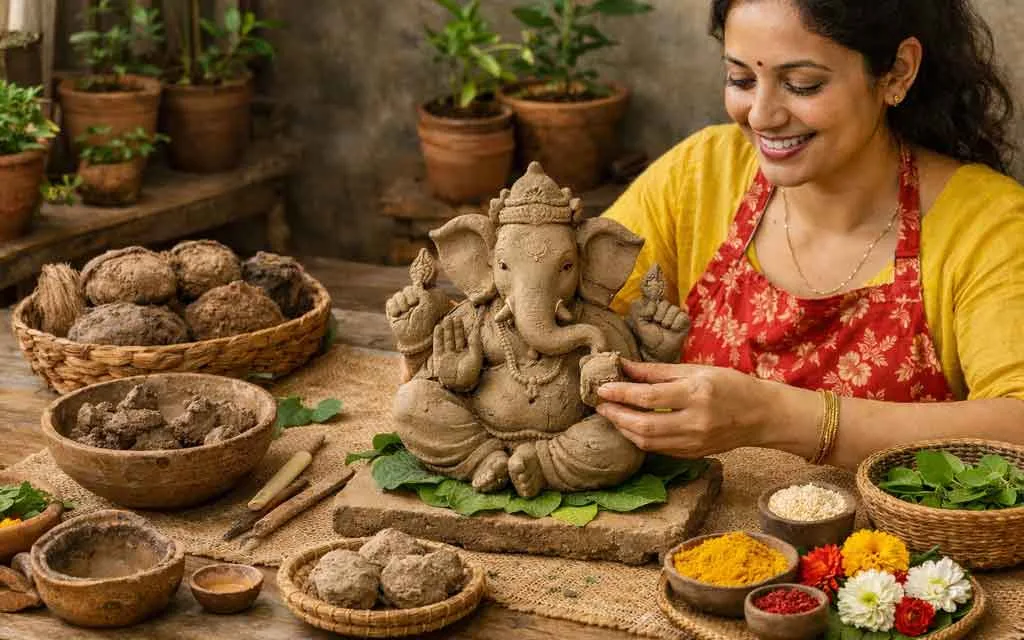
Vinayaka Chavithi 2026 Complete Date, Muhurat & Rituals Guide
Vinayaka Chavithi 2026: Complete Date, Muhurat, Rituals & Full Story | HinduTone HinduTone › Hindu Festivals › Vinayaka Chavithi 2026 🐘 Hindu Festivals ·…
Vinayaka Chavithi 2026: Complete Date, Muhurat, Rituals & Full Story | HinduTone HinduTone › Hindu Festivals › Vinayaka Chavithi 2026 🐘 Hindu Festivals ·…
Vinayaka Chavithi 2026: Complete Date, Muhurat, Rituals & Full Story | HinduTone HinduTone › Hindu Festivals › Vinayaka Chavithi 2026 🐘 Hindu Festivals · Andhra Pradesh · Telangana Vinayaka Chavithi 2026
Complete Date, Muhurat & Rituals Guide 📅 Monday, September 14, 2026 · Bhadrapada Shukla Chaturthi The complete story of Lord Ganesha's birth, exact puja muhurat, 10-day festival schedule, Vrat Katha, prasad recipes, and grand Visarjan on September 25. 📝 April 9, 2026 ✍️ HinduTone Editorial ⏱️ 14 min read 🙏 Ganpati Bappa Morya!
Festival Date Sep 14, 2026
|
Puja Muhurat 11:02 AM – 1:31 PM
|
Tithi Begins 7:06 AM, Sep 14
|
Avoid Moon 9:01 AM – 8:09 PM
|
Ganesh Visarjan Sep 25, 2026
📋 Contents When is Vinayaka Chavithi 2026? Puja Muhurat & Timings Significance of the Festival The Story of Lord Ganesha's Birth 108 Names & Key Names of Ganesha 10-Day Festival Schedule Step-by-Step Puja Vidhi Key Mantras & Slokas Moon Warning (Chandra Darshan) Special Prasad & Neivedhyam Celebrations in AP & Telangana Ganesh Visarjan 2026 Vrat Katha — The Full Story Frequently Asked Questions
वक्रतुण्ड महाकाय सूर्यकोटि समप्रभ।
निर्विघ्नं कुरु मे देव सर्वकार्येषु सर्वदा।। Vakratunda Mahakaya, Surya Koti Sama Prabha.
Nirvighnam Kuru Me Deva, Sarva Karyeshu Sarvada. "O Lord of curved trunk, massive body, radiant as ten million suns — bless me so that I face no obstacles in all my endeavours, always."
Every year, as the Bhadrapada month arrives in the Hindu calendar, hearts across Andhra Pradesh, Telangana, Maharashtra, Karnataka, and Tamil Nadu fill with a singular joy — Vighnaharta is coming home. Vinayaka Chavithi 2026, falling on Monday, September 14, marks the divine birthday of Lord Ganesha, the beloved elephant-headed son of Lord Shiva and Goddess Parvati.
In Telugu-speaking homes, this is not merely a festival — it is the annual return of the family's most cherished deity. Households erupt in colour, the fragrance of fresh marigolds fills every street, the sound of "Ganpati Bappa Morya!" echoes from every lane, and the grand clay idol of Lord Vinayaka takes his place in lovingly decorated mandaps for a joyful ten-day stay.
This is the complete 2026 guide — every muhurat, every ritual, the full story of Ganesha's birth, the Vrat Katha, prasad traditions, Hyderabad celebrations, and the grand Visarjan on September 25. Jai Ganesh! 🙏
When Is Vinayaka Chavithi in 2026?
Vinayaka Chavithi 2026 is on Monday, September 14, 2026.
Ganesh Chaturthi is observed on the Shukla Paksha Chaturthi (fourth day of the waxing moon) of the Bhadrapada month in the Hindu calendar. In 2026, this sacred tithi falls on September 14.
Festival Date
Monday, September 14
Primary day of celebration
⭐ Most Auspicious
Madhyahna Muhurat
11:02 AM – 1:31 PM
Ideal for Ganesh Sthapana & puja
Chaturthi Tithi Begins
7:06 AM, Sep 14
Idol may be brought home from this time
Chaturthi Tithi Ends
7:44 AM, Sep 15
Next day morning
⚠️ Avoid Moon Sighting
9:01 AM – 8:09 PM
On September 14, 2026
Ganesh Visarjan
Friday, Sep 25
Anant Chaturdashi — grand Nimmajjanam
Note: All timings are in IST. Exact muhurat shifts by a few minutes based on your city's sunrise. Residents of Hyderabad, Vijayawada, Visakhapatnam, and other AP/Telangana cities should verify precise local timings with a reliable panchang.
Why Is Vinayaka Chavithi Celebrated? The Significance
Vinayaka Chavithi is the celebration of the divine birth of Lord Ganesha — but its meaning runs far deeper than a birthday observance. Ganesha is the deity who stands at every threshold of life. No Hindu ritual — from a wedding to a business launch, from starting a new home to beginning a new chapter of learning — is begun without first invoking Ganesha's blessings.
He is worshipped as:
VighnahartaRemover of all obstacles
Pratham PujyaFirst among all deities
Buddhi PradaataBestower of wisdom
VighneshwaraLord who controls obstacles
Riddhi-Siddhi DataGiver of prosperity & success
EkadantaThe one-tusked deity
GanapatiLord of all Ganas (celestial beings)
LambodaraThe large-bellied one (universe contained within)
The 10-day festival symbolises the journey of Lord Ganesha from his heavenly abode to Earth — and His return. It is a time when the boundaries between the divine and the human dissolve. Ganesha does not merely visit the temple; He comes home. He sits in the family mandap, is fed modaks and kudumu, is serenaded with bhajans, and departs ten days later in a farewell procession of colour, music, and devotion.
The Story of Lord Ganesha's Birth — The Full Puranic Account
The divine story of how Lord Ganesha came to be is one of the most beloved narratives in all of Hindu tradition. It is told across the Shiva Purana, the Skanda Purana, and the Brahma Vaivarta Purana, with each text offering its own sacred variations. Here is the full account as told in the Shiva Purana, Rudra Samhita:
How Goddess Parvati Created Ganesha
One day, Goddess Parvati wished to bathe in private at her divine abode on Mount Kailash. Since none of Shiva's Ganas (attendants) could be trusted to guard her chamber — being loyal to Lord Shiva first — she decided to create her own guardian.
Parvati gathered the turmeric paste (ubtan) from her own body — the sacred paste she used to cleanse herself before her bath. With divine intention and a mother's love, she shaped this turmeric into the form of a young boy, breathed life into the figure, and opened his eyes. Thus Ganesha came into existence — born not of the womb, but of Parvati's own body and will.
She handed the boy a staff and instructed him: "You are my son. Guard this door. Let no one enter without my permission — no one at all."
The Fateful Confrontation with Lord Shiva
Shortly after, Lord Shiva returned home from his wanderings. His Ganas went ahead to announce him — but the young boy, steadfast in his duty, stopped everyone at the door. He had never seen Shiva before and knew only his mother's command.
When Shiva himself arrived, the boy barred his entry. Shiva, unaware this was Parvati's newly created son, identified himself as the Lord of Kailash. The boy replied that he had orders from his mother and would let no one through.
Shiva's Ganas and even the devas (gods) attempted to subdue the boy by force, but he defeated them all — for Parvati's divine power flowed through him. An enraged Lord Shiva himself took up his trident. In the fierce battle that followed, Shiva severed the boy's head with his Trishul.
Parvati's Grief — and Ganesha's Divine Restoration
When Goddess Parvati emerged and saw what had happened to her son, her grief was boundless. Her sorrow transformed into fierce rage — she began to take on the form of Adi Shakti, preparing to destroy the entire universe. The trembling gods and sages beseeched Lord Shiva to restore the boy to life.
Shiva relented. He sent his Ganas on a divine mission: "Travel north. The first creature you encounter that is sleeping with its head pointing north — bring me its head."
The Ganas found an elephant sleeping with its head to the north. They gently took the elephant's head and brought it back to Kailash. Lord Shiva placed the elephant head upon the boy's body, breathed divine life into him, and restored him fully.
Then Shiva made the most beautiful declaration in all of Hindu mythology: "This child shall be mine. He shall be called Ganapati — Lord of all my Ganas. He shall be Pratham Pujya — the first among all deities to be worshipped, in every ritual, in every home, in every heart, forever."
"Ganesha is not the god of beginnings because He was born first — He is the god of beginnings because He earned it, standing fearlessly at the threshold even against Lord Shiva himself."
— Interpretation from the Shiva Purana, Rudra Samhita
Why Does Ganesha Have One Broken Tusk?
Lord Ganesha's broken right tusk — one of His most distinctive features — has multiple Puranic explanations. The most popular account comes from the Brahma Vaivarta Purana: when Sage Vyasa wished to dictate the Mahabharata, he needed a scribe who could write without stopping. Ganesha agreed on one condition — that Vyasa would dictate without pause. To meet this pace, Ganesha needed a writing instrument that would never break. When his pen snapped, he broke off his own right tusk and used it to continue writing without losing a single verse of the great epic.
His broken tusk thus represents the supreme sacrifice of ego and personal comfort in service of knowledge and dharma — a symbol of total dedication.
Why Does Ganesha Ride a Mouse?
Ganesha's vahana (vehicle) is Mushaka, a small mouse — a creature that appears completely mismatched to the large, majestic deity it carries. But the symbolism is profound. The mouse represents the ego, desire, and the small cunning mind that gnaws endlessly at the granaries of our peace and clarity. Ganesha riding and controlling the mouse represents the enlightened consciousness that has mastered the ego — that sits serenely above all the small, gnawing anxieties of the mind.
The 12 Most Important Names of Lord Ganesha
During Vinayaka Chavithi puja, devotees recite the Dwadasha Nama Stotram — the twelve principal names of Lord Ganesha — as an offering of love and reverence:
Sanskrit Name Telugu Meaning SumukhaసుముఖOne with a beautiful, auspicious face EkadantaఏకదంతThe one-tusked god KapilaకపిలThe tawny one; golden-brown in complexion Gajakarnaగజకర్ణThe elephant-eared one LambodaraలంబోదరThe large-bellied one; the universe within VikataవికటThe fierce one who destroys evil Vighnanashakaవిఘ్ననాశకDestroyer of all obstacles VinayakaవినాయకThe supreme leader; one without a master Dhumraketuధూమ్రకేతుThe grey-coloured one; like smoke in colour Ganadhyakshaగణాధ్యక్షSuperintendent of all divine Ganas Bhalachandraభాలచంద్రOne who bears the crescent moon on his forehead GajananaగజాననThe elephant-faced one
Vinayaka Chavithi 2026 — Complete 10-Day Festival Schedule
The Ganeshotsav lasts for 10 auspicious days, from Chaturthi (Day 1) through Anant Chaturdashi (Day 10/Visarjan). Here is the complete 2026 calendar:
DayDate (2026)Day of WeekSignificance Day 1 ⭐September 14MondayVinayaka Chavithi — Ganesh Sthapana, Prana Pratishtha, Shodashopachara Puja Day 2September 15TuesdayMorning and evening puja with aarti; community bhajans begin Day 3September 16WednesdayCultural programs; pandal visiting begins in cities Day 4September 17ThursdayCommunity puja events; devotional music and harikatha Day 5September 18FridayMid-festival celebrations; special neivedhyam offerings Day 6September 19SaturdayAarti, devotional programs; large public pandal gatherings Day 7September 20SundayPeak community celebrations; major processions in cities Day 8September 21MondayOfferings and prasad distribution; early Visarjan for some families Day 9September 22TuesdayPreparations for grand Visarjan; farewell aartis Day 10September 23WednesdayOptional early Visarjan day Day 11 — Anant Chaturdashi ⭐September 25FridayGrand Ganesh Visarjan / Ganapati Nimmajjanam — festival conclusion
Visarjan may be performed after 1.5 days, 3 days, 5 days, 7 days, or the full 10 days depending on family tradition. The grand Anant Chaturdashi Visarjan on September 25 is the most celebrated.
Vinayaka Chavithi Puja Vidhi — Complete Step-by-Step Guide
The traditional puja for Vinayaka Chavithi follows the Shodashopachara format — sixteen sacred acts of offering and worship. Here is the complete vidhi for 2026:
Before the Puja — Preparation
Clean the house thoroughly on the day before (Tritiya). Decorate the entrance with fresh mango leaf (thoranam) strings and draw a kolam/rangoli at the main door. Set up the puja mandap with a clean red cloth on a raised wooden platform. Arrange fresh flowers, marigold garlands, a deepam (lamp), incense, and fresh fruit.
The 16 Steps of Shodashopachara Puja
1
Avahana — Invocation
Invoke Lord Ganesha's divine presence with folded hands (Avahan Mudra — thumbs folded inward). Ask him to enter the idol and accept your worship.
Om Ganapataaye Namah, Avahanam Samarpayami 🙏
2
Asana — Offering a Sacred Seat
Place 5 betel leaves near the idol's feet along with supari (areca nut), turmeric, and kumkum as the divine seat.
3
Padya & Arghya — Washing the Feet and Hands
Pour a small stream of water symbolically near the idol's feet (Padya) and hands (Arghya) — welcoming the guest as an honoured visitor.
4
Snanam — The Sacred Bath (Panchamrita Abhishekam)
Bathe the idol with the Panchamrita — five sacred substances: milk (ksheera), curd (dadhi), honey (madhu), ghee (ghrita), and sugar (sharkara). Each is poured gently over the idol while chanting. Finally, wash with clean water.
Om Shri Ganeshaya Namah, Panchamritaabhishekam Samarpayami
5
Vastra — Offering Sacred Cloth
Offer new yellow or red cloth, or a sacred thread, to Lord Ganesha. This represents dressing the deity with respect and care.
6
Yagnopavita — The Sacred Thread
Offer a new sacred jandhyam (yagnopavita / sacred thread) to Lord Ganesha — the symbol of his Brahmacharya and Brahmanya.
7
Gandha — Sandalwood Paste & Kumkum
Apply sandalwood paste (chandanam) and kumkum to the idol's forehead and body. The cool fragrance of sandalwood is considered specially pleasing to Lord Ganesha.
8
Pushpa — Offering 21 Types of Flowers & Durva Grass
Offer fresh flowers — red hibiscus (japa), marigolds, and roses are favourites. The single most important offering is 21 blades of Durva grass (garika/arugampul), tied in groups of three. Durva is Ganesha's most beloved patri and no other offering replaces it.
Each blade offered with a different name: Om Ganapataaye Namah, Om Ekadantaya Namah, Om Lambodara Namah...
9
Dhupa — Incense (Agarbatti)
Light agarbatti (incense sticks) and circle them clockwise before the idol three times. The rising smoke represents prayer ascending to the divine.
10
Deepa — Lighting the Sacred Lamp
Light a ghee lamp (deepam) and circle it clockwise before the idol. In Andhra and Telangana homes, the deepam remains lit throughout the 10 days.
11
Naivedya — The Sacred Food Offering
Offer 21 Modaks (kudumu in Telugu), fresh coconut, panakam, vadapappu, chalividi, fruits, and jaggery. Place the offering before the idol and recite the naivedyam mantra. Do not taste any prasad before this offering is complete.
Om Ganapataaye Namah, Naivedyam Samarpayami
12
Tambula — Betel Leaves and Areca Nut
Offer pan-supari (betel leaves with areca nut) as a sign of hospitality — just as an honoured guest is offered tambula after a meal.
13
Dakshina — Symbolic Offering
Offer a symbolic dakshina (monetary offering) — a coin or currency note placed near the idol's feet with reverence.
14
Aarti — The Waving of the Sacred Flame
The most joyful moment of the puja. Wave the camphor flame (karpoora aarti) clockwise before Lord Ganesha while the whole family sings the Ganesha Aarti. In Telugu homes: "Jai Ganesh, Jai Ganesh, Jai Ganesh Deva..."
15
Pradakshina & Namaskara — Circumambulation and Prostration
Circumambulate the idol three times clockwise (pradakshina), then prostrate fully before Lord Ganesha (sashtanga namaskara).
16
Prasad Distribution
Distribute the blessed prasad — modak, coconut, fruits — to all family members. The puja is complete.
Key Mantras & Slokas for Vinayaka Chavithi
ॐ गं गणपतये नमः Om Gam Ganapataye Namah The Ganesha Panchakshari — five-syllable mantra. Chant 108 times with a japa mala for maximum blessings.
गजाननं भूतगणादिसेवितं
कपित्थजम्बूफलचारुभक्षणम्।
उमासुतं शोकविनाशकारकं
नमामि विघ्नेश्वरपादपङ्कजम्।। Gajananam Bhuta Ganadisevitam, Kapittha Jambu Phalacharu Bhakshanam.
Umasutam Shoka Vinashakarakam, Namami Vigneshvara Pada Pankajam. "I bow to the lotus feet of Vighneshvara — the elephant-faced one served by the Bhutas and Ganas, who delights in kapittha and jambu fruits, the son of Uma, the destroyer of sorrow."
ॐ एकदन्ताय विद्महे
वक्रतुण्डाय धीमहि।
तन्नो दंती प्रचोदयात्।। Om Ekadantaya Vidmahe, Vakratundaya Dhimahi. Tanno Danti Prachodayat. The Ganapati Gayatri Mantra — recited for wisdom, focus, and removal of obstacles.
The Ganapati Atharvashirsha — a complete Upanishad dedicated to Lord Ganesha — should ideally be recited at least once during the ten days of Ganeshotsav. It declares Ganesha as Brahman itself — the ultimate reality — and its recitation is considered equal to circumambulating the earth 1,000 times.
⚠️ Moon Warning: Do Not Look at the Moon on Vinayaka Chavithi
Chandra Darshan Warning for 2026
On Vinayaka Chavithi 2026, avoid looking at the moon between 9:01 AM and 8:09 PM on September 14, 2026. Sighting the moon on this day is believed to bring the Chandra Dosha — a curse of false accusation and misfortune.
The Story Behind the Moon Warning
According to the Bhagavata Purana, Lord Chandra (the moon god) once witnessed Lord Ganesha riding on his tiny mouse-vahana. Chandra laughed mockingly at the sight of the large-bellied, elephant-headed deity balanced on such a small creature. An insulted Ganesha cursed Chandra: "Anyone who sees you on Bhadrapada Shukla Chaturthi shall be falsely accused of a wrongdoing they never committed."
This curse manifested most famously when Lord Krishna accidentally saw the moon's reflection on this very day and was subsequently falsely accused by Satrajit of stealing the precious Syamantaka Mani gem — a gem that Krishna had never touched. After suffering this false accusation, Sage Narada advised Krishna to observe the Vinayaka Chavithi Vrat and read the story of Syamantaka Mani. Krishna did so and was ultimately exonerated.
If you accidentally see the moon on Vinayaka Chavithi 2026: Do not panic. Immediately recite the Syamantaka Mani story from the Bhagavata Purana, or chant "Om Gam Ganapataye Namah" 108 times. The effects of the accidental sighting are neutralised by this act of devotion.
Special Prasad & Neivedhyam Traditions
The offering of food to Lord Ganesha is not merely symbolic — in the Telugu tradition, the naivedyam for Vinayaka Chavithi is a full, lovingly prepared spread with dishes that have been passed down through generations.
🍚
Kudumu
కుడుముు
Telugu modak — most essential
🥤
Panakam
పానకం
Jaggery + cardamom + pepper drink
🌾
Vadapappu
వడపప్పు
Soaked chana dal with coconut
🍬
Chalividi
చలివిడి
Sweet rice flour preparation
🥥
Fresh Coconut
కొబ్బరి
Essential; symbol of purity
🍋
Nuvvula Undalu
నువ్వుల ఉండలు
Til-jaggery sesame balls
Kudumu Recipe (Telugu Modak) — Step by Step
Kudumu is the most sacred offering of Vinayaka Chavithi in Telugu homes — steamed rice flour dumplings filled with sweet coconut and jaggery, shaped into the form of a pot (handi). Making 21 kudumu and offering them to Lord Ganesha is considered the highest form of neivedhyam on this day.
Ingredients (for 21 kudumu): Rice flour (3 cups) · Water (3 cups) · Salt (a pinch) · Grated coconut (1.5 cups) · Jaggery — grated (1 cup) · Cardamom powder (½ tsp) · Ghee (1 tsp)
Method: Boil water with salt and ghee. Add rice flour in a stream, stir into a smooth, non-sticky dough. Cover and rest 10 minutes. Melt jaggery, mix in grated coconut, cardamom, and a pinch of salt for the filling. Shape dough into small cups, fill with coconut mixture, seal the top by pinching, and steam in an idli steamer for 12–15 minutes. Offer warm to Lord Ganesha as the first act of puja.
Vinayaka Chavithi Celebrations in Hyderabad, Andhra Pradesh & Telangana
While Vinayaka Chavithi is celebrated across India, the festival finds its most fervent expression in the Telugu states — a 10-day spectacle of devotion, culture, music, and community that has no parallel.
Famous Ganesha Pandals in Hyderabad
Khairatabad Ganesh
Home to one of the largest Ganesha idols in India — sometimes reaching 60 feet. Millions visit during the festival. The Visarjan procession stretches for kilometres.
Balapur Ganesh
Famous for the Balapur Ganesh Laddu Auction — the first prasad laddu is auctioned at record prices each year, with proceeds going to charity.
Dhoolpet Ganesh
Renowned for towering, elaborately crafted idols by master artisans. One of the most photographed pandals in Hyderabad.
Secunderabad Ganesh
Major community pandals near the Ujjaini Mahankali temple area, with elaborate decorations and round-the-clock bhajans.
Kanipakam Temple (AP)
Varasidhi Vinayaka Swamy Temple — celebrates annual brahmotsavams for 21 days from Chavithi, attracting pilgrims from across India.
Vijayawada & Vizag
Massive city-wide pandal networks with cultural programs, competitions, and grand Ganapati Nimmajjanam processions in the Krishna and other rivers.
The Grand Hyderabad Visarjan Procession
The Ganapati Nimmajjanam procession in Hyderabad is one of the most spectacular events in South India. On Anant Chaturdashi, idols from hundreds of pandals are carried in massive processions — on decorated trucks, chariots, and on the shoulders of devotees — through the streets of Hyderabad and Secunderabad before being immersed in Hussain Sagar lake. Lakhs of devotees line the streets for hours, chanting "Ganpati Bappa Morya! Pudhchya Varshi Lavkar Ya!" — a sight that moves even the most casual observer to tears of devotion.
Ganesh Visarjan 2026 — Ganapati Nimmajjanam
Ganesh Visarjan 2026 is on Friday, September 25, 2026 — Anant Chaturdashi.
On the last day of the festival, the Ganesha idol is immersed in a river, sea, lake, or water body — an act called Visarjan (Maharashtra) or Nimmajjanam (Telugu tradition). It symbolises Ganesha's return to his celestial abode, carrying with him all the burdens, sorrows, and obstacles of the household he has graced for ten days.
Visarjan Schedule — Choose Your Duration
1.5-day Sep 15 (Tue)
3-day Sep 17 (Thu)
5-day Sep 19 (Sat)
7-day Sep 21 (Mon)
10-day ⭐ Sep 25 (Fri) Anant Chaturdashi
The Uttarpuja — The Farewell Ritual
Before immersion, the family performs the Uttarpuja — a final, deeply emotional puja of farewell. Flowers are offered, the deepam is lit, and each family member does a personal namaskar. The head of the family sprinkles turmeric rice (akshat) on the idol and gently touches it — initiating the farewell journey. A bundle of rice and cereals is tied in a red cloth to accompany Lord Ganesha on his return voyage.
The entire family then carries the idol to the water body — or in the modern eco-friendly practice, to a large bucket at home — chanting "Ganpati Bappa Morya, Pudhchya Varshi Lavkar Ya!" — "Oh Bappa, come again soon next year!"
The Vinayaka Chavithi Vrat Katha — The Complete Story
Reading or listening to the Vrat Katha is an essential part of Vinayaka Chavithi puja. This is the story that gives the day its deepest meaning — and provides the remedy for anyone who accidentally sees the moon.
The Story of Lord Krishna and the Syamantaka Mani
Long ago, a nobleman named Satrajit, a devotee of the Sun god, received the Syamantaka Mani — a divine gem that could produce eight bhars of gold daily and protect its possessor from all calamity.
One day, Lord Krishna respectfully suggested that such a powerful gem might be safer in the care of King Ugrasena than in a private home. Satrajit refused and kept the gem. On an unfortunate Bhadrapada Shukla Chaturthi evening, Lord Krishna happened to see the moon's reflection in a vessel of water and was inadvertently subjected to the curse of Chandra Dosha.
Shortly after, Satrajit's brother Prasena took the gem to the forest. He was killed by a lion, which in turn was killed by Jambavanta — a great bear — who took the gem to his cave as a toy for his son Jambavati.
Meanwhile, the gem vanished and Satrajit, in grief and suspicion, publicly accused Lord Krishna of stealing and killing Prasena to take the gem. Krishna, the Lord of the Universe, now faced the humiliation of false accusation — the full effect of the Chandra Dosha curse.
Krishna tracked the gem to Jambavanta's cave. After a legendary 28-day battle (one of the most epic encounters in the Bhagavata Purana), Jambavanta recognised Krishna as Lord Rama and surrendered both the gem and his daughter Jambavati in marriage. Krishna returned the Syamantaka Mani publicly to Satrajit, fully clearing his name.
Sage Narada then revealed to Krishna that this entire ordeal was the result of the Chandra Dosha from accidentally seeing the moon. Narada advised him: "Observe the Vinayaka Chavithi Vrat. Read this story of the Syamantaka Mani. Lord Ganesha will remove all traces of false accusation from your life." Krishna did so and was completely freed.
Since then, the reading of this Vrat Katha on Vinayaka Chavithi is prescribed for all devotees — especially those who have accidentally seen the moon — as protection from false accusations and the removal of Chandra Dosha.
Frequently Asked Questions — Vinayaka Chavithi 2026
When is Vinayaka Chavithi in 2026? ›
Vinayaka Chavithi 2026 falls on Monday, September 14, 2026. The Chaturthi Tithi begins at 7:06 AM on September 14 and concludes at 7:44 AM on September 15, 2026. The 10-day festival ends with Ganesh Visarjan on Anant Chaturdashi — Friday, September 25, 2026.
What is the puja muhurat for Vinayaka Chavithi 2026? ›
The most auspicious Madhyahna (mid-day) Puja Muhurat is between 11:02 AM and 1:31 PM IST on September 14, 2026. This is the ideal window for Ganesh Sthapana (installation of the idol) and the full Shodashopachara puja. The idol may be brought home from 7:06 AM when the Chaturthi Tithi begins.
When is Ganesh Visarjan (Ganapati Nimmajjanam) in 2026? ›
The grand Ganesh Visarjan (Ganapati Nimmajjanam) 2026 falls on Friday, September 25, 2026, on the occasion of Anant Chaturdashi. Families may also choose earlier Visarjan on 1.5-day (Sep 15), 3-day (Sep 17), 5-day (Sep 19), or 7-day (Sep 21) options.
Why should we not look at the moon on Vinayaka Chavithi? ›
According to the Bhagavata Purana, when Lord Chandra (the moon) mocked Ganesha's appearance, Ganesha cursed him: anyone who sees the moon on Bhadrapada Shukla Chaturthi will be falsely accused of something they never did (Chandra Dosha). For 2026, avoid looking at the moon between 9:01 AM and 8:09 PM on September 14. If you accidentally see the moon, recite the Syamantaka Mani Vrat Katha or chant "Om Gam Ganapataye Namah" 108 times.
What is the story of Ganesha's birth? ›
According to the Shiva Purana, Goddess Parvati created Ganesha from the turmeric paste (ubtan) from her own body, breathed life into him, and asked him to guard her chamber. When Lord Shiva arrived and tried to enter, Ganesha — unaware this was his mother's husband — blocked him out of duty. Shiva severed Ganesha's head in anger. To console a distraught Parvati, Shiva sent his Ganas to bring the head of the first creature sleeping with its head to the north — an elephant. Shiva placed the elephant head on Ganesha and declared him Ganapati — Lord of all Ganas — and Pratham Pujya, the first deity to be worshipped in all rituals.
What is kudumu and why is it special? ›
Kudumu (కుడుముు) is the traditional Telugu version of modak — steamed rice flour dumplings filled with a sweet coconut-jaggery mixture, shaped into the form of a small pot. It is the most sacred neivedhyam for Vinayaka Chavithi in Andhra Pradesh and Telangana. Offering 21 kudumu to Lord Ganesha is considered the most auspicious act of the entire puja. The number 21 is significant in Ganesha worship — from 21 durva blades to 21 patri leaves to 21 modaks.
Is Vinayaka Chavithi a public holiday in Telangana and Andhra Pradesh? ›
Yes. Ganesh Chaturthi (Vinayaka Chavithi) is a bank holiday in Telangana, as it is among the seven states where the Reserve Bank of India observes it as a bank holiday. In Andhra Pradesh, it is observed as a regional festival holiday in most government offices, schools, and educational institutions.
How many days should I keep the Ganesh idol at home? ›
You may keep the Ganesha idol for 1.5 days, 3 days, 5 days, 7 days, or the full 10 days depending on your family's tradition and capacity for daily puja. Most Telugu households observe either a 3-day or 10-day Ganapati. The 10-day festival concluding on Anant Chaturdashi (September 25, 2026) is the most spiritually complete observance.
Share the blessings: WhatsApp Twitter Facebook Copy Link
Vinayaka Chavithi 2026 Ganesh Chaturthi Lord Ganesha Puja Muhurat 2026 Ganesh Visarjan 2026 Hyderabad Ganesh Andhra Pradesh Telangana Bhadrapada Hindu Festivals Vrat Katha Ganesha Birth Story
🪔
HinduTone Editorial
Dedicated to sharing the living wisdom of Hindu scriptures, festivals, and spiritual tradition — for the modern Hindu seeker. Rooted in authentic Vedic knowledge. Relevant for today's world.
Related Articles
DIY & Crafts How to Make Eco-Friendly Ganesha Idol at Home Rituals Complete Ganesh Chaturthi Puja Vidhi & Mantras Worship 21 Patri for Vinayaka Chavithi: Leaves, Names & Significance Prasad Recipes Kudumu Recipe: Authentic Telugu Modak for Ganesha Devotion Lord Ganesha 108 Names: Meaning & Significance Festival Calendar Hindu Festival Calendar 2026: All Important Dates
Explore More Hindu Wisdom on HinduTone
Festivals, scriptures, puja guides, mantras, and the living traditions of Sanatana Dharma — all in one place for the modern Hindu family.
All Festivals → Scriptures & Stories →
You might also like
Vinayaka Chavithi 2026: Date, Puja Muhurat, Timings, Rituals & Complete Guide for NRIs in USA

Ganesh Chaturthi 2026: Date, Rituals, Modak Offerings & Spiritual Blessings
Vinayaka Chavithi and the Moon: The Complete Story of Lord Ganesha's Curse