

Ganesh Mandapam Permission for New York 2026: Temporary Pavilions, Festival Permits & Permanent Temple Construction
A 2026 guide to Ganesh Mandapam permissions in New York — DOB temporary-structure and Temporary Place of Assembly permits, FDNY tent rules, SAPO street-event permits, and zoning variances — for temporary Ganesh Chaturthi pandals and permanent temple halls across NYC, Long Island, Westchester and upstate.
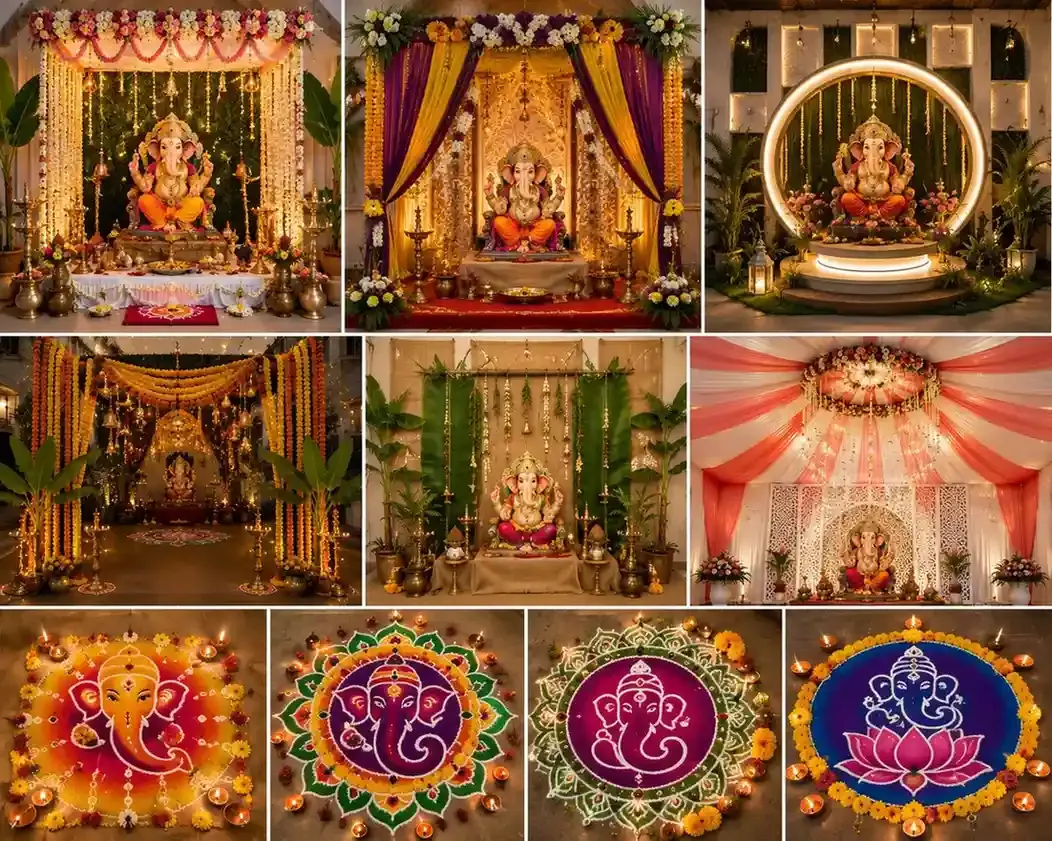
A 2026 guide to Ganesh Mandapam permissions in New York — DOB temporary-structure and Temporary Place of Assembly permits, FDNY tent rules, SAPO street-event permits, and zoning variances — for temporary Ganesh Chaturthi pandals and permanent temple halls across NYC, Long Island, Westchester and upstate.
Quick answer: A home Ganesh puja in New York needs no permit. In NYC a temporary public pandal typically needs a DOB temporary-structure/tent permit (tents ≥400 sq ft), a Temporary Place of Assembly certificate (75+ indoors / 200+ outdoors), an FDNY operational permit, and a SAPO permit for street use. Permanent temples follow the DOB building-permit process, often with a BSA variance. Ganesh Chaturthi 2026 is Monday, 14 September.
Planning a Ganesh Mandapam in New York — a temporary pavilion for Ganesh Chaturthi or a permanent hall within a Hindu temple — means navigating the NYC Department of Buildings (DOB), the Fire Department (FDNY), the Street Activity Permit Office (SAPO) and related agencies. New York has a large Hindu community, especially in Queens, Brooklyn, parts of Manhattan and the suburbs. This guide covers both temporary festival setups and permanent construction under 2026 rules.
Quick answer: Ganesh Chaturthi 2026 is Monday, 14 September (visarjan Friday 25 September). A home puja needs no permit. In NYC a temporary public pandal typically needs a DOB temporary-structure/tent permit (tents ≥400 sq ft), a Temporary Place of Assembly (TPA) certificate (75+ indoors / 200+ outdoors), an FDNY operational permit, and — for street use — a SAPO permit. Outside the five boroughs, rules are simpler under NYS codes. Always confirm with the Authority Having Jurisdiction (AHJ).
What "Ganesh Mandapam" means in New York
- Temporary mandapams / pandals — short-term tents, stages or platforms (usually 5–11 days) on private property, temple grounds, parking lots, parks or streets.
- Permanent mandapams / temple halls — covered multi-purpose halls within a temple complex for daily worship, pujas, cultural programmes and festivals.
NYC’s dense urban environment and strict safety codes make compliance essential. Outside the five boroughs (Long Island, Westchester, upstate), rules follow local town/county ordinances plus New York State codes, which are generally less complex than NYC’s multi-agency system.
The legal framework in New York
New York protects religious exercise under the First Amendment and state law. Houses of worship (Use Group III in the NYC Zoning Resolution) are permitted in many residential and commercial districts, often "as-of-right." However, bulk regulations (floor-area ratio, yards, height, parking) frequently require a variance from the Board of Standards and Appeals (BSA) for temple projects. The agencies involved:
- Department of Buildings (DOB) — temporary structures, Temporary Place of Assembly (TPA), building permits.
- Fire Department (FDNY) — fire safety, tents and membrane structures, operational permits.
- Street Activity Permit Office (SAPO) / Citywide Event Coordination and Management (CECM) — street and sidewalk events.
- NYC Parks — events in parks.
- Department of Health and Mental Hygiene (DOHMH) — temporary food service.
- NYPD — sound-amplification permits.
Permissions for a temporary Ganesh Mandapam (festival pandal)
1. Temporary Structure / Tent Permit (DOB)
- Under the 2022 NYC Building Code (§3103) and Admin Code §28-111, a permit is required for temporary tents of 400 gross sq ft or larger, or platforms/stages of 120 sq ft or larger.
- Smaller tents (<400 sq ft) used for ≤30 days generally do not require a DOB permit.
- Permits run to a maximum of 90 days (extensions possible for cause).
- Application requires construction documents by a NYS-licensed Registered Design Professional (architect/engineer) — site plan, means of egress, occupant load. Submit via DOB NOW or TempUse@buildings.nyc.gov; allow 15–20 business days.
2. Temporary Place of Assembly (TPA) Certificate of Operation
- Required when 75+ people gather indoors, or 200+ outdoors, for religious/social/educational purposes or to consume food/drink, and the event lasts under 30 days.
- Apply at least 10 business days ahead (late applications incur extra fees); fee typically $250 + $100 per late day.
- FDNY must be notified; an inspection is usually required. Associated temporary structures often need a separate Work Permit (Alteration Type-2).
3. FDNY operational permit for tents & membrane structures
NYS and NYC Fire Codes require an operating permit for air-supported temporary membrane structures, special-event structures, or tents exceeding 400 sq ft (limited exceptions for open-sided tents under 700 sq ft with proper clearances). Flame-retardant certification, fire extinguishers, clear exits and 12–20-foot separations from other structures are standard.
4. Street Activity / Religious Event Permit (SAPO)
- If the mandapam or procession uses streets or sidewalks, a SAPO permit is required (religious event / mobile unit categories); apply generally 60 days ahead.
- Often limited to one day and one block; no fundraising or sales without additional permits.
- Amplified sound requires a separate NYPD Sound Permit from the local precinct.
5. Parks, food & insurance
- Events in NYC Parks need a Parks special-event permit (apply ≥21 days ahead via the Parks portal).
- A DOHMH Temporary Food Service Establishment permit (~$70) is required to prepare/serve prasadam at events of 14 days or less.
- General-liability insurance is almost always required; accessibility compliance and clean-up/sanitation plans apply for larger events.
Practical timeline: begin 60–90 days before Ganesh Chaturthi, form an organising committee with a single point of contact, and schedule pre-application meetings with DOB and FDNY for larger structures.
Permissions for a permanent Ganesh Mandapam or temple
- Zoning analysis — houses of worship fall under Use Group III (Community Facilities); check the Zoning Resolution for the district. Many projects need a BSA variance for FAR, yards, height or parking because temple designs often exceed "as-of-right" bulk limits.
- Environmental review — discretionary actions (variances, special permits) trigger City Environmental Quality Review (CEQR).
- Architectural & engineering design — engage licensed professionals versed in NYC Construction Codes, accessibility and fire protection.
- DOB building permit — file via DOB NOW (New Building or Alteration) with structural, mechanical, electrical, plumbing and fire-protection plans, reviewed for Zoning Resolution and Building Code compliance.
- FDNY review — fire-safety systems, exits and assembly-occupancy classifications need separate approval.
- Construction, inspections & Certificate of Occupancy — obtain the work permit, build with required inspections, and secure the final Certificate of Occupancy (and Place of Assembly Certificate of Operation if applicable).
Timeline: from site acquisition to opening commonly takes 2–5 years or more, depending on fundraising, variance hearings and design complexity. Landmarked districts or environmentally sensitive sites add further reviews.
Outside New York City (Long Island, Westchester, upstate)
Rules are simpler and handled by local building departments and fire marshals. The New York State Fire Code still requires operating permits for tents over 400 sq ft, and zoning for houses of worship is generally favourable, though special permits or variances may still be needed. Contact the specific town or village building department early.
Best practices & common challenges
- Start early and document every interaction; hire professionals experienced with NYC temporary-structure and assembly permits; prioritise safety, accessibility and neighbour relations; use eco-friendly materials and clear clean-up plans.
- Dense urban constraints — choose private property or temple grounds where possible to reduce street-permit complexity.
- Strict size thresholds — keep tents under 400 sq ft or platforms under 120 sq ft when feasible to avoid DOB filing.
- Variance needs — strong documentation of religious necessity and unique site conditions strengthens BSA applications.
- Multi-agency coordination — use the CECM Comprehensive Event Permitting Guide and schedule joint pre-application meetings.
Obtaining Ganesh Mandapam permission in New York is rigorous but entirely achievable with proper planning and professional support. Temporary setups can be approved efficiently when size and attendance thresholds are respected; permanent temple projects benefit from the legal recognition of houses of worship, though bulk regulations often require discretionary approvals. Confirm current forms, fees and contacts directly with DOB (DOB NOW), FDNY, SAPO/CECM, NYC Parks and DOHMH, and with the AHJ for your location. May Vighnaharta bless every step of your journey. Ganpati Bappa Morya.
This guide is general information, not legal advice. Requirements vary by borough/locality and change over time — always verify with the relevant agencies before finalising plans.
Frequently Asked Questions
Do I need a permit for a home Ganesh Chaturthi puja in New York?
No — a private religious observance in your home needs no permit. Mind building/co-op rules, open-flame limits (use LED diyas), and noise.
What permits do I need for a public Ganesh pandal in NYC?
Typically a DOB temporary-structure/tent permit (tents ≥400 sq ft or platforms ≥120 sq ft), a Temporary Place of Assembly certificate (75+ indoors / 200+ outdoors), an FDNY operational permit, and a SAPO permit if using streets/sidewalks. A DOHMH temporary food permit is needed to serve prasadam.
What is a Temporary Place of Assembly (TPA)?
A DOB certificate required when 75+ people gather indoors or 200+ outdoors for under 30 days. Apply at least 10 business days ahead; FDNY notification and inspection are usually required.
Do I need a permit for a small tent?
Tents under 400 sq ft used for 30 days or less generally do not require a DOB permit, but the NYS/NYC Fire Code and any street/park use may still apply.
How long does permanent temple construction take in New York?
From site acquisition to a Certificate of Occupancy commonly takes 2–5 years or more, especially where a BSA variance or environmental review (CEQR) is needed.
When is Ganesh Chaturthi 2026?
Monday, 14 September 2026, with visarjan on Friday, 25 September. Begin NYC permit applications 60–90 days ahead.
Ganesh Mandapam permits & visarjan across the USA
- Ganesh mandapam design in the USA (ideas + permits)
- Ganesh Mandapam permission in Texas 2026
- Ganesh Mandapam permission in California 2026
- Ganesh Visarjan in California 2026: immersion rules
- Ganesh Chaturthi 2026 in the USA
- Vinayaka Chavithi / Ganesh Chaturthi 2026: complete guide
Ganesh Mandapam permission: New Jersey
You might also like
Ganesh Mandapam Permission for New Jersey 2026: Temporary Pavilions, Festival Permits & Permanent Temple Construction
Ganesh Mandapam Permission for Illinois 2026: Temporary Pavilions, Festival Permits & Permanent Temple Construction
Ganesh Mandapam Permission for California 2026: Temporary Pavilions, Festival Permits & Permanent Temple Construction