

Ganesh Visarjan in California 2026: Immersion Rules, Legal Eco-Friendly Options & Temple Tanks
Ganesh Visarjan in California 2026 — direct immersion in the ocean, beaches, lakes and rivers is generally prohibited under the Clean Water Act, California Coastal Act and CEQA. The legal, eco-friendly options: temple-managed immersion tanks (Chino Hills, Malibu, Livermore, Fremont) and home immersion with a clay murti.
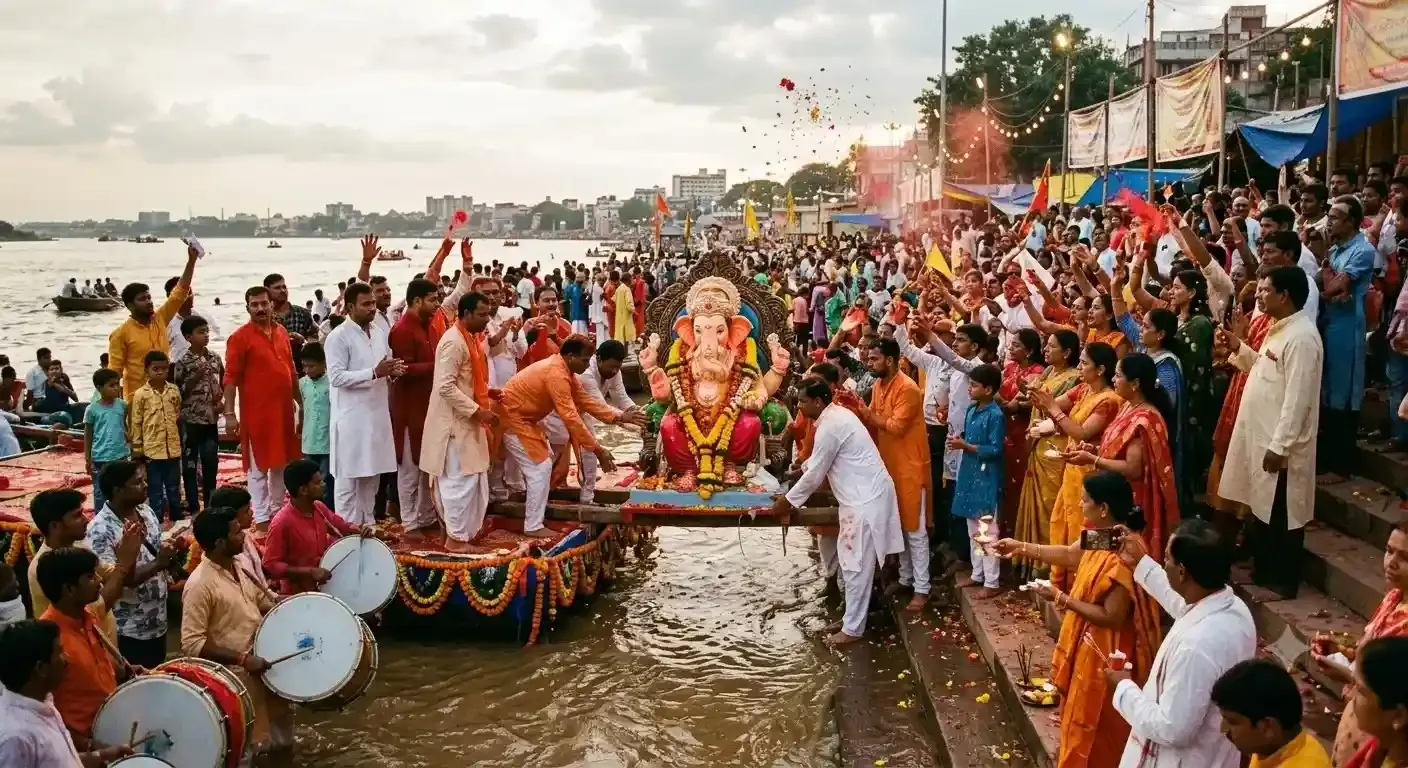
Ganesh Visarjan in California 2026 — direct immersion in the ocean, beaches, lakes and rivers is generally prohibited under the Clean Water Act, California Coastal Act and CEQA. The legal, eco-friendly options: temple-managed immersion tanks (Chino Hills, Malibu, Livermore, Fremont) and home immersion with a clay murti.
Quick answer: In California, immersing Ganesh idols in the ocean, beaches, lakes, rivers, reservoirs or storm drains is generally prohibited under the Clean Water Act, California Coastal Act and CEQA, with fines from ~$1,000 to $50,000+. The legal, eco-friendly options are temple-managed immersion tanks or home immersion in a bucket with a small clay murti. Ganesh Chaturthi 2026 is Monday, 14 September; visarjan is Friday, 25 September.
California has some of the strictest environmental-protection laws in the United States, which make traditional immersion of Ganesh idols in natural water bodies (oceans, beaches, rivers, lakes or bays) generally prohibited without special permits — and such permits are rarely granted for religious immersions. Enforcement is active, and violations can carry significant fines.
Quick answer: In California, do not immerse any idol in the ocean, beaches, lakes, rivers, reservoirs or storm drains. Use a temple-managed immersion tank, or a home immersion in a bucket/tub with a small natural clay murti (clay water to your garden). Ganesh Chaturthi 2026 is Monday, 14 September; visarjan on Anant Chaturdashi is Friday, 25 September. Confirm your temple’s current arrangements and any permits directly for the season.
The legal framework governing immersion
- Clean Water Act (federal) — prohibits discharging pollutants into navigable waters without permits.
- California Coastal Act — strictly protects the entire coastline and coastal waters.
- California Environmental Quality Act (CEQA) — requires environmental review for activities that may affect water quality.
- Regional Water Quality Control Boards — monitor and enforce water-quality standards.
- Local ordinances — cities and counties (Los Angeles, the Bay Area, etc.) add restrictions on storm drains, parks and public water bodies.
Practical result: direct immersion of any idol — clay, Plaster of Paris or otherwise — into the Pacific Ocean, beaches, lakes, rivers or reservoirs is not allowed in most cases, and even symbolic touching of public water with the idol can attract enforcement. Penalties can range from roughly $1,000 to $50,000 or higher, plus possible criminal charges and cleanup costs.
Locations that are off-limits
- Southern California (LA area) — all beaches (Santa Monica, Venice, Manhattan Beach, Hermosa, Redondo, Long Beach, Malibu, etc.), the LA River and its tributaries, public lakes and reservoirs (Echo Park Lake, MacArthur Park), and storm drains and gutters (only rainwater is allowed).
- Northern California / Bay Area — Ocean Beach, Baker Beach, Crissy Field, Aquatic Cove (San Francisco), Pacifica, Half Moon Bay and other Peninsula beaches, all Bay access points, Shoreline Park, Berkeley Marina, and regional parks and lakes.
Legal and eco-friendly immersion options
- Temple-managed artificial tanks / ponds — many temples provide designated immersion tanks or artificial ponds. Examples devotees have used include the BAPS Shri Swaminarayan Mandir (Chino Hills), the Malibu Hindu Temple, the Shiva-Vishnu Temple (Livermore) and Bay Area temples such as the Fremont Hindu Temple, which organise group immersions or tank facilities. Contact the temple directly for its 2026 schedule and rules.
- Home immersion (recommended for small idols) — use a clean tub, bucket or large container of water, gently immerse a small eco-friendly clay idol, and once it dissolves use the clay water for plants or garden soil. Fully legal, private and environmentally responsible.
- Organised community visarjan events — temples and community groups often arrange group immersions at approved artificial facilities; booking in advance is usually required, especially for Anant Chaturdashi and weekend slots.
Best practices for compliant, eco-friendly visarjan
- Choose eco-friendly idols — prefer unpainted or naturally dyed clay (shadu maati); avoid Plaster of Paris, thermocol, glitter, plastic decorations and chemical paints.
- Remove decorations first — take off flowers, garlands, ornaments and non-biodegradable items before immersion, and dispose of them as solid waste.
- Join temple programmes — contact your local temple early for its 2026 visarjan schedule and rules.
- Avoid storm drains — never pour immersion water or residual materials into gutters or drains.
- For larger community events, ensure the organiser holds any required local permits and liability insurance.
Do’s and don’ts
| Do | Don’t |
|---|---|
| Use temple tanks or a home bucket/tub | Immerse idols in the ocean, beaches, lakes, rivers or public fountains |
| Prefer natural clay idols | Use Plaster of Paris or non-biodegradable idols |
| Book temple slots in advance | Dump materials into storm drains |
| Use residual clay water for plants | Attempt unauthorised public immersions |
California’s environmental regulations prioritise protecting water quality and ecosystems, and the Hindu community has adapted with beautiful, respectful alternatives that honour tradition while complying with the law. Contact your nearest temple — especially larger ones in Artesia, Chino Hills, Malibu, Fremont, Livermore or the Central Valley — several weeks before Ganesh Chaturthi for the most current 2026 immersion arrangements. Choosing legal, eco-friendly options lets devotees perform visarjan with full devotion while protecting California’s natural environment, fully aligned with the Hindu reverence for nature. Ganpati Bappa Morya! Pudhchya Varshi Lavkar Ya!
This guide is general information, not legal advice. Regulations and temple arrangements change — always verify current rules with the relevant authorities and your temple before the festival.
Frequently Asked Questions
Can I immerse a Ganesh idol in the ocean or a lake in California?
No — direct immersion in the ocean, beaches, lakes, rivers, reservoirs or storm drains is generally prohibited under the Clean Water Act, California Coastal Act and local ordinances, and can attract fines. Use a temple tank or home immersion instead.
Where can I do Ganesh visarjan legally in California?
At a temple-managed immersion tank (temples in Chino Hills, Malibu, Livermore, Fremont and others provide these) or at home in a bucket/tub with a small natural clay murti; contact your temple early for the 2026 schedule.
How do I do a home visarjan?
Fill a clean tub or bucket with water, gently immerse a small eco-friendly clay idol, let it dissolve, then use the clay water for plants or garden soil — fully legal and eco-friendly.
What are the penalties for illegal immersion in California?
They can range from roughly $1,000 to $50,000 or higher, plus possible criminal charges and cleanup costs. Avoid all public water bodies and storm drains.
What kind of idol should I use?
A natural, unpainted or naturally dyed clay (shadu maati) idol — avoid Plaster of Paris, thermocol, glitter, plastic and chemical paints. Remove all decorations before immersion.
When is Ganesh Visarjan 2026?
Anant Chaturdashi visarjan is Friday, 25 September 2026; shorter cycles immerse on day 1½, 3, 5 or 7. Ganesh Chaturthi is Monday, 14 September.
Ganesh Mandapam permits & visarjan across the USA
- Ganesh mandapam design in the USA (ideas + permits)
- Ganesh Mandapam permission in Texas 2026
- Ganesh Mandapam permission in New York 2026
- Ganesh Mandapam permission in California 2026
- Ganesh Chaturthi 2026 in the USA
- Vinayaka Chavithi / Ganesh Chaturthi 2026: complete guide
Ganesh Mandapam permission: New Jersey
You might also like

Ganesh Chaturthi 2026 in Fahaheel: Mandapam Ideas, Where to Buy & Visarjan
Ganesh Chaturthi 2026 in Salmiya: Mandapam Ideas, Where to Buy & Visarjan
Ganesh Chaturthi 2026 in Doha: Mandapam Ideas, Where to Buy & Visarjan