AR Rahman Sparks Controversy: Accuses Bollywood of 'Communal Bias' in Latest Interview – Playing the Muslim Victim Card
AR Rahman Sparks Controversy: Accuses Bollywood of 'Communal Bias' in Latest Interview – Playing the Muslim Victim Card? Oscar-winning music composer A.R.
AR Rahman Sparks Controversy: Accuses Bollywood of 'Communal Bias' in Latest Interview – Playing the Muslim Victim Card? Oscar-winning music composer A.
AR Rahman Sparks Controversy: Accuses Bollywood of 'Communal Bias' in Latest Interview – Playing the Muslim Victim Card?
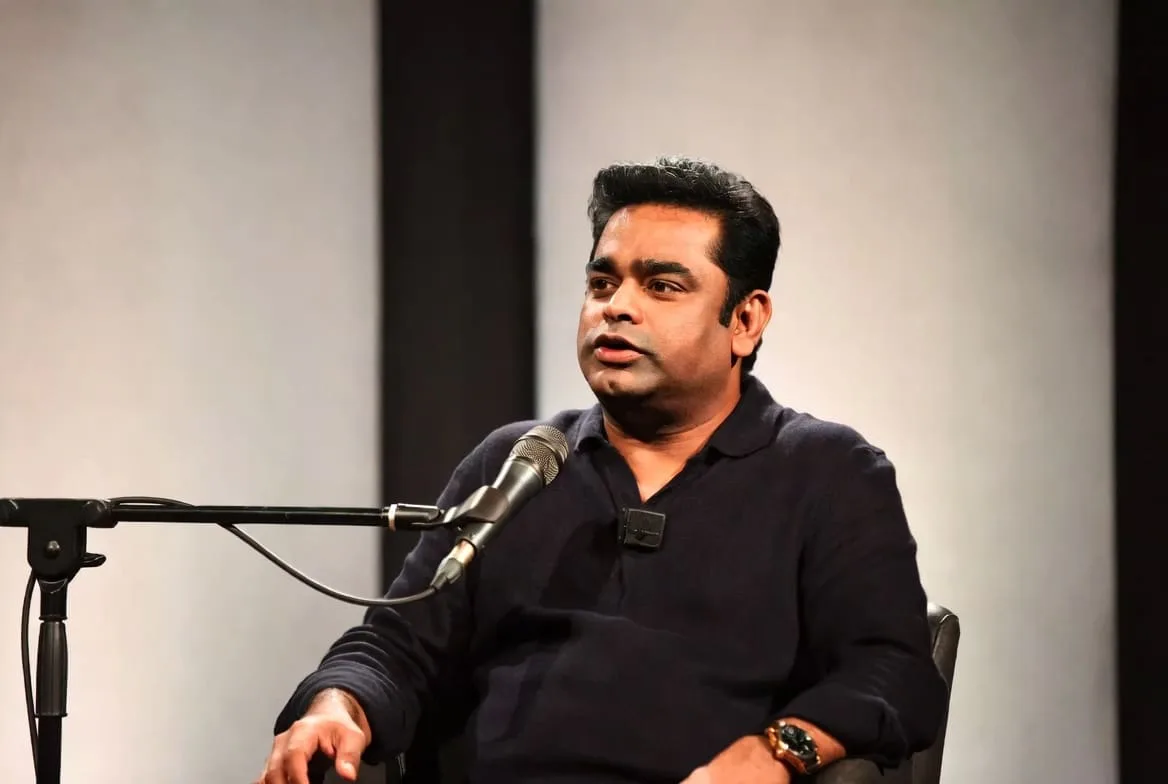
Oscar-winning music composer A.R. Rahman has ignited a heated debate in the Indian entertainment industry after suggesting that a "communal thing" and power shifts in Bollywood may have contributed to him receiving fewer opportunities over the past eight years.
In a recent BBC Asian Network interview, Rahman discussed his career trajectory, noting a decline in Hindi film projects since around 2018. He attributed this partly to non-creative decision-makers gaining influence and hinted at underlying prejudice, describing it as something heard through "Chinese whispers" rather than direct experience. He also labeled the 2025 blockbuster Chhaava (starring Vicky Kaushal) as a "divisive" film that "cashed in on divisiveness," while defending his work on it as focusing on themes of bravery.
Adding to the buzz, Rahman highlighted his ongoing project for Nitesh Tiwari's Ramayana, stating: "Hans Zimmer is Jewish, I am Muslim, and Ramayana is Hindu." He emphasized rising above narrow-mindedness and embracing art beyond religious boundaries, responding to trolls questioning a Muslim composer's involvement in a Hindu epic.
Industry Reactions Pour In
- Kangana Ranaut slammed Rahman on social media, calling him the "most prejudiced and hateful" person she's encountered. She claimed he refused to meet her for her film Emergency, labeling it "propaganda," despite its critical acclaim.
- Javed Akhtar rejected any communal angle, suggesting producers might hesitate due to Rahman's stature rather than bias.
- Shobhaa De called the remarks "dangerous."
- Outlets like OpIndia and others accused him of baselessly playing the Muslim victimhood card, pointing out Bollywood's historically Muslim-friendly environment and consistent work for other Muslim artists.
- Social media erupted with criticism, with users comparing him to figures like Mohammad Azharuddin for allegedly using identity as an excuse when opportunities dry up.
Rahman's conversion to Islam (from Dileep Kumar) in the late 1980s, his Sufi leanings, and past controversies (like the 2015 fatwa over a Prophet Muhammad biopic score) have resurfaced in discussions. Critics argue his recent music has lost its edge, with some attributing the dip to natural career cycles rather than bias.
SEO Keywords for Visibility:
- AR Rahman communal bias controversy 2026
- AR Rahman Muslim victim card
- AR Rahman Bollywood work decline
- AR Rahman Chhaava divisive film comments
- AR Rahman Ramayana Hans Zimmer interview
- AR Rahman Kangana Ranaut clash
Is this a genuine grievance from a legend feeling sidelined, or an unfortunate resort to identity politics amid waning demand? The debate rages on as Rahman prepares for major projects like Ramayana. What do you think—share your views below! 🎶🇮🇳
#ARRahman #Bollywood #Ramayana #Chhaava #IndianCinema #MusicComposer
What does the Ramayana composition project actually involve, and why does the Hans Zimmer comparison matter?
Rahman's decision to collaborate with Hans Zimmer on Nitesh Tiwari's Ramayana adaptation is musically significant, but his framing of it as a Jewish-Muslim-Hindu trinity is worth examining carefully. The Valmiki Ramayana, one of the foundational texts of Sanatana Dharma, has inspired musical traditions stretching back centuries — from Thyagaraja's Rama-bhakti krithis in Carnatic music to Tulsidas's Ramcharitmanas devotional compositions. The suggestion that a composer's religious identity is a noteworthy qualifier for engaging with this material is, itself, a departure from how Hindu artistic tradition has historically received sincere creative devotion.
In classical Bharatiya tradition, the qualification for rendering sacred themes was not birth identity but adhikara — the preparedness and inner orientation of the artist. The Natya Shastra of Bharata Muni, which underpins Indian performing arts, frames artistic creation as a form of yajna, an offering. When Rahman frames his participation primarily through the lens of his religion being 'different,' he inadvertently introduces the very communal framing he claims to oppose.
Is Bollywood actually biased against Muslim artists, or does the data tell a different story?
The Indian film industry, particularly its Hindi-language wing centred in Mumbai, has for decades featured a disproportionately high representation of Muslim artists among its top earners and most celebrated names — from composers like Naushad Ali, S.D. Burman's collaborators, and R.D. Burman to actors, directors, and lyricists who have dominated mainstream cinema across generations. The claim of systemic anti-Muslim bias must be measured against this well-documented historical record, not against one composer's perception of a dip in assignments over eight years.
Career fluctuations in the film industry are overwhelmingly driven by commercial calculus: box-office returns, producer relationships, evolving sonic tastes, and the rise of competing talent. Rahman's own output has spanned fewer Bollywood projects since his global profile expanded post-Oscar, as he increasingly pursued international and independent work. Critics and industry observers have noted that attributing a commercially explicable trajectory to a 'communal thing' heard through 'Chinese whispers' is a claim that demands far more concrete evidence before it can be taken seriously.
Why did the characterisation of Chhaava as 'divisive' draw such sharp rebukes from historians and audiences?
Chhaava is a film centred on Chhatrapati Sambhaji Maharaj, the second Chhatrapati of the Maratha Empire, who was captured by Mughal Emperor Aurangzeb in 1689 and subjected to prolonged torture before being executed because he refused to convert to Islam. His story is not a manufactured grievance; it is documented in Mughal court records, in the Sabhasad Bakhar, and in regional Marathi historical literature. Calling a film about his martyrdom 'divisive' implies that narrating the documented suffering of a Hindu king is somehow inflammatory — a framing that many Hindus found deeply offensive.
The term 'divisive' in contemporary Indian discourse has increasingly been deployed to delegitimise Hindu historical memory. When applied to a film about Sambhaji Maharaj, it risks equating the victim of religious persecution with the aggressor. This is precisely the pattern that outlets critical of Rahman's remarks highlighted: that the label 'divisive' is selectively applied to films that centre Hindu suffering or Hindu heroes, while films exploring other community grievances are routinely celebrated as 'important' or 'courageous.'
How does the Hindu philosophical framework view an artist's relationship to sacred subject matter?
The Bhagavata Purana (Skanda 1, Adhyaya 5) records Narada Muni's counsel to Veda Vyasa: that art divorced from the glorification of Vishnu — from the sacred and the transcendent — leaves both artist and audience incomplete. The tradition does not demand that an artist belong to any particular jaati or sampradaya, but it does emphasise that the artist approach the divine subject with bhakti, humility, and an absence of ego-driven motive. Whether Rahman's composition for Ramayana meets this standard is a matter audiences will judge when the film releases.
What Hindu tradition does not support is the use of a sacred project as a shield in a public controversy about communal grievance. Invoking the Ramayana as proof of one's secularism while simultaneously accusing an industry of communal bias against oneself creates a tension that thoughtful observers across the political spectrum have noticed. The dharmic view would hold that one's relationship with sacred art should speak through the work itself, not through press statements.
What precedent does this controversy set for how Hindu sacred epics are discussed in public discourse?
The broader concern articulated by many Hindu commentators is not about Rahman personally, but about a pattern: that Hindu sacred texts and epics are consistently treated as common property open to all interpretation, while the sentiments of practicing Hindus about that interpretation are dismissed as intolerance or 'majoritarianism.' The Ramayana is not merely a cultural artefact; for hundreds of millions of Hindus it is an active spiritual reality, the story of Maryada Purushottama Sri Rama whose life embodies dharmic ideals codified across the Valmiki Ramayana, Adhyatma Ramayana, and regional versions like Kamban's Tamil Iramavataram.
When the composer of a Ramayana adaptation enters the public conversation not primarily to speak about the devotional or artistic depth of the project, but to centre his own religious identity and grievances, it shifts the discourse in a direction that Hindu audiences find disrespectful to the text. Filmmakers and composers who have approached the epics with evident reverence — irrespective of personal background — have generally been received with warmth by Hindu audiences. The expectation is sincerity toward the subject, not a particular birth certificate.
Frequently Asked Questions
What is AR Rahman Sparks Controversy?
AR Rahman Sparks Controversy: Accuses Bollywood of 'Communal Bias' in Latest Interview – Playing the Muslim Victim Card? Oscar-winning music composer A.R.
What are the key points about AR Rahman Sparks Controversy?
Rahman has ignited a heated debate in the Indian entertainment industry after suggesting that a "communal thing" and power shifts in Bollywood may have contributed to him receiving fewer opportunities over the past eight years. In a recent BBC Asian Network interview, Rahman discussed his career trajectory, noting a decline in Hindi film
Why does AR Rahman Sparks Controversy matter in Hinduism?
It reflects core values of Sanatana Dharma and offers practical and spiritual guidance that remains relevant across generations.
How can devotees apply AR Rahman Sparks Controversy in daily life?
By reflecting on its teaching, incorporating the related practices or observances into daily routine, and approaching it with sincere devotion and understanding.
You might also like
Divine Hindu Temple News, Festivals & Global Devotion in Jyeshtha Adhik Maas 2026
Shani Deva Temples Worldwide & Must-Performed Rituals — Complete Devotee's Guide
Jyeshtha Masam 2026: Dates, Significance, Festivals, Mantras, and Danas – Complete Guide