Pawan Kalyan Clarifies Laddu Adulteration Blame on Previous TTD Board
The Tirumala Laddu Adulteration Controversy continues to stir political and religious sentiments in Andhra Pradesh.

The Tirumala Laddu Adulteration Controversy continues to stir political and religious sentiments in Andhra Pradesh.
The Tirumala Laddu Adulteration Controversy continues to stir political and religious sentiments in Andhra Pradesh. On Tuesday, during a discussion in the Andhra Pradesh Legislative Assembly, Deputy Chief Minister and Jana Sena Party leader Pawan Kalyan addressed the long-standing issue of alleged adulteration in the ghee used for preparing the sacred Tirumala laddus, the prasadam distributed at the Tirumala Tirupati Devasthanams (TTD).
Pawan Kalyan clarified his earlier statements on the matter, emphasizing that he had never directly blamed former Chief Minister Y.S. Jagan Mohan Reddy personally for the adulteration. Instead, he held the previous TTD board, appointed during the YSRCP regime, fully responsible for the lapses in oversight and procurement that allowed substandard or adulterated ghee to be supplied.
The scandal first erupted in September 2024, when laboratory tests on ghee samples supplied to TTD revealed the presence of palm oil, synthetic fats, and other non-dairy adulterants, deviating from the required pure cow ghee standards for the prasadam. This raised widespread outrage among devotees, as the laddu holds profound religious significance as an offering to Lord Venkateswara.
The Andhra Pradesh government, led by Chief Minister N. Chandrababu Naidu, formed a Special Investigation Team (SIT), later involving the Central Bureau of Investigation (CBI). In January 2026, the CBI-led SIT filed a chargesheet against 36 individuals, including suppliers from companies like Bhole Baba Organic Dairy and certain TTD procurement officials. The chargesheet highlighted large-scale supply of synthetic or fake ghee—often blended with palm oil, palmolein, and chemicals—resulting in massive corruption and misappropriation of temple funds estimated in crores. While the report ruled out direct animal fats (such as beef tallow or lard) in the final findings, it confirmed the ghee was not authentic cow ghee but a chemically processed substitute, fueling ongoing debates.
Pawan Kalyan reiterated during the assembly session that the responsibility lies with the administrative and governing bodies under the previous regime, which failed to ensure sanctity and quality in the prasadam preparation. He stressed the moral accountability at higher levels for overseeing TTD operations.
Amid the back-and-forth accusations, Pawan Kalyan appealed to Hindus to rise above caste divisions and unite in defending their faith. He noted that issues affecting religious sentiments often lead to strong solidarity in other communities, urging similar cohesion among Hindus to protect Sanatana Dharma traditions.
The YSRCP has countered these narratives, labeling them as political diversions by the NDA government to deflect from governance issues. Party leaders have pointed to the CBI chargesheet's absence of animal fat evidence as vindication and accused the ruling coalition of politicizing a sacred matter for electoral gains.
The controversy, now over a year old, remains a flashpoint in Andhra Pradesh politics, blending religious sensitivities with allegations of corruption in temple administration. The case has entered the trial stage, with ongoing administrative inquiries into procurement lapses during the relevant period.
For devotees and observers, the core concern endures: safeguarding the purity of the Tirumala laddu prasadam, a symbol of devotion for millions.
Why is the Tirumala Laddu considered so sacred in Vaishnava tradition?
The Tirumala laddu, formally known as the Sri Venkateswara Swamy Devasthanam prasadam, is among the most revered food offerings in all of Hinduism. It is classified as 'nivedyam' — food first offered to the presiding deity, Lord Venkateswara (also called Balaji or Srinivasa), before being distributed to devotees. The Agama Shastra texts that govern temple worship at Tirumala specify that any material offered to the Lord must be sattvic and ritually pure, free from adulteration, animal-derived contaminants, or artificial substitutes.
Pure cow ghee (go-ghrita) holds a particularly exalted place in Vedic ritual. The Rigveda (IV.58) extols ghee as the 'navel of immortality,' and the Taittiriya Upanishad lists it among the substances that sustain both the sacred fire and the body of the worshipper. When ghee used in temple prasadam is replaced with palm oil or synthetic fat, it is considered not merely a food-safety violation but a desecration of the naivedyam itself — an act that, in the Agamic framework, renders the offering incomplete and ritually invalid.
The Tirumala laddu received a Geographical Indication (GI) tag, recognising its unique character tied to its place of origin and specific preparation method. This legal recognition underscores that the authentic recipe — using pure cow ghee, sugar, cashews, cardamom, and other specified ingredients — is inseparable from the laddu's identity as prasadam.
How does TTD procure ghee and what standards are supposed to govern it?
The Tirumala Tirupati Devasthanams procures ghee through a tendering process, inviting bids from dairy suppliers who must meet the Food Safety and Standards Authority of India (FSSAI) specifications for pure cow ghee. Historically, state-run cooperatives such as Nandini (Karnataka Milk Federation) and AP Dairy Development Cooperative Federation were among the preferred suppliers, as their products carried traceable quality certificates. The specifications require a particular level of milk fat, absence of vegetable oils, and compliance with Bureau of Indian Standards (BIS) norms.
The controversy exposed gaps in the internal quality-control chain. According to the CBI-led SIT chargesheet filed in January 2026, procurement officials allegedly cleared consignments without conducting mandatory adulterant-detection tests, including the Baudouin test and gas chromatography analysis that can identify foreign oils. Critics argue that had standard checks been applied at the receiving depot in Tirupati, palm oil blending would have been detected before the ghee ever reached the laddu-making facilities (the 'potu' kitchen) atop Tirumala hill.
Following the scandal, the current TTD board under the Chandrababu Naidu government announced that all ghee consignments would henceforth undergo third-party laboratory verification before acceptance, and that only suppliers with an unbroken certified supply chain — from cow farm to dairy to temple — would be empanelled.
What is the political and institutional background that Pawan Kalyan's statement addresses?
Pawan Kalyan's clarification in the Andhra Pradesh Legislative Assembly is significant because it distinguishes institutional accountability from personal criminal culpability. He was careful to direct responsibility toward the TTD board appointed during the YSRCP government's tenure (2019–2024) rather than making a direct allegation against former Chief Minister Y.S. Jagan Mohan Reddy. Under the AP Charitable and Hindu Religious Institutions and Endowments Act, the state government appoints the TTD Board of Trustees, making the composition of that board a matter of direct government policy.
The YSRCP-era board faced separate controversies even before the ghee adulteration issue, including allegations regarding the appointment of non-Hindu trustees — a matter that went to the Andhra Pradesh High Court. Taken together, these disputes intensified scrutiny of procurement and administrative decisions made during that period. Pawan Kalyan's framing in the assembly debate therefore attempts to confine culpability to the administrative structure rather than risk allegations of political vendetta.
The involvement of the CBI, a central agency, was facilitated by the current state government's request and signals the seriousness with which the matter has been treated at both state and national levels. The filing of a chargesheet against 36 individuals — including private suppliers and serving TTD officials — marks a concrete legal step beyond the initial political blame game.
What does Agamic law say about accountability when temple prasadam is compromised?
Classical texts governing temple administration, including the Manasara and various Agama Paddhatis followed in South Indian Shaiva and Vaishnava temples, specify that the 'dharmakartha' (temple trustee or manager) bears primary responsibility for ensuring the purity of offerings. A trustee who knowingly or negligently allows impure substances to be used in naivedyam is said to incur a form of 'deva-droha' — betrayal of the deity — a sin considered more grave than ordinary theft because it directly corrupts the devotional transaction between worshipper and God.
The Vishnu Purana (Book III) and the Padma Purana both contain passages warning that those who offer adulterants to the Lord under the guise of pure substances accumulate severe karmic consequences. While these texts do not, of course, anticipate modern food-safety law, their moral logic maps closely onto contemporary concerns: the harm is understood as falling not only on the officials responsible but also, in a ritual sense, on the community of devotees who receive compromised prasadam unknowingly.
This theological backdrop explains why the issue resonated so deeply with ordinary devotees across India and abroad. For millions of pilgrims who visit Tirumala every year — the temple sees some 50,000 to 100,000 visitors daily — the laddu is not a food item but a tangible blessing from Lord Venkateswara. Any compromise in its purity is experienced as a personal spiritual injury, not merely a consumer-rights grievance.
What remedial steps has the current TTD board taken to restore devotee trust?
After the SIT findings became public, the TTD administration under the new board undertook a review of its entire supply chain. Reports indicate that contracts with the suppliers named in the CBI chargesheet — including Bhole Baba Organic Dairy — were terminated. The board also announced a move toward direct procurement from verified cooperative dairies and the introduction of real-time digital tracking of ghee consignments from the point of production to the Tirumala kitchen.
The TTD has historically been one of the richest temple trusts in the world, with annual revenues running into thousands of crores of rupees derived from hundi offerings, accommodation fees, and the laddu sale itself. The board has indicated plans to invest a portion of these funds in upgrading the food-testing laboratory already located within the TTD complex, equipping it with gas chromatography–mass spectrometry (GC-MS) instruments capable of detecting adulteration at parts-per-million levels.
Beyond the physical infrastructure, the controversy has renewed calls from Hindu religious organisations and devotee groups for stronger statutory protection of temple prasadam standards — potentially through an amendment to the AP Endowments Act that would make adulteration of temple naivedyam a distinct and more severely punishable offence, separate from general food-adulteration statutes.
Frequently Asked Questions
What did Pawan Kalyan clarify about the Tirumala laddu adulteration?
Pawan Kalyan said in the Andhra Pradesh Legislative Assembly that he never directly blamed Y.S. Jagan Mohan Reddy personally. He held the previous TTD board, appointed during the YSRCP regime, responsible for lapses in oversight and procurement.
When did the Tirumala laddu ghee adulteration controversy begin?
It erupted in September 2024, when lab tests on ghee supplied to TTD reportedly showed palm oil, synthetic fats and other non-dairy adulterants instead of pure cow ghee.
What did the CBI-led SIT chargesheet say?
Filed in January 2026 against 36 individuals, it described large-scale supply of synthetic ghee blended with palm oil, palmolein and chemicals. It ruled out direct animal fats such as beef tallow or lard in its final findings.
Why is pure cow ghee important for the Tirumala laddu?
The laddu is nivedyam, offered first to Lord Venkateswara, and temple worship traditions require offerings to be sattvic and pure. Replacing ghee with palm oil or synthetic fat is considered a desecration of the offering.
What changes did TTD announce after the scandal?
The current TTD board announced that all ghee consignments would undergo third-party laboratory verification before acceptance. Only suppliers with an unbroken certified chain from cow farm to dairy to temple would be empanelled.
You might also like

Sacred Hindu Festivals & Temple News: Divine Week — May 2026

Geethu Royal Tirumala Controversy 2026: What Happened and Why It Matters for Devotees
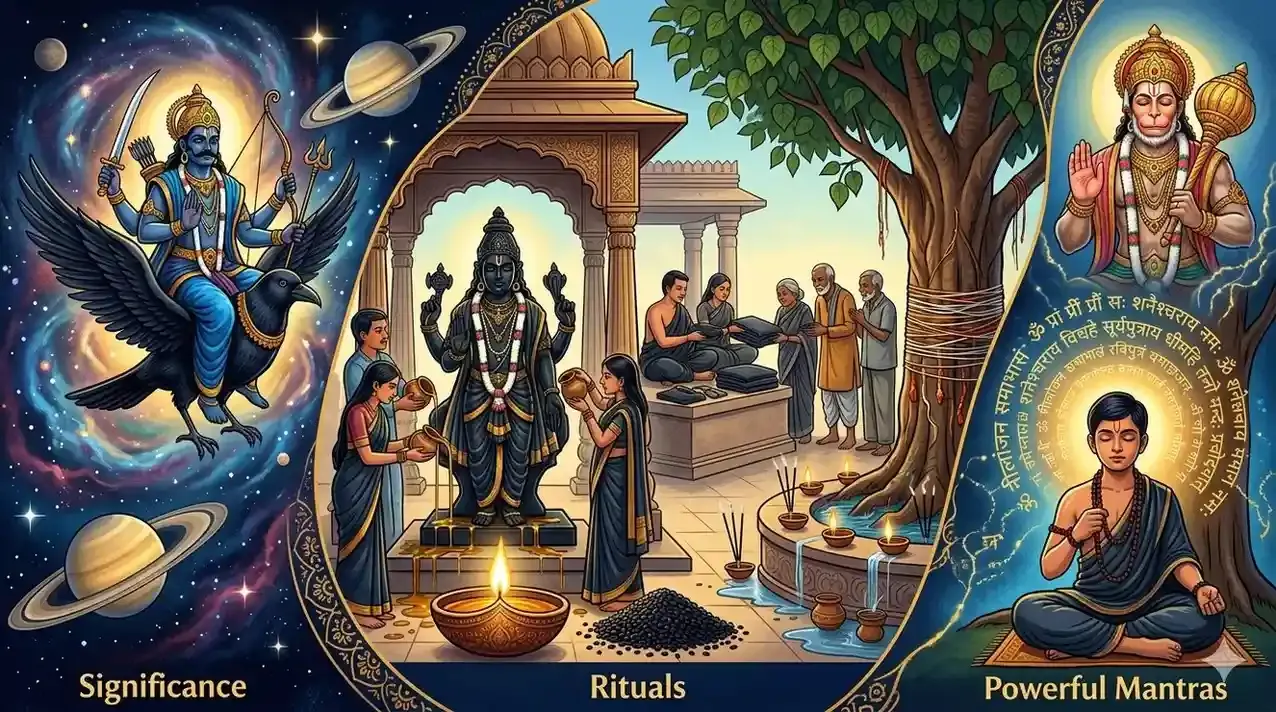
Shani Jayanti 2026: Date, Significance, Rituals & Powerful Mantras