BIG BREAKING: Modi Govt Approves Renaming Kerala to Keralam – A Historic Step for Linguistic Identity
New Delhi, February 24, 2026 – In a major decision, the Union Cabinet chaired by Prime Minister Narendra Modi has approved the proposal to officially rename…
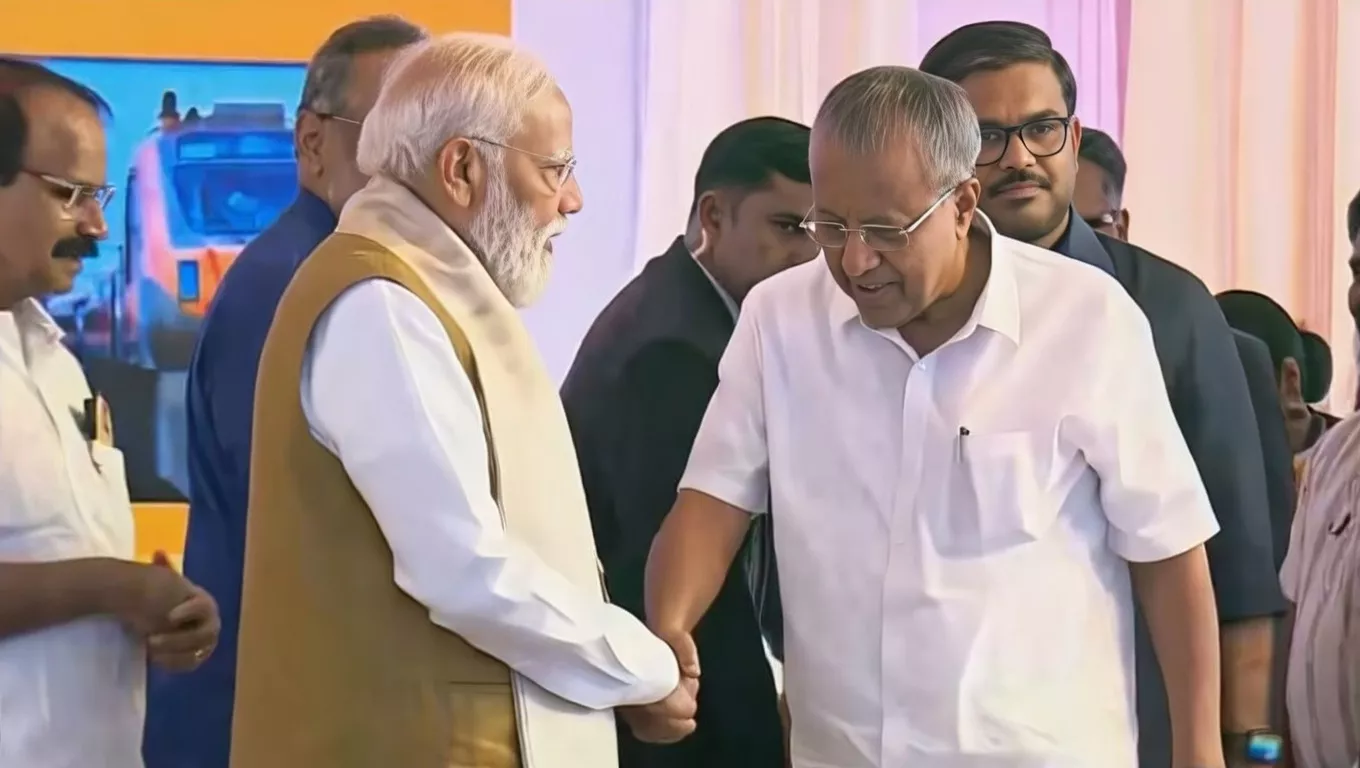
New Delhi, February 24, 2026 – In a major decision, the Union Cabinet chaired by Prime Minister Narendra Modi has approved the proposal to officially rename…
New Delhi, February 24, 2026 – In a major decision, the Union Cabinet chaired by Prime Minister Narendra Modi has approved the proposal to officially rename the state of Kerala to Keralam. This change aligns the official English name with the state's name in its native Malayalam language, fulfilling a long-standing demand rooted in cultural and linguistic heritage.
The announcement was made by Union Minister Ashwini Vaishnaw following the Cabinet meeting held at the new Prime Minister's Office complex, 'Seva Teerth'. The decision comes after the Kerala Legislative Assembly unanimously passed a resolution on June 24, 2024, urging the Centre to amend the First Schedule of the Constitution and adopt "Keralam" as the official name.
Background and Rationale
The push for the name change dates back to the linguistic reorganization of states in 1956, when Kerala was formed on November 1 (celebrated as Kerala Piravi Day) to unite Malayalam-speaking regions. In Malayalam, the state has always been referred to as Keralam, but the Constitution listed it as "Kerala". The 2024 resolution highlighted this discrepancy, stating:
“The name of our State is 'Keralam' in Malayalam Language. States were formed on the basis of language on the 1st day of November, 1956... This Assembly unanimously appeal to the Central Government to take urgent steps as per Article 3 of the Constitution for modifying the name as 'Keralam'.”
The proposal reflects a broader effort to honor linguistic identity and historical demands from the independence era for a unified Malayalam state.
What Happens Next?
The Cabinet's approval initiates the constitutional process under Article 3 of the Constitution. The matter will now be referred to the President of India, who will introduce the Kerala (Alteration of Name) Bill, 2026. The Bill will be sent to the Kerala Legislative Assembly for its views before being tabled in Parliament for final approval and constitutional amendment.
This is not the first such renaming; similar processes have been followed for other states and cities in India.
Political Reactions
- BJP Kerala President Rajeev Chandrasekhar hailed it as a "proud day for all Malayalees" and thanked PM Modi, emphasizing it honors heritage while countering divisive elements.
- Congress MP Shashi Tharoor responded wittily on social media, quipping about potential new terms like "Keralamite" or "Keralamian".
- The move comes ahead of Kerala Assembly elections, adding political significance.
Why "Keralam" Matters
"Keralam" is the authentic pronunciation and spelling in Malayalam, often called "God's Own Country". Supporters argue the change strengthens cultural pride without affecting everyday usage in other languages.
This landmark decision by the Modi government bridges a linguistic gap and reinforces India's commitment to respecting regional identities.
Stay tuned to Hindutone.com for more updates on this developing story. [image: 🇮🇳]
What does 'Keralam' actually mean, and what do ancient texts say about the name?
The name 'Keralam' carries deep etymological roots that stretch back to classical Sanskrit and Tamil-Brahmi literary traditions. One widely cited derivation comes from the Sanskrit compound 'Kera' (coconut palm) and 'alam' (land or place), yielding 'land of coconut trees' — a description that matches the coastal geography of the region with remarkable precision. The Adi Shankaracharya, born at Kalady on the banks of the Periyar river in modern Keralam, himself referenced the region in his biographical accounts as a land of distinct linguistic and spiritual character.
The earliest datable reference to the name appears in the Rock Edict II of Emperor Ashoka (circa 3rd century BCE), where 'Keralaputra' is listed among the southern kingdoms beyond Mauryan territory. Later, the Sangam-era Tamil work Purananuru and the Malayalam Manipravalam texts of the medieval period use variants of 'Keralam' consistently, underscoring that the 'a' at the end is not a grammatical accident but an integral part of the noun in Malayalam morphology. Dropping it to 'Kerala' in English constitutional usage was therefore a transliteration compromise, not a faithful rendering.
How does Article 3 of the Constitution enable a state to be renamed, and what is the full legislative journey ahead?
Article 3 of the Indian Constitution grants Parliament the power to form new states, alter boundaries, and — crucially — change the name of any existing state. The procedure requires the President to refer the Bill to the concerned state legislature for expressing its views within a specified time; Parliament is not bound by those views but must give the assembly an opportunity to respond. Because the Kerala Legislative Assembly has already passed a unanimous resolution in June 2024 specifically requesting this change, the consultative step is effectively pre-satisfied, which may expedite the parliamentary timetable.
Once the Kerala (Alteration of Name) Bill, 2026 is introduced in either House of Parliament and passed by simple majority — unlike constitutional amendments under Article 368 which require special majorities — it will receive Presidential assent. Following assent, the First Schedule of the Constitution, which lists all states by name, will be amended by substituting 'Keralam' for 'Kerala'. Consequential administrative changes will follow: the official seal of the Governor, High Court letterheads, central government correspondence, and eventually passport address fields will all reflect 'Keralam'.
Which other Indian states have successfully gone through similar renaming processes, and what can Keralam learn from them?
India has a well-established precedent for state renamings. Madras became Tamil Nadu in 1969, a change driven by Dravidian cultural politics and the desire to anchor the state's identity in the Tamil-speaking majority rather than its colonial port city. Mysore was renamed Karnataka in 1973 to embrace the broader Kannada-speaking community. More recently, Uttaranchal became Uttarakhand in 2007, restoring the historically and spiritually resonant suffix 'khand' (sacred territory), and Orissa became Odisha in 2011 to align English spelling with Odia pronunciation.
Each of these renamings followed broadly the same Article 3 route and encountered similar administrative transition periods of one to three years before all central and state documents were uniformly updated. The Odisha experience is particularly instructive for Keralam: because the change was primarily phonological (swapping a vowel), the government issued a single gazette notification followed by circulars to ministries, and the transition was largely seamless. Keralam's renaming is similarly phonological in nature — adding a final 'M' — suggesting the administrative burden will be manageable.
What is the significance of Kerala Piravi Day and how does this renaming deepen its meaning?
Kerala Piravi, celebrated on November 1 each year, literally means 'the birth of Kerala' and marks the 1956 merger of the Travancore-Cochin state with the Malabar district and the Kasaragod taluk of South Canara, creating a unified Malayalam-speaking state under the States Reorganisation Act. The celebration is deeply intertwined with the Aikya Kerala (United Kerala) movement that began in the early 20th century and drew inspiration from the linguistic and cultural unity of the Malayalam-speaking people across feudal princely states and British-administered districts.
For generations of activists who championed the Aikya Kerala cause — invoking the Mathrubhasha (mother tongue) as the primary bond of statehood — the official name 'Kerala' was always felt to be slightly alien, a Sanskritised-English approximation that erased the final nasal sound essential to Malayalam's phonological identity. The renaming to 'Keralam' thus completes a cultural circle: the state born in the name of linguistic unity will now carry its name in the very form the language itself demands. November 1, 2026 would be a symbolically fitting date for the new name to take formal effect, should Parliament act swiftly.
How does Malayalam's unique literary and scriptural heritage reinforce the case for an authentic rendering of the state's name?
Malayalam is one of the classical languages of India, accorded Classical Language status by the Government of India in 2013, recognising its literary tradition spanning over 1,500 years. The earliest Malayalam literary works, such as the Ramacharitam (12th century CE) and the Manipravalam compositions of the medieval era, as well as the Adhyatma Ramayanam rendered by Thunchaththu Ezhuthachan — revered as the father of modern Malayalam — all treat 'Keralam' as the native designation of the land. Ezhuthachan's 16th-century compositions were themselves a cultural watershed that standardised Malayalam script and vocabulary.
The Malayalam script, derived from the Grantha script and closely related to the Tamil-Brahmi tradition, contains a set of phonemes — including the final anusvara or nasal 'M' — that have no easy equivalent in English transliteration conventions developed during the colonial period. This phonological gap was the root cause of 'Kerala' entering official usage. Recognising 'Keralam' in the Constitution is therefore not merely a political gesture but an acknowledgment that the constitutional architecture of a linguistic state must, at minimum, spell that state's name as its own language prescribes.
Frequently Asked Questions
When did the Union Cabinet approve renaming Kerala to Keralam?
The Union Cabinet chaired by PM Narendra Modi approved it on February 24, 2026. Union Minister Ashwini Vaishnaw announced the decision after the meeting at the new PMO complex, Seva Teerth.
What process follows the Cabinet approval for the name change?
Under Article 3, the matter goes to the President, who introduces the Kerala (Alteration of Name) Bill, 2026. It is sent to the Kerala Legislative Assembly for its views before being tabled in Parliament for final approval.
Why is Kerala being renamed Keralam?
In Malayalam the state has always been called Keralam, but the Constitution lists it as Kerala. The Kerala Assembly unanimously passed a resolution on June 24, 2024 urging the Centre to adopt Keralam.
Which other Indian states have been renamed before?
Madras became Tamil Nadu in 1969 and Mysore became Karnataka in 1973. Uttaranchal became Uttarakhand in 2007, and Orissa became Odisha in 2011.
What does the name Keralam mean?
One widely cited derivation joins the Sanskrit 'Kera' (coconut palm) with 'alam' (land), giving 'land of coconut trees'. Keralam is the authentic spelling and pronunciation in Malayalam.
You might also like

The Kerala Story 2: Goes Beyond – Complete Review for Hindus
PM Modi Srisailam Temple Visit: Offers Prayers at Bhramaramba Mallikarjuna Swamy Devasthanam for India's Prosperity
PM Modi Inaugurates 'Shanti Shikhar' – A Beacon of Peace and Spiritual Empowerment in Nava Raipur