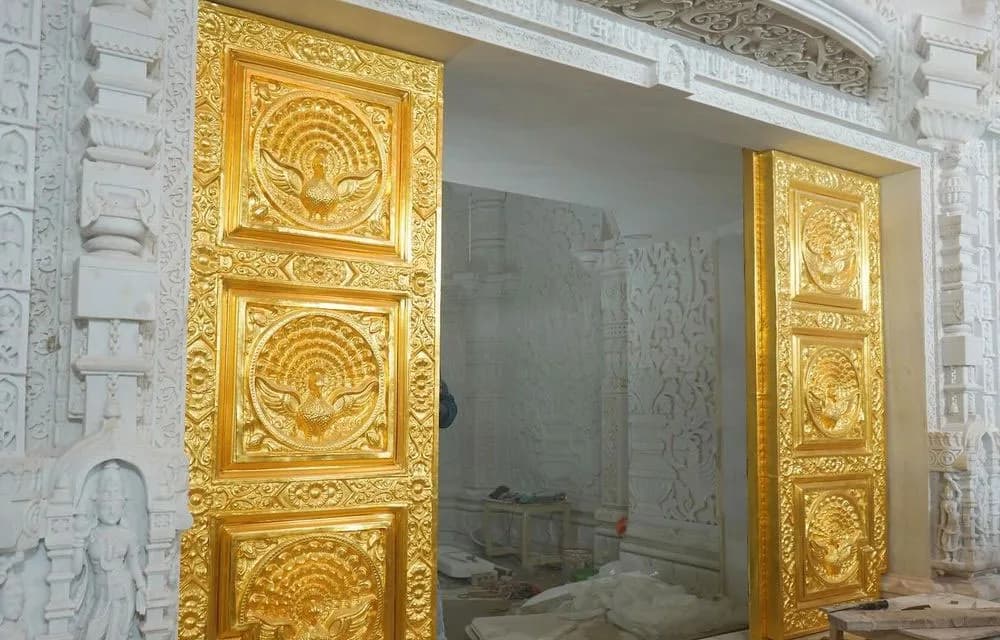
PM Modi to Hoist Saffron Flag at Ram Temple in Ayodhya Today: Historic Dhwajarohan on Vivah Panchami 2025
Ayodhya, November 25, 2025 — In a landmark moment for the nation, Prime Minister Narendra Modi will today perform the sacred Dhwajarohan ritual by hoisting a…
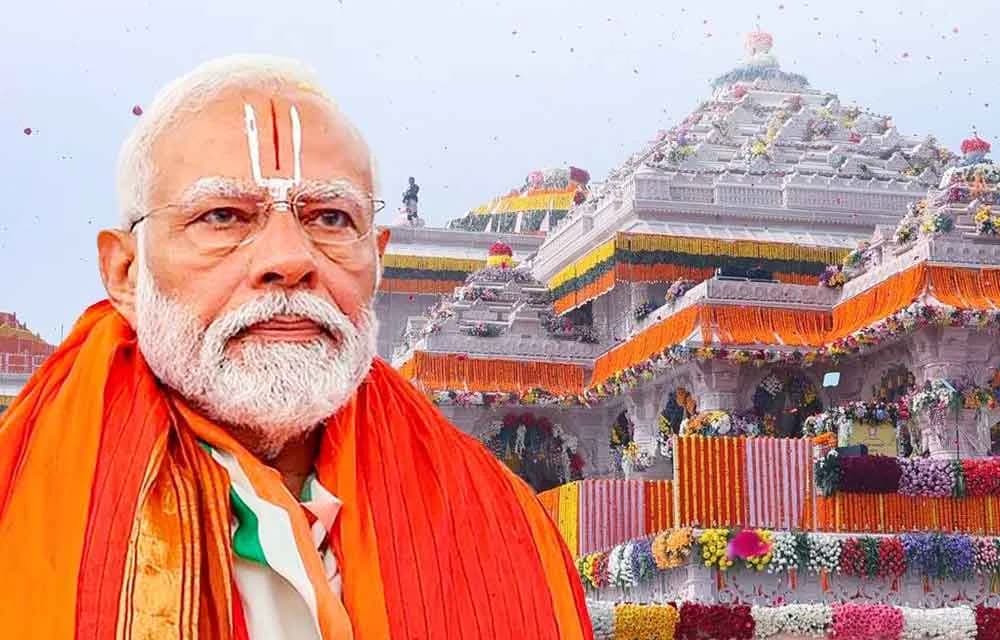
Ayodhya, November 25, 2025 — In a landmark moment for the nation, Prime Minister Narendra Modi will today perform the sacred Dhwajarohan ritual by hoisting a…
Ayodhya, November 25, 2025 — In a landmark moment for the nation, Prime Minister Narendra Modi will today perform the sacred Dhwajarohan ritual by hoisting a grand saffron flag atop the main spire of the Shri Ram Janmabhoomi Temple in Ayodhya. This ceremony marks the formal completion of the magnificent temple, symbolising a new era of spiritual resurgence and cultural pride for Bharat.
The auspicious event coincides with Vivah Panchami, the divine day commemorating the marriage of Lord Ram and Goddess Sita. The saffron flag — representing the radiance, dharma, and valor of Lord Ram — will soar high above Ayodhya, becoming a beacon of unity, devotion, and civilisational strength.
PM Modi’s Itinerary in Ayodhya Today
- Darshan at the Shri Ram Janmabhoomi Temple
- Visit to the sacred Saptmandir complex dedicated to revered sages and devotees — Maharshi Vashishtha, Vishwamitra, Valmiki, Agastya, Devi Ahilya, Nishadraj Guha, and Mata Shabari
- Prayers at the Ram Darbar and the sanctum of Ram Lalla
- Hoisting of the 20×10 ft saffron flag atop the 161-ft central shikhar
- Public address to thousands of seers, dignitaries, and devotees
The flag, crafted from premium parachute fabric and adorned with silk embroidery, features the Sun, the sacred Om, and the Kovidara tree. It will be mounted on a 42-ft rotating pole engineered to withstand strong winds. For the first time, all seven shikharas of the temple will display saffron flags.
A Five-Day Vedic Celebration
The Dhwajarohan ceremony concludes a grand five-day Vedic ritual (November 21–25), conducted by 108 acharyas from Ayodhya, Kashi, and South India under the guidance of renowned scholar Ganeshwar Shastri Dravid. The entire city is adorned with flowers, shimmering diyas, and the resonant chants of “Jai Shri Ram.”
Architectural Grandeur & Cultural Unity
The Ram Temple harmoniously blends:
- Nagara-style architecture in the main shikhar
- South Indian temple elements in its expansive 800-metre parkota
Additional structures — including the Sheshavatar Temple, Pushkarni Kund, and various devotee facilities — are now fully functional, enhancing the spiritual and cultural experience.
Journey from Verdict to Victory: 2019 to 2025
- November 2019: Supreme Court delivers historic verdict
- August 2020: PM Modi performs Bhoomi Pujan
- January 2024: Pran Pratishtha of Ram Lalla
- November 2025: Dhwajarohan — final milestone of the grand temple
Voices of Joy and Hope
Millions across India and the world celebrate today as the fulfilment of a 500-year-old dream. Alongside devotion and pride, locals also express hope for fair rehabilitation and new employment opportunities in Ayodhya’s rapidly growing temple-driven economy.
As the saffron flag ascends above Ayodhya, it not only venerates Lord Ram but reaffirms India’s eternal values of dharma, harmony, and progress.
Jai Shri Ram! Jai Siya Ram!
What is Dhwajarohan and Why Does It Hold Supreme Significance in Temple Tradition?
Dhwajarohan — literally 'the ascending of the flag' (dhwaja = flag, arohan = ascent) — is one of the sixteen foundational consecration rites (shodasha upacharas) prescribed in the Agama Shastras for the formal inauguration or completion of a temple. The Manasara, an ancient Sanskrit treatise on temple architecture (Vastu Vidya), specifies that no temple is considered fully consecrated until its flag, known as the Dhvaja or Pataka, is raised above the central spire, signalling to the cosmos and the surrounding world that the presiding deity now reigns in full divine presence.
In the Valmiki Ramayana (Ayodhya Kanda), Ayodhya itself is described as a city adorned with towering flags — 'dhvajaih samantaat' — marking its identity as a seat of dharmic kingship. Raising the saffron flag at Shri Ram Janmabhoomi Temple thus reconnects the present ceremony with an ancient, unbroken civilisational memory. The saffron (bhagwa) colour is rooted in the imagery of the sacrificial fire (agni), representing both the burning away of adharma and the radiant light of Satya and Dharma.
Vivah Panchami: The Sacred Tithi That Makes This Day Doubly Auspicious
Vivah Panchami falls on the Shukla Paksha Panchami (fifth day of the waxing moon) of the month of Margashirsha, and is celebrated as the divine wedding anniversary of Lord Shri Ram and Goddess Sita. This sacred event is described in elaborate detail in the Bal Kanda of the Valmiki Ramayana — the Swayamvara in Mithila where Shri Ram broke the Pinaka bow of Lord Shiva and won the hand of Janaki. The Balmiki Ramayana describes the celestial shower of flowers (pushpa varsha) that accompanied the moment, and the chanting of Vedic mantras by Sage Shatananda and other priests of King Janaka's court.
Performing the Dhwajarohan on Vivah Panchami carries profound theological weight: the flag raised on this day not only consecrates the temple architecturally but also invokes the divine union of Ram and Sita — the cosmic ideal of dharmic partnership (dharma-dampati) — as the presiding spiritual energy over Ayodhya. Across Mithila, Janakpur (in present-day Nepal), and Ayodhya, Vivah Panchami is observed with grand processions re-enacting the wedding cortege, recitation of Sundarakanda, and mass feeding of devotees (anna-daan).
The Saptamandir Complex: Who Are the Seven Sages and Devotees Being Honoured?
PM Modi's itinerary includes a visit to the Saptamandir complex — seven shrines dedicated to seven figures who held central roles in Shri Ram's life as recorded in the Valmiki Ramayana and other Itihasa texts. Maharshi Vashishtha was the kula-guru (family preceptor) of the Raghu dynasty, responsible for the Upanayana (sacred thread ceremony) and the education of Ram and his brothers. Maharshi Vishwamitra was the royal sage who took Ram and Lakshmana from Ayodhya to protect his yajna (fire sacrifice) and subsequently led them to Mithila, setting in motion the events of the Vivah.
Maharshi Valmiki authored the Valmiki Ramayana itself and later sheltered Devi Sita in his ashrama, making him a direct witness to the entire arc of Ram's story. Maharshi Agastya is credited in the Aranya Kanda with giving Shri Ram the Aditya Hridayam and the divine Brahmastra. Devi Ahilya, the consort of Maharshi Gautama, was liberated from a curse by the touch of Ram's feet — an event recorded in the Bal Kanda as one of Ram's earliest acts of grace. Nishadraj Guha, the tribal chieftain of the Shringi-Verapur region on the banks of the Ganga, provided Ram safe passage during the vanavasa (forest exile), representing Ram's profound respect for those outside the Vedic mainstream. Mata Shabari of the Matanga ashrama in the Dandaka forest is venerated for her pure devotion (bhakti) — the 'ber' (berries) she offered Ram after tasting each one for sweetness remain one of the most beloved episodes of the Ramayana across all Indian traditions.
Nagara Architecture and the 161-Foot Shikhara: What Makes This Temple's Design Exceptional?
The Shri Ram Janmabhoomi Temple is built in the Nagara style of North Indian sacred architecture, characterised by a curvilinear tower (shikhara) that rises in a series of horizontal bands (bhumis) tapering to a crowning amalaka (ribbed disc) and kalasha (finial pot). The Manasara and Mayamata — two foundational Vastu-Agama texts — classify the Nagara style as the most appropriate for temples north of the Vindhya mountains, which the Ramayana itself references as the boundary between the Aryavarta and Deccan regions.
The central shikhara of the Ram Temple reaches 161 feet, placing it among the tallest Nagara-style shikharas in contemporary temple construction. The inclusion of South Indian architectural elements in the parkota (outer enclosure wall) represents a deliberate architectural syncresis, echoing the pan-Indian character of Ram's narrative — from the Himalayan ashrams of Vashishtha to Lanka in the far south. The 42-foot rotating flagpole engineered to withstand high wind loads is a modern structural solution that respects both the traditional requirement of continuous flag display (the Agama Shastras prescribe that the temple flag must never be allowed to fall limp or torn) and contemporary engineering safety standards.
Five Days of Vedic Ritual: What Ceremonies Preceded Today's Dhwajarohan?
The five-day Vedic celebration (November 21–25) follows the sequence of rituals prescribed in the Agama tradition for Purna Pratishtha (complete consecration). Such a programme typically includes Ganapati Puja and Punyahavachana (purification rites) on the first day, followed by Kalasha Sthapana (installation of sacred water vessels), Navagraha Homa (fire offerings to the nine planetary deities), Maha Rudra Abhisheka, and finally the Dhwajarohan as the culminating ceremony. The involvement of 108 acharyas drawn from Ayodhya, Kashi (Varanasi), and South India reflects the pan-sampradaya (cross-tradition) nature of the event, with both Shaiva and Vaishnava ritual experts collaborating.
The number 108 is itself deeply significant in Hindu cosmology: the Upanishads number 108 in the classical canonical count, there are 108 names of major deities in standard stotras (hymns), and the distance between the Earth and the Sun is approximately 108 times the Sun's diameter — a correspondence that ancient Vedic astronomers noted in texts like the Aryabhatiya. Conducting 108-acharya yajnas ensures that the ritual energy (yajna shakti) is both complete and expansive, consecrating not just the physical structure but the spiritual field (kshetra) of Ayodhya itself, long revered as one of the Sapta Moksha Puris — the seven cities capable of granting liberation.
Ayodhya as Sapta Moksha Puri: The City's Place in Hindu Sacred Geography
The Skanda Purana and the Padma Purana enumerate seven cities (Sapta Moksha Puris) whose very darshan (sight) or death within whose limits is believed to confer moksha (liberation): Ayodhya, Mathura, Haridwar (Hari ki Pauri), Varanasi (Kashi), Kanchipuram, Ujjain (Avantika), and Dwaraka. Of these, Ayodhya holds the distinction of being the birthplace (janmabhoomi) of Shri Ram — one of the Dashavatara (ten principal incarnations) of Lord Vishnu — making it uniquely associated with the concept of divine incarnation (avatara) on Indian soil.
The Atharva Veda (10.2.31) describes the 'City of God' (Brahmapura) as a place of eight-spoked cosmic order — an image that classical commentators have associated with Ayodhya's layout and its role as a model of dharmic urban planning. With the completion of the Ram Temple and today's Dhwajarohan, Ayodhya's identity as a living tirtha (pilgrimage centre) and as a symbol of Bharatiya civilisational continuity is renewed for future generations, connecting millions of devotees across the Indian subcontinent and the global Hindu diaspora to a site whose sanctity the Ramayana itself places beyond all historical period.
Frequently Asked Questions
Where is PM Modi to Hoist Saffron Flag at Ram Temple located?
Ayodhya , November 25, 2025 — In a landmark moment for the nation, Prime Minister Narendra Modi will today perform the sacred Dhwajarohan ritual by hoisting a grand saffron flag atop the main spire of the Shri Ram Janmabhoomi Temple in Ayodhya. This ceremony marks the formal completion of the magnificent temple , symbolising a new era of spiritual resurgence
Who is the presiding deity of PM Modi to Hoist Saffron Flag at Ram Temple?
The presiding deity is Lord Rama.
What are the timings and how do I reach PM Modi to Hoist Saffron Flag at Ram Temple?
Temples typically open early morning and evening; confirm current darshan timings before visiting. The nearest airport, railway station and road routes are covered in the guide above.
What is the best time to visit PM Modi to Hoist Saffron Flag at Ram Temple?
Major festival days and the cooler months are popular, though weekday mornings offer a calmer darshan. Plan around the temple's key festivals for the most vibrant experience.
You might also like
Tirumala News (September 2026): Gokulashtami Celebrations, ACB Arrest of TTD Deputy EO & Fake-Website Alert

Guruvayur Sree Krishna Temple Sets Historic Record: 437 Weddings on Chingam Sunday (23 August 2026)

Ayodhya Bar Association Refuses to Defend Ram Temple Donation Scam Accused | ₹5 Lakh Fine