Retired ATS Officer Alleges Pressure to Frame RSS Chief in Malegaon Blast Case
Mumbai, August 1, 2025 — In a shocking revelation, retired Anti-Terrorism Squad (ATS) officer Mehboob Mujhawar has claimed that he was pressured to arrest…
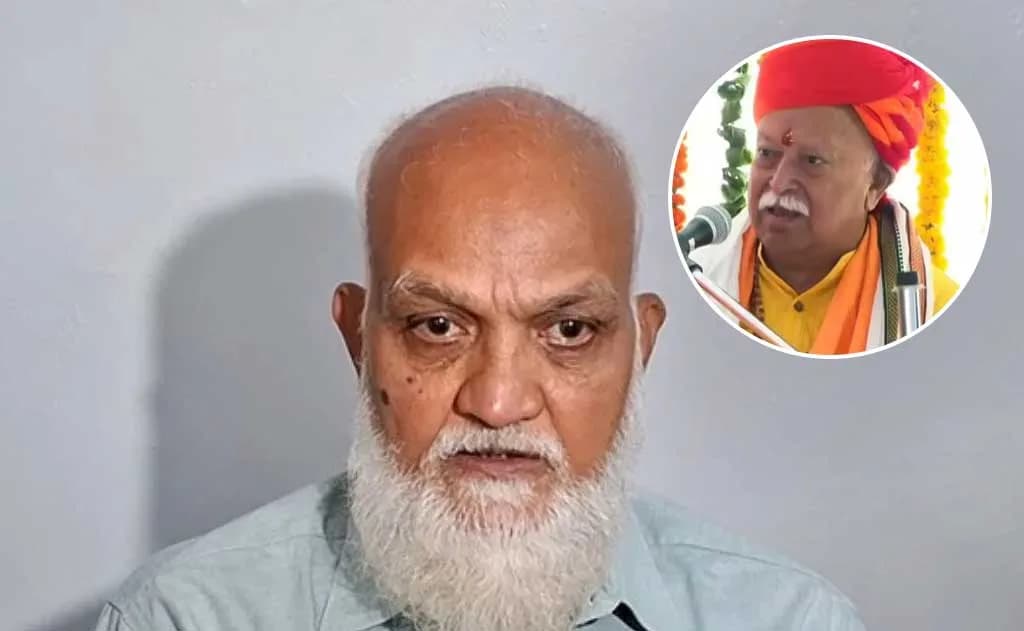
Mumbai, August 1, 2025 — In a shocking revelation, retired Anti-Terrorism Squad (ATS) officer Mehboob Mujhawar has claimed that he was pressured to arrest…
Mumbai, August 1, 2025 — In a shocking revelation, retired Anti-Terrorism Squad (ATS) officer Mehboob Mujhawar has claimed that he was pressured to arrest Rashtriya Swayamsevak Sangh (RSS) chief Mohan Bhagwat in connection with the 2008 Malegaon blast case. Mujhawar further alleged that he was directed to give the investigation a "saffron terror" angle, implying a deliberate attempt to implicate Hindu organizations and leaders.
The Malegaon blast, which occurred on September 29, 2008, in Nashik, Maharashtra, killed six people and injured over 100. Initially, the investigation focused on various groups, but it later took a controversial turn with allegations of "saffron terror" being pushed by certain political and investigative factions.
Speaking exclusively to Hindutone, Mujhawar, who served in the ATS during the investigation, claimed that senior officials instructed him to target Bhagwat, the Sarsanghchalak of the RSS, despite a lack of credible evidence linking him to the blast. "I was told to build a case against Mohan Bhagwat ji and to project the narrative of 'saffron terror.' It was clear that the orders were politically motivated," Mujhawar said. He added that he resisted the pressure, citing professional ethics and the absence of any substantial proof.
Mujhawar’s allegations point to a broader conspiracy to malign Hindu organizations during the period when the term "saffron terror" gained traction in public discourse. He claimed that certain political leaders and officials sought to use the Malegaon case to tarnish the image of the RSS and other nationalist groups. "The agenda was to weaken the Hindu organizations by labeling them as terror outfits. I refused to be a part of this fabricated narrative," he stated.
The retired officer’s claims have reignited debates about the handling of the Malegaon blast case. The investigation saw several twists, with initial accusations against Hindu groups later being challenged in court. In 2016, the National Investigation Agency (NIA), which took over the case, filed a chargesheet that dropped names of some accused and questioned the "saffron terror" theory, citing insufficient evidence.
RSS spokesperson Sunil Ambekar responded to Mujhawar’s claims, stating, "These revelations expose the malicious attempts to defame the RSS and its leadership. The Sangh has always worked for national unity and harmony, and such conspiracies will not deter us from our mission."
Political reactions have been swift, with BJP leaders demanding a thorough probe into Mujhawar’s allegations. "This is a serious matter that points to the misuse of state machinery for political vendettas. Those responsible must be held accountable," said Maharashtra BJP leader Devendra Fadnavis. Meanwhile, opposition parties have remained cautious, with some dismissing the claims as an attempt to "rewrite history."
Mujhawar, now living a quiet life post-retirement, said he chose to speak out to set the record straight. "I served the nation with integrity, and I could not stay silent about this injustice any longer. The truth must come out," he concluded.
The Malegaon blast case remains a contentious issue, with ongoing legal proceedings and polarized opinions. Mujhawar’s allegations have added a new layer to the controversy, raising questions about the integrity of past investigations and the role of political pressures in shaping terror probes.
Hindutone reached out to the Maharashtra ATS and the Home Ministry for comments, but no response was received at the time of publishing.
What exactly happened in the 2008 Malegaon blast, and how did the investigation evolve?
The blast occurred on September 29, 2008 — coinciding with Shab-e-Barat — near a mosque in Malegaon, a town in Nashik district of Maharashtra. A motorcycle-borne improvised explosive device killed six people and left over 100 injured. The Malegaon town had already witnessed a prior blast in 2006, and the 2008 incident immediately heightened communal tensions across the state.
The Maharashtra ATS, then led by Hemant Karkare, arrested several individuals including Lt. Col. Prasad Purohit and Sadhvi Pragya Singh Thakur within weeks of the blast. The arrests were accompanied by the aggressive promotion of the 'saffron terror' or 'Hindu terror' narrative — a framing that critics argued was politically engineered rather than evidence-driven. Charges under the stringent Maharashtra Control of Organised Crime Act (MCOCA) were initially applied but were later dropped by the National Investigation Agency (NIA).
In 2016, the NIA filed a fresh chargesheet that substantially revised the evidentiary basis of the case, dropping MCOCA charges and removing several accused from the primary frame of culpability. The agency's revised findings indicated that the earlier investigation had overstated certain links and relied on evidence that did not withstand judicial scrutiny — lending credibility to longstanding claims of politically motivated investigative overreach.
Who is Mehboob Mujhawar, and why does his testimony carry weight?
Mehboob Mujhawar served as an officer within the Maharashtra ATS during the critical period when the Malegaon 2008 investigation was being shaped. As an insider to the investigative process, his allegations carry a different evidentiary weight than those of political commentators or external critics — he claims direct, first-hand knowledge of the instructions passed down through the chain of command.
Mujhawar's decision to speak publicly comes years after his retirement, a pattern seen in several institutional whistleblower cases where officials feel freer to disclose perceived wrongdoing once they are beyond the reach of departmental action. His specific claim — that he was asked to 'build a case' against RSS Sarsanghchalak Mohan Bhagwat despite the absence of credible evidence — is a serious allegation of fabrication of evidence, which, if corroborated, would constitute a grave violation of the Code of Criminal Procedure and fundamental rights guarantees under Articles 20 and 21 of the Indian Constitution.
It is important to note that Mujhawar's claims have thus far been made in a media interview and have not yet been submitted as an affidavit before any court or commission of inquiry. Verification through judicial or parliamentary processes would be essential before definitive conclusions can be drawn.
How was the 'saffron terror' narrative constructed, and who promoted it?
The term 'saffron terror' entered mainstream Indian political discourse around 2008–2010, used by certain politicians and media outlets to suggest that Hindu nationalist groups were sponsoring domestic terrorism. Critics have argued that the term was a deliberate rhetorical device to create a false equivalence with other well-documented terrorist networks and to politically damage organizations like the RSS and Vishwa Hindu Parishad ahead of electoral cycles.
Several senior leaders of the then-ruling United Progressive Alliance (UPA) government publicly used the phrase in speeches and press interactions, giving it official currency. Former Home Minister Sushilkumar Shinde's remarks at an All India Congress Committee plenary in 2013 — where he referred to 'Hindu terror' training camps — provoked widespread outrage and were subsequently walked back under pressure. These incidents form part of the broader political context within which Mujhawar's allegations must be understood.
From a dharmic standpoint, the deliberate use of state machinery to criminalise Hindu identity and leadership represents what many scholars of Indic studies describe as an extension of colonial-era strategies of delegitimising Sanatana Dharma's institutional expressions. The RSS, founded in 1925 by Dr. Keshav Baliram Hedgewar, has consistently maintained a character-building and cultural mission rooted in the ideal of Hindu Rashtra — a civilisational concept, not a theocratic one.
What has the NIA's revised investigation revealed, and what is the current legal status of the case?
After taking over the Malegaon 2008 case, the National Investigation Agency conducted an independent re-examination of the evidence and filed a chargesheet in 2016 that differed significantly from the ATS's original findings. The NIA dropped MCOCA charges — which carry harsher penalties and stricter bail conditions — against the accused, including Sadhvi Pragya Singh Thakur, citing insufficient evidence to sustain those provisions.
The Special NIA Court in Mumbai has been conducting trial proceedings that have stretched over several years. Sadhvi Pragya Singh Thakur was granted bail by the Bombay High Court in 2017 on health grounds, after spending nearly nine years in custody as an undertrial — a period that itself became a focal point of debate about the misuse of preventive detention laws. Lt. Col. Prasad Purohit, who had claimed that he was working as an intelligence operative with official sanction, similarly secured bail after the Supreme Court's intervention.
As of the time of this report, the trial continues before the Special Court. The prolonged nature of the proceedings has drawn criticism from legal observers who note that the accused spent years incarcerated before charges were substantially revised — raising systemic questions about accountability for investigative agencies that pursue politically influenced cases.
What do these allegations mean for the integrity of anti-terror investigations in India?
If Mujhawar's account is accurate, it points to a structural vulnerability in India's investigative architecture: the susceptibility of specialised units like the ATS to executive pressure when investigations touch on politically sensitive communities or figures. The principle of investigative independence is foundational to a constitutional democracy, and its compromise in high-profile cases undermines public trust in the rule of law regardless of which community or organisation is targeted.
Several retired officers from various state police forces and central agencies have, over the years, made similar claims of political interference in terror-related probes — though formal accountability mechanisms for such interference remain weak. There is no dedicated Parliamentary oversight committee with subpoena powers over intelligence and anti-terror agencies comparable to those in some other democracies, making whistleblower testimony in the media often the only available channel for such disclosures.
For the Hindu community and organisations committed to Sanatana Dharma, these revelations underscore the importance of robust legal defence networks, media vigilance, and engagement with constitutional institutions to ensure that religious identity is never weaponised as a proxy for criminal liability. The Malegaon case has become emblematic of a period when the investigative and political establishment allegedly subordinated truth to a predetermined ideological narrative.
Frequently Asked Questions
What is Retired ATS Officer Alleges Pressure to Frame RSS?
Mumbai, August 1, 2025 — In a shocking revelation, retired Anti-Terrorism Squad (ATS) officer Mehboob Mujhawar has claimed that he was pressured to arrest Rashtriya Swayamsevak Sangh (RSS) chief Mohan Bhagwat in connection with the 2008 Malegaon blast case. Mujhawar further alleged that he was directed to give the investigation a "saffron terror" angle, impl
What are the key points about Retired ATS Officer Alleges Pressure to Frame RSS?
The Malegaon blast, which occurred on September 29, 2008, in Nashik, Maharashtra, killed six people and injured over 100. Initially, the investigation focused on various groups, but it later took a controversial turn with allegations of "saffron terror" being pushed by certain political and investigative factions.
Why does Retired ATS Officer Alleges Pressure to Frame RSS matter in Hinduism?
It reflects core values of Sanatana Dharma and offers practical and spiritual guidance that remains relevant across generations.
How can devotees apply Retired ATS Officer Alleges Pressure to Frame RSS in daily life?
By reflecting on its teaching, incorporating the related practices or observances into daily routine, and approaching it with sincere devotion and understanding.
You might also like

Shani Deva Temples Worldwide & Must-Performed Rituals — Complete Devotee's Guide

ISKCON to Serve Pure Sattvik Mid-Day Meals to School Children in Bengal | Suvendu Adhikari Initiative

The Resolve of a Monk – A Divine Incident Showcasing Kanchi Paramacharya’s Compassion