Tragic Incident at the Mahakumbh Mela on Mauni Amavasya
It is with a heavy heart that we report a tragic incident at the Mahakumbh Mela in Prayagraj, where a stampede broke out during the sacred ritual of Mauni…
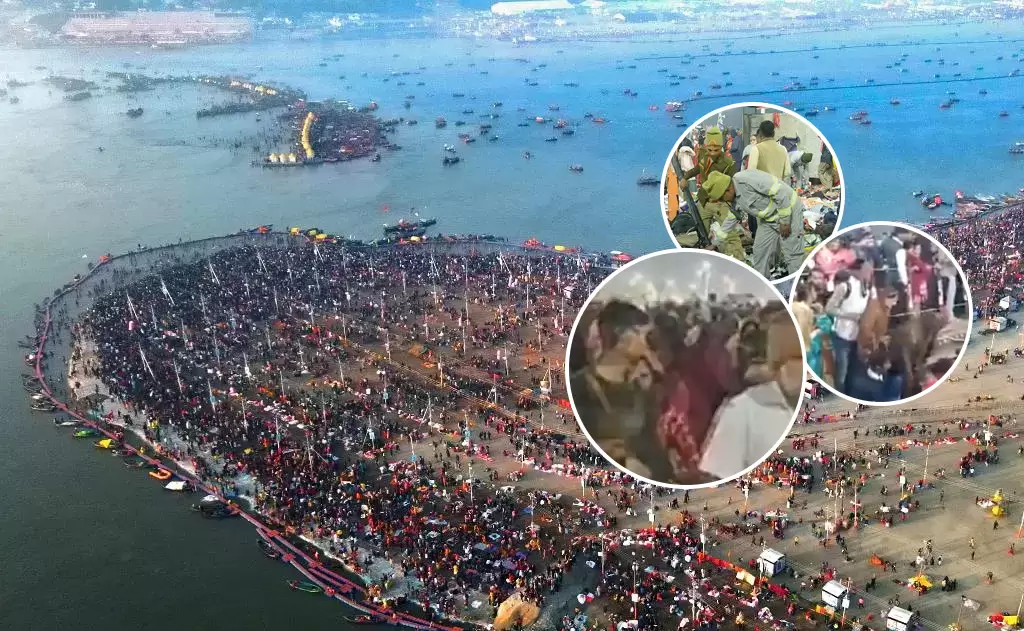
It is with a heavy heart that we report a tragic incident at the Mahakumbh Mela in Prayagraj, where a stampede broke out during the sacred ritual of Mauni Amavasya. Devotees from all corners of the world gathered to participate in the holy dip, a significant event during the Kumbh Mela. However, due to the massive crowd and overcrowding at various ghats, chaos ensued, leading to a stampede.
Casualties and Injuries:
As per early reports, 15 people have tragically lost their lives in the stampede. Over 70 others have been injured, with some in critical condition, as the authorities and medical teams rushed to the scene for immediate assistance. The exact number of casualties is yet to be confirmed by the state government, as they continue to verify and assess the situation.
A Sacred Day Turned Tragic:
The Mauni Amavasya holds immense spiritual significance for millions of Hindus, marking a day of silence and purification. Thousands of devotees, seeking divine blessings, braved the crowds to take a holy dip in the sacred rivers, believing it would cleanse their sins and bring them closer to Moksha.
However, the peaceful and spiritual atmosphere turned to horror as the stampede broke out. The scene of panic and devastation has left many heartbroken, as what was supposed to be a day of spiritual reflection has now become a day of mourning.
Efforts by Authorities:
The local police and emergency services were quick to respond, doing their best to bring the situation under control and provide medical assistance to those injured. Authorities are working hard to provide immediate relief to the injured, while also ensuring that crowd control is reinforced to prevent any further unfortunate incidents. The state government has assured that they are fully committed to investigating the causes of this tragic incident and providing compensation to the victims' families.
Prayers for the Victims:
At HinduTone, our hearts go out to the families who have lost their loved ones and to those injured in this distressing tragedy. In such times, the collective prayers and support of the entire nation are crucial. We pray for the souls of those who lost their lives in this devastating incident, and we wish a speedy recovery to the injured.
Let us all take a moment to reflect and pray for the safety and well-being of the devotees, and hope that the authorities take the necessary precautions to prevent such tragedies in the future.
Stay Updated:
Follow us for more updates on this developing story. For more information about Mahakumbh and its significance, you can explore our articles on www.hindutone.com.
What is Mauni Amavasya and Why Do Millions Converge on This Single Day?
Mauni Amavasya falls on the new-moon day (Amavasya) of the Hindu month of Magha, when the sun and moon align in Makara (Capricorn). The Rigveda and later the Matsya Purana both describe Magha Amavasya as an especially potent titha for pitru-tarpana — offerings to ancestors — and for shedding accumulated karma through sacred immersion (snanam). The silence vow (mauna) observed on this day is believed to redirect inward the spiritual energy that would otherwise dissipate through speech.
At the Mahakumbh Mela held in Prayagraj — the Triveni Sangam where the Ganga, Yamuna, and the invisible Saraswati meet — Mauni Amavasya is considered the most auspicious of all six Shahi Snan (royal bathing) dates in the 2025 cycle. Pilgrimage authorities estimate that tens of millions attempt the snan on this single day alone, making it one of the largest single-day human gatherings on earth. This extraordinary concentration of devotees in a defined riverbank area inevitably creates extraordinary crowd-management demands.
The Historical and Scriptural Roots of the Kumbh Mela at Prayagraj
The theological basis for Kumbh Mela rests on the Samudra Manthan narrative found in the Bhagavata Purana and the Vishnu Purana, wherein drops of Amrita (the nectar of immortality) fell at four earthly locations — Prayagraj, Haridwar, Nashik, and Ujjain — as the divine bird Garuda carried the Kumbha (pot) away from the asuras. Prayagraj is held to be the most sacred of the four, referred to in the Matsya Purana as Tirtharaja, the king of all pilgrimages.
The Chinese traveller Xuanzang, visiting in the 7th century CE during the reign of Emperor Harshavardhana, documented a large assembly at Prayagraj (then known as Prayaga) that bears resemblance to the Kumbh Mela tradition, suggesting the gathering has deep historical continuity well beyond medieval times. The Mahakumbh — held every twelve years — draws the largest attendance of the Kumbh cycle, with the 2025 edition spanning 45 days and hosting an estimated 400 to 450 million visits over its full duration.
How Stampedes Occur at Large Pilgrimages — Lessons from Past Tragedies
Crowd-crush incidents at religious gatherings typically arise not from panic alone but from a phenomenon crowd-safety researchers call 'crowd turbulence' — a state where density exceeds approximately six to seven persons per square metre and individual movement becomes impossible against the collective wave. At the ghats of Prayagraj, where narrow lanes converge onto relatively short stretches of riverbank, the physical geography itself creates natural bottlenecks that amplify pressure when millions attempt to move simultaneously in the pre-dawn hours of an auspicious snan.
India has experienced previous tragedies at large pilgrimages that underscore the recurring nature of this challenge. Incidents at the Nashik Kumbh in 2003, at the Mandher Devi temple in Satara in 2005, and at the Naina Devi temple in Himachal Pradesh in 2008 all involved similar convergence of narrow access routes, pre-dawn timing, and peak-day crowd volumes. Each subsequent event has prompted revised crowd-management protocols; the fact that tragedies can still occur reflects the scale challenge that no current system has fully resolved.
The Spiritual Imperative of Seva — How Hindu Organisations Respond in Crisis
The concept of Apad-dharma — duty under calamity — is articulated in the Mahabharata's Shanti Parva, which teaches that assisting those in distress supersedes ordinary ritual obligations. In that spirit, numerous Akhadas and Hindu seva organisations deployed volunteers at the ghats who assisted the injured before formal emergency services arrived. Organisations such as the Vishwa Hindu Parishad seva wing, the Brahma Kumaris medical teams, and local Hanuman Sena units have historically maintained first-aid kiosks throughout Kumbh grounds.
The Shankaracharyas and heads of major Akhadas present at the 2025 Mahakumbh called for calm and issued appeals through their camps urging pilgrims to cooperate with authorities, prioritising the preservation of life (jiva-raksha) over any individual desire for the most auspicious moment of immersion. This reflects a mature theological position: the Bhagavata Purana (11.2.46) itself states that compassion toward all beings (daya) is among the highest expressions of bhakti.
What Reforms in Crowd Management Are Needed at Future Kumbh Events?
Experts in mass-gathering safety consistently point to three core interventions: staggered entry windows tied to digital registration, real-time crowd-density monitoring using drone surveillance and AI-assisted analytics, and strict one-way pedestrian flow corridors on approach routes to each ghat. The Uttar Pradesh government has in previous editions installed CCTV networks and control rooms; the scale of the Mahakumbh, however, demands investment commensurate with an event that rivals the total attendance of the Olympic Games across its entire duration.
Several pilgrimage sites globally — including the Hajj in Mecca, managed by Saudi authorities — have incrementally reduced casualty rates through time-slot allocation systems and wristband-based crowd monitoring. Adapting such frameworks to the Kumbh Mela requires balancing the logistical with the theological: many pilgrims regard arriving at the exact muhurta (auspicious time window) as spiritually non-negotiable. Dialogue between religious leaders, state authorities, and urban-planning experts before the next Ardha Kumbh in Haridwar will be essential to honour both the sanctity of the occasion and the duty of care owed to every devotee.
Grief, Resilience, and the Community's Path Forward
In the immediate aftermath, families of the deceased are entitled to claim compensation under the State Disaster Response Fund guidelines applicable in Uttar Pradesh, and the state government has indicated that ex-gratia payments will be processed. Victim families who are from other states or nations face additional challenges in navigating bureaucratic procedures while in grief; coordination with district magistrates at Prayagraj is the recommended first point of contact for such families.
The Hindu tradition holds that a death at a sacred tirtha — particularly at Triveni Sangam — confers upon the departed a form of spiritual liberation, a belief rooted in texts such as the Prayaga Mahatmya section of the Matsya Purana. While this theological understanding offers some consolation to bereaved families, it does not diminish the community's responsibility to demand accountability and structural reform. Honouring the victims most meaningfully means ensuring that the next crore of pilgrims who come seeking moksha can do so in safety.
Frequently Asked Questions
What happened at the Mahakumbh Mela on Mauni Amavasya?
A stampede broke out at Prayagraj during the Mauni Amavasya holy dip, as massive crowds overcrowded various ghats. Early reports said 15 people died and over 70 were injured.
Why is Mauni Amavasya so crowded at the Kumbh?
It falls on the new-moon day of the Hindu month of Magha and is considered the most auspicious of the Shahi Snan dates. Tens of millions are estimated to attempt the holy dip on this single day.
What is the silence vow observed on Mauni Amavasya?
Mauna is a vow of silence kept on this day. It is believed to turn inward the spiritual energy that would otherwise dissipate through speech.
How did authorities and seva groups respond to the stampede?
Local police and emergency services moved quickly to control the situation and give medical aid. Akhadas and Hindu seva organisations also deployed volunteers who helped the injured.
What compensation can victims' families claim?
Families can claim compensation under the State Disaster Response Fund guidelines in Uttar Pradesh, and the state government has indicated ex-gratia payments will be processed. Families from other states should first contact district magistrates at Prayagraj.
What crowd-management reforms are suggested for future Kumbh events?
Experts point to staggered entry windows tied to digital registration, real-time crowd-density monitoring using drones and AI analytics, and strict one-way pedestrian corridors on approaches to each ghat.
Share this with family and friends
Send it on WhatsApp, post it, or copy the link.
More from News
- Aurora Hindu Temple Shooting Plot Foiled: Illinois Teen Charged After Rifle Jammed, Police Say
- Hindu Temples Abroad News, October 2026: Neasden's 42-Foot Tapomurti, Maha Annakut, Paris Mandir Hosts UNESCO Diplomats, Abu Dhabi Prayers
- Hindu Temple News, October 2026: Tirumala Navaratri Brahmotsavam, Sabarimala Security, Kashi's New CEO and Puri Updates
- Hindu Festival News, October 2026: Kullu Dussehra, Bastar, Delhi Ramlila, Gujarat Garba, Bathukamma, Chhath and Ayodhya Deepotsav
- Festival Special Trains 2026: Dasara, Diwali and Chhath Specials Announced So Far, Route by Route