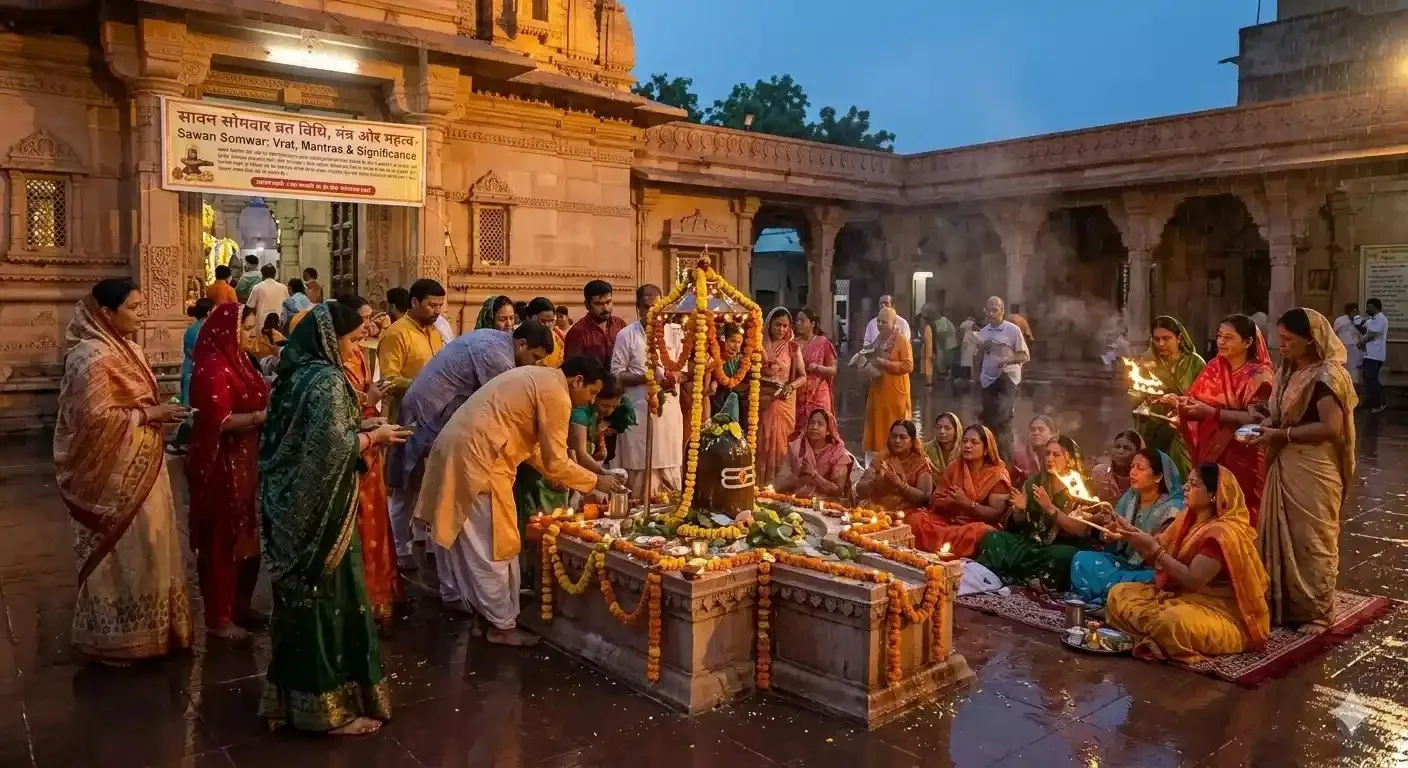
Maha Kumbh 2025 Legacy — 13 Months Later: Records, Spiritual Impact, NRI Pilgrim Stories & Next Ardh Kumbh 2027 Preview
Maha Kumbh 2025 legacy 13 months on — 66+ crore attendance records, infrastructure deployed, NRI pilgrim stories. Plus Ardh Kumbh Prayagraj 2027 + Haridwar 2028 planning.
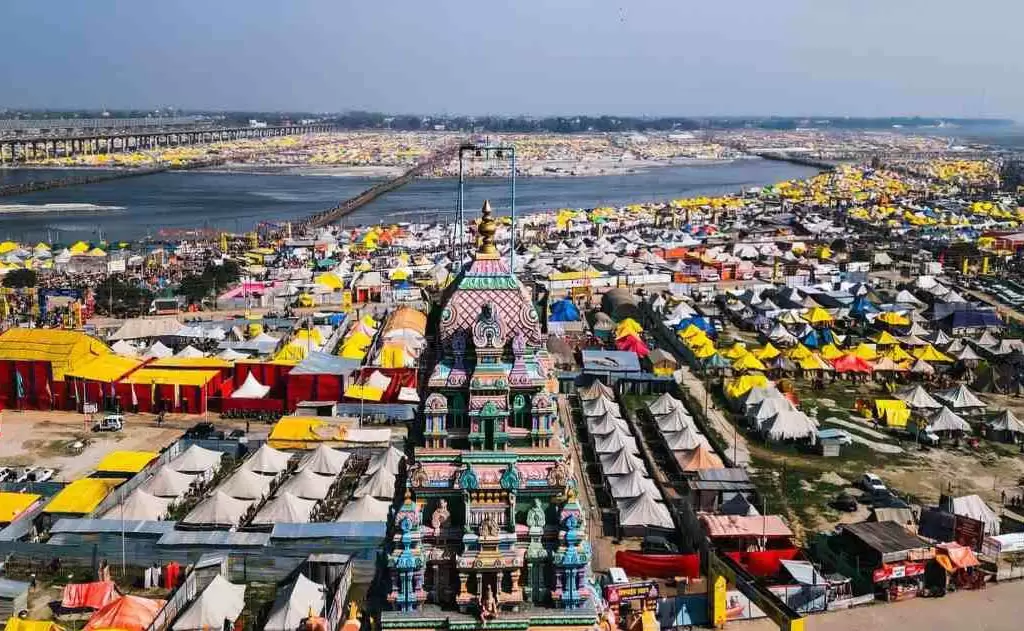
Maha Kumbh 2025 legacy 13 months on — 66+ crore attendance records, infrastructure deployed, NRI pilgrim stories. Plus Ardh Kumbh Prayagraj 2027 + Haridwar 2028 planning.
Quick Answer: Maha Kumbh 2025 at Prayagraj (Jan 13 – Feb 26, 2025) drew over 66 crore (660 million) attendees across 45 days — the largest human gathering in recorded history. Thirteen months later, the legacy continues through infrastructure, spiritual memory, and the building anticipation for Ardh Kumbh Prayagraj 2027 (Magh Mela window January-February 2027) and Haridwar Kumbh Mela 2028. NRI pilgrims account for an estimated 12 lakh international visitors during the 2025 Kumbh.
1. Maha Kumbh 2025 — Records That Defined It
- Duration · Jan 13 – Feb 26, 2025 (45 days)
- Total attendance · Over 66 crore (660 million)
- Peak single-day attendance · 10+ crore on Mauni Amavasya (Jan 29)
- Foreign/NRI pilgrims (estimated) · ~12 lakh
- Akharas participating · 13 official + several smaller traditions
- Naga sadhus participating · ~50,000
- Tents erected · 1.5 lakh+
- Roads laid · 450+ km of temporary roads
- Ghats developed · 35 km of stepped river bathing infrastructure
- Budget · ₹7,500+ crore (Uttar Pradesh + Centre combined)
- Mela area · 4,000 hectares (more than 2x larger than 2013)
The 2025 Kumbh exceeded every previous gathering in scale. For comparison, the 2013 Prayagraj Maha Kumbh drew ~12 crore over its duration — the 2025 Kumbh more than 5x that figure.
2. Infrastructure Deployed and Its Lasting Impact
Thirteen months on, Prayagraj remains transformed:
- Permanent ghat improvements — the Triveni Sangam riverbank now has stepped stone bathing infrastructure that survived the post-Kumbh dismantling
- Airport expansion — Prayagraj's airport was upgraded to handle 10x its pre-Kumbh capacity; this remains
- Highway connectivity — the Prayagraj-Lucknow-Varanasi triangle saw permanent road upgrades
- Power grid — 67,000 LED streetlights installed for the Mela are now powering year-round civic lighting
- Sewage treatment — three new STPs built for Kumbh continue to serve the city
- Healthcare — 100-bed hospital infrastructure left in place
- Digital systems — the Kumbh's lost-and-found app, crowd-monitoring tech, and the integrated control room have been redeployed for ongoing city governance
For Prayagraj, the Maha Kumbh was as much an urban-renewal exercise as a spiritual one.
3. Spiritual Legacy — What Pilgrims Remember
In hundreds of interviews and travel diaries written by 2025 Kumbh pilgrims, recurring themes:
The Amrit Snan (Shahi Snan) moments. The six royal-bathing days drew the most intense crowds and the most enduring memories. The pre-dawn akhara processions led by Naga sadhus on chariots, the sound of conches and bells echoing across the floodplain, and the moment of stepping into the cold Ganga-Yamuna-Saraswati confluence at 4 AM — these are the embodied memories that defined 2025.
Encounter with sadhus. Pilgrims describe brief unscheduled conversations with sannyasis at akhara camps — moments that shifted careers, marriages, and life directions for many returnees.
The collective resonance. Several pilgrims describe an inexplicable shift in their daily practice after the Kumbh — sustained meditation habits that didn't exist before, sudden ease in chanting, less attachment to outcomes.
The infrastructure marvel. Pilgrims who attended previous Kumbhs (2013, 2019) describe 2025 as transformatively better-organised — clean toilets, clear signage, functional medical aid, abundant drinking water.
4. NRI Pilgrim Stories
🇺🇸 USA — Pittsburgh family of 4, attended Jan 28-Feb 2
"We landed in Delhi on January 27, took the Vande Bharat to Prayagraj on Mauni Amavasya morning. The crowd was beyond comprehension — but the organisation worked. We did the Mauni Amavasya Snan at 5 AM. The kids — 9 and 12 — say it's the most important thing they've done. We're sending them back with my parents for Ardh Kumbh 2027."
🇬🇧 UK — Leicester family of 6, attended Feb 12-17 (Maghi Purnima window)
"For my elderly father, this was his return. He'd attended 1989 Kumbh as a young man. Forty years later, walking the same ghats with three grandchildren — there's no NRI experience that compares."
🇨🇦 Canada — Brampton-based engineering manager
"I left Brampton on January 15, returned February 22. Six weeks at the Mela. The H1-B and CRS-score grind dissolves into something else when you're sitting in a Naga akhara at 3 AM. I came back and rewrote my career plan."
🇦🇺 Australia — Melbourne IT professional
"I went solo for the Mauni Amavasya bath. Booked Aug 2024 (six months ahead) — even with that lead time, hotels at Prayagraj were sold out. I stayed at Varanasi and commuted by morning train. It was worth every hour."
These are representative; the actual NRI pilgrim count is estimated at ~12 lakh across the 45 days.
5. Ardh Kumbh Prayagraj 2027 — Preview
The Ardh Kumbh (literally "half Kumbh") falls every 6 years at Prayagraj — halfway between the 12-yearly Purna Kumbh cycles. Ardh Kumbh 2027 will be a major event in its own right, though smaller in scale than the 2025 Maha Kumbh.
Expected dates: The full Mela window runs January 14, 2027 – February 26, 2027 (the same 45-day pattern), with Shahi Snan dates likely:
- Jan 14, 2027 — Makar Sankranti
- Jan 26, 2027 — Mauni Amavasya
- Feb 2, 2027 — Vasant Panchami
- Feb 11, 2027 — Maghi Purnima
- Feb 26, 2027 — Maha Shivaratri
(Note: exact dates will be confirmed by UP government 6 months before. Dates are calculated from Hindu lunar calendar.)
What to expect:
- Attendance forecast: ~25-30 crore (smaller than Maha Kumbh but still the largest gathering of 2027)
- All akharas participating
- Infrastructure already largely in place from 2025
- Easier accommodation availability than Maha Kumbh
- Less media frenzy — more authentic pilgrimage experience
For NRI planning: Bookings open mid-2026. Ardh Kumbh 2027 will be far easier to attend than Maha Kumbh 2025 was — a recommended pilgrimage window if you missed the 2025 event.
6. Haridwar Kumbh Mela 2028 — Preview
After Prayagraj Ardh Kumbh 2027, the next major Kumbh is Haridwar Maha Kumbh 2028 — full Maha Kumbh status (12-yearly cycle).
Expected window: Haridwar Kumbh traditionally falls between Makar Sankranti (January) and Vaisakh Purnima (April). The 2028 dates will be calculated as Saturn moves through Aquarius (Kumbha) and Jupiter through Pisces — the astrological signature that defines Haridwar's Kumbh window.
Why Haridwar matters:
- Considered the holiest of the four Kumbh sites (Prayagraj, Nashik, Ujjain, Haridwar)
- Har Ki Pauri ghat — where Vishnu's footprint marked the earth
- Bathing in the Ganges directly (not the Triveni confluence)
- Closer to Delhi (200 km vs 600+) — easier for NRI arrivals
- Smaller in geographic scale than Prayagraj — more navigable
Planning recommendation: If 2025 Prayagraj was missed, attend Haridwar 2028 over Prayagraj 2027. Haridwar's Maha Kumbh status carries greater religious weight; the geography is friendlier; the time gap allows proper planning.
7. How NRIs Should Plan a Kumbh Visit
2-year prep timeline (for Ardh Kumbh 2027)
24 months ahead (Jan 2026, just past us): Begin family conversation; align with school holidays and work calendars
18 months ahead (Jul 2026): Block flight dates; preliminary research on which Shahi Snan you want to attend
12 months ahead (Jan 2027 — start of Mela year): Lock flights; begin accommodation research
9 months ahead (Apr 2026 for Jan 2027): Book accommodation (the earliest practical window — tent cities open booking ~6-9 months ahead)
6 months ahead (Aug 2026): Final accommodation; tour-operator finalisation if using one
3 months ahead (Oct 2026): Visa-equivalent paperwork (OCI verification, India travel docs); medical prep (vaccinations if needed; cold-weather gear)
1 month ahead (Dec 2026): Final packing; learn key Hindi/Sanskrit phrases for navigating the Mela
Practical tips
- Accommodation tiers: Tent City (mid-budget; book through Mela administration); private dharmashalas (budget); 5-star hotels in Allahabad/Varanasi (premium, commute to ghats by car or boat); Camp/cottage options closer to ghats (budget plus convenience)
- Best Shahi Snan for NRIs: Mauni Amavasya is the spiritual peak but the most crowded; Vasant Panchami offers good experience with manageable crowds; Maha Shivaratri closes the Mela powerfully
- Family with kids: Avoid Mauni Amavasya (overwhelming). Choose Vasant Panchami (Jan-Feb) or Maghi Purnima
- Single travellers: Mauni Amavasya for the intensity, Maha Shivaratri for the closing
- Mobile + connectivity: Indian SIM essential; airtel and Jio cover the Mela area
- Health prep: Cold morning baths in Ganga water — start cold-shower acclimatisation 3 months ahead
8. FAQs
Q: When is the next major Kumbh after Maha Kumbh 2025?
A: Ardh Kumbh Prayagraj January-February 2027 (smaller half-Kumbh). Then full Maha Kumbh Haridwar 2028.
Q: Was 2025 Maha Kumbh the biggest ever?
A: Yes — 66+ crore attendance set the all-time record for human gatherings.
Q: Will Ardh Kumbh 2027 have the same infrastructure as 2025?
A: Most permanent infrastructure (roads, power, sewage, airport) remains. Temporary infrastructure (tent city) will be rebuilt at smaller scale.
Q: Can NRIs participate in Shahi Snan?
A: Naga sadhus and akhara members have the first ceremonial dip. After their procession concludes, the ghats open to general public. NRIs can do Shahi Snan-day bathing, though not as part of the akhara procession.
Q: What about Haridwar Kumbh 2028 dates?
A: Will be announced by Uttarakhand government in 2027. Window typically January-April.
Q: Is one day at Kumbh enough?
A: Recommended minimum 3 days to absorb the experience. Many pilgrims stay 6-10 days. Some sadhus stay the full 45.
Final Thoughts
Thirteen months after the Maha Kumbh 2025, the legacy lives in physical infrastructure, in 66 crore pilgrim memories, and in the quiet renewal of millions of spiritual practices that began on the banks of the Triveni Sangam. For NRI Hindus who missed 2025, Ardh Kumbh Prayagraj 2027 and Haridwar 2028 are the next two opportunities — and both will be far easier to attend than the 2025 once-in-144-years gathering.
The Kumbh is not a place. It is a continuity. From the cosmic churning of the Samudra Manthan that placed Amrita drops on these four earthly sites, through every 12-year recurrence over millennia, the Kumbh is the Hindu civilisation's living proof that the sacred and the engineered can coexist at planetary scale.
Gangā cha Yamunā chaiva, Godāvarī Sarasvatī, Narmade Sindhu Kāveri, jale’smin sannidhim kuru.
May the seven sacred rivers grace this water.
Har Har Gange! Jai Shri Hari! Jai Sankarshana Balaram!
HinduTone Editorial Team · Tags: Maha Kumbh 2025, Maha Kumbh Legacy, Ardh Kumbh 2027, Haridwar Kumbh 2028, Triveni Sangam, NRI Kumbh, Hindu Pilgrimage
Frequently Asked Questions
What is Maha Kumbh Legacy?
Maha Kumbh 2025 at Prayagraj (Jan 13 – Feb 26, 2025) drew over 66 crore (660 million) attendees across 45 days — the largest human gathering in recorded history. Thirteen months later, the legacy continues through infrastructure, spiritual memory, and the building anticipation for Ardh Kumbh Prayagraj 2027 (Magh Mela window January-February 2027) and Haridwa
What are the key points about Maha Kumbh Legacy?
NRI pilgrims account for an estimated 12 lakh international visitors during the 2025 Kumbh. Maha Kumbh 2025 — Records That Defined It Duration · Jan 13 – Feb 26, 2025 (45 days) Total attendance · Over 66 crore (660 million) Peak single-day attendance · 10+ crore on Mauni Amavasya (Jan 29) Foreign/NRI pilgrims (estimated) · ~12 lakh Akhara
Why does Maha Kumbh Legacy matter in Hinduism?
It reflects core values of Sanatana Dharma and offers practical and spiritual guidance that remains relevant across generations.
How can devotees apply Maha Kumbh Legacy in daily life?
By reflecting on its teaching, incorporating the related practices or observances into daily routine, and approaching it with sincere devotion and understanding.
You might also like
12 Jyotirlinga Yatra 2026: Pilgrimage Guide, Itinerary & Costs | HinduTone
12 Jyotirlingas of Lord Shiva: Complete Darshan Guide, Pilgrimage Circuits & NRI Travel Tips
Shani Deva Temples Worldwide & Must-Performed Rituals — Complete Devotee's Guide