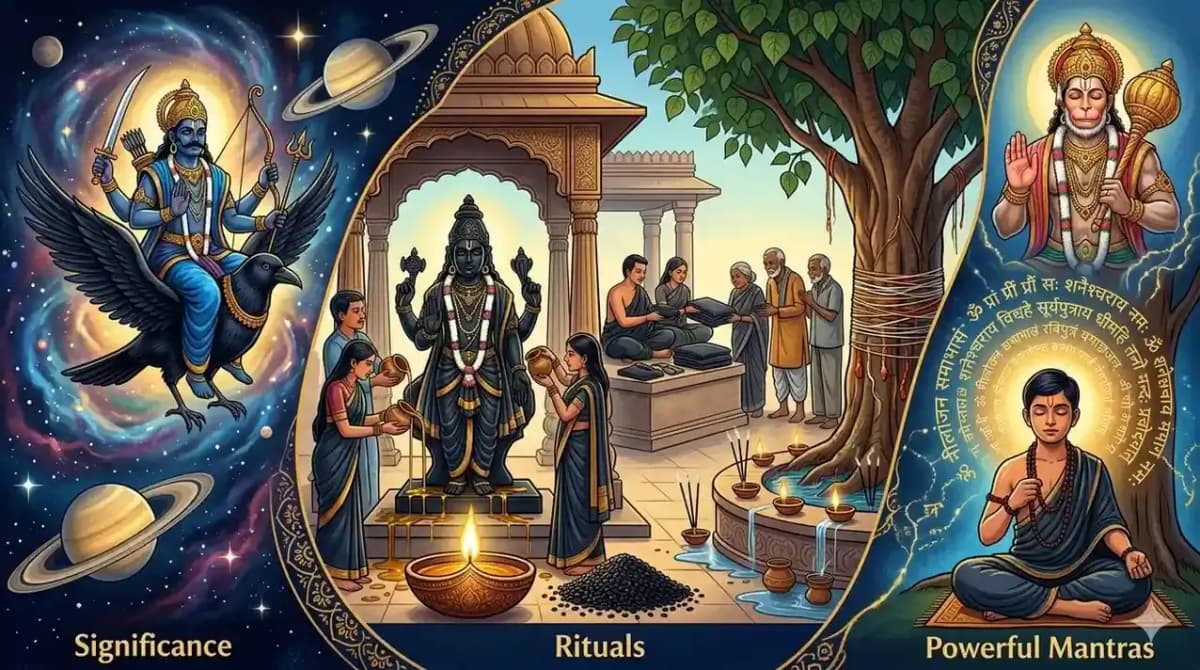
Guru Mantra: Bow to the Divine Teacher Within
Gurur Brahma Gurur Vishnu Gurur Devo Maheshwaraha Guruh Sakshat Para Brahma Tasmai Shri Gurave Namaha The Guru is Brahma, the Guru is Vishnu, the Guru is Shiva…
Gurur Brahma Gurur Vishnu Gurur Devo Maheshwaraha Guruh Sakshat Para Brahma Tasmai Shri Gurave Namaha The Guru is Brahma, the Guru is Vishnu, the Guru is Shiva…
Gurur Brahma Gurur Vishnu Gurur Devo Maheshwaraha Guruh Sakshat Para Brahma Tasmai Shri Gurave Namaha
The Guru is Brahma, the Guru is Vishnu, the Guru is Shiva The Guru is verily the Supreme Absolute itself, to that Guru I offer my salutations
In the vast ocean of spiritual wisdom that flows from ancient India, few mantras carry the profound reverence and transformative power of the Guru Mantra. These sacred syllables, chanted by millions of seekers across centuries, encapsulate one of the most essential and often misunderstood principles of the spiritual path—the guru tattva, the principle of the divine teacher.
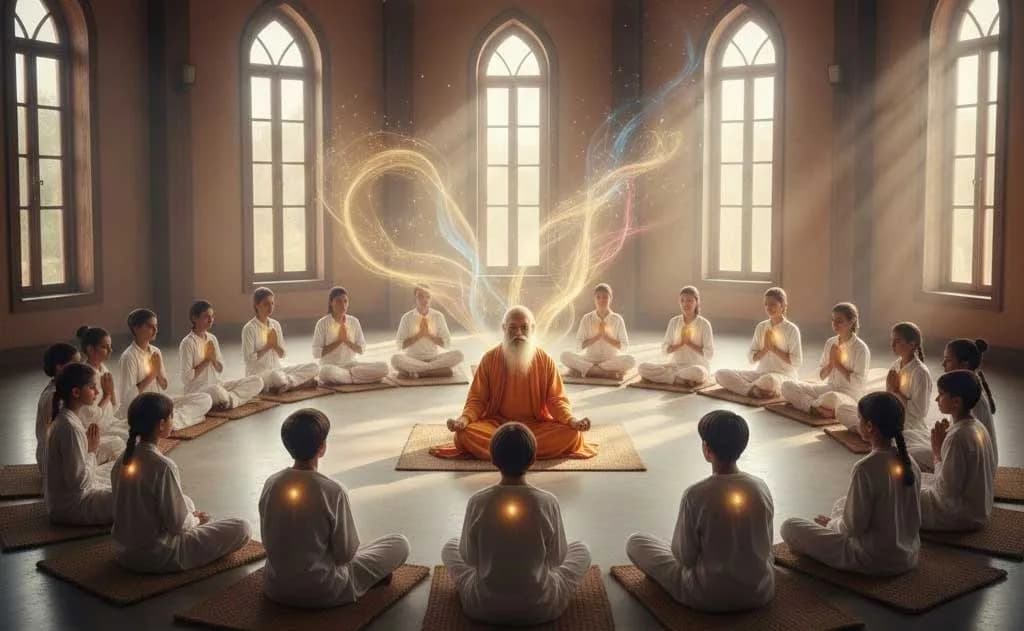
When a devoted student sits before their teacher, hands folded in pranaam, eyes closed in meditation, and allows these words to flow from the depths of their heart, something extraordinary occurs. The boundaries between seeker and sought begin to dissolve. The guru ceases to be merely a person and reveals themselves as a principle, a presence, a portal to the infinite wisdom that pervades all existence.
This is not blind worship. This is not the surrender of reason or autonomy. This is the recognition of a profound spiritual truth: that the divine consciousness that created and sustains the universe also resides within, waiting to be awakened, and that this awakening often requires the catalyzing presence of one who has already walked the path.
The Sacred Syllables: Understanding the Guru Mantra
Let us first immerse ourselves in the depth of this mantra, for every word is a universe unto itself.
Gurur Brahma – The Guru is Brahma, the creator. Just as Brahma brought forth the cosmos from the unmanifest void, the guru creates the spiritual aspirant anew. The person who approaches the guru is not merely refined or improved—they are fundamentally recreated. Old identities, limiting beliefs, karmic patterns that have accumulated across lifetimes—all these are dissolved and a new being emerges, one aligned with their highest truth.
Gurur Vishnu – The Guru is Vishnu, the preserver. The spiritual path is fraught with challenges. Doubts arise. The mind rebels. Old patterns reassert themselves. External obstacles manifest. In these moments, the guru's grace preserves and protects the sadhana (spiritual practice), ensuring that the seeker does not fall away from the path. The guru sustains the inner flame even when outer storms threaten to extinguish it.
Gurur Devo Maheshwaraha – The Guru is Shiva, the transformer and destroyer. This is perhaps the most crucial function. The guru destroys ignorance, the root cause of all suffering. Like Shiva's cosmic dance that both destroys and regenerates, the guru systematically dismantles the false self—the ego's constructions, society's conditioning, the accumulated debris of unconscious living—to reveal the luminous truth of who we really are.
Guruh Sakshat Para Brahma – The Guru is directly, manifestly, the Supreme Absolute itself. This is the culminating recognition. The guru is not merely representing or pointing toward the divine—the guru IS the divine in form, made accessible to the human consciousness that still operates within duality. Through the guru's physical presence, the formless takes form. Through the guru's words, the silence speaks. Through the guru's touch, the infinite embraces the finite.
Tasmai Shri Gurave Namaha – To that glorious Guru, I bow. This is not servile submission but sacred acknowledgment. To bow is to set aside the ego's arrogance, to admit "I do not know," to create the empty space into which wisdom can pour. The act of bowing itself is transformative, a physical gesture that realigns consciousness toward receptivity and humility.
The Guru Tattva: Principle Beyond Personality
One of the greatest misunderstandings in contemporary spiritual discourse concerns the nature of the guru. In the West particularly, influenced by democratic egalitarianism and wounded by cases of spiritual abuse, many seekers reject the entire concept of the guru as authoritarian or cultish.
This confusion arises from conflating the guru tattva—the principle of divine guidance—with the guru as person. The guru tattva is not a human being's personality, knowledge, or power. It is the presence of awakened consciousness operating through a form.
Think of electricity. Electricity itself is invisible, formless potential. For it to become useful—to light a lamp, power a device, cook food—it must flow through a conductor, through specific forms and structures. Yet the electricity remains distinct from the bulb or appliance. Similarly, the guru tattva—the transmission of liberating wisdom—is the electricity, while the human guru is the conductor through which it flows.
This understanding protects us from two equal and opposite errors. The first error is worshiping the guru's personality, becoming attached to their human quirks, habits, and preferences, mistaking the form for the essence. The second error is dismissing the necessity of the form altogether, imagining we can access the formless truth without the catalyzing presence of one who embodies it.
The guru tattva recognizes that while truth is ultimately beyond all forms, we who are currently bound in form require form-based transmission. The guru meets us where we are—embodied, dualistic, conditioned—and gradually leads us to where we're going—the recognition of our own formless nature.
Why the Spiritual Guide Matters: The Psychology and Metaphysics of Guidance
The question arises: if the truth is already within us, if we are already the divine consciousness we seek, why do we need a guru at all? Can we not simply read books, practice meditation, and discover truth independently?
Theoretically, yes. The Upanishads themselves declare "Tat Tvam Asi"—Thou Art That. You are already the infinite consciousness you seek. But there's a critical difference between theoretical truth and lived realization, between knowing about water and quenching your thirst.
The Mirror Effect
The guru serves first as a mirror. We cannot see our own face without a reflective surface. Similarly, we cannot easily perceive our own patterns, blind spots, and unconscious mechanisms without the mirror of an awakened consciousness. The guru reflects back to us both our limitations and our highest potential.
When a student exhibits spiritual pride, the guru's response reveals it. When a student harbors hidden fear, the guru's teaching illuminates it. When a student underestimates their capacity, the guru's confidence awakens it. This mirroring is not criticism but compassionate revelation—the necessary seeing that precedes transformation.
The Transmission Beyond Words
The most profound aspect of the guru-disciple relationship is what the Zen tradition calls "direct transmission from mind to mind" or what the Vedic tradition calls darshan—the blessing of presence. There is a vibrational transfer that occurs in the presence of awakened consciousness that cannot happen through books or recordings alone.
Consider learning to swim. You can read every book on swimming technique, watch countless videos, memorize the mechanics perfectly. But until you get into water with someone who knows how to swim, who can support you as you learn to trust the water's buoyancy, who can demonstrate through their own ease what confidence in water looks like—you will not truly learn.
Spiritual awakening is similar. The guru's presence carries a frequency, an energetic signature of what awakened consciousness feels like. Simply being in that presence begins to entrain your own consciousness toward that frequency, the way tuning forks in proximity begin to resonate with each other.
The Accountability and Structure
The spiritual path is subtle. The ego is crafty. Without external reference points, it's remarkably easy to mistake egoic inflation for spiritual progress, spiritual bypassing for genuine transcendence, or comfortable complacency for true peace.
The guru provides accountability—a benevolent but unwavering standard against which genuine progress can be measured. The guru designs sadhana specifically suited to each student's temperament, karma, and stage of development. The guru recognizes when a student is ready for the next teaching and when they need to deepen their current practice.
This structured guidance prevents the common pitfall of spiritual dilettantism—sampling many paths without committing to any, collecting techniques like trophies without allowing any to truly transform consciousness.
Devotion to the Spiritual Guide: Love as the Accelerant
The element that transforms the guru-disciple relationship from informational transfer to genuine transmission is bhakti—devotion, love, surrender. This is perhaps the most foreign concept to the modern Western mind, which prizes independence and questions authority.
Yet devotion in the spiritual context is not weakness or dependency. It is the recognition that the small self, with all its limited understanding and egoic agendas, cannot engineer its own transcendence. The ego cannot dissolve itself through its own efforts, just as the eye cannot see itself or the hand cannot grasp itself.
Devotion creates the opening, the surrender, the "yes" to grace that allows transformation to occur. When you love the guru, you naturally align with their teachings. When you trust the guru, you practice even when you don't immediately understand why. When you surrender to the guru, you allow your rigid structures to soften enough to be reshaped.
This devotion is not blind. True gurus never demand unquestioning obedience or exploitation of students. True devotion is intelligent, discerning, and ultimately liberating. It is the devotion to truth operating through a form, not servitude to a personality.
The Test of True Devotion
Authentic devotion produces specific fruits that distinguish it from mere personality attachment or psychological dependency. True devotion makes you:
- More independent and self-reliant, not less
- More compassionate toward all beings, not exclusive to the guru
- More discerning and wise, not more gullible
- More integrated and whole, not fragmented
- More connected to your inner guru, not externally dependent
If your relationship with a spiritual teacher produces the opposite effects—increasing dependency, separating you from family and society, demanding financial exploitation, encouraging blind obedience to nonsensical directives, or fostering spiritual pride and exclusivity—these are red flags indicating distortion of the genuine guru principle.
The Inner Guru: Finding the Teacher Within
Here we arrive at the beautiful paradox at the heart of the guru tattva: the external guru exists to awaken the internal guru. The teacher you bow to outside is training you to recognize and bow to the teacher within.
Every authentic lineage teaches this. The Sikh tradition speaks of the "shabad guru"—the word, the teaching, the inner voice of wisdom. The Buddhist tradition speaks of "buddha nature"—the awakened awareness inherent in all beings. The Christian mystics spoke of "Christ consciousness" dwelling within. Vedanta declares "Ayam Atma Brahma"—this self is the Absolute.
The Guru Mantra, when chanted with deep understanding, is actually awakening you to your own divine nature. When you bow to the guru as Brahma-Vishnu-Maheshwara, you are simultaneously recognizing these cosmic principles operating within your own consciousness.
You are the creator (Brahma) of your experience through the power of attention and intention. You are the preserver (Vishnu) of your highest aspirations and values. You are the transformer (Shiva) who can destroy limiting patterns and regenerate your being.
The external guru is like scaffolding around a building under construction. Essential during the building process, but ultimately removed when the structure can stand on its own. The goal is not permanent dependency but the graduation into self-mastery, guided always by the inner guru that has been awakened.
Practical Guidance: Working with the Guru Mantra
For those called to work with this sacred mantra, here is practical guidance for making it a transformative practice:
Daily Recitation
Chant the Guru Mantra at the beginning of your spiritual practice—meditation, pranayama, study, or any sadhana. This invokes the guru's grace and aligns your consciousness with the teaching frequency. Even 3-11 repetitions, done with full presence and devotion, carry significant power.
Guru Purnima and Special Occasions
On Guru Purnima (the full moon in July dedicated to honoring the guru) and your guru's birthday or other significant dates, engage in extended practice—108 repetitions, 1008 repetitions, or continuous chanting for a set period. These intensive practices deepen the connection and bring profound blessings.
Before Receiving Teaching
When sitting to receive teaching—whether directly from a living teacher, from sacred texts, or from the inner guru revealed in meditation—chant the mantra to create receptivity. This simple act shifts consciousness from the ordinary mode of intellectual grasping to the sacred mode of absorbing wisdom.
In Times of Confusion or Crisis
When the path seems unclear, when doubts assail you, when you feel disconnected from guidance—return to the Guru Mantra. Chant it with your whole heart, surrendering the confusion and asking for clarity. Grace responds to sincere invocation.
Contemplative Practice
Don't just mechanically repeat the words. Contemplate their meaning. Meditate on each aspect: What does it mean that the guru is the creator of my new being? How does the guru preserve my practice? What needs to be destroyed in me for truth to emerge? How is the guru the manifestation of the Absolute?
This contemplative engagement transforms the mantra from formula to living wisdom.
Conclusion: The Eternal Relationship
The relationship with the guru—whether external teacher or inner guide—is not transactional or temporary. It is eternal, existing beyond the boundaries of time, space, and even physical presence. Disciples whose gurus have left the body often report continued guidance through dreams, synchronicities, intuitions, and the ongoing presence of the teaching in their consciousness.
This is because the guru tattva is not dependent on the guru's physical form. Once the connection is established at the level of consciousness, it continues to operate, guide, and transmit wisdom. The guru's voice becomes internalized, the guru's presence becomes the very fabric of awareness.
The Guru Mantra is your key to this eternal relationship. Each repetition strengthens the connection, deepens the devotion, and clarifies the transmission. Whether you have found your external guru or are still seeking, whether you are just beginning the path or have walked it for decades, this mantra remains relevant and powerful.
Bow to the divine teacher without, for in doing so, you awaken the divine teacher within. Honor the guru in form, for through that form, the formless becomes knowable. Surrender to the guru's grace, for that surrender is what finally liberates you into your own infinite nature.
Gurur Brahma Gurur Vishnu Gurur Devo Maheshwaraha Guruh Sakshat Para Brahma Tasmai Shri Gurave Namaha
May this sacred mantra illuminate your path, may the guru's grace guide your journey, and may you recognize, in time, that the guru you've been seeking has been present all along, as the very awareness through which you read these words, as the longing that drew you to the spiritual path, as the love that will finally reveal you to yourself.
Om Shanti
Frequently Asked Questions
What is the Guru Mantra?
Gurur Brahma Gurur Vishnu Gurur Devo Maheshwaraha Guruh Sakshat Para Brahma Tasmai Shri Gurave Namaha The Guru is Brahma, the Guru is Vishnu, the Guru is Shiva The Guru is verily the Supreme Absolute itself, to that Guru I offer my salutations In the vast ocean of spiritual wisdom that flows from ancient India, few mantras carry the profound reverence and tr
How many times should the Guru Mantra be chanted?
It is traditionally chanted 108 times using a rudraksha or tulsi mala. Even 11 or 21 sincere repetitions daily are considered beneficial — steady, focused practice matters more than the count.
What is the best time to chant the Guru Mantra?
Dawn (Brahma Muhurta) after a bath is considered ideal, though it may be chanted any time with a calm, focused mind. Many devotees keep a fixed daily time to build consistency.
Who can chant the Guru Mantra?
Anyone may chant it with faith and a pure mind, regardless of age, gender or background. Beginners benefit from first hearing the correct pronunciation and understanding its meaning.
What are the benefits of chanting the Guru Mantra?
It is believed to calm the mind, dissolve negativity, and draw divine grace, protection and clarity to the devotee.
You might also like
Powerful Mantras for Students & Parents Before Joining School
Powerful Hindu Mantras for Purushottam Maas 2026: Vishnu Bhakti, Chanting Guide & Global Devotion

Sacred Hindu Festivals & Temple News: Divine Week — May 2026