Mahamrityunjaya Mantra Meaning, Benefits & Chanting Rules
Dear devotees, as the auspicious vibrations of Sanatana Dharma resonate in our hearts, I bow with deepest reverence to Mahadev, Lord Shiva – the Tryambaka, the…
Dear devotees, as the auspicious vibrations of Sanatana Dharma resonate in our hearts, I bow with deepest reverence to Mahadev, Lord Shiva – the Tryambaka, the…
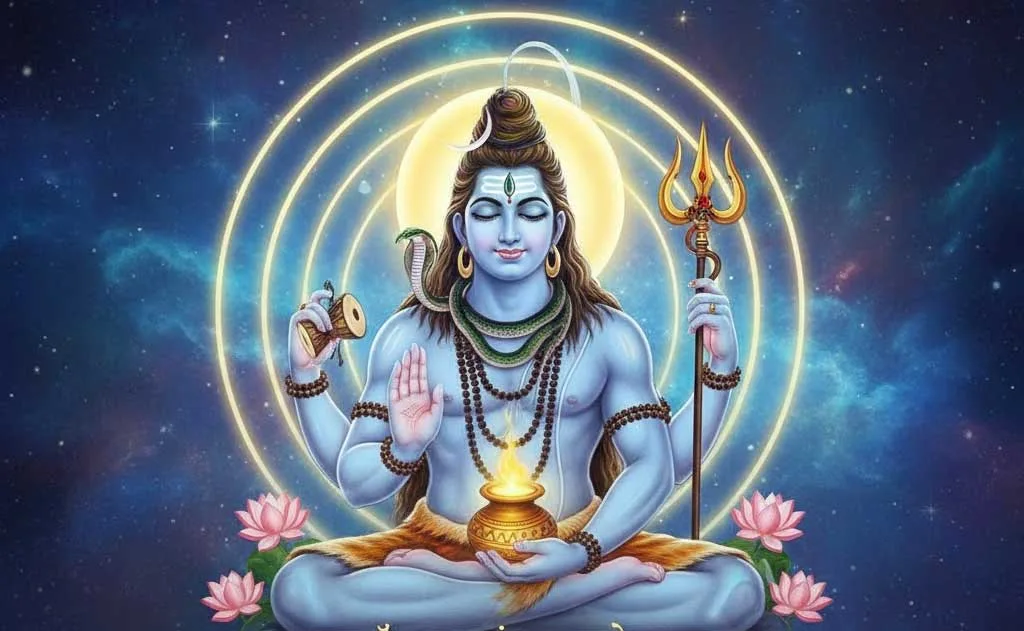
Dear devotees, as the auspicious vibrations of Sanatana Dharma resonate in our hearts, I bow with deepest reverence to Mahadev, Lord Shiva – the Tryambaka, the conqueror of death, the compassionate healer who holds the nectar of immortality. O beloved seekers sheltered under His divine trishul, let us invoke His boundless mercy:
Om Tryambakam Yajamahe Sugandhim Pushtivardhanam Urvarukamiva Bandhanan Mrityor Mukshiya Maamritat
O Mahamrityunjaya, three-eyed Lord fragrant with grace, nourish us with vitality and strength. Liberate us from the bonds of death as gently as a ripe cucumber from its vine, yet grant us the nectar of eternal life. Hara Hara Mahadev!
The Mahamrityunjaya Mantra, revered as the great death-conquering mantra, is a timeless gem from the Vedas – a heartfelt prayer to Lord Shiva for healing, protection, and spiritual liberation. As your humble priest sharing this sacred wisdom like a family elder gathered around the eternal flame, I invite you, dear devotees worldwide, to immerse in its divine resonance. From ancient ashrams in Bharat to modern homes in the global diaspora, this mantra unites us in unwavering bhakti, embodying our cherished unity in diversity.
The Origin and Mythological Story of the Mahamrityunjaya Mantra
Legends from Puranas and Vedas: The Tale of Young Sage Markandeya
The Mahamrityunjaya Mantra originates in the Rig Veda (7.59.12) and Yajur Veda (3.60), addressed to Tryambaka Rudra, the fierce yet compassionate form of Lord Shiva.
The most beloved legend, narrated in the Shiva Purana and Markandeya Purana, centers on young Sage Markandeya. Sage Mrikandu and his wife Marudvati, childless despite fervent prayers, performed intense tapasya. Pleased, Lord Shiva appeared and offered a choice: a virtuous son with short life or a long-lived but ordinary one. They chose the former.
Born as Markandeya, brilliant and devoted to Shiva, the boy learned his fate – death at 16. Undeterred, he worshipped a Shivling fervently. On his fateful day, Yama arrived with his noose. Markandeya clung to the Linga, chanting this sacred mantra revealed through divine grace.
Yama's noose encircled both boy and Linga. Enraged, Lord Shiva emerged as Mrityunjaya, kicking Yama and reviving him only after granting Markandeya eternal youth. Thus, the mantra became synonymous with conquering untimely death.
Dear devotees, Markandeya's unwavering devotion teaches us that sincere surrender to Mahadev transcends even destiny's grasp.
Other Sacred Associations
In another Puranic tale, Shukracharya received this mantra from Shiva as Sanjeevani Vidya (knowledge of resurrection). Chandra (Moon God) also chanted it to escape Daksha's curse.
These leelas remind us: Shiva's grace liberates from all fears, including mrityu (death).
Spiritual Significance of the Mahamrityunjaya Mantra: Victory Over Death and Ignorance
Known as Mrita-Sanjivini Mantra, it invokes Shiva's healing energy to overcome physical ailments, emotional turmoil, and spiritual bondage.
The mantra prays for liberation from death's grip like a ripe fruit from its stem – naturally, without force – while seeking amrita (immortality) through divine union.
It purifies karma, dispels negativity, and awakens kundalini. As Shiva embodies transformation, chanting fosters forgiveness, resilience, and moksha.
In my priestly reflection: This mantra unites Hindus globally – chanted in hospitals for healing, homes for protection, temples during Shivaratri – proving Shiva's grace knows no bounds.
The Mahamrityunjaya Mantra: Text, Pronunciation, and Word-by-Word Meaning
Phonetic Pronunciation Guide
Om Tryam-ba-kam Ya-jaa-ma-he Su-gan-dhim Push-ti-var-dha-nam Urvaa-ru-ka-mi-va Ban-dha-naan Mri-tyor Mook-shee-ya Maa-mri-taat
(Chant slowly, devotionally, feeling each vibration.)
Word-by-Word Devotional Explanation
- Om: Primal sound, Brahman.
- Tryambakam: Three-eyed Lord (past, present, future; creation, preservation, destruction).
- Yajamahe: We worship/meditate upon.
- Sugandhim: Fragrant (divine grace permeating all).
- Pushtivardhanam: Nourisher of health, vitality, prosperity.
- Urvarukamiva: Like a ripe cucumber.
- Bandhanan: From bondage/stem.
- Mrityor: From death.
- Mukshiya: Liberate/release.
- Maamritat: Me to immortality (not depriving of eternal life).
Full meaning: "We worship the three-eyed Lord, fragrant and nourisher of all. Liberate us from death's bonds as a ripe fruit from the vine, granting the nectar of immortality."
This prayer seeks healing and liberation through Shiva's compassion.
Traditional Rituals and Chanting Rules: Step-by-Step Guidance
Auspicious Timings and Muhurat
- Ideally during Brahma Muhurta (pre-dawn, ~4-6 AM).
- Mondays, Pradosh, or Maha Shivaratri (February 15, 2026 – Nishita Kaal: ~11:55 PM to 12:56 AM IST).
- Daily: 108 times; for specific intentions, 1,25,000 over 40 days.
Mahamrityunjaya Mantra Chanting Rules Step-by-Step
- Purification: Bathe, wear clean clothes; maintain sattvic diet.
- Setup: Sit facing east/north on kusha mat; place Shivling or image with bilva leaves.
- Sankalpa: State intention (health, protection).
- Japa Method:
- Use rudraksha mala (108 beads).
- Chant mentally or softly; focus on third eye.
- Offer bilva, water, milk during extended japa.
- Offerings:
- Bilva leaves (3-pronged)
- Milk, curd, honey
- Incense, diya
- Conclusion: End with aarti ("Om Jai Jagdish Hare" or Shiva Tandava).
For diaspora Hindus: Chant anytime with pure heart; use apps for guidance.
Modern Practice for Global Hindus: Unity in Diversity
Today, devotees chant for healing cancer, stress, or global peace. Diaspora communities organize group japa, online sessions, especially on Shivaratri.
Tips: Chant mentally during travel; teach children for protection.
Temples: /temples/
Tirumala Updates: /tirumala/
Pooja, Slokas and Mantras: /pooja-slokas-and-mantras/
Hindu Gods: /hindu-gods/
Benefits of Chanting Mahamrityunjaya Mantra: Blessings and Karma Cleansing
Regular japa brings:
- Physical healing, longevity
- Protection from accidents, negativity
- Mental peace, reduced anxiety
- Karma purification, liberation from fears
- Spiritual awakening, divine grace
Scriptures affirm: It revives like sanjeevani, granting victory over mrityu.
Puja and Mantra Suggestions
Simple Puja:
- Abhishek with panchamrit.
- Chant 108 times offering bilva.
Combine with "Om Namah Shivaya" for deeper surrender.
For crises: Extended japa with homa.
Conclusion: A Priest's Blessing
Dear devotees, embrace the Mahamrityunjaya Mantra as Shiva's eternal shield. Let its vibrations heal your body, calm your mind, and liberate your soul.
May Mahamrityunjaya Shiva bless you with health, fearlessness, and moksha. Hara Hara Mahadev!
Om Namah Shivaya! May His grace envelop all Hindus worldwide.
Frequently Asked Questions
What is the Mahamrityunjaya Mantra Meaning, Benefits &?
Dear devotees, as the auspicious vibrations of Sanatana Dharma resonate in our hearts, I bow with deepest reverence to Mahadev , Lord Shiva – the Tryambaka, the conqueror of death, the compassionate healer who holds the nectar of immortality. O beloved seekers sheltered under His divine trishul, let us invoke His boundless mercy: Om Tryambakam Yajamahe Sugan
How many times should the Mahamrityunjaya Mantra Meaning, Benefits & be chanted?
It is traditionally chanted 108 times using a rudraksha or tulsi mala. Even 11 or 21 sincere repetitions daily are considered beneficial — steady, focused practice matters more than the count.
What is the best time to chant the Mahamrityunjaya Mantra Meaning, Benefits &?
Dawn (Brahma Muhurta) after a bath is considered ideal, though it may be chanted any time with a calm, focused mind. Many devotees keep a fixed daily time to build consistency.
Who can chant the Mahamrityunjaya Mantra Meaning, Benefits &?
Anyone may chant it with faith and a pure mind, regardless of age, gender or background. Beginners benefit from first hearing the correct pronunciation and understanding its meaning.
What are the benefits of chanting the Mahamrityunjaya Mantra Meaning, Benefits &?
It is believed to calm the mind, dissolve negativity, and draw divine grace, protection and clarity to the devotee.
You might also like
Mahamrityunjaya Mantra: Healing & Longevity Secrets
Mahamrityunjaya Mantra: Healing, Protection & Inner Strength
Powerful Mantras for Students & Parents Before Joining School