October 2025: Rashi-wise Auspicious Pujas and Deities
Mesha (Aries):Key Nakṣatras: Ashvini, BharaniDeity: Lord ShivaRecommended Pujas: Rudrabhishekam, Maha Mrityunjaya mantra chanting, new beginnings rituals.
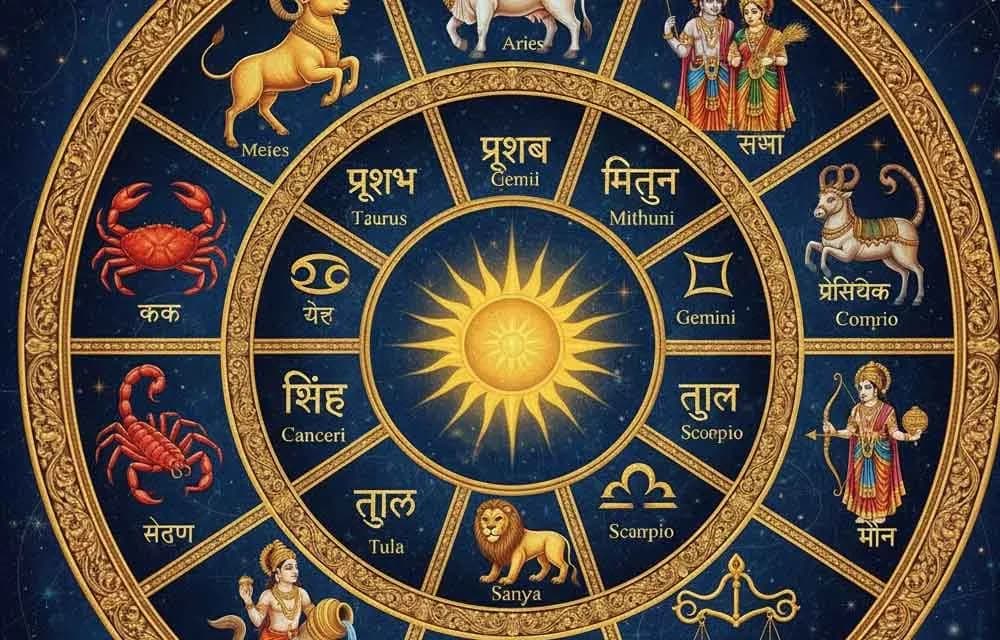
Mesha (Aries):Key Nakṣatras: Ashvini, BharaniDeity: Lord ShivaRecommended Pujas: Rudrabhishekam, Maha Mrityunjaya mantra chanting, new beginnings rituals.
Mesha (Aries):
Key Nakṣatras: Ashvini, Bharani
Deity: Lord Shiva
Recommended Pujas: Rudrabhishekam, Maha Mrityunjaya mantra chanting, new beginnings rituals.
Vrishabha (Taurus):
Key Nakṣatras: Bharani, Krittika
Deity: Goddess Lakshmi
Recommended Pujas: Lakshmi Puja, Dhanalakshmi mantra chanting, financial and prosperity rituals.
Mithuna (Gemini):
Key Nakṣatras: Krittika, Rohini
Deity: Lord Ganesha
Recommended Pujas: Ganapati Homam, Sankashti Chaturthi Vrat, education and intellect-focused rituals.
Karka (Cancer):
Key Nakṣatras: Rohini, Mrigashira
Deity: Goddess Durga
Recommended Pujas: Navaratri celebrations, Durga Saptashati recitation, home and family protection rituals.
Simha (Leo):
Key Nakṣatras: Mrigashira, Ardra
Deity: Lord Surya
Recommended Pujas: Surya Namaskar, Gayatri Mantra chanting, health and vitality-focused rituals.
Kanya (Virgo):
Key Nakṣatras: Ardra, Punarvasu
Deity: Goddess Saraswati
Recommended Pujas: Saraswati Puja, Vidya Puja, education and spiritual growth rituals.
Tula (Libra):
Key Nakṣatras: Punarvasu, Pushya
Deity: Lord Vishnu
Recommended Pujas: Vishnu Sahasranama chanting, Tulasi Puja, harmony and balance rituals.
Vrischika (Scorpio):
Key Nakṣatras: Pushya, Ashlesha
Deity: Lord Kartikeya / Skanda
Recommended Pujas: Skanda Shashti Vrat, Murugan Puja, courage, protection, and career success rituals.
Dhanu (Sagittarius):
Key Nakṣatras: Magha, Purva Phalguni
Deity: Lord Rama
Recommended Pujas: Ramayana recitation, Sita-Rama puja, leadership, and righteousness rituals.
Makara (Capricorn):
Key Nakṣatras: Hasta, Chitra
Deity: Lord Vishnu / Lord Shiva
Recommended Pujas: Vishnu Puja, Rudrabhishekam, Shani Shanti remedies, career and stability rituals.
Kumbha (Aquarius):
Key Nakṣatras: Chitra, Swati
Deity: Lord Shani / Lord Vishnu
Recommended Pujas: Shani Puja, Vishnu Sahasranama chanting, humanitarian and social service rituals.
Meena (Pisces):
Key Nakṣatras: Swati, Revati
Deity: Lord Vishnu / Krishna
Recommended Pujas: Vishnu Puja, Krishna Mantra chanting, spiritual growth, travel, and charity-focused rituals.
✅ Tips for All Rāśis:
- Light a diya each evening to attract positivity.
- Chant your Rāśi-specific mantra 108 times daily.
- Avoid inauspicious periods like Rāhukāla, Yamaganda, and Durmuhurta for starting new ventures or pujas.
- Donate or perform charity on full moon days or Thursdays/Saturdays based on planetary influence.
Why October 2025 Holds Special Ritual Significance Across the Rashis
October 2025 spans the latter half of the Hindu month Ashwin and the opening days of Kartik, a transition charged with devotional intensity. Ashwin hosts Sharat Navaratri, the nine-night celebration of Goddess Durga culminating in Vijayadashami (Dussehra), while Kartik Pratipada marks the onset of the fortnight considered most sacred for Vishnu and Shiva worship alike. This celestial overlap means that nearly every Rashi carries an opportunity to align personal puja with a pan-Dharmic festival.
The Sun's ingress into Tula (Libra) — known as Tula Sankranti — occurs in mid-October, momentarily weakening the Sun's natural strength (the sign is its debilitation, neecha, in Vedic astrology). This makes Surya-related remedies for Simha natives especially timely, while simultaneously boosting the significance of Vishnu worship for Tula natives, since Tula is ruled by Shukra (Venus) whose presiding deity is Maha Lakshmi.
Scriptural Basis for Rashi-Deity Correspondences
The linkage between a zodiac sign and its presiding deity (Rashi Devata) draws from several textual streams. The Brihat Parashara Hora Shastra, a foundational text of Jyotisha, assigns planetary lords to each Rashi and, by extension, the deities those planets represent. For instance, Mangal (Mars) rules Mesha, and Mars is identified with Skanda-Kartikeya and with the fierce aspect of Rudra — hence Lord Shiva is the recommended deity for Mesha natives.
The Devi Bhagavata Purana and the Markandeya Purana (which contains the Devi Mahatmyam) both establish Goddess Durga as the protector of the home and family unit, aligning naturally with Karka (Cancer), a sign whose very symbol — the crab — denotes protective shells and domestic waters. Similarly, the Vishnu Sahasranama, as compiled within the Anushasana Parva of the Mahabharata, is prescribed broadly for Moon-sign periods governed by Vishnu-associated grahas such as Guru (Jupiter) and Shukra (Venus), covering Dhanu, Tula, Kumbha, and Meena.
Optimal Tithi and Muhurta Windows for Each Puja in October 2025
For Rudrabhishekam (Mesha and Makara), the Pradosh Vrat tithis — the thirteenth lunar day of each fortnight — falling in October provide a naturally amplified window. Pradosh Kala, the ninety-minute period around sunset on those days, is considered by the Shiva Purana as the moment Shiva dances the Sandhya Tandava, making abhishekam performed then especially efficacious.
Lakshmi Puja for Vrishabha natives finds its peak on the Kojagari Purnima (Sharad Purnima) in early October — a full-moon night when, according to the Devi Bhagavata, Goddess Lakshmi descends to earth and blesses those who remain awake in vigil. Ganapati Homam for Mithuna natives is best observed on the Sankashti Chaturthi falling in October, specifically at moonrise when Ganesha is said to grant liberation from obstacles (Vighna Nashana). Skanda Shashti, the six-day vrat ending on the sixth tithi of Kartik Shukla Paksha, is the single most potent window for Vrischika natives to perform Murugan Puja.
Recommended Sacred Locations and Kshetras for Amplified Worship
While home puja is fully valid, visiting a presiding kshetra during October magnifies the rashi-specific puja manifold. Mesha natives undertaking Rudrabhishekam are spiritually advised to direct their intention toward the Jyotirlinga at Kashi Vishwanath Mandir, Varanasi, or perform the abhishekam at any Shiva temple consecrated with a Panchaloha linga. Vrishabha natives focused on Lakshmi puja may orient their prayers toward Sri Mahalakshmi Mandir, Kolhapur (one of the Shakti Pithas), or Padmanabhaswamy Temple, Thiruvananthapuram, where Lakshmi is worshipped as Sridevi.
Vrischika natives observing Skanda Shashti gain particular merit by praying toward Arulmigu Subramaniar Swamy Temple, Tiruchendur in Tamil Nadu, or Palani Murugan Temple, Palani, both of which hold elaborate Shashti festivals in Kartik. Dhanu natives reciting the Ramayana can connect their practice to Shri Ram Janmabhoomi Mandir, Ayodhya, or to any Hanuman temple, since Hanumanji is considered the living embodiment of Rama-bhakti and Dhanu is ruled by Guru, whose blessings flow through devotion and scripture recitation.
Mantra Counts and Practical Puja Materials for Each Rashi
Classical texts prescribe specific repetition counts (japa sankhya) for maximum fruit. The Maha Mrityunjaya Mantra for Mesha natives is traditionally chanted in multiples of 108, with 1,008 repetitions (one mala of 108 done nine times, or a continuous count on a Rudraksha mala) recommended for a month-long sadhana. The Vishnu Sahasranama for Tula, Kumbha, and Meena natives is chanted once daily — a single complete recitation takes approximately forty minutes and is considered equivalent to 1,000 individual Vishnu nama japa by the Padma Purana.
In terms of puja materials: Mesha — bilva leaves, white flowers, milk and honey for abhishekam; Vrishabha — lotus flowers, turmeric, gold-coloured cloth, and kumkum for Lakshmi; Mithuna — durva grass, modaka (sweet dumpling), and red hibiscus for Ganesha; Karka — red hibiscus, red cloth, and sindoor for Durga; Simha — red lotus, wheat, and raw jaggery offered to the rising Sun; Kanya — white flowers, akshat (unbroken rice), and ink or a new pen symbolising Vidya for Saraswati. Using regionally available substitutes is fully permitted; the Bhagavata Purana (Book 11) teaches that the Lord accepts even a tulsi leaf offered with sincere bhakti.
Common Mistakes to Avoid and Purity Guidelines During October Pujas
The Dharmashastra tradition (particularly Manu Smriti and the Grihyasutras) emphasises that ritual purity — both external (shuddhi of the body and space) and internal (manasika shuddhi, purity of intention) — precedes the efficacy of any mantra or puja. A frequently overlooked guideline is that Rudrabhishekam should not be performed with water drawn and left overnight; fresh, clean water — ideally from a river or a copper vessel — should be used. Similarly, Lakshmi Puja spaces should be free of broken items or clutter, as the Skanda Purana states that Alakshmi (the inauspicious aspect) resides where disorder prevails.
For mantra recitation, mispronunciation (apashabda) is considered to reduce benefit, so beginners are encouraged to learn from a qualified pandit or use a verified audio guide before undertaking a month-long japa commitment. Practitioners of Shani Puja (Kumbha) should note that oil offerings (sesame oil in a small iron lamp) are placed before the Shani idol, never poured directly on a shared Shivalinga without the temple priest's guidance. Finally, all these pujas are ideally begun on an auspicious day (Shubha Muhurta) — a Monday for Shiva-related rituals, a Friday for Lakshmi and Saraswati, a Sunday for Surya, and a Tuesday or Shashti for Skanda worship.
Frequently Asked Questions
What is the October?
Mesha (Aries): Key Nakṣatras: Ashvini, Bharani Deity: Lord Shiva Recommended Pujas: Rudrabhishekam, Maha Mrityunjaya mantra chanting, new beginnings rituals. Vrishabha (Taurus): Key Nakṣatras: Bharani, Krittika Deity: Goddess Lakshmi Recommended Pujas: Lakshmi Puja , Dhanalakshmi mantra chanting, financial and prosperity rituals.
How many times should the October be chanted?
It is traditionally chanted 108 times using a rudraksha or tulsi mala. Even 11 or 21 sincere repetitions daily are considered beneficial — steady, focused practice matters more than the count.
What is the best time to chant the October?
Dawn (Brahma Muhurta) after a bath is considered ideal, though it may be chanted any time with a calm, focused mind. Many devotees keep a fixed daily time to build consistency.
Who can chant the October?
Anyone may chant it with faith and a pure mind, regardless of age, gender or background. Beginners benefit from first hearing the correct pronunciation and understanding its meaning.
What are the benefits of chanting the October?
It is believed to calm the mind, dissolve negativity, and draw divine grace, protection and clarity to the devotee.
You might also like
Powerful Mantras for Students & Parents Before Joining School
Powerful Hindu Mantras for Purushottam Maas 2026: Vishnu Bhakti, Chanting Guide & Global Devotion
Shani Deva Temples Worldwide & Must-Performed Rituals — Complete Devotee's Guide