Harivarasanam: Full Lyrics in Sanskrit with Meaning, the Sabarimala Lullaby of Lord Ayyappa
Harivarasanam, sung every night at Sabarimala as Lord Ayyappa's sanctum closes, is the Hariharatmajashtakam, eight Sanskrit verses to the son of Hari and Hara. Here is the full text from sanskritdocuments.org in Devanagari and IAST, our own verse-by-verse meaning, what the source says about the author, and how to sing it at home during the Mandala season.

Quick answer: Harivarasanam is the eight-verse Sanskrit hymn to Lord Ayyappa, the son of Hari (Vishnu) and Hara (Shiva), that is sung every night at Sabarimala as the last song before the sanctum closes. Its own title is the Hariharatmajashtakam; every verse ends "hariharatmajam devam ashraye", "I take refuge in the divine son of Hari and Hara". The source we follow names the author as Kumbakudi Kulathur Iyer. The 2026-27 Mandala season is expected to begin on Tuesday 17 November 2026.
Last updated: 20 October 2026. The Sanskrit below is the text published by sanskritdocuments.org (file hariharaatmajaashhtakam.itx), converted to Devanagari and IAST by software from the source, with no word typed by hand. Our own plain-English meaning follows each verse.
Harivarasanam: full text with meaning
Each verse appears in Devanagari and then in IAST transliteration, followed by its meaning. Each verse is a string of names and qualities of Ayyappa, and its fourth line is always the same refrain of refuge. In temple singing, "swamy sharanam ayyappa" is sung after every verse; the source prints the refrain once, after the colophon.
Verse 1
हरिवरासनं विश्वमोहनं
हरिदधीश्वरमाराध्यपादुकम् ।
अरिविमर्दनं नित्यनर्तनं
हरिहरात्मजं देवमाश्रये ॥ १॥
harivarāsanaṃ viśvamohanaṃ
haridadhīśvaramārādhyapādukam |
arivimardanaṃ nityanartanaṃ
hariharātmajaṃ devamāśraye || 1||
Meaning: Seated on a noble throne, enchanter of the universe, lord of all the directions, whose sandals are worthy of worship; crusher of enemies, ever dancing: I take refuge in the divine son of Hari and Hara.
Verse 2
शरणकीर्तनं भक्तमानसं
भरणलोलुपं नर्तनालसम् ।
अरुणभासुरं भूतनायकं
हरिहरात्मजं देवमाश्रये ॥ २॥
śaraṇakīrtanaṃ bhaktamānasaṃ
bharaṇalolupaṃ nartanālasam |
aruṇabhāsuraṃ bhūtanāyakaṃ
hariharātmajaṃ devamāśraye || 2||
Meaning: He who loves the chanting of 'sharanam', who lives in the hearts of his devotees, who delights in protecting and sustaining, who loves to dance; radiant as the dawn, lord of all beings: I take refuge in the divine son of Hari and Hara.
Verse 3
प्रणयसत्यकं प्राणनायकं
प्रणतकल्पकं सुप्रभाञ्चितम् ।
प्रणवमन्दिरं कीर्तनप्रियं
हरिहरात्मजं देवमाश्रये ॥ ३॥
praṇayasatyakaṃ prāṇanāyakaṃ
praṇatakalpakaṃ suprabhāñcitam |
praṇavamandiraṃ kīrtanapriyaṃ
hariharātmajaṃ devamāśraye || 3||
Meaning: True in his love, lord of every life, a wish-granting tree to those who bow to him, adorned with a beautiful radiance; the temple of Om, who loves songs of praise: I take refuge in the divine son of Hari and Hara.
Verse 4
तुरगवाहनं सुन्दराननं
वरगदायुधं वेदवर्णितम् ।
गुरुकृपाकरं कीर्तनप्रियं
हरिहरात्मजं देवमाश्रये ॥ ४॥
turagavāhanaṃ sundarānanaṃ
varagadāyudhaṃ vedavarṇitam |
gurukṛpākaraṃ kīrtanapriyaṃ
hariharātmajaṃ devamāśraye || 4||
Meaning: Riding a horse, with a lovely face, holding the noble mace, praised in the Vedas; who showers grace like a guru, who loves songs of praise: I take refuge in the divine son of Hari and Hara.
Verse 5
त्रिभुवनार्चितं देवतात्मकं
त्रिनयनप्रभुं दिव्यदेशिकम् ।
त्रिदशपूजितं चिन्तितप्रदं
हरिहरात्मजं देवमाश्रये ॥ ५॥
tribhuvanārcitaṃ devatātmakaṃ
trinayanaprabhuṃ divyadeśikam |
tridaśapūjitaṃ cintitapradaṃ
hariharātmajaṃ devamāśraye || 5||
Meaning: Worshipped in the three worlds, the very soul of the gods, the lord sprung from the three-eyed Shiva, a divine teacher; honoured by the gods, giver of whatever is prayed for: I take refuge in the divine son of Hari and Hara.
Verse 6
भवभयापहं भावुकावहं
भुवनमोहनं भूतिभूषणम् ।
धवलवाहनं दिव्यवारणं
हरिहरात्मजं देवमाश्रये ॥ ६॥
bhavabhayāpahaṃ bhāvukāvahaṃ
bhuvanamohanaṃ bhūtibhūṣaṇam |
dhavalavāhanaṃ divyavāraṇaṃ
hariharātmajaṃ devamāśraye || 6||
Meaning: Remover of the fear of worldly existence, bringer of welfare, enchanter of the world, adorned with sacred ash; whose mount is white, who rides a divine elephant: I take refuge in the divine son of Hari and Hara.
Verse 7
कलमृदुस्मितं सुन्दराननं
कलभकोमलं गात्रमोहनम् ।
कलभकेसरी वाजिवाहनं
हरिहरात्मजं देवमाश्रये ॥ ७॥
kalamṛdusmitaṃ sundarānanaṃ
kalabhakomalaṃ gātramohanam |
kalabhakesarī vājivāhanaṃ
hariharātmajaṃ devamāśraye || 7||
Meaning: With a soft and gentle smile and a lovely face, tender as a young elephant, of captivating form; whose mounts are the young elephant, the lion and the horse: I take refuge in the divine son of Hari and Hara.
Verse 8
श्रितजनप्रियं चिन्तितप्रदं
श्रुतिविभूषणं साधुजीवनम् ।
श्रुतिमनोहरं गीतलालसं
हरिहरात्मजं देवमाश्रये ॥ ८॥
śritajanapriyaṃ cintitapradaṃ
śrutivibhūṣaṇaṃ sādhujīvanam |
śrutimanoharaṃ gītalālasaṃ
hariharātmajaṃ devamāśraye || 8||
Meaning: Dear to those who take refuge in him, giver of whatever is prayed for, ornament of the Vedas, the very life of good people; delight of the ear, who loves music: I take refuge in the divine son of Hari and Hara.
Colophon and refrain
॥ इति श्री हरिहरात्मजाष्टकं सम्पूर्णम् ॥
शरणं अय्यप्पा स्वामी शरणं अय्यप्पा ।
|| iti śrī hariharātmajāṣṭakaṃ sampūrṇam ||
śaraṇaṃ ayyappā svāmī śaraṇaṃ ayyappā |
Meaning: Thus ends the Shri Hariharatmajashtakam. Refuge, Ayyappa Swami; refuge, Ayyappa.
Who wrote Harivarasanam?
The source we follow, sanskritdocuments.org, gives the author as Kumbakudi Kulathur Iyer, and titles the hymn Hariharatmajashtakam, also called the Shastuh Gitashtakam, Harivarasanam Shastashtakam and Ayyappa Nidrastotram (the sleep hymn of Ayyappa). This is the attribution most widely given. Over the years other claims of authorship have been reported in the press; HinduTone follows the source and does not take a side on those claims.
The tune most people know is the slow, tender melody made famous by the singer K. J. Yesudas, whose recording is, by long custom, played at Sabarimala when the temple closes each night.
What the hymn says about Ayyappa
| Verse | Some of the names in it |
|---|---|
| 1 | Seated on a noble throne, enchanter of the universe, lord of the directions, ever dancing |
| 2 | Lover of the 'sharanam' chant, dweller in devotees' hearts, radiant as the dawn, lord of beings |
| 3 | True in love, wish-granting tree, temple of Om, lover of songs |
| 4 | Rider of the horse, holder of the mace, praised by the Vedas, gracious as a guru |
| 5 | Worshipped in three worlds, son of the three-eyed Shiva, divine teacher |
| 6 | Remover of the fear of samsara, adorned with sacred ash, rider of the divine elephant |
| 7 | Gentle smile, tender form; the young elephant, the lion and the horse as his mounts |
| 8 | Dear to those who seek refuge, ornament of the Vedas, lover of music |
Ayyappa (also called Dharma Sastha and Manikanta) is worshipped as the son of Shiva and of Vishnu in the form of Mohini, which is why he is Hariharatmaja, 'born of Hari and Hara'. The hymn holds both sides together: the sacred ash of Shiva (verse 6) and the grace and charm associated with Vishnu (verses 1 and 7). For the story of Manikanta, see the story of Ayyappa Swamy.
When Harivarasanam is sung
- Every night at Sabarimala: as the last song before the sanctum closes, while the lamps are put out one by one.
- Mandala season 2026-27: the temple is expected to open on the evening of Monday 16 November 2026, with the 41-day Mandala season beginning on Tuesday 17 November and the Mandala Pooja on Sunday 27 December 2026. These are expected dates; confirm with the Travancore Devaswom Board. See the Sabarimala 2026-27 season guide.
- Makaravilakku: in January 2027; see Makaravilakku 2027.
- During the 41-day vratam: devotees wearing the mala sing it to close their evening puja; see Ayyappa deeksha for NRIs and mala dharana rituals.
- At the end of Ayyappa bhajans: in temples and homes around the world, Harivarasanam is the closing song; see the Ayyappa and Dharma Sastha temples guide and Ayyappa temples in the USA.
- Saturdays: many devotees pray to Ayyappa on Saturdays; see why Saturday matters in Hindu worship.
How to sing it at home
- Sing it at the very end of your evening prayer, after the lamp (aarti) and before you rest.
- Sit before a picture of Ayyappa with a lit lamp. If you keep the deeksha, wear the mala and the black or blue clothes of the vratam.
- Sing slowly and softly; it is a lullaby, not a march. Add "swamy sharanam ayyappa" after each verse if you wish.
- Towards the end, some families dim the lights one by one, as is done at Sabarimala.
- Close with a moment of silence and "swamiye sharanam ayyappa".
Pronunciation help
- Each line has the same light, even rhythm; take a breath at every line break.
- In the IAST, a line over a vowel (ā, ī, ū) means it is held twice as long; ś and ṣ are 'sh' sounds; ṃ is a nasal 'm'.
- Follow a recording with the IAST for a few evenings before singing on your own.
For other Ayyappa prayers, see the 108 names of Ayyappa and how to pray to Lord Ayyappa.
Traditional beliefs about the hymn
Harivarasanam is a prayer of refuge (sharanagati). Devotees traditionally believe that singing it at the close of the day:
- brings a sense of peace and of the Lord's protection through the night;
- keeps the spirit of the Mandala vratam, discipline and surrender, alive at home;
- joins the devotee, wherever in the world, with the pilgrims at Sabarimala singing the same verses.
These are traditional beliefs about the hymn's spiritual value. No hymn guarantees particular worldly results; Harivarasanam is best sung simply, as an offering of love.
Tips for NRI families
- Learn the refrain first. Children pick up "hariharatmajam devam ashraye" quickly; let them sing it with you at the end of each verse.
- Use the Mandala season. The 41 evenings from 17 November to 27 December 2026 are a natural time to learn one verse every few days.
- Plan a pilgrimage carefully. If you plan to travel to Sabarimala, read the Sabarimala pilgrimage guide and book through official channels.
- Read more. See the Ayyappa Swamy hub, the Lord Shiva hub and the Lord Vishnu hub. During Skanda Sashti, Ayyappa's brother Murugan is praised in the Subrahmanya Bhujangam.
Frequently asked questions
Who wrote Harivarasanam?
The text we follow, on sanskritdocuments.org, names the author as Kumbakudi Kulathur Iyer, and this is the attribution most widely given. Other claims of authorship have been reported over the years; we follow the source.
What does 'Harivarasanam' mean?
They are the first words of the hymn. Varasana is a noble seat or throne, and hari can mean Vishnu or a lion, so the phrase is usually understood as 'the one seated on a noble throne', the first of many epithets of Ayyappa. The hymn's own title is Hariharatmajashtakam, 'eight verses to the son of Hari and Hara'.
When is Harivarasanam sung at Sabarimala?
Every night, as the last song before the sanctum is closed (after the Athazha puja). The lights are dimmed one by one while it is sung, and it is traditionally thought of as Ayyappa's lullaby (the source also calls it the Ayyappa Nidrastotram, 'the sleep hymn').
Is Harivarasanam in Sanskrit or Malayalam?
The eight verses are in Sanskrit. The source adds ten more verses 'found in some places' that mix in Malayalam words; those are not part of the hymn sung at Sabarimala and are not given here.
Can Harivarasanam be sung at home?
Yes. Many families and bhajan groups sing it at the end of evening prayers or of an Ayyappa bhajan, especially during the 41-day Mandala vratam. Sing it slowly, with the refrain 'swamiye sharanam ayyappa' after each verse if you wish.
What are the benefits of singing Harivarasanam?
The hymn is a prayer of refuge: every verse ends 'I take refuge in the divine son of Hari and Hara'. Devotees traditionally believe it brings peace and a sense of the Lord's protection at the close of the day. These are matters of faith, not guaranteed results.
How many times should Harivarasanam be sung?
It is sung once, as a closing song, not counted like a japa mantra. There is no tradition of chanting it 108 times; sing it once with full attention at the end of the day's worship.
Editor's note (20 October 2026)
This page was rewritten on 20 October 2026. The earlier version gave the lyrics only in an informal English spelling, with some meanings that are not in the text (for example a 'royal tiger' in verse 7, where the text names the young elephant, the lion and the horse) and with chanting advice (108 times, at dawn) that does not fit a hymn sung once at night. The Sanskrit now follows Hariharatmajashtakam (Harivarasanam) on sanskritdocuments.org (file hariharaatmajaashhtakam.itx, encoded by Karthik Raman and Antaratma and proofread by them and PSA Easwaran), which names Kumbakudi Kulathur Iyer as the author. It was converted from ITRANS to Devanagari and IAST by software; no word has been changed. The source also prints ten further verses 'found in some places', partly in Malayalam; they are not part of the eight-verse hymn and are not reproduced. The English meanings are our own, and the hymn is presented as an act of devotion, with no promise of particular results. Mandala dates are the expected dates given in our Sabarimala 2026-27 guides.
Related guides
Share this with family and friends
Send it on WhatsApp, post it, or copy the link.
More from Pooja, Slokas and Mantras
- Sri Durga Parameshwari Stotram: Sanskrit Verses, Meaning and Devotional Significance
- Sri Venkatesa Vijayarya Saptavibhakti Stotram: Full Text in Telugu, Sanskrit and IAST with Meaning
- Deeparadhana: Significance of Lighting the Lamp, Deepam Jyoti Parabrahma Meaning, Oil and Wicks
- Narmadashtakam (Sabindu Sindhu) by Adi Shankaracharya: Full Text in Sanskrit with Meaning
- Hari Stotram (Jagajjalapalam) by Swami Brahmananda: Full Text in Sanskrit with Meaning
You might also like
Maha Mrityunjaya Mantra for Hindus
Powerful Mantras for Students & Parents Before Joining School
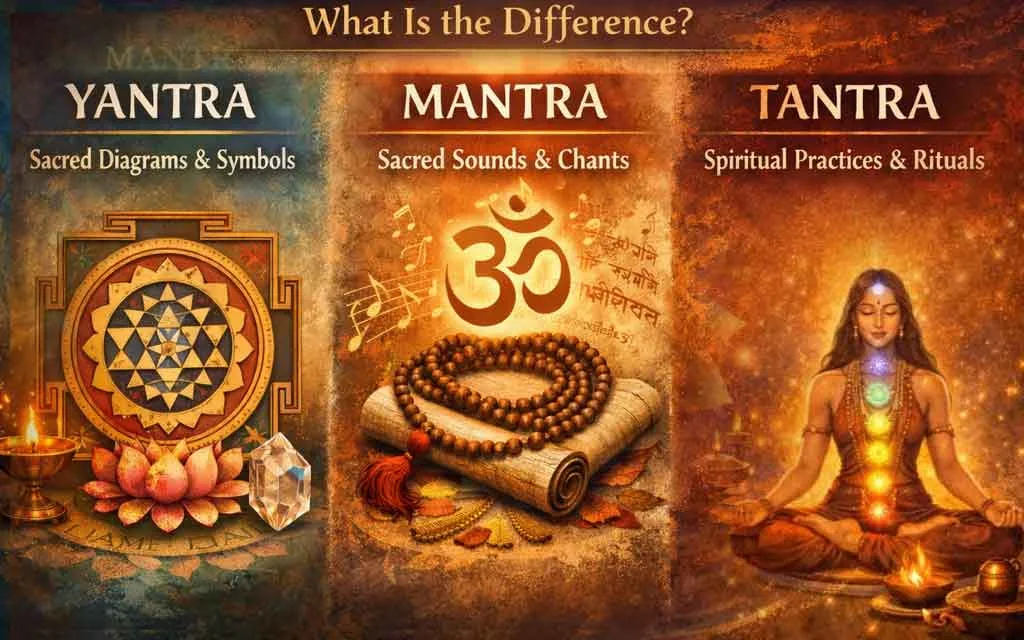
Yantra vs Mantra vs Tantra — What Is the Difference? | Complete Hindu Guide