Namakaranam — The Hindu Baby Naming Ceremony (NRI Guide)
Namakaranam, the Hindu naming ceremony — its significance, muhurtam, samagri, step-by-step vidhi, mantras, and how NRIs perform it abroad. Links to the baby names hub.
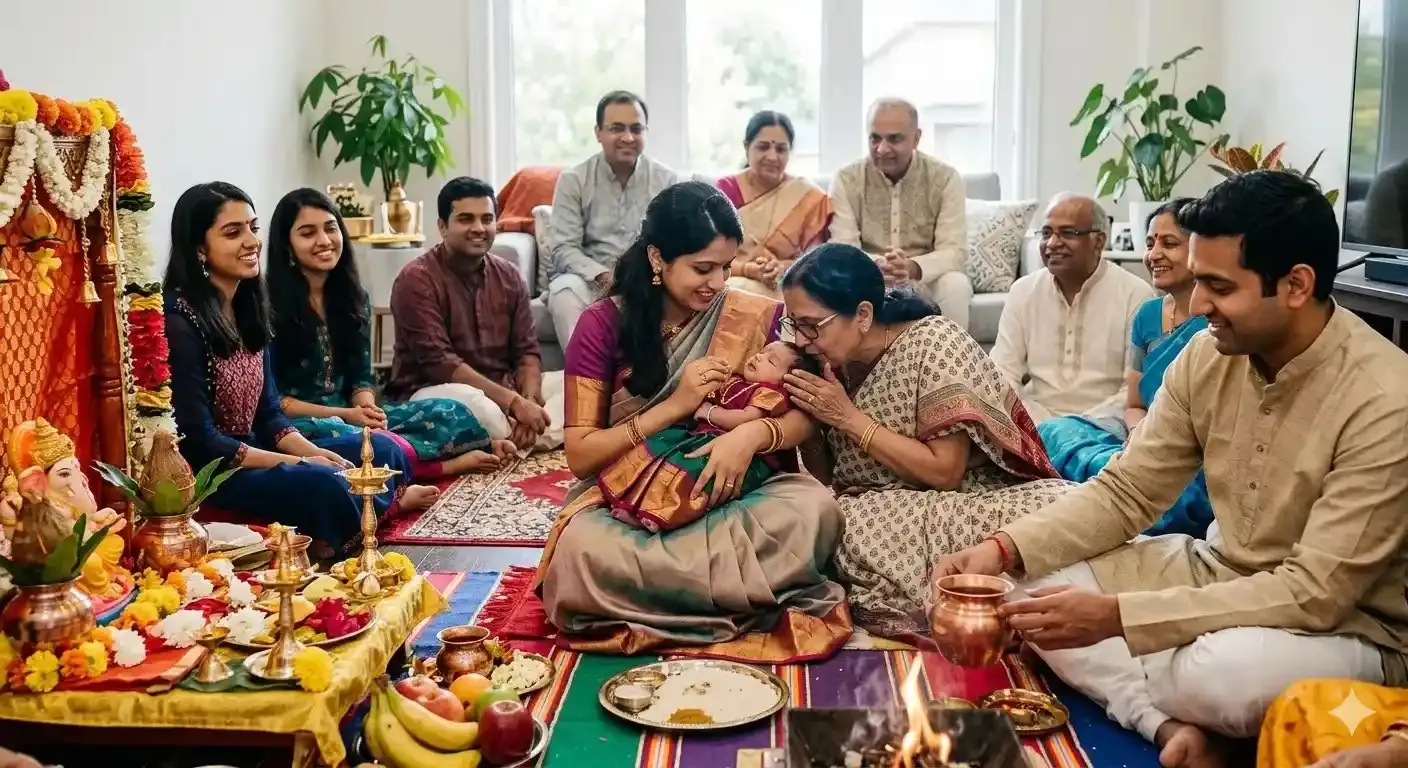
Namakaranam (the naming ceremony) is the fifth of the Shodasha Samskaras, in which a newborn is formally given a name. Traditionally it is performed on about the eleventh day after birth (timing varies by family and region). It is a joyful rite of blessing and welcome.
Significance
The name is often chosen with care — by the child’s birth star (nakshatra) and its starting syllable (akshara), by a family deity, or by an elder’s blessing. The chosen name is gently whispered in the baby’s ear, and the gathering blesses the child for a long and dharmic life.
When Is It Performed? (Timing / Muhurtam)
- Traditionally around the 11th day after birth; some families choose the 12th day, a later auspicious day, or align with the nakshatra.
- Pick a shubha muhurtam — check a panchang or consult your purohit, adjusting for your time zone.
Items (Samagri)
- A lamp, turmeric, kumkum, rice (akshata) and flowers
- A small kalash, betel leaves & nuts, fruits and sweets
- A new cloth/cradle for the baby; a plate to write the name in rice (optional)
Step-by-Step Vidhi
- Clean the space; light a lamp and invoke Lord Ganesha — "Om Gam Ganapataye Namaha".
- The elders/purohit perform a brief sankalpa stating the family and the occasion.
- The chosen name is written in a tray of rice and gently whispered in the baby’s right ear.
- Elders bless the child with akshata (rice + turmeric); offer prayers (many recite the Gayatri or "Om Namo Narayanaya" as a blessing).
- Distribute prasadam and celebrate with family.
Note: mantras and exact steps vary by sampradaya (Smarta, Vaishnava, etc.) and region — follow what your family purohit teaches.
How NRIs Perform It Abroad
- Invite a local purohit in person, or arrange an online ceremony with a priest in India.
- A simplified home version with a lamp, the name-whisper, elders’ blessing and prasadam is fully acceptable.
- Source samagri from Indian stores; involve grandparents virtually over a video call.
Choosing a name? Explore our Hindu baby names hub for meanings, nakshatra and rashi guidance. See also the 16 Samskaras guide and Annaprasana.
Frequently asked questions
When is Namakaranam performed after birth?
Namakaranam is traditionally performed around the 11th day after birth. Some families choose the 12th day, a later auspicious day, or align it with the nakshatra, so timing varies by family and region.
How is a baby's name chosen for Namakaranam?
The name is often chosen by the child's birth star (nakshatra) and its starting syllable (akshara), by a family deity, or by an elder's blessing.
What items are needed for a Namakaranam ceremony?
Needed items include a lamp, turmeric, kumkum, rice (akshata), flowers, a small kalash, betel leaves and nuts, fruits and sweets. A plate or tray of rice to write the name in is optional.
Can NRIs perform Namakaranam abroad?
Yes. NRIs can invite a local purohit or arrange an online ceremony with a priest in India. A simplified home version with a lamp, the name-whisper, elders' blessing and prasadam is fully acceptable.
How is the name announced during the ceremony?
The chosen name is written in a tray of rice and gently whispered in the baby's right ear. Elders then bless the child with akshata, which is rice mixed with turmeric.
Which mantra is chanted at the start of Namakaranam?
The ceremony begins by invoking Lord Ganesha with "Om Gam Ganapataye Namaha". Many families also recite the Gayatri or "Om Namo Narayanaya" as a blessing, though mantras vary by sampradaya and region.
Share this with family and friends
Send it on WhatsApp, post it, or copy the link.
More from Spirituality
- Sri Medha Dakshinamurthy Swami Dhyanam | Meditation Sloka for Intelligence, Eloquence & Self-Realization
- What Is True Poverty? | Dharma Is the Greatest Wealth | Sanatana Dharma
- Correct Yourself First! | The Power of Constructive Criticism for Personal Growth
- Trees: Abodes of the Divine | Spiritual and Environmental Significance of Trees
- Dashaphala Rahasyalu Part 3: When Do Planetary Dashas Give Full Results?
You might also like
Daylight Saving & Hindu Puja Timings: An NRI Guide

Chilkur Balaji 'Visa Balaji' Temple: The 11 and 108 Pradakshina Custom Explained for NRIs

Ekagrata (One-Pointedness): Yoga Concentration and Samyama Glossary