Muladhara Chakra — the root of spiritual awakening
Muladhara, the root of the seven chakras, rests at the base of the spine. Explore its classical tantric correspondences — Earth element, LAM bija, Bala Ganesha — and the dormant Kundalini Shakti coiled within.
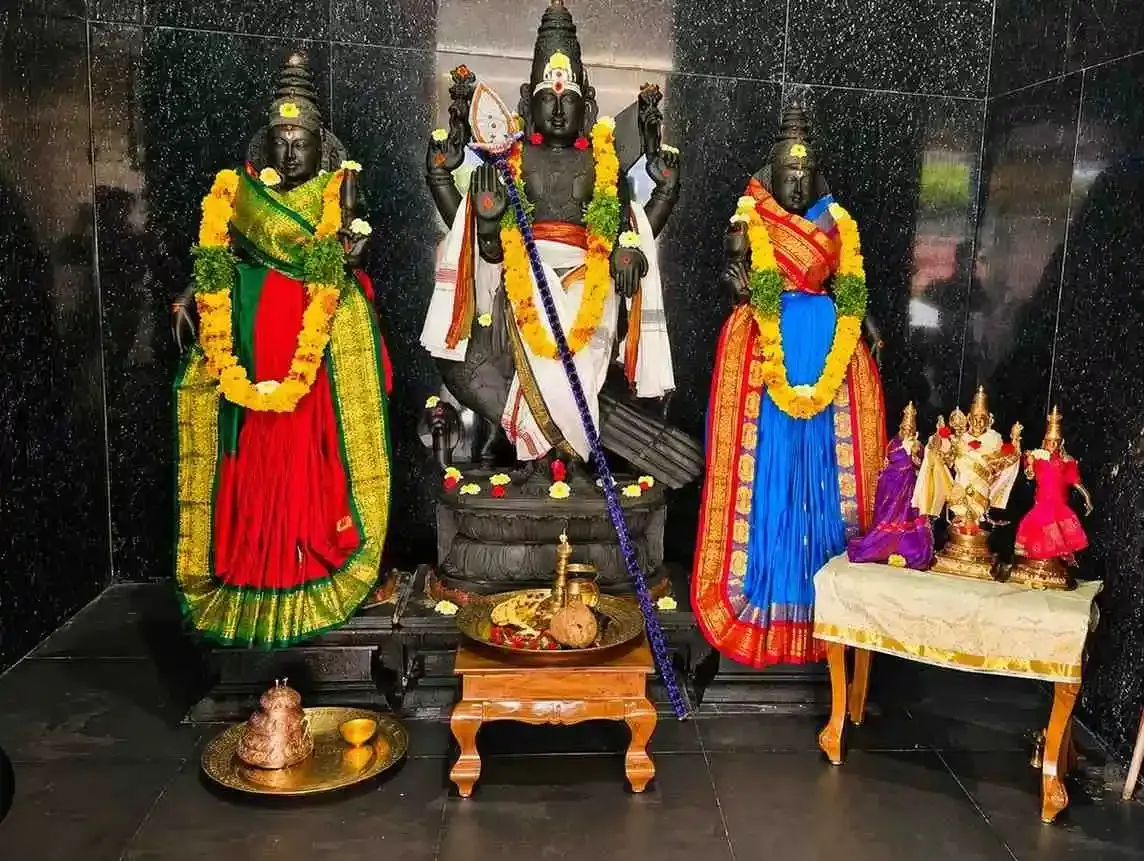
Muladhara, the root of the seven chakras, rests at the base of the spine. Explore its classical tantric correspondences — Earth element, LAM bija, Bala Ganesha — and the dormant Kundalini Shakti coiled within.
Quick answer: Muladhara is the first, or root, chakra in the tantric and yogic subtle-body system, situated at the base of the spine near the perineum. Its name joins mula (root) and adhara (support), and it is associated with the Earth element, the bija mantra LAM, and a four-petalled crimson lotus. In classical texts it is the seat of the dormant Kundalini Shakti, and it governs our sense of grounding, stability, and security.
In the tantric and yogic vision of the subtle body, the human being is far more than flesh and bone. Along the axis of the spine runs a luminous river of energy, and strung upon it like lotuses on a stem are the chakras — wheels of consciousness through which the divine life-force flows. The first of these, the foundation of them all, is the Muladhara Chakra: the root of spiritual awakening.
The very name is a teaching. Mula means root, and adhara means support or base. The Muladhara is thus the rooted support upon which the entire edifice of the inner life is built. Just as a great temple cannot stand without a firm foundation, the seeker cannot rise toward the divine without first honouring the ground beneath — the earthy, grounding, stabilising power of this first chakra.
Where the Muladhara Rests
The Muladhara is located at the very base of the spine, in the region of the perineum. It faces downward and earthward, connecting the human being to the solid, sustaining body of the Earth herself. This is the point where the subtle body meets the physical, where spirit is anchored in matter.
Classical Correspondences of the Muladhara
The classical tantric texts describe each chakra with a precise symbolic vocabulary — a colour, an element, a sacred sound, a number of lotus petals, and presiding deities. These are not arbitrary decorations but a contemplative map, images upon which the yogi meditates. The correspondences of the Muladhara are as follows.
| Attribute | Muladhara Correspondence |
|---|---|
| Position | Base of the spine / perineum |
| Element (Tattva) | Earth (Prithvi) |
| Petals | Four-petalled crimson lotus |
| Bija mantra | LAM |
| Colour | Deep red / crimson |
| Sense (Tanmatra) | Smell (gandha) |
| Governs | Survival, stability, grounding, security |
| Presiding deities | Bala Ganesha; Brahma and Dakini (classical texts) |
The Earth element (Prithvi) gives the Muladhara its heavy, stable, sustaining quality. The associated sense is smell, the most earthbound of the senses. The crimson colour speaks of vitality and rootedness, and the four petals are inscribed in the tradition with the seed-syllables that surround the central sound.
The Bija Mantra LAM
At the heart of the Muladhara lotus resides its bija, or seed-sound: LAM. In tantric practice the bija mantra is the sonic body of the chakra — chanting it with reverence and awareness is a way of tuning oneself to that centre, purifying it, and awakening its latent power.
LAM is chanted slowly, letting the sound resonate downward toward the base of the spine, drawing the mind's attention to the root. It is a simple, safe, and beautiful practice for cultivating a felt sense of groundedness.
Bala Ganesha, Guardian of the Root
The presiding deity of the Muladhara is Bala Ganesha — Ganesha in his youthful, child form. This is deeply fitting. Ganesha is Vighnaharta, the remover of obstacles, and it is he who is invoked at the very beginning of every sacred undertaking. Just as no worship begins without first honouring Ganesha, no journey up the chakras begins without honouring the root he guards.
The Dormant Kundalini Shakti
The Muladhara holds the greatest secret of the tantric path. Coiled here, at the base of the spine, sleeps the Kundalini Shakti — the dormant spiritual energy imagined as a serpent coiled three-and-a-half times, resting in silence around the root. She is the divine Mother's own power, latent within every being, awaiting awakening.
When, through grace and disciplined practice, this energy stirs and rises, she ascends through the central channel, the sushumna nadi, piercing each chakra in turn — Muladhara, Svadhishthana, Manipura, Anahata, Vishuddha, Ajna — until she reaches the thousand-petalled Sahasrara at the crown. There the individual soul is said to unite with the Supreme, and awakening is fulfilled.
This is described in the tradition with the greatest reverence, for it is nothing less than the flowering of the divine within the human. It is also a profound and demanding path. The classical teachings are unanimous that the awakening and guiding of Kundalini must be undertaken only under the direct care of a qualified guru. It is not a technique to be forced or hurried, but a grace to be prepared for with humility.
The Seven Chakras in Ascending Order
The Muladhara is the first of seven principal chakras. Understanding its place in the whole helps us see why the root matters so much — everything above rests upon it.
- Muladhara — root
- Svadhishthana — sacral
- Manipura — navel
- Anahata — heart
- Vishuddha — throat
- Ajna — brow
- Sahasrara — crown
The seeker does not leap to the crown. One begins at the base, honouring and strengthening the root, so that the energy which rises has a stable foundation from which to climb.
Signs of a Balanced or Unsettled Root
The health of the Muladhara is felt inwardly, in the quality of one's relationship to life and to the Earth. These signs are described spiritually — as states of the inner being, not as medical conditions.
When the root is balanced
- A steady sense of security and belonging
- Feeling grounded, present, and at home in one's body
- Trust in life and calm in the face of change
- Stability, patience, and the capacity to persevere
When the root is unsettled
- Persistent fear, anxiety, or a sense of not belonging
- Restlessness and difficulty feeling grounded
- Insecurity around one's basic needs and place in the world
- Feeling disconnected from the body and the Earth
Devotional Practices to Honour the Root
The Muladhara is honoured not by force but by simplicity, devotion, and grounded living. The following practices are traditional, gentle, and safe to cultivate on one's own — while remembering that the deeper Kundalini practices belong under a guru's guidance.
- Grounding: walking barefoot on the earth, sitting on the ground, and cultivating stillness and presence in the body.
- Ganesha worship: offering prayers, aarti, and remembrance to Bala Ganesha, the presiding deity and remover of obstacles at the root.
- Chanting LAM: softly repeating the bija mantra of the Muladhara, letting the sound settle at the base of the spine.
- Mula bandha: the root lock, a subtle contraction at the perineum used in yoga — mentioned here only in passing, for it should be learned from a qualified teacher and never forced.
- Seva and simple living: selfless service, contentment, and a modest life naturally steady and purify the root.
- Meditation on the crimson four-petalled lotus, visualising it firm and radiant at the base of the spine.
None of these need be elaborate. The Muladhara responds to sincerity and steadiness far more than to intensity. A daily moment of grounded prayer does more to honour the root than any dramatic exertion.
A Word of Reverence and Caution
The chakra system and the awakening of Kundalini are among the most sacred and subtle teachings of the tantric and yogic traditions. They are approached with devotion, patience, and humility. Grounding practices, Ganesha worship, and gentle mantra chanting may be taken up freely and joyfully. But the advanced practices that seek to rouse and raise the Kundalini require the living guidance of a qualified guru.
To honour the Muladhara is, in the end, to honour the ground on which we stand — the Earth that sustains us, the body that carries us, and the divine Shakti who sleeps at the root, awaiting the day of awakening. May every seeker be firmly rooted, so that in time the lotus of the heart may bloom and the crown may shine.
Frequently Asked Questions
You might also like
Bilvashtakam: Full Text with Meaning — The Eight Verses of Bilva Offering to Lord Shiva

Swaraj in the Bhagavad Gita: Inner Freedom and Self-Mastery

Best Eco-Friendly Puja Items for USA NRIs: Sustainable Choices for Hindu Worship