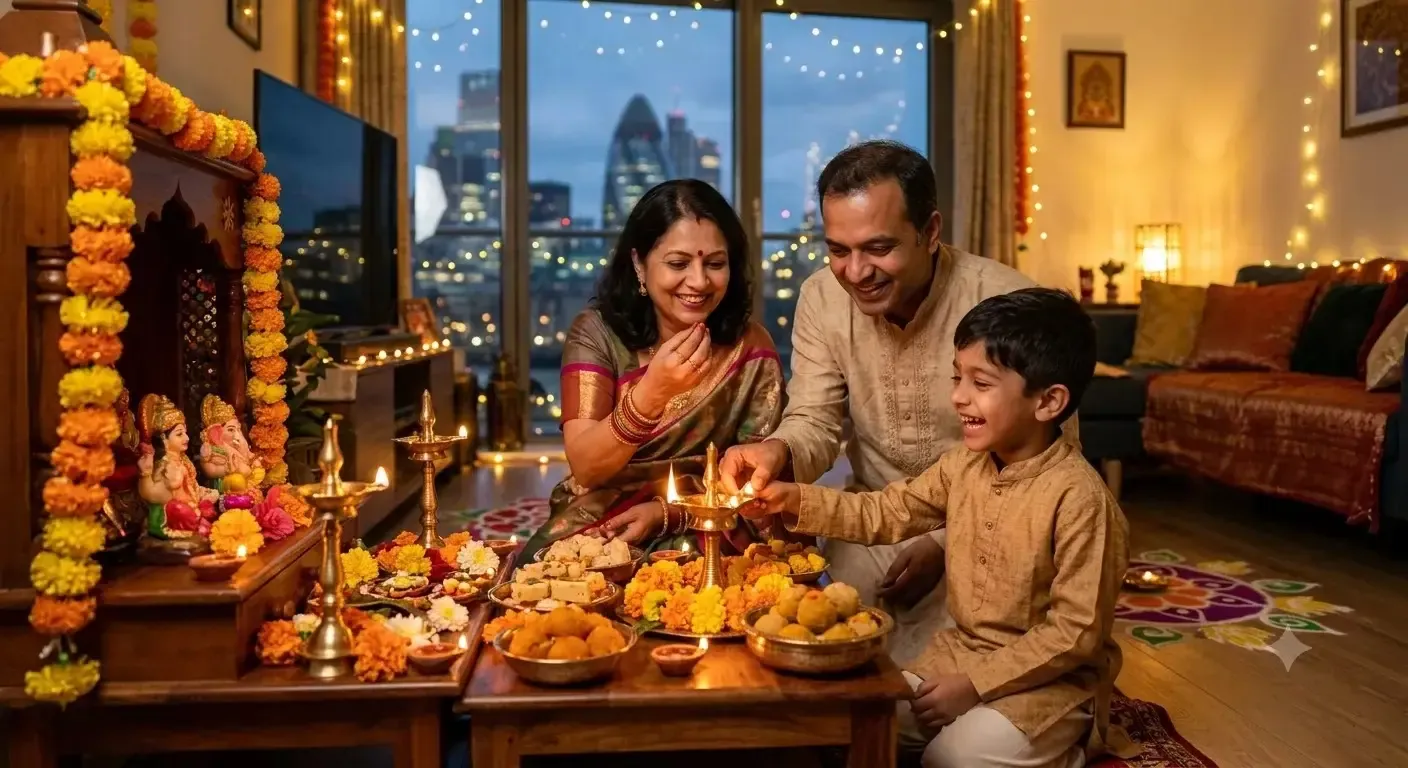
Why 108 Is Sacred in Hinduism — The Significance of the Number 108
From 108 beads on a mala to 108 sacred names, the number 108 recurs across Hindu tradition. Here are the well-attested reasons — astronomical, astrological, linguistic, yogic, and symbolic — behind why 108 is considered sacred.
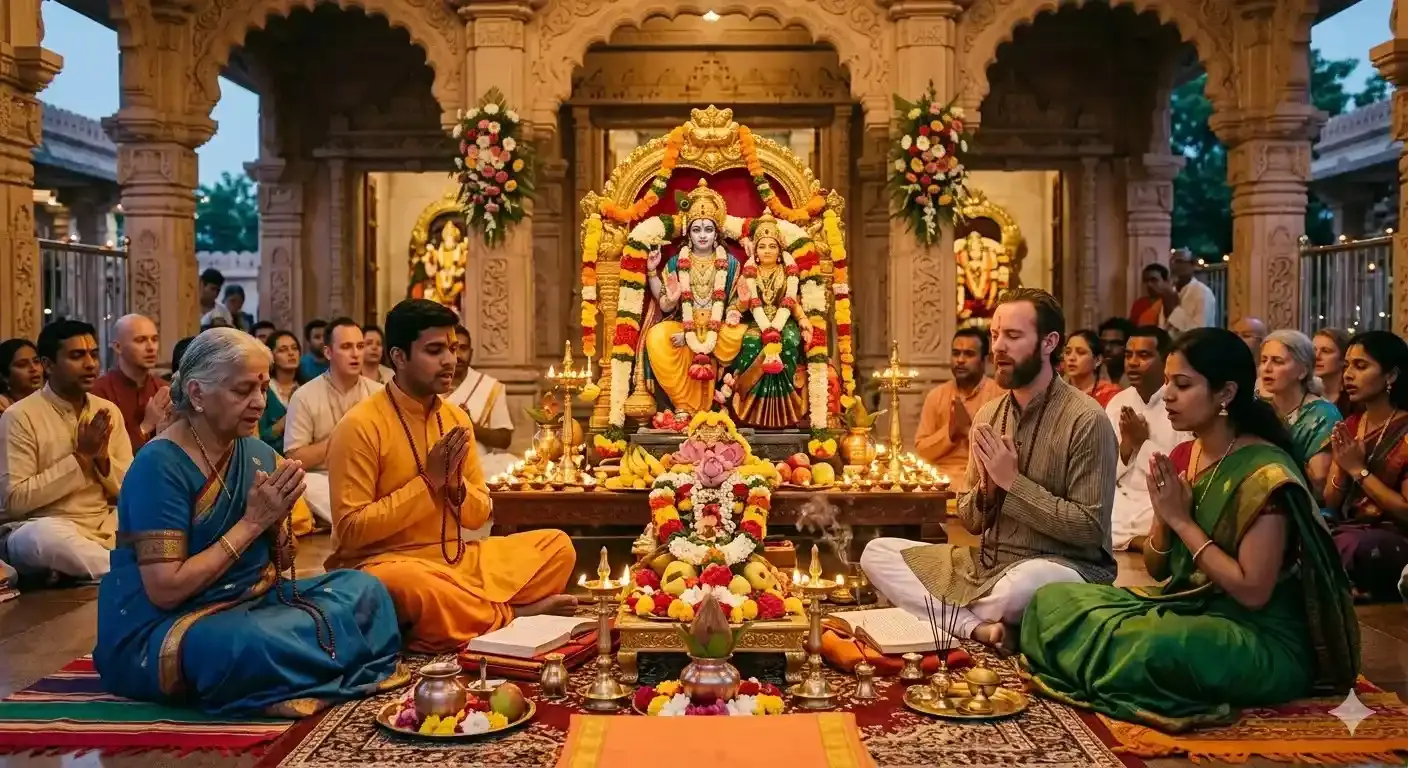
From 108 beads on a mala to 108 sacred names, the number 108 recurs across Hindu tradition. Here are the well-attested reasons — astronomical, astrological, linguistic, yogic, and symbolic — behind why 108 is considered sacred.
Quick answer: The number 108 is considered sacred in Hinduism because it recurs across scripture, ritual, and cosmology — 108 beads on a japa mala, 108 names in an ashtottara, and 108 repetitions of a mantra. Traditional explanations connect it to astronomy (the Sun, Moon, and Earth distances and diameters cited in roughly 108:1 ratios), to astrology (27 nakshatras times 4 padas, and 12 rashis times 9 grahas), to the 54 letters of the Sanskrit alphabet in their Shiva and Shakti forms, and to yogic teachings about the 108 nadis converging at the heart. Symbolically, 1 points to the one truth, 0 to emptiness or completeness, and 8 to eternity.
Few numbers appear as often in Hindu life as 108. It is the count of beads on a japa mala, the number of names chanted in an ashtottara shatanamavali, the tally of Divya Desams sung by the Alvars, and the number of times a mantra is traditionally repeated in a single sitting. Whenever a devotee turns a rosary, offers 108 kalashas in an abhisheka, or completes 108 rounds of Surya Namaskar, this one number quietly threads through the practice.
Why 108? Hindu tradition offers several explanations — astronomical, astrological, linguistic, yogic, and symbolic. None is presented here as final proof; rather, these are the well-attested reasons that have been handed down and repeated across centuries. Together they help explain why 108 came to be treated as a number of wholeness and completion.
Where 108 appears in Hindu tradition
Before looking at the explanations, it helps to see how widely 108 recurs. Its presence across such different domains — worship, pilgrimage, scripture, and practice — is itself part of why it is felt to be sacred.
- 108 beads on a japa mala, used to count repetitions of a mantra or a divine name.
- 108 names in an ashtottara shatanamavali, chanted for deities such as Vishnu, Shiva, Ganesha, and the Devi.
- 108 Divya Desams — the sacred abodes of Vishnu celebrated in the hymns of the Alvars.
- 108 Shakti Peethas in some traditional counts of the Devi's sacred sites.
- 108 Upanishads listed in the Muktika canon.
- 108 repetitions of a mantra as a standard measure of japa.
- 108 rounds of Surya Namaskar performed on special occasions and festivals.
The astronomical explanation
One of the most widely cited explanations is astronomical. Traditional accounts point to a set of approximate ratios between the Sun, the Moon, and the Earth that hover near 108. These figures are cited as approximations — the exact numbers vary with how and when they are measured — but the recurring nearness to 108 is what tradition emphasizes.
| Traditionally cited ratio | Approximate value |
|---|---|
| Average distance from Earth to Sun / Sun's diameter | about 108 |
| Average distance from Earth to Moon / Moon's diameter | about 108 |
| Sun's diameter / Earth's diameter | about 108 |
For those who cite these ratios, the harmony is striking: the same number that measures the distance and scale of the great luminaries also measures the beads a devotee turns while remembering the divine. Whether one reads this as coincidence or design, it has long reinforced the sense that 108 links the individual practitioner to the wider cosmos.
The astrological explanations
Two explanations come from Jyotisha, the traditional Hindu science of the stars. Both arrive at 108 by multiplying familiar cosmic divisions.
27 nakshatras times 4 padas
The ecliptic is divided into 27 nakshatras, or lunar mansions. Each nakshatra is further divided into 4 padas, or quarters. Twenty-seven multiplied by four gives 108 — so the number is said to encompass the whole sweep of the sky through which the Moon travels.
12 rashis times 9 grahas
A second astrological explanation multiplies the 12 rashis (zodiac signs) by the 9 grahas of the Navagraha (the traditional nine celestial influences). Twelve times nine again yields 108, taken to represent every combination of sign and planetary influence — and thus a symbolic totality of astrological experience.
The Sanskrit alphabet
A linguistic explanation draws on the sound-structure of Sanskrit itself. The alphabet is traditionally counted as 54 letters. Each letter is understood to have two aspects — a masculine, Shiva form and a feminine, Shakti form. Fifty-four multiplied by two gives 108. In this reading, the number holds within it the complete play of sound, and with it the union of Shiva and Shakti from which creation is said to unfold.
The yogic explanation
In yogic and tantric tradition, 108 marks the subtle anatomy of the body. There are said to be 108 marma points — vital junctions of energy — and 108 nadis, or subtle channels, described as converging at the heart center, the anahata chakra. Chanting or meditating 108 times is therefore understood not merely as counting, but as tracing a complete circuit through the subtle body, returning attention again and again to the heart.
The symbolic meaning of 1, 0, and 8
Beyond calculation, the very digits of 108 are read symbolically in devotional practice:
- 1 stands for the one — the single, higher truth, or God, the source from which all else arises.
- 0 stands for emptiness or completeness — the stillness and fullness cultivated in spiritual practice.
- 8 stands for infinity or eternity — that which has no beginning and no end.
Read together, the digits trace a small teaching: from the one, through emptiness, to the eternal. It is a fitting number to hold in the mind while turning a mala.
108 in daily worship and practice
These explanations are not merely theoretical. They shape how devotion is actually performed.
- Japa on a mala: the 108 beads let a practitioner complete a full round of a mantra or name without counting aloud, one bead per repetition.
- Ashtottara shatanamavali: 108 names of a chosen deity are recited or offered, each name a small act of remembrance.
- Surya Namaskar: 108 rounds are offered on solstices and festivals as an act of devotion and discipline.
- Abhisheka: the sacred bathing of a deity is sometimes performed with 108 kalashas (pots of consecrated water).
- Pilgrimage and scripture: the 108 Divya Desams and the 108 Upanishads invite a lifetime of visiting and study.
A number of wholeness
What unites all these explanations is a single intuition: that 108 stands for completeness. It gathers the sky's mansions, the play of planets, the sounds of the sacred language, the channels of the subtle body, and the scale of the heavens into one number the hand can hold. When a devotee counts to 108, the tradition suggests, they are quietly rehearsing the wholeness of creation and returning to its source.
Perhaps that is the deepest reason 108 endures. It asks little — only that we begin again, bead by bead, name by name — and in that patient repetition, the finite hand touches something without end. May every round you count draw you a little closer to the one, through the stillness, toward the eternal.
Frequently Asked Questions
Why is 108 considered sacred in Hinduism?
108 is considered sacred because it recurs across scripture, ritual, and cosmology — 108 mala beads, 108 sacred names, 108 Divya Desams, and 108 mantra repetitions. Traditional explanations link it to astronomy, astrology, the Sanskrit alphabet, yogic subtle anatomy, and symbolic readings of its digits, giving it a sense of completeness and wholeness.
Why do malas have 108 beads?
A japa mala has 108 beads so a practitioner can complete a full round of a mantra or divine name, one repetition per bead, without counting aloud. The number 108 is treated as a complete cycle of japa, echoing the many other places 108 appears in Hindu tradition.
What is the astronomical significance of 108?
Traditional accounts cite approximate ratios near 108: the average Earth-to-Sun distance is roughly 108 times the Sun's diameter, the average Earth-to-Moon distance is roughly 108 times the Moon's diameter, and the Sun's diameter is roughly 108 times Earth's diameter. These are cited as approximations, since exact figures vary.
How do the nakshatras relate to 108?
The sky is divided into 27 nakshatras (lunar mansions), and each nakshatra has 4 padas (quarters). Multiplying 27 by 4 gives 108, so the number is said to span the entire path of the Moon through the heavens.
Why is 108 linked to the Sanskrit alphabet?
The Sanskrit alphabet is traditionally counted as 54 letters, and each letter is understood to have a masculine (Shiva) and a feminine (Shakti) form. Fifty-four multiplied by two gives 108, so the number is said to contain the complete range of sacred sound and the union of Shiva and Shakti.
What do the digits 1, 0, and 8 mean?
In symbolic readings, 1 represents the one — the higher truth or God; 0 represents emptiness or completeness cultivated in practice; and 8 represents infinity or eternity. Together the digits of 108 trace a movement from the one, through emptiness, to the eternal.
Where else does the number 108 appear in Hinduism?
Beyond the mala, 108 appears in the ashtottara shatanamavali (108 names of a deity), the 108 Divya Desams of Vishnu, some counts of 108 Shakti Peethas, the 108 Upanishads of the Muktika canon, 108 rounds of Surya Namaskar, and abhisheka performed with 108 kalashas.
Is the significance of 108 proven scientific fact?
No. The astronomical and numeric ratios connected to 108 are traditionally cited approximations rather than exact scientific measurements, since the real figures vary. Their value in Hindu tradition is devotional and symbolic — pointing to harmony and completeness — rather than a precise scientific claim.
You might also like
Benefits of Pradakshina by Number | Spiritual Significance of 1 to 108 Circumambulations
Bilvashtakam: Full Text with Meaning — The Eight Verses of Bilva Offering to Lord Shiva
Swaraj in the Bhagavad Gita: Inner Freedom and Self-Mastery