Yellamma (Renuka Yellamma): The Universal Mother Goddess of the Deccan
Yellamma, the "Mother of All," is a powerful Shakti form worshipped across Karnataka, Telangana and Maharashtra. Explore her myth, temples, and devotion.
Yellamma, the "Mother of All," is a powerful Shakti form worshipped across Karnataka, Telangana and Maharashtra. Explore her myth, temples, and devotion.
Quick answer: Yellamma, also called Renuka Yellamma or Ellamma, is a Hindu mother goddess worshipped across the Deccan — Karnataka, Telangana, Maharashtra and Andhra Pradesh. A fierce yet compassionate form of Shakti identified with Renuka, mother of Parashurama, she is revered as the "Mother of All," protecting devotees from disease, misfortune and hardship.
Yellamma — also known as Renuka Yellamma or Ellamma — is one of the most widely worshipped mother goddesses of the Deccan. Her devotion runs deep across Karnataka, Telangana, Maharashtra and parts of Andhra Pradesh, where she is honoured as a powerful form of Shakti and closely identified with Renuka, the mother of Parashurama, the sixth avatar of Vishnu.
The name Yellamma is commonly understood to mean "Mother of All" or "Universal Mother," drawing on Kannada and Telugu roots associated with protection and motherhood. She is also called Jagadamba. In folk tradition she stands as a protective, earthy Grama Devata — a village guardian shielding communities from disease, misfortune and hardship — while in mainstream Hindu devotion she is embraced as a compassionate universal mother.
- Also known as: Renuka Yellamma, Ellamma, Jagadamba
- Tradition: Shakti / Mother Goddess (Devi)
- Regions: Karnataka, Telangana, Maharashtra, Andhra Pradesh
- Identified with: Renuka, mother of Parashurama
- Most famous temple: Saundatti, Belagavi district, Karnataka
- Key festival links: Yellamma Jatre, Bonalu (Ashada)
Who is Yellamma?
Yellamma is revered as a fierce protector and, at the same time, a nurturing universal mother. Her worship reflects the living continuity of the ancient mother-goddess traditions of the Deccan, integrated into mainstream Hindu devotion through her identification with Renuka and with Shakti. For millions across South India she is a familiar, accessible presence — a goddess of the people, especially those facing illness, hardship or social marginalisation.
She is particularly cherished by pastoral communities such as the Dhangars and Kurumbas, as well as agrarian and artisan groups. Worshippers approach her for health, fertility, family welfare, relief from skin ailments and the fulfilment of vows, offering their prayers through processions, food offerings, folk music and dance.
The Myth of Renuka and Yellamma
The most widespread narrative links Yellamma to the sage Jamadagni and his wife Renuka. Renuka was renowned for her exceptional purity and chastity — so much so that she could fetch water in unbaked clay pots that would not dissolve. One day, while at the river, she momentarily lost her concentration on seeing celestial beings sporting in the water, and her pot broke. Perceiving this as a lapse, the sage Jamadagni grew angry.
In his anger, Jamadagni ordered his sons to behead their mother. The first four refused and were cursed for their disobedience. The youngest, Parashurama, obeyed his father. Later, granted a boon, Parashurama asked that his mother's life be restored. In some versions of the tale, the heads were interchanged in the haste of the revival — Renuka's head was placed on the body of another woman (often described as a protective woman of humbler background) and vice versa. The form that emerged from this blending became Yellamma, the "Mother of All."
Other variants tell of Renuka's head being worshipped separately, or of her becoming Mariamman in Tamil traditions. Across these tellings, the narrative symbolises transformation, the blending of social boundaries, maternal power, and the divine acceptance of all devotees regardless of their background.
Iconography and Forms
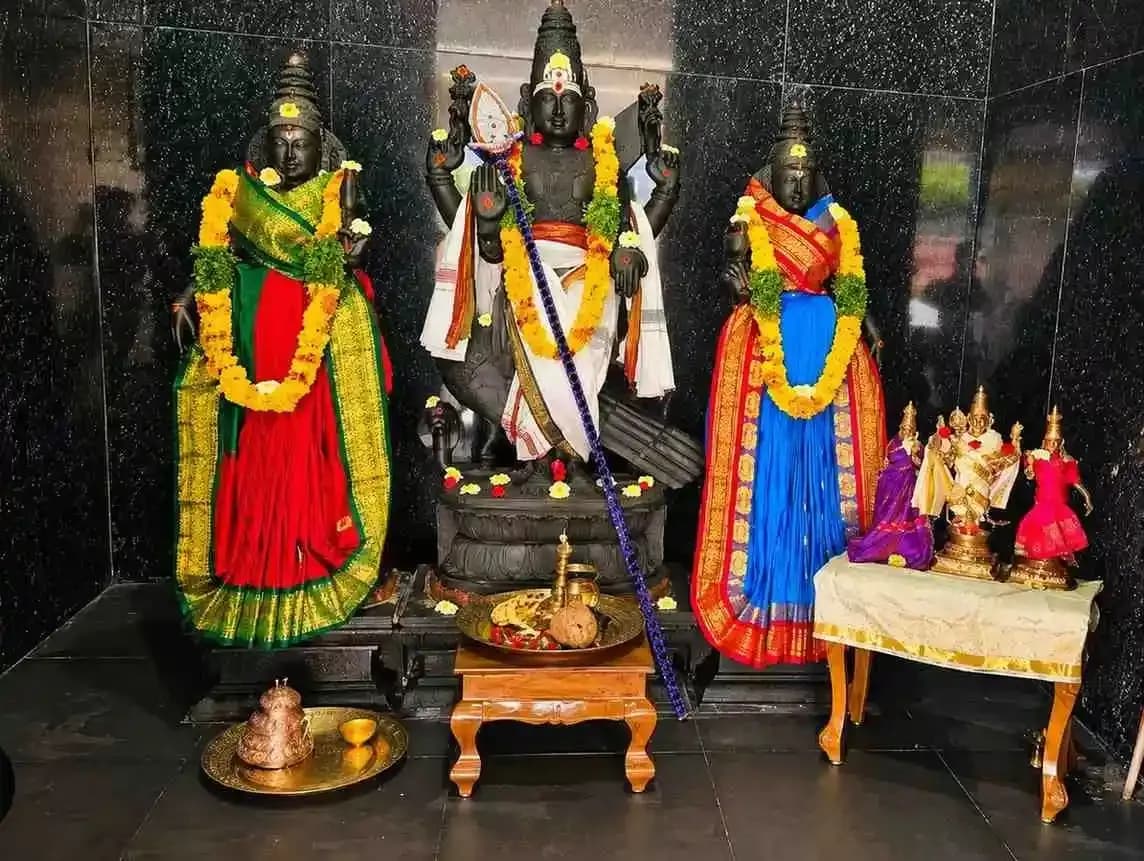
Yellamma is worshipped in strikingly varied forms across her many shrines. At major temples such as Saundatti, she is often venerated as a head or bust, reflecting the beheading myth. In much of Telangana folk practice, her worship is aniconic — expressed through clay gathered from termite mounds, turmeric-marked stones and simple altars rather than sculpted images.
She is closely linked with fertility, protection, fire, and — in folk belief — with skin diseases, which she is thought to both cause and cure. In some traditions she is counted among the Saptamatrikas (the seven mother goddesses), and she is closely associated with related Deccan goddesses such as Pochamma, Maisamma and Mahakali.
Major Yellamma Temples
Yellamma's presence is felt across countless village shrines and grand temples alike. Two centres stand out as principal pilgrimage destinations.
| Temple | Location | Notable details |
|---|---|---|
| Yellamma Temple, Saundatti | Yellammanna Gudda hill, Belagavi district, Karnataka | The most famous pilgrimage centre; built/renovated in the early 16th century (c. 1514-1515) in Chalukyan-Rashtrakuta style; draws huge crowds during the Yellamma Jatre. |
| Balkampet Yellamma Temple | Hyderabad, Telangana | An ancient shrine with origins around the 15th century; the idol is said to lie several feet below ground; a major Bonalu centre and venue for the Yellamma Kalyanotsavam. |
| Other shrines | North Karnataka, southern Maharashtra, Telangana | Numerous temples and village altars across the Deccan continue her worship in both formal and folk styles. |
Beyond these landmark temples, Yellamma is honoured at many sites throughout North Karnataka, southern Maharashtra and Telangana, ranging from established stone temples to simple community altars.
Yellamma and Bonalu
During Bonalu, the vibrant Telangana festival celebrated in the month of Ashada, Yellamma is one of the principal forms of the Mother Goddess worshipped alongside Mahakali, Pochamma and others. Special Yellamma pujas are typically observed on the first and last days of the festivities.
The Balkampet Yellamma Temple is a key focal point for Bonalu processions and the offering of Bonam — cooked food presented to the goddess. Devotees carry these offerings in decorated pots amid folk music and celebration, honouring the goddess for the protection and welfare of their families and communities. As festival dates follow the traditional lunar calendar and can vary by region and year, devotees are encouraged to confirm dates locally.
Cultural and Social Dimensions
Yellamma's worship has long emphasised accessibility. She is a goddess of the people — especially those facing hardship, illness or social marginalisation — and her shrines have historically welcomed communities from many walks of life.
Historically, some of her temples were associated with the Devadasi system, under which girls were dedicated to the deity. This practice was legally prohibited in Karnataka in 1982 and is no longer officially practised. It is noted here only as a matter of history, without endorsement, to give an accurate account of how these traditions have changed over time.
In some regions, folk traditions also connect Yellamma with transgender communities, including Jogappa and Kinnar groups, who regard her as a protective mother. Across all these communities, the enduring theme is that of a compassionate, protective presence who accepts devotees regardless of background.
The Significance of Yellamma
At the heart of Yellamma's devotion lies a union of two qualities: fierce protection and universal motherhood. Devotees turn to her seeking health, fertility, family welfare, relief from skin ailments and the fulfilment of vows. Her festivals bring communities together through processions, Bonam-style food offerings, folk music, dance and, in some places, states of trance.
- A powerful form of Shakti, identified with Renuka, mother of Parashurama
- Revered as the "Mother of All" — a universal, compassionate protector
- Worshipped in both temple (iconic) and folk (aniconic) forms across the Deccan
- Sought for health, fertility, family welfare and relief from illness
- A living link to the ancient mother-goddess traditions of South India
Yellamma represents the living continuity of the Deccan's ancient mother-goddess heritage, woven into mainstream Hindu devotion through her identification with Renuka and Shakti. For millions across South India, she remains a compassionate and protective presence — a mother to all who seek her.
Related reading
- Bonalu festival: traditions, Bonam offerings and goddess worship in Telangana
- Renuka Devi and the Parashurama story in Hindu tradition
- Grama Devatas: the village guardian deities of South India
- Shakti and the Saptamatrikas: forms of the Divine Mother
Frequently Asked Questions
Who is Yellamma?
Yellamma, also called Renuka Yellamma or Ellamma, is a Hindu mother goddess widely worshipped across the Deccan — Karnataka, Telangana, Maharashtra and Andhra Pradesh. She is a powerful form of Shakti, identified with Renuka, the mother of Parashurama, and revered as the "Mother of All."
What does the name Yellamma mean?
The name Yellamma is commonly understood to mean "Mother of All" or "Universal Mother," drawing on Kannada and Telugu roots associated with protection and motherhood. She is also known as Jagadamba and, in folk tradition, as a protective village guardian, or Grama Devata.
How is Yellamma connected to Renuka and Parashurama?
In the most widespread myth, Yellamma is identified with Renuka, wife of sage Jamadagni and mother of Parashurama. After Renuka was beheaded on Jamadagni's order and then revived through Parashurama's boon, some versions describe heads being interchanged, and the blended form that emerged became Yellamma, the "Mother of All."
Where is the most famous Yellamma temple?
The most famous pilgrimage centre is the Yellamma Temple at Saundatti, on Yellammanna Gudda hill in Belagavi district, Karnataka. Built or renovated in the early 16th century (around 1514-1515) in Chalukyan-Rashtrakuta style, it draws huge crowds during the Yellamma Jatre.
What is the Balkampet Yellamma Temple?
The Balkampet Yellamma Temple in Hyderabad, Telangana, is an ancient shrine with origins around the 15th century. Its idol is said to lie several feet below ground. It is a major Bonalu centre and the venue for the Yellamma Kalyanotsavam.
How is Yellamma worshipped during Bonalu?
During Bonalu, celebrated in the month of Ashada, Yellamma is one of the principal forms of the Mother Goddess worshipped alongside Mahakali and Pochamma. Special Yellamma pujas are observed on the first and last days, with Balkampet a key site for processions and Bonam offerings. Festival dates follow the lunar calendar, so confirm dates locally.
What do devotees pray to Yellamma for?
Devotees seek health, fertility, family welfare, relief from skin ailments and the fulfilment of vows. Worship combines fierce protection with universal motherhood, and festivals involve processions, food offerings, folk music, dance and, in some places, states of trance. Traditions do not promise guaranteed outcomes.
What was the Devadasi system associated with Yellamma temples?
Historically, some Yellamma temples were associated with the Devadasi system, under which girls were dedicated to the deity. This practice was legally prohibited in Karnataka in 1982 and is no longer officially practised. It is noted only as a matter of history, presented factually and without endorsement.