Shukravar — The Sacred Friday: Complete Guide to Rituals, Lakshmi Puja, Santoshi Mata Worship & Fasting for Hindus in India and Across the World
Published by HinduTone.com | Dharma · Devotion · Daily Practice "Om Shreem Hreem Shreem Kamale Kamalalaye Prasida Prasida, Shreem Hreem Shreem Om Mahalakshmyai…
Published by HinduTone.com | Dharma · Devotion · Daily Practice "Om Shreem Hreem Shreem Kamale Kamalalaye Prasida Prasida, Shreem Hreem Shreem Om Mahalakshmyai…
Published by HinduTone.com | Dharma · Devotion · Daily Practice
"Om Shreem Hreem Shreem Kamale Kamalalaye Prasida Prasida, Shreem Hreem Shreem Om Mahalakshmyai Namah."
O Goddess Lakshmi, dwelling in the lotus, please be gracious — I bow to you, the Great Goddess of wealth, beauty, and auspiciousness.
Introduction — Why Friday Belongs to Goddess Lakshmi, Santoshi Mata, and Shukra Dev
In the sacred rhythm of the Hindu week — where each day vibrates with the energy of a specific divine force — Friday, Shukravar, stands as the most luminously feminine, most abundantly beautiful, most deeply auspicious day of the entire week. It is the day of the three great divine feminine presences: Goddess Lakshmi — the eternal bestower of wealth, beauty, love, and grace; Santoshi Mata — the beloved goddess of contentment, satisfaction, and fulfilled desires; and Shukra Dev — the planet Venus, the most brilliant object in the night sky, presiding over love, beauty, luxury, romance, and the arts.
The name Shukravar comes from "Shukra" — the Sanskrit name for the planet Venus and for the colour white (Shukla). In Vedic astrology, Shukra (Venus) is the planet of love, beauty, desire, pleasure, marriage, the arts, luxury, vehicles, and sensory refinement. A well-placed Shukra in one's horoscope brings a beautiful, harmonious life — filled with love, comfort, creative expression, and aesthetic joy. And the supreme deity who channels and magnifies Shukra's finest gifts is Maa Lakshmi — the consort of Lord Vishnu, the goddess who dwells in the lotus, the one who bestows abundance in every form: material wealth, spiritual richness, health, beauty, love, and moksha.
Friday is the week's day of grace. Where Saturday is discipline and Sunday is radiance, Friday is grace — the day when the universe offers its gifts freely to those who simply open their hearts to receive. It is the day when women across India light a lamp at sunset, offer lotus flowers and white sweets to Lakshmi, and invite the goddess's presence into their homes. It is the day when devotees of Santoshi Mata observe the 16-Friday fast with such love that the goddess herself appears in their lives to dissolve every sorrow and grant every righteous desire.
At HinduTone.com, we bring you the most complete, most devotion-rich guide to Friday worship — every ritual, every mantra, every fast rule, the Shukravar Vrat Katha, the 16-Friday Santoshi Mata Vrat, the Vaibhav Lakshmi Vrat, the sacred temples of Lakshmi and Santoshi Mata across India, and complete guidance for NRI Hindus in the USA, UK, Australia, and Canada to observe Shukravar with full bhakti, wherever in the world they may be.
"Ya Devi Sarva Bhuteshu, Lakshmi Rupena Samsthita, Namastasyai Namastasyai Namastasyai Namo Namah." Salutations, salutations, salutations to the Goddess who dwells in all beings as Lakshmi.
The Spiritual Significance of Shukravar — Eight Sacred Dimensions
1. Goddess Lakshmi — The Source of All Abundance
Maa Lakshmi is the second of the great Tridevi (the three supreme goddesses — Saraswati, Lakshmi, Parvati) and the consort of Lord Vishnu. She is the goddess of wealth (Dhana Lakshmi), grain and food (Dhanya Lakshmi), courage (Veera Lakshmi), progeny (Santana Lakshmi), victory (Jaya Lakshmi), knowledge (Vidya Lakshmi), beauty (Aishwarya Lakshmi), and the auspiciousness that pervades all good fortune (Adi Lakshmi). These eight forms are collectively known as Ashta Lakshmi — and Friday is the day to invoke all eight simultaneously.
2. Santoshi Mata — The Goddess of Contentment
Santoshi Mata is a uniquely beloved goddess in the modern Hindu tradition — particularly in North and Central India. Her name itself is her gift: Santoshi means contentment, satisfaction, peace. She is considered the daughter of Lord Ganesha (born to fulfil the wishes of his sons Shubh and Labh for a sister). She is described as the kindest, most gentle, most immediately responsive manifestation of Shakti — the Divine Feminine energy. Friday fast is dedicated to propitiate the brightest planet Venus. The observance of this Shukravar Vrat consecutively for 16 Fridays will please the Goddess Santoshi and she will destroy all difficulties and sorrows of devotees, fulfil their honest desires, and bless them with wealth, a happily married life, and progeny.
3. Shukra Dev — Venus, the Planet of Love and Beauty
In Vedic astrology, Shukra (Venus) governs: love and romance, beauty and aesthetics, marriage and marital harmony, vehicles and luxury, creative arts (music, dance, painting, poetry), pleasure and enjoyment, and the reproductive system. A strong Shukra blesses one with a beautiful, harmonious married life, creative gifts, physical attractiveness, and material comfort. Worship on Friday — particularly with white flowers, white sweets, and the Shukra mantra — directly strengthens Venus in one's horoscope and dissolves Shukra-related doshas.
4. White and Red — The Sacred Colours of Friday
Unlike the bold yellow of Thursday or the fiery red-orange of Tuesday, Friday carries two sacred colours: white (the primary colour — pure, lustrous, the colour of the full moon, of Lakshmi's lotus, of pearls, of Shukra's light in the night sky) and red (for Lakshmi's auspiciousness, beauty, and the shakti of the divine feminine). On Friday, wear white or red clothing, offer white or red flowers, prepare white sweets (kheer, coconut milk pudding), and decorate the altar with white and red.
5. The No-Sour Rule — Friday's Most Distinctive Fast Rule
The most distinctive and widely known feature of Friday fasting — particularly for the Santoshi Mata Vrat — is the absolute prohibition of sour foods. No curd, no tamarind, no lemon, no pickles, no amla (gooseberry), no sour mangoes on Fridays during the vrat. This rule is so central to the Friday fast that many devotees extend it to their entire household — not just to themselves. The mythology explains: sour foods invoke the energy of conflict and discontent, which is the opposite of Santoshi's nature.
6. Vaibhav Lakshmi Vrat — The Wealth-Inviting Friday Fast
The Vaibhav Lakshmi Vrat is a particularly beloved form of Friday fasting, especially popular in Gujarat and Maharashtra. Vaibhav means "glory, opulence, magnificent wealth." This vrat is observed specifically to invite Lakshmi's abundance into the home — financial prosperity, health, harmony, and happiness. Many business-owning families in Gujarat observe the Vaibhav Lakshmi Vrat every Friday without interruption — and credit their commercial success directly to the goddess's grace.
7. Bengal's Friday — Devi Durga and Kali
In some regions, especially in Bengal, Friday is also a day to honour Goddess Durga and her fierce form, Kali. These powerful goddesses represent strength, protection, and the destruction of evil. Bengali Hindu families often perform Durga and Kali puja on Fridays, particularly during Navratri, when Friday falls on an especially auspicious tithi. The combination of Lakshmi's gentle grace and Durga-Kali's fierce protection makes Friday a uniquely complete day of the Divine Feminine.
8. Lakshmi Puja on Diwali — The Supreme Friday Connection
The greatest Lakshmi puja of the entire year — Diwali Lakshmi puja — is performed on Amavasya night. But every Friday of the year is a miniature Diwali — a weekly invitation for Lakshmi to enter and remain in the home. The Padma Purana teaches that Lakshmi departs from a household where there is no Friday lamp, no Friday puja, no Friday cleanliness. Conversely, she dwells permanently in the home where Friday worship is observed with love and consistency.
The Three Deities of Friday
Primary Deity — Goddess Mahalakshmi (Shri Lakshmi)
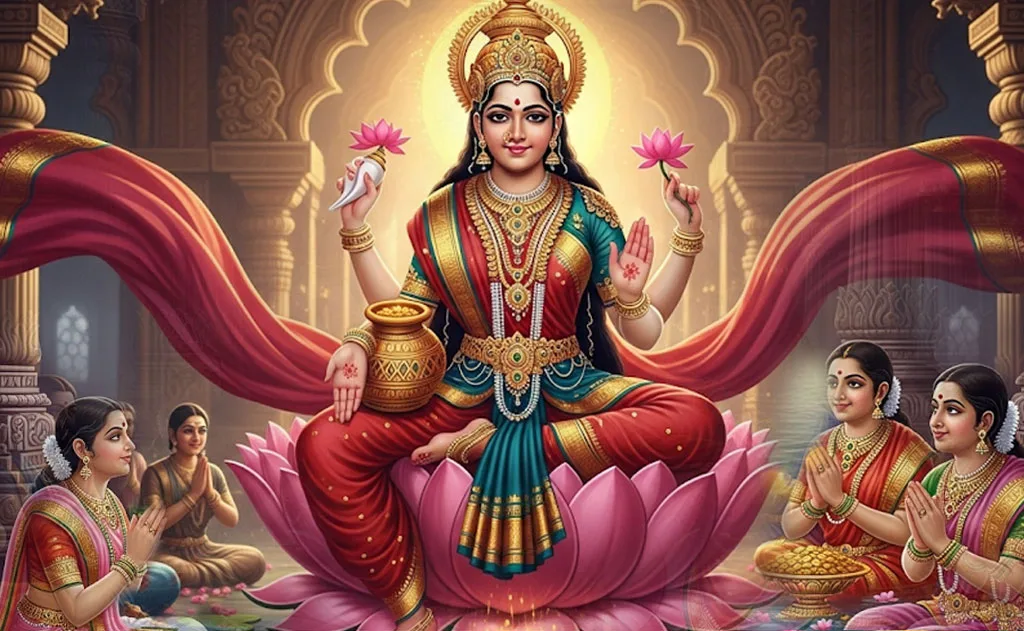
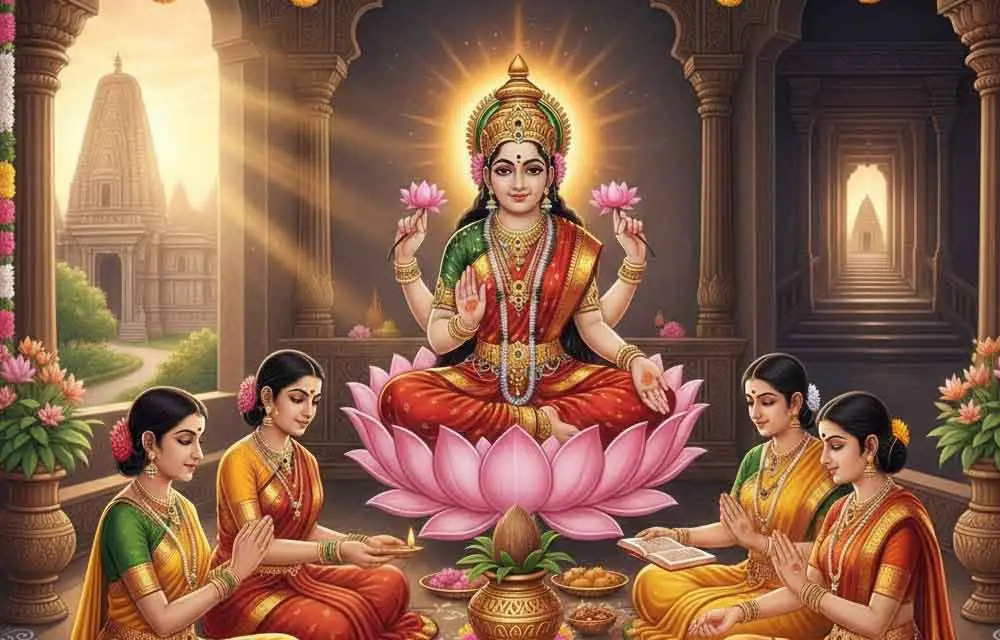
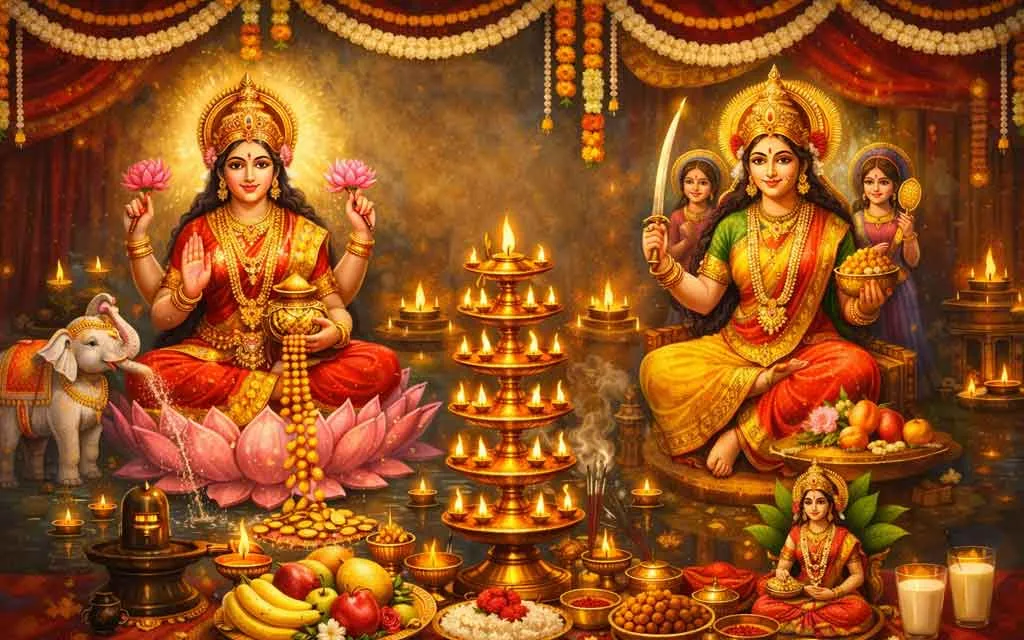
Maa Lakshmi is depicted standing or seated on a pink or white lotus, holding lotus flowers in two of her four hands, with one hand in the Abhaya Mudra (protection gesture) and the other in the Varada Mudra (gift-giving gesture). Golden coins pour from her giving hand in an eternal stream — the visual representation of her infinite generosity. She is dressed in red or gold, adorned with jewels, flanked by white elephants pouring sacred water over her. Her beauty is described as surpassing the combined radiance of the moon, the sun, and all the stars — and yet her grace is intimate and accessible to every sincere devotee.
The Ashta Lakshmi — Eight Forms of Lakshmi:
Secondary Deity — Santoshi Mata
Santoshi Mata is depicted seated on a lotus, dressed in green and gold, holding a sword (khadga) in her left hand and a trident (trishul) in her right — the arms of protection. Her face radiates a calm, contented smile. She wears a garland of lotus flowers. Her expressions alternate between peaceful and fierce — for she is the daughter of Ganesha (wisdom) and the granddaughter of Shiva (the destroyer of all that is false). The mythology of her birth: the sons of Lord Ganesha — Shubh (auspiciousness) and Labh (prosperity) — longed for a sister. On the occasion of Raksha Bandhan, all goddesses had sisters to tie rakhi, but Shubh and Labh had none. Their sorrow moved Lord Ganesha, who created Santoshi Mata from the divine flames of his own being — and because she was born to satisfy (santushta) the desire of her brothers, she was named Santoshi.
Tertiary Deity — Shukra Dev (Lord Venus)
Shukra Dev is described as white-complexioned, beautiful, and youthful — dressed in white, riding a white horse or a silver chariot. He holds a Rudraksha mala, a lotus, a golden staff, and makes the Varada Mudra. He is the Guru of the Asuras (just as Brihaspati is the Guru of the Devas) — a great sage of wisdom and the teacher of the Mritasanjivani Vidya (the science of restoring the dead to life). White flowers, white rice, white cloth, and white sweets are offered to Shukra Dev on Fridays.
Complete Shukravar Puja Vidhi — Step by Step
Preparation the Night Before
- Gather puja materials: Lakshmi murti or picture, Santoshi Mata picture, white and red flowers, lotus (if available), coconut, rice, white sweets (kheer, coconut ladoo), jaggery, chana (roasted gram), camphor, ghee lamp, incense, white cloth.
- Clean the entire home on Thursday evening — Lakshmi does not enter dirty homes. Sweep, mop, and remove clutter. This Friday cleanliness ritual is as spiritually significant as the puja itself.
- Do NOT wash hair on Friday in many traditional observances — a rule particularly followed by women during the Santoshi Mata Vrat.
- Never bring sour food items into the home on Friday during the Santoshi Mata Vrat — not just as personal restriction but as a household-wide rule.
Morning Routine — The Sacred Beginning
Step 1 — Rise Before Sunrise (Brahma Muhurta) Wake before sunrise during Brahma Muhurta (4:00–5:30 AM). This is especially important for the Vaibhav Lakshmi Vrat — Lakshmi is said to roam the earth at dawn, and the devotee who is awake and worshipping at this hour invites her presence directly.
Step 2 — Ritual Bath Bathe with clean water. Add a few drops of rose water to the bath — rose is Lakshmi's and Venus's sacred fragrance. Wear white or red clothing after the bath. White is the primary colour of Friday — pure, lustrous, the colour of Lakshmi's lotus. Red is the colour of her auspiciousness and divine feminine power.
Step 3 — Decorate and Purify the Home Draw a rangoli or kolam at the entrance of the home — particularly a lotus pattern or a Lakshmi foot-print (Shri Pada), which symbolises Lakshmi entering the home. Sprinkle Ganga Jal in the puja room and throughout the home. Light incense and camphor to create a fragrant, pure atmosphere.
Step 4 — Set Up the Friday Altar Arrange the puja space facing east or north with:
- Lakshmi murti or picture (ideally seated on a lotus, with Vishnu, or in Ashtalakshmi form)
- Santoshi Mata picture or murti
- Shukra Dev picture or Shukra Yantra
- White flowers — white lotus (most sacred to Lakshmi), white rose, jasmine, white marigold
- Red flowers — red lotus, red hibiscus, red rose
- Lotus petals scattered on the altar
- Fresh coconut with husk
- White rice (akshat) — unbroken rice grains
- Jaggery (gur) and roasted gram (chana) — Santoshi Mata's most sacred offering
- Kheer (rice pudding) — Lakshmi's favourite sweet
- White cloth to cover the altar
- Perfume or rose water (Attar) — Shukra's sacred fragrance
- Cowrie shells (Kauri) — traditionally associated with Lakshmi's abundance
- Gold or silver jewellery briefly placed before the murti — then kept in the home safe for Lakshmi's blessing
- Ghee lamp and camphor for the aarti
Step 5 — Sankalpa (Sacred Vow) Sit facing east. Sprinkle clean water over yourself. Join your palms and declare:
"Om Shreem Mahalakshmyai Namah. Om Santoshi Matayai Namah. Adya Shukravare, Shri Lakshmi tatha Santoshi Mata prasadartham, , aham Shukravar Vrat karishye."
(O Mahalakshmi, O Santoshi Mata. Today, Friday, for the grace of Lakshmi and Santoshi Mata and for , I observe this Shukravar Vrat.)
The Heart of the Puja — Lakshmi Abhishekam and Lotus Archana
Lakshmi Abhishekam — The Sacred Bath:
Pour each substance gently over the Lakshmi murti while chanting "Om Shreem Mahalakshmyai Namah" continuously. The Abhishekam may be performed with just milk and Ganga Jal if other substances are unavailable — Lakshmi accepts every offering made with sincere love.
Lotus Archana — The Supreme Lakshmi Offering: The lotus (Kamal) is Lakshmi's most sacred flower — she dwells in the lotus, she holds the lotus, she IS the lotus of the universe. Offering lotus petals (or whole lotus flowers) to Lakshmi while chanting her 108 names is the most complete Friday act of devotion. If fresh lotus is unavailable, offer the most beautiful flowers available — Lakshmi loves beauty in all its forms.
Offer each flower or petal while chanting one of Lakshmi's 108 names.
Jaggery and Roasted Gram — Santoshi Mata's Sacred Offering: The offering most uniquely associated with Santoshi Mata is jaggery (gur) and roasted chickpeas (chana). These two simple, golden-brown foods are the goddess's most beloved prasad. Offer a small amount of jaggery and roasted chana to Santoshi Mata's murti on every Friday of the vrat. This offering — humble in appearance, infinite in spiritual power — is said to invoke Santoshi Mata's immediate and personal blessing.
White Rice Offering (Akshat): Unbroken white rice (akshat with turmeric) is offered to Lakshmi as a symbol of completeness, auspiciousness, and abundance. Place a mound of white rice before the Lakshmi murti and offer it while chanting "Om Shreem Hreem Shreem Mahalakshmyai Namah."
The Lotus Footprints (Shri Pada): After the morning puja, draw small lotus-footprint shapes (pointing inward into the home) from the main entrance to the puja room with white rice flour or white rangoli powder. This is one of the most beautiful Friday traditions — symbolising Lakshmi walking into the home and choosing to remain.
What to Offer on Friday
What NOT to offer or do on Friday:
- No sour foods whatsoever during Santoshi Mata Vrat — no curd, tamarind, lemon, pickles, amla, or any sour substance on the person's plate or in the household
- Non-vegetarian food — strictly avoided
- Onion and garlic (tamasic — disrupts the sattvic, loving energy of Friday)
- Black or dark-coloured items in the puja
- Do not buy iron items or give iron goods on Friday in traditional practice
- Do not cut hair on Friday
- Avoid anger, criticism, and harsh speech — the feminine grace of Lakshmi and Santoshi is repelled by negativity
Mantra Recitation — The Sacred Sounds of Friday
The Mahalakshmi Beeja Mantra — Root Invocation
ॐ श्रीं महालक्ष्म्यै नमः Om Shreem Mahalakshmyai Namah
The most powerful and universal Lakshmi mantra. "Shreem" (pronounced Shreem) is Lakshmi's beeja (seed syllable) — the sound-essence of her infinite abundance. Chanting "Om Shreem Mahalakshmyai Namah" 108 times on Friday morning using a white sandalwood or crystal mala is the primary act of Lakshmi invocation. Wear red or white clothing while chanting.
The Mahalakshmi Ashtakam Mantra
ॐ श्रीं ह्रीं श्रीं कमले कमलालये प्रसीद प्रसीद, श्रीं ह्रीं श्रीं ॐ महालक्ष्म्यै नमः॥
Om Shreem Hreem Shreem Kamale Kamalalaye Prasida Prasida, Shreem Hreem Shreem Om Mahalakshmyai Namah.
Meaning: O Goddess Lakshmi, dwelling in the lotus, please be gracious. I bow to you — the Great Goddess of abundance. This expanded beeja mantra is more potent than the simple Shreem mantra and is particularly used for attracting prosperity, resolving financial challenges, and inviting Lakshmi's permanent residence in the home.
Shukra Beeja Mantra (Planet Venus)
ॐ द्रां द्रीं द्रौं सः शुक्राय नमः Om Draam Dreem Draum Sah Shukraya Namah
Meaning: Salutation to Shukra (Venus). The seed-syllable mantra of the planet Venus — the most potent Venus mantra in Vedic astrology. Chant 108 times on Friday mornings for strengthening Venus in the horoscope, improving love and marriage, resolving Venus-related doshas, and enhancing creative and aesthetic gifts.
The Shukra Mantra
ॐ शुं शुक्राय नमः Om Shum Shukraya Namah
The simplified Venus mantra. Chant 108 times on Fridays — particularly recommended by Vedic astrologers for those with Venus retrograde, Venus in challenging houses, or delayed marriage.
The Santoshi Mata Mantra
ॐ संतोषी मातायै नमः Om Santoshi Matayai Namah
The primary mantra for invoking Santoshi Mata's grace. Chant 108 times on Friday mornings using a mala. During the 16-Friday Vrat, chant this mantra while offering jaggery and roasted gram.
Sri Suktam — The Vedic Hymn of Lakshmi
The Sri Suktam is the supreme Vedic hymn to Goddess Lakshmi — found in the Rig Veda (Khilani section) and considered the most ancient and most powerful of all Lakshmi prayers. Its 16 verses invoke Lakshmi in all her abundance-bestowing forms. Reciting the Sri Suktam on Friday morning — ideally after the Abhishekam — is the most potent single act of Lakshmi worship in the entire Vedic tradition.
Opening verse:
Hiranya Varnam Harinim Suvarna Rajata Srajam, Chandraam Hiranyamayim Lakshmim Jatavedo Ma Avaha.
Meaning: O Agni (sacred fire), bring to me Lakshmi — golden in colour, beautiful as the moon, wearing garlands of gold and silver, shining like the moon, made of gold. May she, the goddess of fortune and beauty, come to me.
Reciting the complete Sri Suktam takes approximately 10–15 minutes. Many families recite it every Friday morning and every Diwali — and over generations, this practice is credited with consistent financial stability and prosperity.
Lakshmi Chalisa — The Forty Verses of Lakshmi
The Lakshmi Chalisa, composed in Hindi, is a beautiful 40-verse devotional hymn in praise of Maa Lakshmi. It describes her beauty, her origin from the churning of the cosmic ocean (Samudra Manthan), her relationship with Lord Vishnu, and her gifts of wealth, health, and happiness. Recite the Lakshmi Chalisa on Friday mornings and evenings during the 16-Friday Vrat.
Opening verse:
Mata Lakshmi Kari Kripa, Karahu Hridaya Mein Vaas, Manokamna Siddha Karu, Purna Karo Aas.
Mahalakshmi Ashtakam — Eight Verses of Supreme Praise
Composed by Adi Shankaracharya, the Mahalakshmi Ashtakam is eight verses of the most exquisitely beautiful Lakshmi praise in Sanskrit. Each verse addresses a different aspect of Lakshmi's infinite nature. Reciting the complete Ashtakam on Fridays is considered one of the highest acts of Lakshmi bhakti:
Opening verse:
Namastestu Mahamaye Shreepeethe Surapujite, Shankhachakra Gadahaste Mahalakshmi Namostute.
Meaning: Salutations to the great illusion-weaver, worshipped by the gods at the Shri Pitha. O Mahalakshmi, I bow to you — holder of the conch, discus, and mace.
The 108 Names of Goddess Lakshmi (Lakshmi Ashtottara Shatanamavali)
Reciting the 108 names of Lakshmi on Fridays — offering a lotus petal or white flower with each name — is the most complete Friday Archana. Key names include:
Om Prakrityai Namah · Om Vikritayai Namah · Om Vidyayai Namah · Om Sarvabhutahitapradayai Namah · Om Shraddhayai Namah · Om Vibhavaryai Namah · Om Nityapushtayai Namah · Om Vibhavaryai Namah · Om Kamakshai Namah · Om Kamalayai Namah · Om Anandayai Namah · Om Padmapriayai Namah · Om Padmahasthayai Namah · Om Padmakshai Namah · Om Padmasundarai Namah · Om Vishnupatnyai Namah · Om Prasannakshai Namah · Om Narayanasamashritayai Namah · Om Daridryadhvamsinai Namah · Om Devyai Namah · Om Sarvapadravanivarinahyai Namah · Om Navadurgayai Namah · Om Mahakaalyai Namah...
Jai Santoshi Mata Aarti — The Friday Aarti
The most beloved Friday aarti — sung in countless Hindu homes every Friday evening:
Jai Santoshi Mata, Maiya Jai Santoshi Mata, Apane Sewak Jana Ko, Sukha Sampatti Data. Jai Santoshi Mata.
Gur Aru Chana Paramapriya, Tame Santosh Kiyo, Santoshi Kahalai, Bhaktana Vaibhav Diyo. Jai Santoshi Mata.
Shukravar Priya Manat, Aaja Diwas Sohi, Bhakta Mandali Chhai, Katha Sunat Mohi. Jai Santoshi Mata.
Meaning: Victory to Santoshi Mata — who gives happiness and prosperity to her devotees. Jaggery and roasted gram please her greatly — she is called Santoshi because she blesses her devotees with all opulence. Friday is her beloved day — today that day has come — the gathering of devotees listens to her story with joy.
Evening Puja — The Most Important Act of Friday
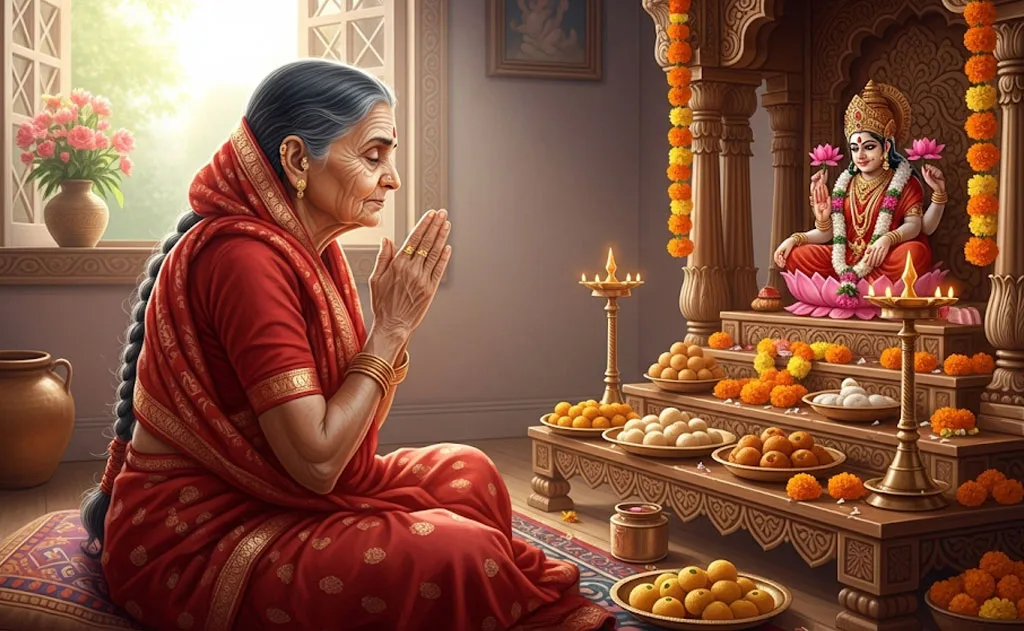
The Friday evening puja is the crown of Shukravar worship. In many Hindu traditions, the Friday evening lamp-lighting is the most important weekly ritual performed by the woman of the household — equal in significance to the great Diwali Lakshmi puja:
- As the sun sets, clean the puja area and light fresh incense.
- Light the ghee lamp — Lakshmi is drawn to the lamp's light as she roams the earth at dusk.
- Offer fresh white and red flowers to Lakshmi.
- Offer jaggery and chana to Santoshi Mata.
- Recite the Sri Suktam or the Mahalakshmi Ashtakam.
- Read or listen to the Shukravar Vrat Katha with the family.
- Perform the Santoshi Mata Aarti and the Lakshmi Aarti — "Om Jai Lakshmi Mata" — circling the lamp before the murti.
- Distribute kheer, coconut ladoo, and jaggery-chana as prasad.
- Break the fast with the traditional Friday meal.
- Donate white cloth, white sweets, or cash to a woman in need — Lakshmi's grace multiplies when shared.
Fasting Rules — Shukravar Upavasa
Complete Fast (Nirahara)
No food from sunrise to sunset. Water and coconut water are permitted. Break the fast in the evening after the aarti with kheer or white rice-based food.
Partial Fast (Phal-Ahar)
Permitted throughout the day: fresh fruits (especially white-fleshed fruits — banana, coconut, sapodilla), milk, curd (permitted for Lakshmi Vrat but NOT for Santoshi Mata Vrat), coconut water, fruit juices, dry fruits, sabudana, and rock salt (sendha namak) preparations.
Not permitted: sour foods of any kind during Santoshi Mata Vrat (see the key rule below), onion, garlic, non-vegetarian food, regular table salt.
THE CRITICAL FRIDAY RULE — No Sour Foods for Santoshi Mata Vrat
The first and foremost rule of this fast is that nobody in the house should eat or touch anything sour on this day. This means: no curd (dahi), no tamarind (imli), no lemon, no lime, no pickle (achar), no amla (gooseberry), no raw mango, no kokum, no vinegar — not just for the fasting person but for everyone in the household. This rule is so important that breaking it is said to nullify the day's vrat and require it to be repeated.
For the Lakshmi Vrat (not Santoshi Mata Vrat specifically): curd may be used in cooking for the family, but the fasting person avoids it.
The Traditional Friday Meal
- Kheer (rice pudding with milk, sugar, and cardamom) — the supreme Friday prasad and meal
- White rice with ghee
- Chana (roasted gram) and jaggery
- Coconut-based sweets
- Sabudana khichdi or sabudana vada
- Banana and coconut
- Puri and chickpea curry (for the Santoshi Mata Udyapan prasad)
Friday Vrat Food Specialities
- Sabudana khichdi — with cumin and peanuts in rock salt (no sour chutney)
- Kheer — the quintessential Friday sweet
- Coconut ladoo — white, sweet, auspicious
- Singhare ka halwa (water chestnut pudding)
- Kuttu ki puri (buckwheat bread)
- Sweet potato chat (no tamarind chutney — use mint chutney only)
- Banana halwa
- Makhana (fox nut) kheer
- Coconut rice (plain, with ghee and rock salt)
- Rose milk — rose water in chilled milk with mishri (for Venus/Shukra)
The Two Great Friday Vrats — Solah Shukravar
Form 1 — Santoshi Mata Vrat (16 Fridays)
It is believed that the observance of this Shukravar Vrat consecutively for 16 Fridays will please the Goddess Santoshi and that she will destroy all difficulties and sorrows of devotees. The 16-Friday Santoshi Mata Vrat is the most popular form. Begin on any Friday of Shukla Paksha. Observe all rules for 16 consecutive Fridays. On the 17th Friday (Udyapan), perform the concluding ceremony.
Who should observe: Anyone facing difficulties — financial hardship, marital unhappiness, loneliness, family conflict, unemployment, or any form of suffering. The Santoshi Mata Vrat is the tradition's most universal, most accessible, most immediately powerful vrat — available to every person of any age, gender, or background.
Form 2 — Vaibhav Lakshmi Vrat (11 or 21 Fridays)
The Vaibhav Lakshmi Vrat is observed for 11 or 21 consecutive Fridays — particularly popular in Gujarat and Maharashtra. It is focused specifically on the invitation of material and spiritual abundance. Many business-owning families observe this vrat perpetually — every Friday, without interruption. The Vaibhav Lakshmi Vrat Katha is a separate, beautiful text recited on each Friday of the vrat.
Rules of the 16-Friday Santoshi Mata Vrat
- Begin on any Friday of Shukla Paksha in any month.
- Fast for 16 consecutive Fridays — no sour food for the entire household on any of these Fridays.
- On each Friday: rise before sunrise, bathe, wear white or red, perform Santoshi Mata puja with jaggery and chana offering, recite the Shukravar Vrat Katha, observe the fast until evening.
- Offer jaggery (gur) and roasted gram (chana) to Santoshi Mata on each Friday — these are non-negotiable as her offerings.
- Distribute prasad of jaggery and chana to family members and others — but warn everyone that they must not eat anything sour that day.
- Observe brahmacharya (mental purity and positive speech) on each Friday.
- Light the evening lamp before Santoshi Mata and Lakshmi — the lamp should not be extinguished before the aarti is complete.
Udyapan — The Concluding Ceremony (17th Friday)
On the 17th Friday — after completing all 16 Shukravar Vrats:
- Perform a grand Lakshmi and Santoshi Mata puja.
- Prepare and offer: Puri (fried bread), Kheer, Chickpeas (whole), and Jaggery — the traditional Santoshi Mata Udyapan prasad.
- Invite eight children (ideally boys and girls) to receive the prasad — along with some cash as Dakshina.
- Distribute the prasad generously to family, neighbours, and the community.
- Ensure no sour food is consumed by anyone present at the Udyapan ceremony.
- Express gratitude to Santoshi Mata for the 16 weeks of grace received.
The Shukravar Vrat Katha — Sacred Friday Stories
The Story of Gita and the 16 Fridays
This is the most famous and widely recited Shukravar Vrat Katha — told in nearly every village and city of North India, and now known globally through the legendary film Jai Santoshi Maa (1975) which brought this story to millions:
Once, in a poor household, lived a young wife named Gita. Her husband, whose name was Birju (or in some versions, Kampat), was a devoted but restless man who left home to seek his fortune in a distant city. He found work, prospered, and — caught up in his new life — forgot to write to his wife or return home. Gita was left in the care of her difficult in-laws who treated her unkindly, giving her little food and no respect.
One Friday, Gita saw a group of women observing the Santoshi Mata Vrat. She learned about the 16-Friday fast — that if observed with complete sincerity and the strict no-sour-food rule, Santoshi Mata herself would intervene to set right all that was wrong in the devotee's life. Gita, with nothing but her faith, began the vrat that very Friday.
Week after week, despite the difficulty of her circumstances, she observed every Friday with unwavering devotion — fasting, offering jaggery and chana, reciting the Katha, and keeping the household free of sour food (which caused conflict with her in-laws, who resented the restriction). But Gita persisted.
After she completed the 16 Fridays, Santoshi Mata appeared in Birju's dream — showing him his wife's suffering and commanding him to return home with money and respect. Birju awoke with remorse in his heart. He immediately prepared to return, sending money ahead. Gita, upon receiving the money, performed the Udyapan ceremony on the 17th Friday — feeding eight children with puri, kheer, chickpeas, and jaggery. But at the feast, a sister-in-law secretly mixed sour tamarind into the chickpeas. Santoshi Mata, whose rules had been violated, was displeased and Birju was arrested on a false charge on his way home.
Gita realised what had happened and observed another round of the vrat with even greater care. On the 17th Friday of the second cycle, the Udyapan was performed without any sour food. This time, Santoshi Mata was fully satisfied — Birju was released, returned home, and the couple began a happy, prosperous new life together. The story of Gita and the 16 Fridays spread throughout the village — and soon, thousands of women began observing the Santoshi Mata Vrat.
The Katha teaches: Santoshi Mata's grace is absolute — but so is her one rule. The no-sour-food restriction is not a restriction but a teaching: sourness (conflict, resentment, criticism) repels the goddess of contentment. To invite contentment, one must create the conditions of contentment — even in a household that resists.
The Birth of Santoshi Mata (The Raksha Bandhan Story)
On the occasion of Raksha Bandhan, all the gods and their sisters joyfully tied rakhi. But Shubh and Labh — the sons of Lord Ganesha — had no sister to tie rakhi with. They watched with longing as the goddess celebrated with their cousins and uncles. Their sadness moved Lord Ganesha deeply. His consorts Riddhi and Siddhi, seeing their sons' grief, asked Ganesha to create a daughter. Ganesha agreed. From the divine flames of his being — combining the energy of Riddhi (prosperity) and Siddhi (achievement) — he created Santoshi Mata. Because she was born to satisfy (santushta) the longing of her brothers, she was named Santoshi. The brothers were overjoyed. They tied rakhi to their new sister. And from that day, Santoshi Mata has been the goddess who satisfies all longing — every righteous desire of every sincere devotee.
The Young Merchant and Venus (Shukra Dev Katha)
Once, three young men — a Brahmin, a merchant, and a prince — were all recently married and discussing their happiness. The merchant boy's bride had not yet come to his house from her parents'. He was eager to bring her home immediately. His mother warned him: "Venus is not visible in the sky right now. Bringing your bride home when Venus is invisible is not auspicious. Wait just a few more days." The young man dismissed this as superstition and left to bring his wife anyway.
Midway through the journey, disaster struck. The couple met with an accident — their carriage overturned, the merchant was injured, and they found themselves stranded in an unfamiliar place. His friends rushed to help and the couple was taken back to the bride's house to recover. Realising his error, the young man prayed sincerely to Shukra Dev and promised to observe the Shukravar Vrat with complete devotion. The merciful Shukra Dev accepted his prayer and blessed him. When Venus rose again in the sky — auspiciously visible — the merchant brought his bride home safely. The couple observed the Friday fast together for the rest of their lives and lived in enduring love and prosperity.
The Katha teaches: Venus is the planet of love and marriage. Honouring its rhythms — through Friday fasting and Shukra worship — aligns the devotee's life with love's deepest tide.
Key Shukravar Timings in India
India city-wise approximate sunrise on a representative Friday: Delhi ~7:02 AM · Mumbai ~7:12 AM · Chennai ~6:25 AM · Kolkata ~6:15 AM · Hyderabad ~6:32 AM · Bengaluru ~6:39 AM
Major Lakshmi and Santoshi Mata Temples Across India — Where Shukravar Shines
Supreme Lakshmi Temples of India
Santoshi Mata Temples
Friday Rituals for NRI Hindus — Complete Country-Wise Guide
For the global Hindu diaspora, Goddess Lakshmi and Santoshi Mata are as close as the nearest lamp lit at dusk with love. The goddess does not require a grand temple — she requires a clean home, a sincere heart, a lamp flame, and a lotus or a single red flower offered with devotion. She is Sarvavyapi — all-pervading — and her grace flows equally to the devotee who worships in Tirupati and the one who worships in Toronto.
India — Regional Traditions
North India (UP, Bihar, Delhi, Rajasthan, MP, Haryana, Punjab): Friday is primarily Santoshi Mata's day in North India. The 16-Friday Santoshi Mata Vrat is observed by millions of women across the Hindi belt — it is one of the most widely practised Friday observances in India. The Lakshmi Chalisa, Sri Suktam, and the Shukravar Vrat Katha are recited in homes and small neighbourhood mandirs. The Friday evening lamp is lit in virtually every household — the single most universally observed Hindu weekly ritual after the Monday Shiva lamp and the Sunday Surya arghya.
Maharashtra: Mahalakshmi is the presiding goddess of Maharashtra — the great Kolhapur Mahalakshmi being the supreme state deity. The Vaibhav Lakshmi Vrat is deeply embedded in Marathi-Gujarati households. Many Maharashtrian women observe Friday Lakshmi puja without interruption throughout their married lives. The Ashtalakshmi form — all eight Lakshmi manifestations worshipped together — is particularly celebrated in Maharashtra on Fridays.
Gujarat: Friday is the most commercial, most auspicious day for Gujarati merchants and business families. The Vaibhav Lakshmi Vrat is a cornerstone of Gujarati household devotion. Business ledgers (Chopda Puja) are opened with Lakshmi's blessing on Diwali, but every Friday is a mini-Chopda Puja — a weekly renewal of commercial and household prosperity. White sweets, lotus flowers, and coconut are the signature Friday offerings in Gujarat.
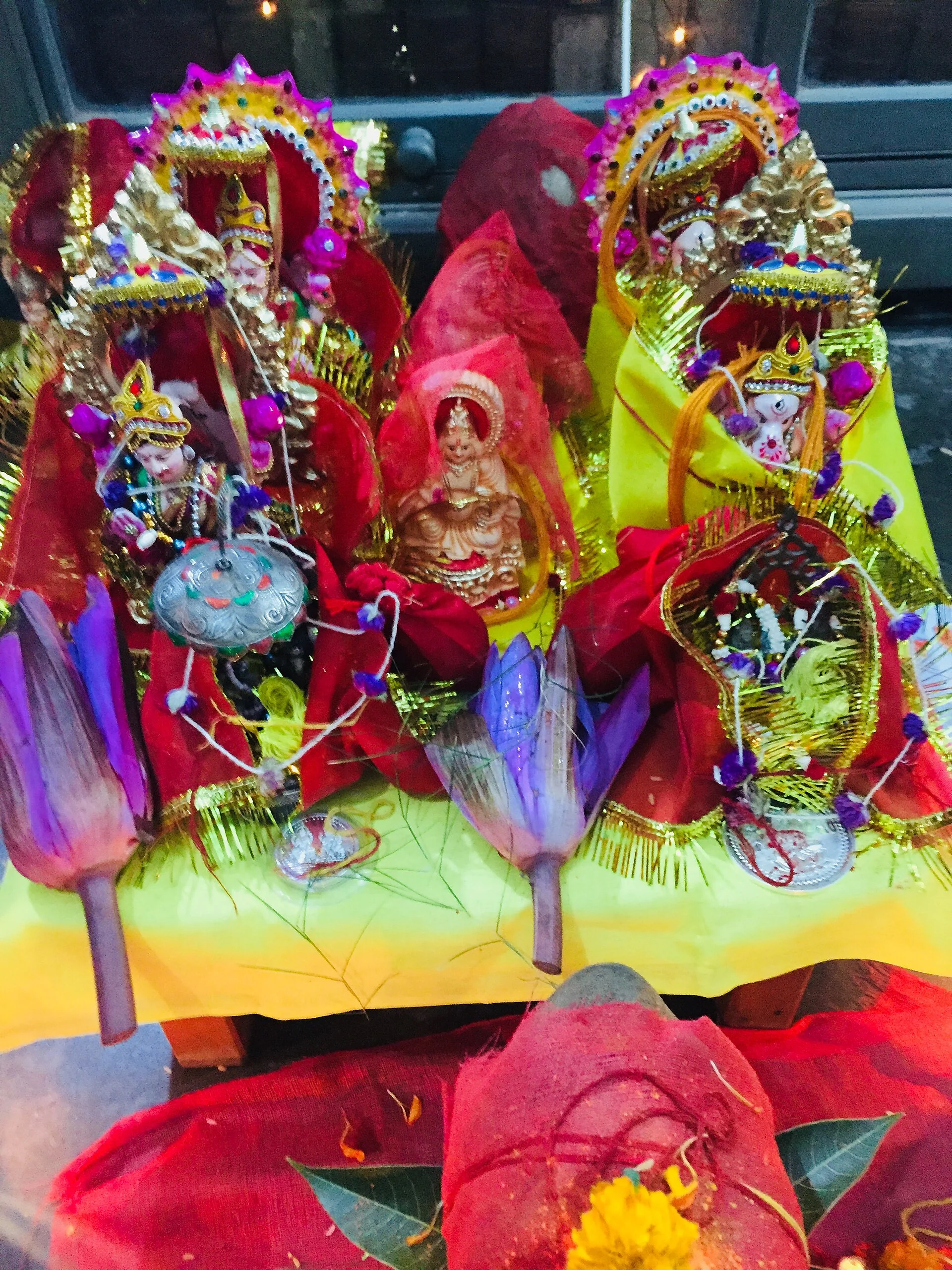
Tamil Nadu, Andhra Pradesh, and Telangana: Friday is Varalakshmi Vratam day — particularly the Friday of Shravana month (August), which is the most sacred Lakshmi Friday of the entire year. Women observe the Varalakshmi Vratam with elaborate Lakshmi puja, decorating a Kalash (pot) with Lakshmi's face and worshipping it as the goddess herself. The puja includes Kumkumarchana (offering of red turmeric / vermilion with 108 names), naivedyam of 9 different dishes, and a beautiful thread-tying ceremony. This tradition is one of the most beautiful and elaborate domestic rituals in all of South India.
West Bengal: Friday honours Goddess Lakshmi through the Lakshmi Panchali (a collection of Lakshmi hymns in Bengali) and a special Friday Lakshmi puja performed by the women of the household. Bengal also observes Durga and Kali on Fridays. The autumn Durga Puja — the greatest Bengali festival — always includes specific Friday puja moments. Kali Puja, observed on Diwali night in Bengal, is also associated with Friday energy.
[image: 🇺🇸] United States of America
Setting Up Friday Worship at Home: All essential Shukravar puja items are widely available across the USA. Indian grocery stores (Patel Brothers, Subzi Mandi, Apna Bazar, and South Indian stores) carry lotus flowers (in season), rose water, white and red flowers, jaggery, roasted chana, kheer ingredients, and Lakshmi murtis. Many South Indian grocery stores stock lotus when in season. Roasted chana (Bengal gram) and jaggery are universally available in Indian stores.
Special Varalakshmi Vratam in the USA: The Telugu and Tamil communities in the USA observe Varalakshmi Vratam (August Shravana month Friday) with remarkable fidelity. Community organisations in New Jersey, Texas, California, and Georgia organise group Varalakshmi Vrat programmes — where dozens or hundreds of women gather for the collective puja, naivedyam, and Kumkumarchana.
Major Lakshmi Temples in the USA:
Sri Lakshmi Temple, Ashland, MA — one of the few temples in North America dedicated exclusively to Goddess Lakshmi — is a particularly important Friday destination for the Hindu diaspora of New England. Its annual Varalakshmi Vratam event draws devotees from across the northeastern USA.
United Kingdom
Home Worship: All Friday puja essentials are available at Leicester's Belgrave Road, Southall, Wembley, Harrow, and Birmingham's Soho Road. Rose water, white and red flowers, jaggery, roasted chana, kheer ingredients, and Lakshmi murtis are standard stock at all large Indian grocery stores. Lotus flowers are available at Indian flower shops during summer months.
Varalakshmi Vratam in the UK: The Telugu and Tamil communities in London, Leicester, and Birmingham observe Varalakshmi Vratam every August Friday with group puja events. Many Hindu women's organisations in the UK organise community Varalakshmi puja celebrations open to all Hindu women.
Major Lakshmi Temples in the UK:
Bradford's Lakshmi Narayan Temple — dedicated specifically to Lakshmi and Narayan — is a uniquely important Friday destination in the UK. Its Friday evening puja, Sri Suktam recitation, and Lakshmi aarti are open to all and draw a vibrant community gathering every week.
Australia
Home Worship: All Friday puja items are available at Indian grocery stores in Sydney (Parramatta, Harris Park), Melbourne (Dandenong, Clayton), Brisbane (Sunnybank), and Perth. The large Telugu and Tamil communities in Sydney and Melbourne ensure excellent availability of Varalakshmi Vrat-specific items during the August Shravana season. Rose water and lotus (when in season) are available at specialty Indian floral shops.
Varalakshmi Vratam in Australia: The Varalakshmi Vratam is one of the most vibrant Telugu and Tamil community observances in Australia. In Sydney, Melbourne, and Brisbane, community organisations host group Varalakshmi Vrat puja events each August — open to all Hindu women — with elaborate puja, communal naivedyam, and distribution of prasad.
Major Lakshmi Temples in Australia:
Sri Venkateswara Temple, Helensburgh hosts one of Australia's most elaborate Varalakshmi Vratam events every year — drawing hundreds of Telugu and Tamil women from across the Sydney region. The temple also observes special Friday Padmavathi (Lakshmi) Abhishekam throughout the year.
Canada
Home Worship: The Greater Toronto Area, Greater Vancouver, and Calgary all have excellent access to Friday puja materials. South Asian grocery stores in Brampton, Mississauga, and Scarborough carry rose water, lotus (in season), white and red flowers, jaggery, roasted chana, kheer ingredients, and Lakshmi murtis. Varalakshmi Vrat kits are often assembled and sold by Indian community organisations in August.
Major Lakshmi Temples in Canada:
Varalakshmi Vratam in Canada: The Telugu Association of Ontario, Tamil Sangam Toronto, and similar community organisations in Toronto organise group Varalakshmi Vrat puja events every August. These community gatherings — where women perform the Varalakshmi Vrat together, recite the Lakshmi Ashtottara, and share an elaborate naivedyam — are among the most spiritually vibrant and culturally joyful events in the Canadian Hindu calendar.
Practical NRI Tips — Adapting Friday Rituals Abroad
Item Substitutions for Friday Worship
The No-Sour Rule for NRI Households
Managing the no-sour-food rule in an NRI household can be nuanced — particularly when non-observing family members want their regular food. The tradition's guidance: ideally, the entire household avoids sour food on Friday. In practice, many NRI devotees observe the restriction strictly for themselves (no sour food on their own plate) and respectfully request that the kitchen avoids cooking with tamarind or curd that day. Flexibility with sincere intention is always accepted by the goddess.
Varalakshmi Vrat Outside India — Essential Items
For NRI women observing Varalakshmi Vrat outside India:
- A brass or copper Kalash (pot) serves as Lakshmi's murti — decorate it with mango leaves, coconut, and Lakshmi's face drawn with kumkum
- Nine varieties of naivedyam can include any nine preparations — sweet and savoury — made without sour ingredients
- The sacred thread (kappu or kankanam) tied around Lakshmi's wrists and your own wrists during the ceremony is available from Indian stores or can be ordered online
- Community Varalakshmi Vrat gatherings in the GTA, Sydney, and London are organised annually — joining these creates the social and spiritual energy that makes this vrat most powerful
When Work Makes Full Observance Difficult
Even a five-minute Friday Lakshmi ritual carries the full grace of Shukravar. The minimum Friday practice:
- Light a lamp (even a candle) at home on Friday evening — this single act invites Lakshmi's presence more than any elaborate ritual done without love
- Chant "Om Shreem Mahalakshmyai Namah" 108 times on your commute or during a quiet moment
- Offer a red or white flower at a Lakshmi murti or picture
- Eat something sweet and white (a spoonful of kheer, a coconut ladoo, a banana) in consciousness of the day
- Avoid anger and criticism on Friday — Lakshmi is drawn to homes of peace and harmony
Benefits of Shukravar Vrat — Worldly and Spiritual
Worldly (Prakritic) Benefits
- Invitation of Lakshmi's abundance — financial prosperity, removal of debt, and flow of wealth
- Contentment and peace in the home — Santoshi Mata's specific gift
- Harmonious, loving marriage — Shukra's most cherished blessing
- Blessings of children and family harmony
- Relief from Venus-related doshas in the horoscope — improving love, beauty, relationships, and creative gifts
- Success in the arts, music, dance, and creative professions (all Venus domains)
- Attraction of a suitable life partner
- Relief from conflict between family members
- Beauty, grace, and health — Lakshmi's blessings on the body
- Luxury, comfort, and vehicles — traditional Shukra blessings
Spiritual (Adhyatmic) Benefits
- Development of Santoshi (contentment) — the highest and rarest inner quality; the foundation of peace
- Alignment with the Divine Feminine energy (Shakti) in its most nurturing, abundant, and gentle form
- Opening of the heart chakra — Lakshmi's energy dwells in the heart; Friday worship softens the heart and expands compassion
- Development of beauty consciousness — the recognition that beauty, grace, and joy are divine values, not worldly distractions
- Cultivation of generosity and sharing — Lakshmi multiplies when shared; Friday dana (giving) amplifies the vrat's merit
- Deepening of devotion to the Tridevi — particularly for women, Friday worship strengthens the connection to the divine feminine principle within
Health Benefits
- Fasting on Fridays rests the reproductive system and the kidneys — both governed by Venus
- The white-food emphasis of Friday fasting (milk, coconut, banana, rice) introduces cooling, sattvic, easily digestible foods
- Avoiding sour foods on Friday gives the digestive system a rest from acidic foods — particularly beneficial for those with acid reflux or pitta-dominant constitutions
- Rose water used in the bath and puja has demonstrated aromatherapy benefits: reducing anxiety, improving mood, and promoting emotional balance
- Sri Suktam recitation (~12 minutes) involves rhythmic Sanskrit chanting that activates the parasympathetic nervous system and promotes deep calm
- The Friday lamp-lighting — a daily sunset ritual — naturally regulates the body's transition from daytime activity to evening rest
Closing Blessing — From HinduTone.com
ॐ श्रीं महालक्ष्म्यै नमः
O Maa Lakshmi — you who dwell in the lotus, you who pour golden abundance from your gracious hands, you who choose to enter homes that are clean, loving, and welcoming — we light this Friday lamp for you. May its flame call you home.
O Santoshi Mata — most gentle daughter of Ganesha, born from divine flame to satisfy all longing — hear us. Every Friday, we bring you our jaggery and our gram and our sincere hearts. Every Friday, we ask: dissolve what is sour in our lives. Replace it with your sweetness. Your sweetness of contentment. Your sweetness of peace.
O Shukra Dev — most brilliant light of the night sky, teacher of beauty, lord of love — may your grace flow like rose water through every marriage, every home, every creative life, every loving heart that turns toward you on Friday.
To every Hindu woman in Kolhapur who visits Mahalakshmi at dawn — and to every NRI woman in New Jersey, in Leicester, in Melbourne, in Brampton who lights a lamp at dusk on Friday — the same goddess sees you both. The same grace flows to you both. You are not separated from the divine by distance. You are held.
Om Shreem Mahalakshmyai Namah! Jai Santoshi Mata! Jai Maa Lakshmi!
© 2026 HinduTone.com — The Voice of Hindus Worldwide: Unity in Diversity
Address: Nilagiri Block, 513, 5th Floor, Beside Ameerpet Metro Station, Ameerpet, Hyderabad – 500016
Note: Shukra Hora timings vary by location and season. The no-sour-food rule during Santoshi Mata Vrat is the most critical Friday observance — please follow it with care. Always confirm auspicious Shukla Paksha Fridays with your local Panchang. Spiritual practices yield their greatest fruit when offered with a heart full of love, sincerity, and genuine desire for the divine — not merely for its rewards.
Frequently Asked Questions
Which deities are worshipped on Shukravar, Friday?
Friday belongs to Goddess Lakshmi, Santoshi Mata and Shukra Dev, the planet Venus. Lakshmi is the primary deity, and Santoshi Mata is the secondary deity of the day.
What is the 16-Friday Santoshi Mata fast?
It is the Shukravar Vrat observed for 16 consecutive Fridays to please Santoshi Mata. Devotees believe she removes difficulties and sorrows and fulfils honest desires.
What foods are forbidden during the Friday fast?
Sour foods are strictly avoided: no curd, tamarind, lemon, pickles, amla or sour mangoes. Many families extend this rule to the whole household, since sourness is said to invoke conflict and discontent.
Which colours should be worn and offered on Friday?
White and red are the sacred colours of Friday. Wear white or red clothing, offer white or red flowers, prepare white sweets such as kheer, and decorate the altar in white and red.
What is the Vaibhav Lakshmi Vrat?
It is a Friday fast especially popular in Gujarat and Maharashtra, observed to invite Lakshmi's abundance, health and harmony into the home. Many business families in Gujarat keep it every Friday.
Can NRI Hindus in the USA, UK, Australia and Canada observe Shukravar?
Yes. NRI Hindus can observe Shukravar with full devotion wherever they live, lighting a lamp at sunset, offering white sweets and flowers to Lakshmi, and following the same fast rules.