
Tulsi Vivah 2026: Date, Puja Vidhi, Samagri, Katha and Significance
Tulsi Vivah 2026 falls on Saturday 21 November in India, the USA and the UK, and Sunday 22 November in Australia, New Zealand, Singapore and Malaysia. The samagri list, a step-by-step home vidhi, the story of Vrinda, mantras, regional customs and wishes.
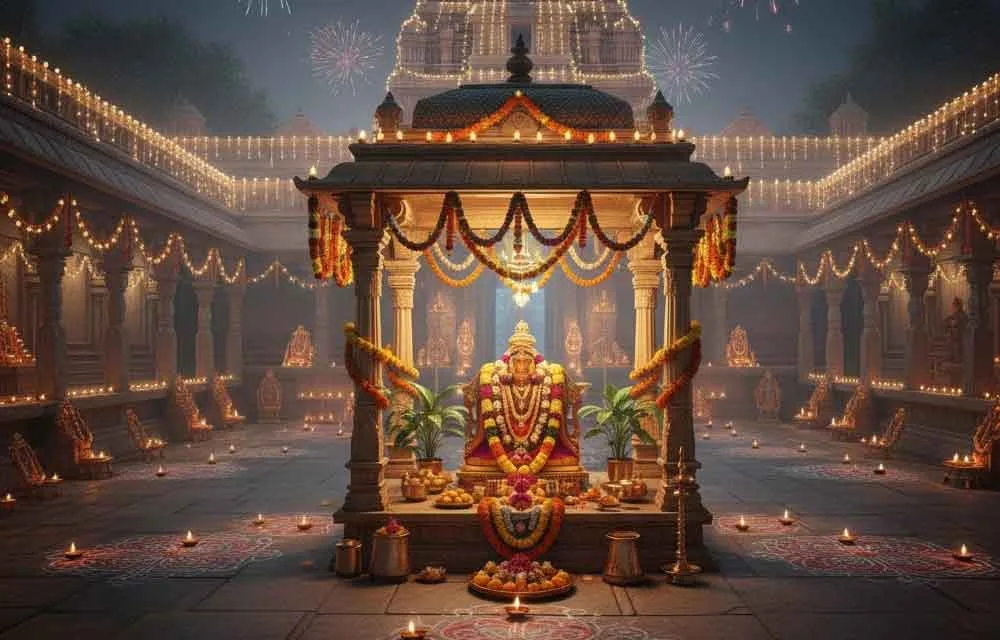
Quick answer: Tulsi Vivah 2026 is on Saturday 21 November in India (Kartika Shukla Dwadashi, after Dev Uthani Ekadashi on Friday 20 November), and on Sunday 22 November in Australia, New Zealand, Singapore and Malaysia. Decorate the Tulsi plant as a bride, worship Lord Vishnu as Shaligram, perform the symbolic wedding and aarti, usually in the evening. Many families hold the ceremony on any day up to Kartik Purnima (24 November).
Last updated: 21 October 2026
Tulsi Vivah is a sacred Hindu festival that celebrates the ceremonial marriage of Goddess Tulsi with Lord Vishnu, often worshipped in the form of Shaligram. Observed in the holy month of Kartika, it symbolises devotion, purity, prosperity and the divine bond between Tulsi Mata and Lord Vishnu.
For many Hindu families, Tulsi Vivah is a cherished annual tradition: the Tulsi plant is decorated as a bride, and the family offers prayers, mantras and a symbolic wedding ceremony. In many communities it also marks the start of the Hindu wedding season. This guide covers the Tulsi Vivah 2026 date, puja samagri, step-by-step vidhi, the traditional story, significance and wishes, for devotees in India and Hindu families abroad.
Tulsi Vivah 2026 date
Tulsi Vivah 2026 is on Saturday 21 November 2026 in India, on Kartika Shukla Dwadashi, the day after Dev Uthani (Prabodhini) Ekadashi on Friday 20 November (Drik Panchang). Dwadashi begins at about 6:31 AM IST on 21 November. Some families and temples hold the ceremony on Dev Uthani Ekadashi itself, or on another day prescribed by local custom.
| Detail | Information |
|---|---|
| Festival | Tulsi Vivah (Tulasi Vivah, Ksheerabdi Dwadashi in the Telugu states) |
| Date in India | Saturday 21 November 2026 |
| Hindu date | Kartika Shukla Dwadashi |
| Dev Uthani Ekadashi | Friday 20 November 2026 |
| Main deities | Goddess Tulsi and Lord Vishnu |
| Form of worship | Tulsi plant with Shaligram or a Vishnu image |
| Usual time | Evening (Pradosh), or as your family tradition prescribes |
What Drik Panchang lists for 20 to 24 November
| Date | Observance (Drik Panchang, India) |
|---|---|
| Friday 20 November | Dev Uthani (Prabodhini) Ekadashi, Smarta fast |
| Saturday 21 November | Tulasi Vivah; Ekadashi parana; Gauna and Vaishnava Devutthana Ekadashi; Yogeshwara Dwadashi |
| Tuesday 24 November | Kartik Purnima, Dev Diwali; Bhishma Panchak ends |
Drik's Hyderabad page shows that Dwadashi is over before sunrise on Sunday 22 November, so in India Saturday is the only day with Dwadashi in daylight. Details for the day are on our panchang for 21 November 2026. If you also keep the Ekadashi fast, our Dev Uthani Ekadashi 2026 guide has parana times by city.
Tulsi Vivah 2026 dates abroad
| Country | Dev Uthani Ekadashi | Tulsi Vivah | Country guide |
|---|---|---|---|
| India | Fri 20 Nov | Sat 21 Nov | This page |
| USA | Fri 20 Nov | Sat 21 Nov | USA guide |
| Canada | Fri 20 Nov | Sat 21 Nov | Canada guide |
| UK | Fri 20 Nov | Sat 21 Nov | UK guide |
| Germany, the Netherlands and Europe | Fri 20 Nov | Sat 21 Nov | Europe guide |
| UAE | Fri 20 Nov | Sat 21 Nov | Ksheerabdi Dwadashi in the UAE |
| South Africa | Fri 20 Nov | Sat 21 Nov | Follow your temple's panchang |
| Australia | Sat 21 Nov | Sun 22 Nov | Australia guide |
| New Zealand | Sat 21 Nov | Sun 22 Nov | Follow your temple's panchang |
| Singapore | Sat 21 Nov | Sun 22 Nov | Singapore guide |
| Malaysia | Sat 21 Nov | Sun 22 Nov | Follow your temple's panchang |
Source: Drik Panchang (Hyderabad) and HinduTone's Drik-validated calculator for each country's sunrise. The date moves to Sunday in Australia, New Zealand, Singapore and Malaysia because Ekadashi is still running at their sunrise on Saturday.
When Dwadashi begins in your city
A tithi changes at one moment worldwide. Dwadashi begins at 6:31 AM India time on Saturday 21 November (Drik Panchang), which is the local time below. The Tulsi Vivah date is the day on which Dwadashi is present at your sunrise, so in North America it starts on Friday evening but the ceremony is still on Saturday. Canada's times use the clocks that apply from 1 November 2026: British Columbia UTC−7, Alberta UTC−6 and Manitoba UTC−5.
| City | Dwadashi begins (local time) | Tulsi Vivah | Sunset that day |
|---|---|---|---|
| Vancouver | Fri 20 Nov, about 6:01 PM | Sat 21 Nov | Check Drik for your city |
| Los Angeles, San Francisco | Fri 20 Nov, about 5:01 PM | Sat 21 Nov | Check Drik for your city |
| Calgary, Edmonton | Fri 20 Nov, about 7:01 PM | Sat 21 Nov | Check Drik for your city |
| Chicago, Dallas, Houston | Fri 20 Nov, about 7:01 PM | Sat 21 Nov | Check Drik for your city |
| Winnipeg | Fri 20 Nov, about 8:01 PM | Sat 21 Nov | Check Drik for your city |
| Toronto, Montreal | Fri 20 Nov, about 8:01 PM | Sat 21 Nov | 4:48 PM (Toronto) |
| New York, New Jersey | Fri 20 Nov, about 8:01 PM | Sat 21 Nov | 4:35 PM (New York) |
| London | Sat 21 Nov, about 1:01 AM | Sat 21 Nov | 4:05 PM |
| Frankfurt, Amsterdam | Sat 21 Nov, about 2:01 AM | Sat 21 Nov | 4:35 PM (Frankfurt), 4:42 PM (Amsterdam) |
| Durban | Sat 21 Nov, about 3:01 AM | Sat 21 Nov | 6:35 PM |
| Dubai | Sat 21 Nov, about 5:01 AM | Sat 21 Nov | 5:30 PM |
| Singapore, Kuala Lumpur | Sat 21 Nov, about 9:01 AM | Sun 22 Nov | 6:53 PM (Singapore), 6:59 PM (Kuala Lumpur) |
| Sydney, Melbourne | Sat 21 Nov, about 12:01 PM | Sun 22 Nov | 7:44 PM (Sydney) |
| Auckland | Sat 21 Nov, about 2:01 PM | Sun 22 Nov | Check Drik for your city |
Sunset times are for the Tulsi Vivah day and follow the Drik method. Many families hold the ceremony in the evening after lighting lamps; we do not publish a fixed muhurat. Never use India's clock time for a ceremony abroad.
Puja timings depend on your city and the panchang your family follows, so confirm with a local panchang or your temple. Country guides: USA, UK, Canada, Australia, Singapore and Europe.
Telugu families can use our Ksheerabdi Dwadashi guides for the USA, UK, Canada, Australia, UAE, Singapore and Europe.
What is Tulsi Vivah?
Tulsi Vivah means the divine wedding of Tulsi Mata. In Hindu tradition the sacred Tulsi plant is revered as a form of Goddess Tulsi, also associated with Vrinda. Lord Vishnu is usually represented in the ceremony by a Shaligram stone or a Vishnu idol.
Devotees decorate the Tulsi plant as a bride and arrange a symbolic wedding with Lord Vishnu, with a decorated mandap, flowers, lamps, traditional wedding offerings, prayers and prasadam. The celebration expresses the belief that sincere devotion, purity and dharma bring spiritual well-being to a household.
Why is Tulsi Vivah celebrated?
1. To honour Goddess Tulsi
Tulsi is one of the most sacred plants in Hindu homes. Many families keep a Tulsi plant in the courtyard, on the balcony or in the prayer area and worship it daily.
2. To worship Lord Vishnu
The ceremony honours Lord Vishnu, the preserver of the universe, who according to tradition awakens from his four-month cosmic sleep on Dev Uthani Ekadashi. Devotees pray for peace, protection, harmony and spiritual progress.
3. To celebrate devotion and dharma
The stories of Tulsi Vivah highlight devotion, faith, righteousness and the relationship between divine grace and human perseverance.
4. To mark an auspicious turn of the season
In many communities Tulsi Vivah marks the end of Chaturmas and the start of the wedding season. Customs vary by region.
5. To bring families together
Building the mandap, decorating the Tulsi plant, singing devotional songs and sharing prasadam help families pass their traditions from generation to generation.
Tulsi Vivah katha: the traditional story
The best-known story connected with Tulsi Vivah concerns Vrinda, her devotion to Lord Vishnu and the origin of the sacred Tulsi plant.
In a widely told version, Vrinda was a deeply devoted woman married to Jalandhar. Her steadfast devotion and spiritual power were believed to protect her husband. During the conflict between Jalandhar and the gods, Lord Vishnu intervened in the events surrounding the battle. This caused Vrinda profound grief, and she expressed her sorrow and anger towards Vishnu.
The story continues differently in various Puranic and regional traditions. In a popular version, Vrinda becomes the sacred Tulsi plant, and Lord Vishnu promises to honour her devotion forever: no worship of Vishnu is complete without Tulsi leaves. The divine marriage of Tulsi and Vishnu is commemorated each year through Tulsi Vivah.
Many retellings add that Vrinda cursed Vishnu to become a stone, which is linked with the Shaligram, the sacred black stone from the Gandaki river, and that the Tulsi plant grew where she gave up her life. This is one reason the Shaligram stands for Vishnu in the ceremony and Tulsi leaves are offered in every Vishnu and Krishna puja. Our guide to the sacred Tulasi covers the plant's place in Hindu life.
Details of the Vrinda and Jalandhar story vary between texts and regional retellings, so families may follow the version traditionally recited in their community.
Tulsi Vivah puja samagri 2026
Prepare these items before the ceremony. The exact list depends on family tradition.
- Tulsi plant in a clean pot or a Tulsi Vrindavan
- Shaligram stone, Vishnu idol or the form traditionally used in your home
- Chunri or cloth to dress Tulsi Mata, and a yellow or red cloth for the ceremony
- Flowers and flower garlands
- Kumkum, turmeric, sandalwood paste and akshata
- Incense sticks, a diya, and ghee or oil for the lamp
- Water in a clean vessel
- Fruits, sweets and other naivedya
- Betel leaves and nuts, where customary
- Sugarcane stalks for a small mandap, if your family uses one
- A mangalsutra or symbolic wedding thread, according to family custom
- Camphor and a bell for aarti
- Prasadam for distribution
You do not need elaborate arrangements. A clean space, a Tulsi plant, a lamp and heartfelt devotion are enough for a simple home observance.
Samagri at a glance: essential or optional
| Item | Use | Essential or optional |
|---|---|---|
| Tulsi plant in a clean pot (or a Tulsi vrindavan) | the bride, Tulasi Devi | Essential |
| Shaligram, or a Vishnu or Krishna murti or picture | the groom | Essential (any of these) |
| Ghee lamp, incense, flowers, kumkum, haldi, akshata (rice) | worship of both | Essential |
| Red or yellow chunari, bangles, bindi | dressing Tulsi as a bride | Customary |
| Sugarcane stalks | the mandap over the pot (North and West India) | Optional |
| Usiri (amla) branch | placed with Tulasi on Ksheerabdi Dwadasi (Andhra Pradesh and Telangana) | Optional, by region |
| Yellow cloth for the Shaligram, sandalwood paste, Tulsi leaves | dressing the groom | Customary |
| Panchamrit or water | bathing the Shaligram or murti | Customary |
| Seasonal fruit, sugarcane pieces, sweets or kheer | naivedya, then prasad | Essential (any simple offering) |
Tulsi Vivah puja vidhi: step by step
This is a general guide for worship at home. Where your family tradition or temple differs, follow them.
Step 1: Clean the puja area
Clean the area around the Tulsi plant and arrange the puja items. Decorate the Tulsi Vrindavan with flowers or rangoli.
Step 2: Prepare for the ceremony
Bathe, wear clean clothes and build a small mandap if your tradition includes one, often with sugarcane stalks. Place the Shaligram or Vishnu image respectfully near the Tulsi plant.
Step 3: Decorate Tulsi Mata
Dress the Tulsi plant with flowers, a chunri and simple bridal ornaments, taking care not to damage the plant.
Step 4: Worship Lord Vishnu
Offer flowers, sandalwood paste, water, incense and a lamp to Lord Vishnu or the Shaligram, following your usual puja.
Step 5: Worship Goddess Tulsi
Offer flowers, kumkum, water and naivedya. Recite Tulsi stotras, Vishnu prayers or other verses familiar to your family.
Step 6: Perform the symbolic wedding
Conduct the wedding according to family custom. Some households exchange garlands, tie a wedding thread, hold a mandap ceremony or recite wedding verses.
In many homes a family member, often the person who tends the plant, performs the kanyadaan for Tulsi. The Shaligram or murti is carried around the Tulsi pot seven times, or a sacred thread is tied around both, while the family sings wedding songs or chants Vishnu's name.
Step 7: Perform aarti
Light the aarti lamp and pray to Tulsi Mata and Lord Vishnu. Families may sing devotional songs or read the Tulsi Vivah katha.
Step 8: Offer naivedya and share prasadam
Offer fruits, sweets or other foods to the deities and share prasadam with family and guests.
Step 9: Pray for peace and well-being
Conclude with a prayer for your family's well-being, the health and happiness of loved ones, and peace in the wider community.
In Andhra Pradesh and Telangana, the same day is kept as Ksheerabdi Dwadashi, with a Tulasi-Damodara kalyanam beside an amla (usiri) branch and rows of lamps; see Ksheerabdi Dwadasi 2026.
Tulsi Vivah mantras and prayers
Devotees recite Tulsi and Vishnu prayers according to family tradition. A widely used Vishnu mantra is:
ॐ नमो भगवते वासुदेवाय (Om Namo Bhagavate Vasudevaya)
A simple invocation to Goddess Tulsi is:
ॐ तुलस्यै नमः (Om Tulasyai Namah)
Another widely chanted Vishnu mantra (from our verified mantra list):
ॐ नमो नारायणाय॥
oṃ namo nārāyaṇāya||
Meaning: Salutations to Narayana.
Repeat the prayers with concentration and reverence. If your family follows a particular Tulsi Vivah sankalpa, stotra or priest-led ritual, use that. Chanting is an act of devotion; it does not promise any particular result. Our daily Tulasi pooja guide explains the daily worship through Kartik.
Spiritual significance of Tulsi Vivah
Purity and devotion: Tulsi is revered as a sacred presence in the home and is closely tied to the worship of Lord Vishnu.
Family harmony: The wedding ceremony is a time for families to pray for peace, mutual respect and well-being.
Preserving tradition: Children learn prayers, stories, rituals and the meaning of Hindu worship.
Gratitude for nature: Caring for a Tulsi plant reminds devotees of the value of plants and the natural world.
A new spiritual beginning: For many families, the ceremony marks a turn in the religious calendar and a chance to renew their devotional practice.
Closing Chaturmas: with Vishnu awake after Dev Uthani Ekadashi, many families resume weddings, engagements and house-warmings from the following days, after checking a muhurat with their priest. Through Kartik, families water the plant each morning and light a lamp before it each evening (see our Kartik Snan and Deepdaan 2026 guide), and the month ends with Kartik Purnima on 24 November (see our Karthika Pournami 2026 guide).
These are religious and cultural meanings held by devotees, not guarantees of particular material results.
Tulsi Vivah celebrations in different regions
Maharashtra
Many Maharashtrian families keep Tulsi Vivah with a decorated Tulsi Vrindavan, a symbolic wedding with mangalashtak verses and traditional offerings; some families hold it on any day from Dwadashi to Kartik Purnima.
Gujarat
Devotees perform Tulsi Vivah with prayers to Lord Vishnu, household decorations and community gatherings. Practices differ by family and temple.
Some temples and families take the groom in a procession to the bride's home, as at a real wedding, sometimes as a community event.
Uttar Pradesh and North India
The festival is tied to Vishnu worship, the Tulsi plant and the end of Chaturmas. Some temples hold public ceremonies for devotees.
In Uttar Pradesh and Bihar the ceremony is often held on Dev Uthani Ekadashi or the next day under a sugarcane mandap, with folk wedding songs, and the wedding season begins after it.
Andhra Pradesh and Telangana
Tulsi worship is part of many households' daily routine. On Ksheerabdi Dwadashi families perform the Tulasi-Damodara kalyanam at home or attend a temple ceremony.
Hindu communities abroad
Hindu families in the USA, the UK, Canada, Australia, New Zealand and elsewhere observe Tulsi Vivah at home or through community temples, adapting the ceremony to the space and schedules available while keeping the central prayers and symbolic wedding. Remember that Australia, New Zealand, Singapore and Malaysia keep it on Sunday 22 November 2026.
Practical tips for families abroad
- Buy a Tulsi plant early in November; Indian stores and nurseries can run out before the festival.
- In cold climates, Tulsi is happiest indoors by a sunny window. Keep it away from cold drafts and heaters, water lightly, and do not move it outside for the ceremony if it is near freezing.
- A Shaligram is optional. A small murti or a picture of Vishnu or Krishna is enough.
- Saturday 21 November is a weekend day in the Americas, Europe, the UK and the UAE, and Sunday 22 November in Australia, Singapore and Malaysia, so families can hold the ceremony at home on the day itself.
- Many Hindu temples hold community Tulsi Vivah ceremonies. Programmes and times appear only on each temple's own calendar, so check its website before you go.
- Use LED diyas if open flames are not allowed in your building, and never disable a smoke alarm.
- Grandparents in India can join over a video call, but keep your own local date rather than India's clock.
How to celebrate Tulsi Vivah at home
- Confirm the date and puja time from your local panchang.
- Clean the Tulsi area and prepare the puja items in advance.
- Invite family members to help decorate the plant and prepare offerings.
- Read the Tulsi Vivah katha together.
- Chant a Vishnu mantra or a prayer used in your home.
- Perform a simple symbolic ceremony according to family custom.
- Share prasadam and explain the story to children.
- Care for the Tulsi plant after the festival and continue your daily worship.
If you live in an apartment or abroad, a modest arrangement is perfectly fine. Follow your family's tradition rather than trying to recreate a large ceremony.
A note on fasting and health
Some families keep a fast until the ceremony; this is a custom, not an obligation. Pregnant or nursing women, the elderly, children and anyone with a medical condition should eat normally and consult a doctor before fasting. If you kept the Ekadashi fast on Friday, break it in your parana window before the Tulsi Vivah preparations.
Tulsi Vivah 2026 wishes and greetings
Share these on WhatsApp, Instagram, Facebook or Telegram.
Traditional wish: Happy Tulsi Vivah 2026! May Tulsi Mata and Lord Vishnu bless your home with peace, happiness, devotion and prosperity.
Devotional message: On the sacred occasion of Tulsi Vivah, may the blessings of Goddess Tulsi and Lord Vishnu bring harmony, faith and positivity into your life. Shubh Tulsi Vivah!
Short WhatsApp Status: Shubh Tulsi Vivah 2026! May Tulsi Mata bless every home with peace and divine grace. 🙏🌿
Family greeting: Wishing you and your family a blessed Tulsi Vivah. May this auspicious occasion strengthen family bonds and fill your home with love, devotion and happiness.
For Hindus abroad: Happy Tulsi Vivah 2026 to Hindu families around the world. Wherever we live, may our traditions, prayers and devotion keep us connected to our spiritual roots.
Instagram caption: 🌿🙏 Celebrating the divine union of Tulsi Mata and Lord Vishnu. May this sacred day bring peace, devotion and blessings to every home. Shubh Tulsi Vivah 2026!
Conclusion
Tulsi Vivah is a meaningful celebration of devotion, tradition and the sacred relationship between Goddess Tulsi and Lord Vishnu. Through a simple puja, a symbolic wedding and the retelling of devotional stories, families keep a cherished tradition alive and pass its values to the next generation. As Tulsi Vivah 2026 approaches, confirm your local date and puja time, prepare your offerings and celebrate in the way that best reflects your family's tradition.
HinduTone wishes everyone a blessed Tulsi Vivah 2026. May Tulsi Mata and Lord Vishnu bring peace, devotion and harmony to every home.
Also read: Tulasi Stotram with meaning.
Frequently asked questions
When is Tulsi Vivah in 2026?
Saturday 21 November 2026 in India, on Kartika Shukla Dwadashi, the day after Dev Uthani Ekadashi (Friday 20 November). It is also 21 November in the USA, Canada, the UK and the UAE, and Sunday 22 November in Australia, New Zealand, Singapore and Malaysia.
Which deities are worshipped during Tulsi Vivah?
Goddess Tulsi is worshipped with Lord Vishnu, who is represented by a Shaligram stone or a Vishnu idol.
What items are needed for Tulsi Vivah puja?
A Tulsi plant, a Shaligram or Vishnu image, a chunri, flowers and garlands, a diya, incense, kumkum, turmeric, sandal paste, akshata, fruits, sweets, water and, if your family uses one, sugarcane for a small mandap.
Can Tulsi Vivah be performed at home or abroad?
Yes. Many families hold a simple home ceremony with a decorated Tulsi plant, prayers, offerings and a symbolic wedding, or join a temple celebration. Families abroad should use their local date.
Is Tulsi Vivah the same as Dev Uthani Ekadashi?
No. They are related but distinct. Dev Uthani Ekadashi (20 November 2026 in India) celebrates Lord Vishnu's awakening; Tulsi Vivah is the ceremonial wedding of Tulsi and Vishnu, usually on the following Dwadashi, though some families hold it on the Ekadashi.
Is Tulsi Vivah the same as Ksheerabdi Dwadashi?
They fall on the same day. In Andhra Pradesh and Telangana the day is called Ksheerabdi Dwadashi and is marked with a Tulasi-Damodara kalyanam beside an amla branch.
Can Tulsi Vivah be done on another day?
Many families hold it on any convenient day from Prabodhini Ekadashi (20 November) to Kartik Purnima (24 November), and temples often choose a weekend. Follow your family custom or your priest's advice.
Editor's note (21 October 2026)
We merged our second Tulsi Vivah 2026 guide into this page, which now carries its Drik Panchang observance table, the fuller country table, a city table of Dwadashi start times and sunset, the samagri table of essential and optional items, more regional customs, tips for families abroad and a note on fasting and health. Its old address now redirects here. Dates are unchanged: Saturday 21 November 2026 in India (Drik Panchang). City times convert the Drik tithi moment to each city's clock; sunset follows the Drik method. Regional calendars and family traditions differ; follow your family or temple.
Editor's note (19 October 2026)
Owner-supplied article. Dates follow Drik Panchang for India and HinduTone's country date pages (Dwadashi begins about 6:31 AM IST on 21 November). We added the dates abroad, the Ksheerabdi Dwadashi connection and links to related guides. The Vrinda story is given as commonly told; versions differ between texts.
Related guides
- Dev Uthani (Prabodhini) Ekadashi 2026: parana by city
- Ksheerabdi Dwadasi 2026
- Tulasi pooja in Karthika Masam 2026
- Karthika Masam 2026: North and South India
- Karthika Masam 2026 rituals, state by state
- Karthika Masam 2026 calendar day by day
- November 2026 Hindu festivals calendar
- Ksheerabdi Dwadashi and Tulasi Vivah 2026 in the USA
Share this with family and friends
Send it on WhatsApp, post it, or copy the link.
More from Festivals
- Vasant Panchami 2027 (Saraswati Puja, Basant Panchami, Sri Panchami): Date, Panchami Tithi, Puja Muhurat by City, Vidhi and Story
- Holi 2027: Date, Holika Dahan Muhurat City-Wise, Bhadra Timings, Puja Vidhi and Holi Abroad
- Makar Sankranti 2027: Date, Punya Kaal Timings City-Wise, Bhogi, Pongal, Kanuma, Lohri and Uttarayan
- Dev Deepawali 2026 Varanasi: Date, Purnima Time, Ganga Aarti, Story, Puja Vidhi and Deep Daan
- Kartik Purnima 2026: Date, Purnima Time, Snan, Deep Daan, Puja Vidhi and Significance
You might also like
Dev Uthani Ekadashi and Tulsi Vivah 2026 in the UK: Date City-Wise, Smarta and Vaishnava Days, Puja at Home
Dev Uthani Ekadashi and Tulsi Vivah 2026 in Australia: Date City-Wise, Why It Is a Day Later Than India, Puja at Home
Dev Uthani Ekadashi and Tulsi Vivah 2026 in Canada: Date City-Wise, Smarta and Vaishnava Days, Puja at Home