Vaishakha Masam 2026 Start Date: North vs South Indian Calendar Comparison
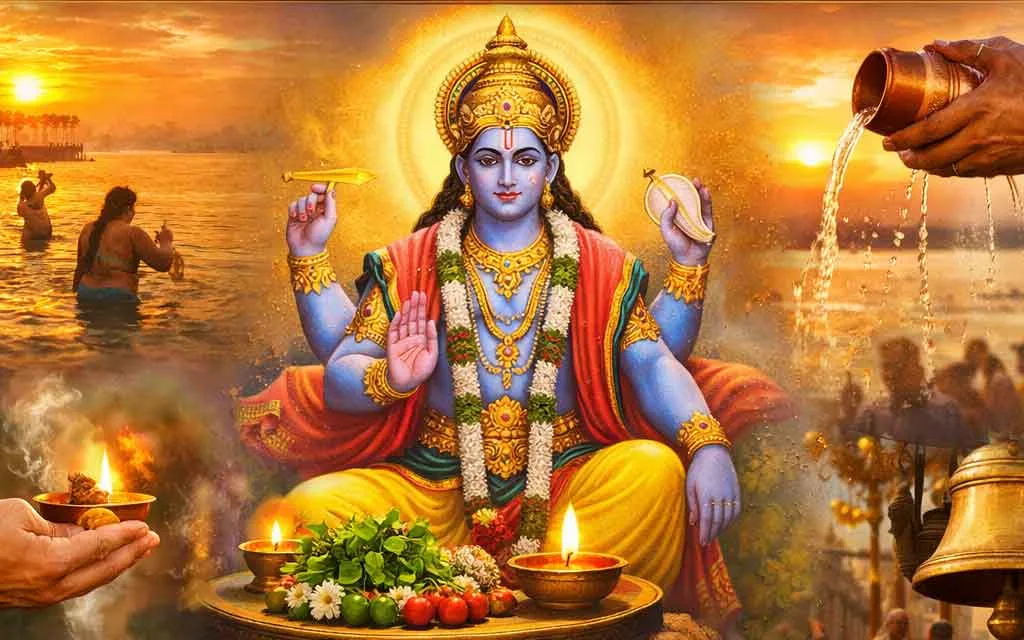
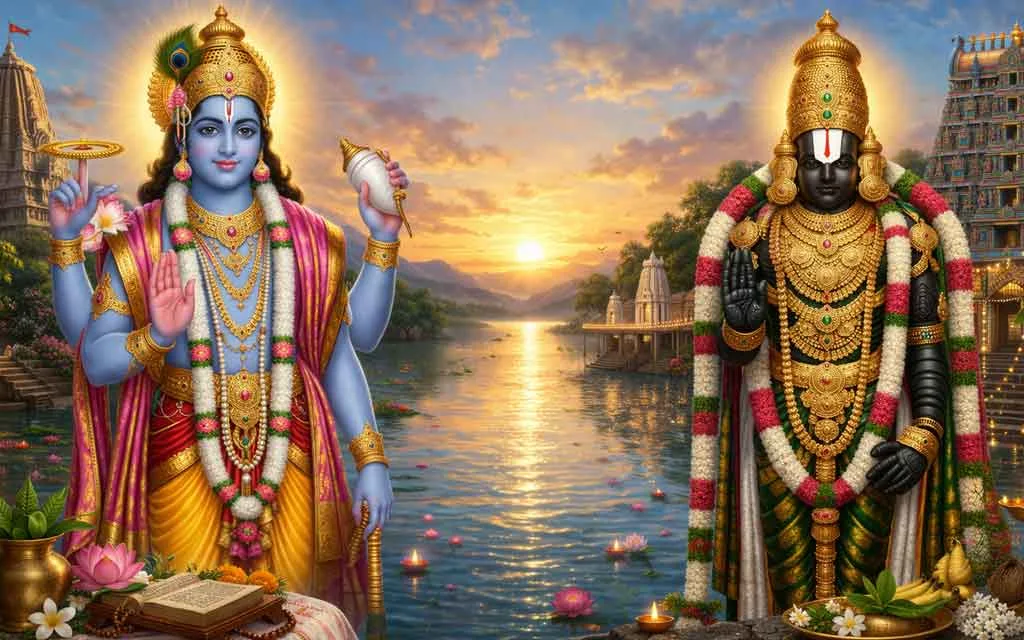
Vaishakha Masa (also called Vaishakha Masam or Vaisakha) is one of the most sacred months in the Hindu calendar, especially dear to Lord Vishnu.
Vaishakha Masa (also called Vaishakha Masam or Vaisakha) is one of the most sacred months in the Hindu calendar, especially dear to Lord Vishnu.
Vaishakha Masa (also called Vaishakha Masam or Vaisakha) is one of the most sacred months in the Hindu calendar, especially dear to Lord Vishnu. Devotees observe holy baths (Vaishakha Snan) in Ganga-Yamuna, perform charity, and worship Vishnu with Tulsi during this period for immense spiritual merit.
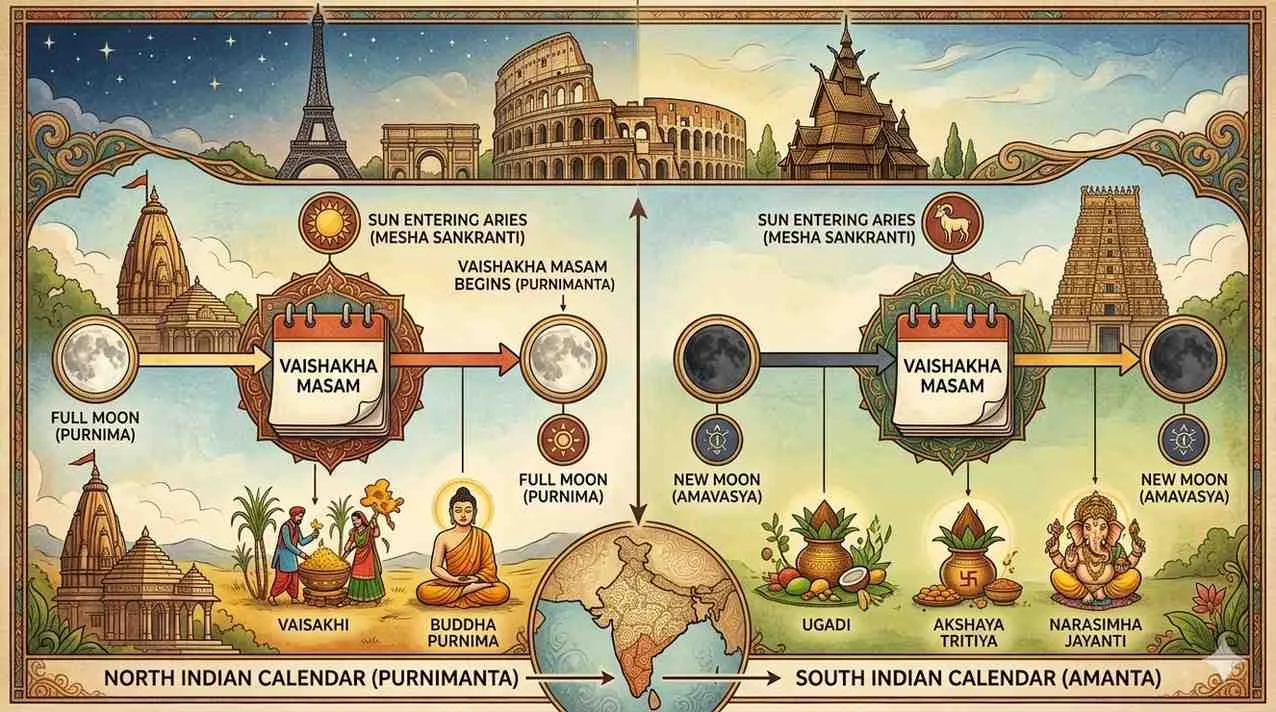
However, the start date of Vaishakha differs between North India and South India due to two traditional lunar systems: Purnimanta and Amanta. This 15-day difference often confuses devotees planning pujas, vrats, or temple visits in April-May 2026.
Why North and South Indian Calendars Differ?
Hindu months follow the lunar cycle, but the definition of when a month ends varies:
- Purnimanta System (North India): The month ends on Purnima (Full Moon). The new month begins the day after Purnima. Widely followed in Uttar Pradesh, Bihar, Rajasthan, Delhi, Haryana, Madhya Pradesh, and parts of Punjab.
- Amanta System (South India): The month ends on Amavasya (New Moon). The new month begins the day after Amavasya. Followed in Andhra Pradesh, Telangana, Tamil Nadu, Karnataka, Kerala, and most coastal states.
Because of this, for about 15 days every month, the same tithi belongs to different lunar months in North and South India.
Vaishakha Masam 2026 Start Dates
North India (Purnimanta Calendar):
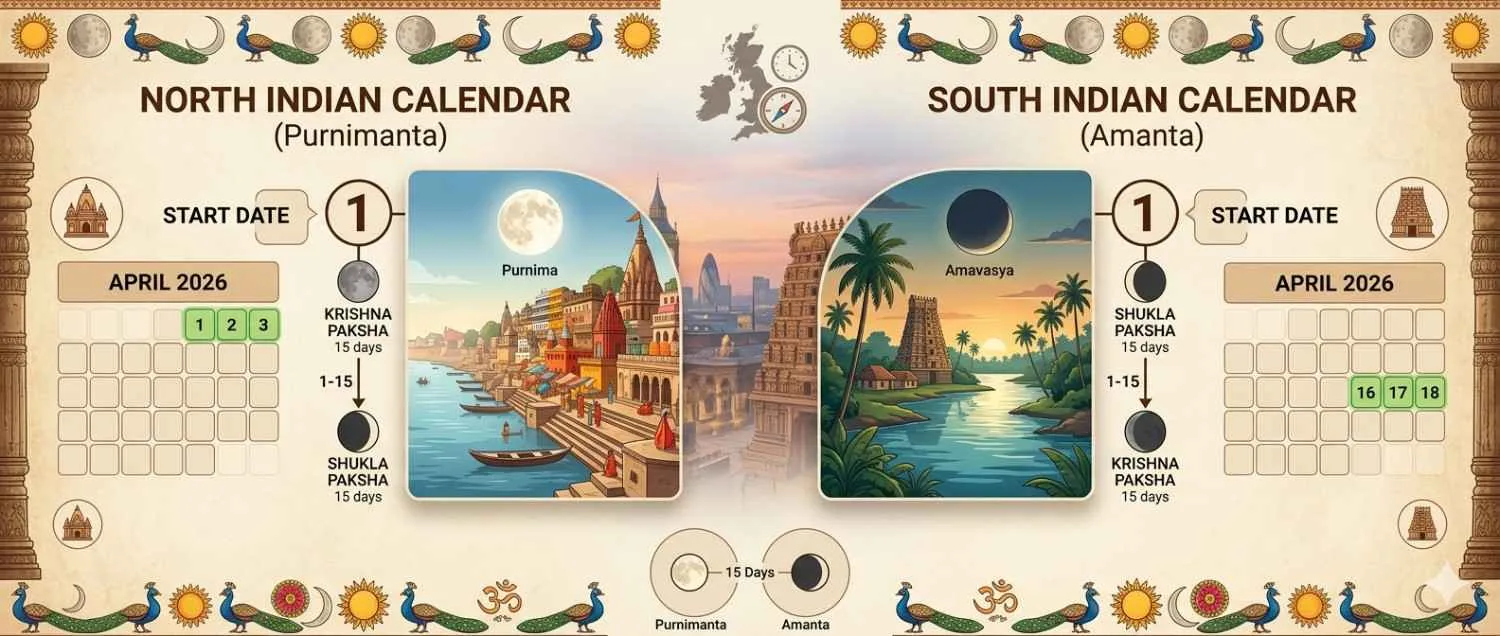
- Vaishakha Masa begins on April 3, 2026 (Friday)
- This follows Chaitra Purnima (around April 1-2, 2026).
- Vaishakha ends on Vaishakha Purnima – May 1, 2026 (Friday).
South India (Amanta Calendar – Telugu, Tamil, Kannada, Malayalam):
- Vaishakha Masam begins on April 18, 2026 (Saturday)
- This follows the Amavasya after Chaitra month.
- Vaishakha Masam ends on the next Amavasya around May 16, 2026.
Key Difference: There is approximately a 15-day gap. From April 3 to April 17, 2026, North Indians observe Vaishakha Masa while South Indians are still in Chaitra Masa.
Impact on Major Festivals in April-May 2026
Most tithi-based festivals (like Ekadashi, Tritiya, Jayanti) fall on the same Gregorian dates across India, but their month name differs:
Note: At Tirumala / Tirupati (Andhra Pradesh), temple rituals and sevas follow the South Indian (Amanta) tradition, even though some festivals are observed on common tithi dates.
Practical Tips for Devotees in 2026
- North India devotees: Start Vaishakha Snan, daan, and Vishnu puja from April 3, 2026.
- South India devotees (including Telugu, Tamil, Kannada speakers): Begin Vaishakha observances from April 18, 2026. For Tirumala darshan or special sevas, check TTD calendar.
- Pan-India practices: Ekadashis, Akshaya Tritiya, and Narasimha Jayanti are observed on the same dates everywhere. You can follow local panchangam for exact tithi timings.
- Vaishakha Snan: Perform early morning holy bath (with Ganga Jal if needed) and offer Tulsi leaves + Surya Arghya regardless of the system.
- Always cross-check with your local panchangam or temple website, as minor variations of 1 day can occur due to sunrise timings.
Spiritual Significance of Vaishakha Masa
Irrespective of the calendar system, Vaishakha is supremely auspicious for Lord Vishnu worship. Scriptures like Skanda Purana declare that bathing in holy rivers, charity of water, and daily Vishnu puja in this month grant punya equal to all yajnas and lead to moksha.
Om Namo Narayanaya! May Lord Vishnu bless you with health, prosperity, and devotion during Vaishakha Masam 2026, whether you follow North or South Indian traditions.
Why Is Vaishakha Considered the Holiest Month for Vishnu Worship?
The Skanda Purana devotes an entire section — the Vaishakha Mahatmya — to declaring this month supremely dear to Lord Vishnu. The text states that a single act of charity, a single recitation of Vishnu-sahasranama, or a single predawn bath in a sacred river during Vaishakha yields merit equivalent to performing the Ashwamedha yajna. This is why Vaishakha is sometimes called 'Madhava Masa,' Madhava being a name of Vishnu signifying the lord of the spring season.
The Padma Purana further specifies that Tulsi archana offered to Vishnu during Vaishakha carries one thousand times its usual potency. Devotees light deepas (lamps) in front of Vishnu shrines at dawn throughout the month, a practice called 'Vaishakha Deepa Dana,' said to remove the darkness of seven past lifetimes. Major Vaishnava pilgrimage centres — including Srirangam (Tiruchirappalli), Tirupati Balaji (Tirumala), Vrindavan (Mathura district), and Puri Jagannath (Odisha) — hold special month-long utsavas during Vaishakha to honour these injunctions.
Which Major Vratas and Tithis Fall Inside Vaishakha Masam 2026?
Because tithi calculations are shared across both systems, certain observances land on identical Gregorian dates regardless of whether a devotee follows the Purnimanta or Amanta calendar. Akshaya Tritiya (Vaishakha Shukla Tritiya) is the single most auspicious Muhurta of the year for new beginnings, gold purchase, and annadana; in 2026 it falls around April 20. Any charitable act performed on this tithi is said in the Bhavishya Purana to bear 'akshaya' — inexhaustible — fruit across all future births.
Vaishakha also contains two Ekadashis: Varuthini Ekadashi (Krishna Paksha, around April 9 for North, April 27 for South) and Mohini Ekadashi (Shukla Paksha, around April 24 for North, May 9 for South). Mohini Ekadashi is especially significant because it commemorates the Mohini avatar of Vishnu who distributed amrita to the devas after the Samudra Manthan. Devotees observe a nirjala (waterless) or phalahar fast and read the Mohini Ekadashi Mahatmya from the Bhavishyottara Purana. The month closes with Vaishakha Purnima, which is simultaneously Buddha Purnima and the day the Buddha is believed to have attained enlightenment at Bodh Gaya — a tithi venerated across multiple traditions.
How Do Temples in Andhra Pradesh and Telangana Observe Vaishakha Masam?
In Andhra Pradesh and Telangana, Vaishakha Masam (starting April 18, 2026) is observed with a distinctive set of traditions centred on Lord Vishnu and his consort Sri Lakshmi. Draupadi Puja, Annadana Utsava, and Tulasi Seva are held daily at Divya Desam temples such as Sri Ahobilam (Nandyal district), Sri Simhachalam (Visakhapatnam), and the Sri Kodanda Rama temple at Tirupati. Devotees believe that feeding even a single person during Vaishakha Masam wipes out the sin of brahmahatya.
The pre-dawn bath called 'Vaishakha Snanam' is performed in rivers, tanks, or even at home before sunrise throughout the month. Women in particular carry copper pots of water, draw kolams in front of Vishnu idols, and offer Tulsi garlands every morning. In Hyderabad, the Chilkur Balaji temple and the Birla Mandir (Naubath Pahad) both see significantly increased footfall from mid-April through mid-May during this Vaishakha period.
What Is the Purnimanta System and Why Does North India Follow It?
The Purnimanta (also called Pournamasa) reckoning is attested as far back as Vedic Jyotisha literature, where the full moon — Purnima — was treated as the natural culmination and 'end-point' of a lunar fortnight cycle. Because the bright half (Shukla Paksha) leads into the full moon, it forms a logical climax, and the new month begins in the ensuing dark fortnight (Krishna Paksha). This system is explicitly described in the Surya Siddhanta and adopted by most jyotisha schools prevalent in the Gangetic plains.
Practically speaking, this means a North Indian observing 'Chaitra Navratri' finishes the Navami fast and then enters Vaishakha Masa just two days later, around Purnima. Many Dharmashastra texts composed in northern India — including the Nirnayasindhu (by Kamalakara Bhatta, a 17th-century Varanasi scholar) — specifically prescribe festival dates according to this Purnimanta reckoning. Pilgrims from Uttar Pradesh, Bihar, and Rajasthan planning Haridwar or Prayagraj visits for Vaishakha Snan should note that their month opens on April 3, 2026.
Practical Guide: How Should Devotees Decide Which Calendar to Follow?
The simplest principle from the Dharmashastra tradition is: follow the calendar of your kula parampara (family lineage tradition) or the regional panchanga used by the priest performing your puja. A Telugu or Kannada family settled in Delhi should ideally follow the Amanta panchanga for month-related observances (so Vaishakha begins April 18 for them), while a Bihari family living in Chennai should follow the Purnimanta panchanga (Vaishakha begins April 3 for them). Tithi-based vrats — Ekadashi, Pradosha, Amavasya — are calculated identically and need no adjustment.
When visiting major temples, check the temple's own published panchanga. Tirumala Tirupati Devasthanams (TTD) follows the Amanta Telugu panchanga, whereas the Kashi Vishwanath temple in Varanasi follows the Purnimanta calendar. If you are observing a month-long vrata such as Vaishakha Deepa Dana, begin on the date stipulated by your family's panchanga and maintain continuity for all 30 days. Mixing the two systems mid-month is generally discouraged by shastric authorities, as it disrupts the spiritual continuity (sankalpa) of the vrata.
Vaishakha Masam and Its Connection to the Ganga — Sacred Bath Traditions
The Vaishakha Snan tradition draws from the Skanda Purana's statement that 'Ganga, during Vaishakha, carries the combined merit of all tirthas.' Pilgrims travel to Haridwar, Rishikesh, Prayagraj (Triveni Sangam), Varanasi (Dashashwamedha Ghat), and Mathura (Vishrama Ghat) to take pre-sunrise baths throughout the month. The bath is ideally performed before the sun crosses 10 degrees on the horizon — a time called 'Brahma Muhurta' — when scriptures say the Ganga's purifying power is at its peak.
In South India, where the Ganga is not physically accessible, devotees invoke the Ganga mantra ('Gange cha Yamune chaiva Godavari Saraswati...') to sanctify local rivers and even household water. The Godavari river at Rajahmundry (Rajamahendravaram), the Krishna at Vijayawada (Kanaka Durga Ghat), and the Kaveri at Srirangam and Bhagamandala are treated as Ganga-equivalent during Vaishakha. Large annadana camps are organised at these ghats by religious trusts throughout Vaishakha Masam, feeding thousands of pilgrims daily in the spirit of the month's emphasis on dana (charity).
Frequently Asked Questions
When does Vaishakha Masam 2026 start in North and South India?
In North India (Purnimanta) Vaishakha begins on April 3, 2026 and ends on Vaishakha Purnima, May 1. In South India (Amanta) it begins on April 18, 2026 and ends around May 16.
Why do North and South India start Vaishakha on different dates?
North India follows the Purnimanta system, where the month ends on Purnima. South India follows the Amanta system, where it ends on Amavasya. This creates a gap of about 15 days between the two.
Which calendar should a Telugu family living in Delhi follow?
Follow your family's kula parampara or the panchanga your priest uses. A Telugu or Kannada family in Delhi should ideally follow the Amanta panchanga, so Vaishakha begins April 18 for them.
Do Ekadashi and Akshaya Tritiya dates change between the two calendars?
No. Tithi-based vrats such as Ekadashi, Pradosha and Amavasya are calculated identically, and Akshaya Tritiya and Narasimha Jayanti fall on the same dates everywhere. Only the month name differs.
What is Vaishakha Snan and how is it performed?
It is an early morning holy bath, ideally in a sacred river and with Ganga Jal if needed, done before sunrise. Devotees also offer Tulsi leaves and Surya Arghya, regardless of which calendar they follow.
Which calendar do Tirumala and Kashi Vishwanath follow?
Tirumala Tirupati Devasthanams follows the Amanta Telugu panchanga, while the Kashi Vishwanath temple in Varanasi follows the Purnimanta calendar. Check the temple's own published panchanga before visiting.
You might also like

Purushottam Maas 2026: Lord Vishnu's Sacred Gift of Spiritual Multiplication & Divine Grace
Vaishakha Masam 2026 Start Date in Europe: North vs South Indian Calendar Comparison
Vaishakha Masam 2026 Start Date in UK: North vs South Indian Calendar Comparison