Hindu Priest Job USA 2025 – Full-Time Sanatan Dharma Rituals Position South Florida | South Florida Hindu Temple (SFHT) Careers

Job Title: Hindu Priest (Sanatan Dharma Rituals) Organization: South Florida Hindu Temple (SFHT) Location: Southwest Ranches, South Florida, USA (Full address and details available on https://www.sfht.org/Employment Type: Full-time Status: Ongoing opportunity – Temple actively seeking experienced priests committed to service

Advertisement

About South Florida Hindu Temple (SFHT)

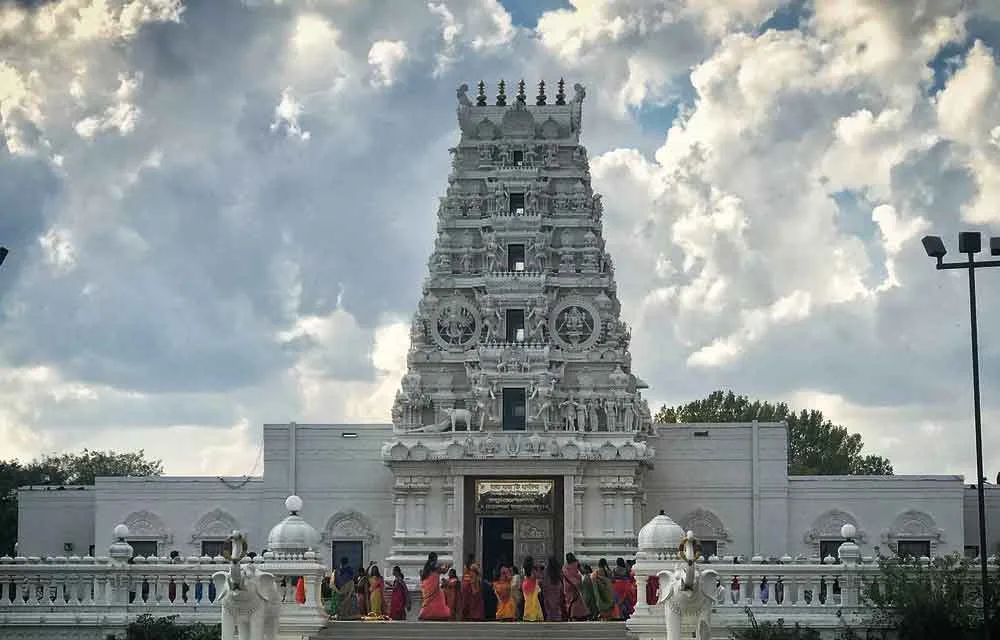
The South Florida Hindu Temple (SFHT) is an inclusive, vibrant Hindu temple dedicated to collective worship and cultural preservation. Serving the diverse Indian and broader community in South Florida, the temple hosts weekly prayers (with hundreds attending Sunday mornings), celebrates festivals from across India, and conducts regular rituals such as Rudra Abhishekam, Hanuman Chalisa, Lakshmi Puja, Saraswati Puja, and monthly havans. Emphasizing Sanatan Dharma values, SFHT offers English-language education programs for children, puja services (temple or home), hall rentals, and volunteering opportunities, creating a sacred and auspicious environment for spiritual growth.

Key Responsibilities

  • Proficiently perform all rituals in accordance with Sanatan Dharma traditions.
  • Conduct daily pujas, special ceremonies, festivals, and other religious services.
  • Support ongoing temple activities, including weekly and monthly observances.
  • Engage with the community through guidance and participation in cultural/educational programs.

Advertisement

Requirements and Qualifications

  • Extensive experience and proficiency in performing all Sanatan Dharma rituals.
  • Strong commitment to temple service and adherence to Hindu traditions.
  • Ability to conduct daily pujas, abhishekam, havans, and special ceremonies independently.
  • (Additional preferences such as language skills, Vedic knowledge, or US work eligibility may be discussed during application.)

Compensation and Benefits

  • Details not publicly specified (to be discussed with selected candidates).

How to Apply

The position is open for applications. Interested and qualified candidates should complete the online application form directly at: https://www.sfht.org/pages/working-at-sfht

Advertisement

The temple will review submissions and contact suitable candidates promptly.

For more information about SFHT and its activities, visit https://www.sfht.org/.

(Note: This is an excellent opportunity for dedicated priests to serve a growing, inclusive Hindu community in South Florida. Official details are available via the temple's application page.)

What Ritual Expertise Does a Sanatan Dharma Priest Need in a Diaspora Temple Setting?

A priest serving a diaspora community such as SFHT must command a remarkably broad liturgical repertoire. Unlike a temple in India that may specialize in one Agama tradition — Shaiva, Vaishnava, or Shakta — a North American temple routinely serves worshippers from Tamil Nadu, Gujarat, Maharashtra, Punjab, and Andhra Pradesh under one roof. The priest must therefore be conversant with both Shaiva Agama rites (such as the Rudra Abhishekam drawn from the Sri Rudram of the Krishna Yajurveda) and Vaishnava Pancharatra procedures for deities like Vishnu and Lakshmi.

Advertisement

Daily services typically follow a pancakala or tri-kala structure — morning, midday, and evening — each requiring distinct offerings (naivedyam), lamp-waving (deepa aradhana), and recitation. Festivals like Navaratri, Ganesh Chaturthi, and Diwali demand extended, multi-day rituals including Chandi Homa, Ganapati Havan, and Lakshmi Sahasranama Archana. Proficiency in these ceremonies, drawn from texts such as the Skanda Purana and the Devi Bhagavata Purana, signals the depth of training SFHT is seeking.

How Is a Hindu Priest Traditionally Trained, and What Credentials Are Relevant?

Classical priestly training follows the gurukula model, in which a shishya (student) lives with an acharya and learns Vedic recitation, ritual procedure (kalpa), and Sanskrit grammar over a period of several years — often from childhood. Institutions such as the Rashtriya Sanskrit Sansthan and various Veda Pathashalas across Tamil Nadu, Andhra Pradesh, and Karnataka still produce trained priests holding formal certifications in Vedic branches (shakhas) such as the Rigveda Shakala, Yajurveda Taittiriya, or Sama Veda Kauthuma.

In the American context, practical experience conducting samskaras — the sixteen life-cycle rites including Namakarana (naming), Upanayana (sacred thread), Vivaha (marriage), and Antyesti (last rites) — carries substantial weight. A priest who can guide a second-generation Hindu family through a Vivaha ceremony entirely in English while maintaining the Sanskrit mantras intact is especially valuable to a temple like SFHT, which explicitly emphasizes English-language outreach and education.

What Is the Significance of the Specific Rituals Conducted at SFHT?

The Rudra Abhishekam performed at SFHT is a sacred bathing ritual of Shiva with eleven substances — milk, yogurt, honey, ghee, sugarcane juice, and others — accompanied by the chanting of the Sri Rudram (Namakam and Chamakam) from the Taittiriya Samhita of the Krishna Yajurveda. Tradition holds in the Shiva Purana that each recitation of the Rudra Namakam neutralizes accumulated papa (demerit) and invokes Rudra's grace for health and protection of the community.

The Hanuman Chalisa, composed by Goswami Tulsidas in the sixteenth century in Awadhi, is recited to invoke the protection and strength (bala) of Hanuman, who is described in the Valmiki Ramayana as the exemplar of seva (selfless service) and bhakti. Monthly havans conducted at SFHT follow the Smarta tradition, where the Homa fire receives ghee oblations with Vedic mantras from the Rigveda and Yajurveda, physically enacting the principle from the Bhagavad Gita (3.10–16) that yagna sustains the cosmic and social order.

Foreign-trained priests most commonly enter the United States under the R-1 nonimmigrant religious worker visa, which allows a qualifying religious organization — a category that includes registered temples — to sponsor a minister or religious worker for up to five years. The sponsoring organization must demonstrate that it is a bona fide nonprofit religious entity and that the applicant has been a member of that religious denomination for at least two years immediately before the application.

For longer-term or permanent residence, the EB-4 special immigrant religious worker category provides a path to a Green Card for ministers who have worked for a qualifying religious organization for at least two years. Temples like SFHT that are formally registered as 501(c)(3) nonprofit organizations in the United States qualify as petitioning entities under both visa categories. Candidates are strongly advised to consult a qualified immigration attorney regarding specific documentation requirements, as U.S. Citizenship and Immigration Services (USCIS) scrutinizes religious worker petitions carefully.

How Does Serving a Diaspora Temple Differ from Temple Service in India?

A priest in India typically operates within a well-established local community that shares a common regional language, caste tradition, and festival calendar. In contrast, the priest at SFHT serves a congregation drawn from across India and the broader Hindu world — including Caribbean Hindus of Indo-Trinidadian heritage who follow their own devotional practices rooted in the Ramayana tradition of Tulsidas. This demands both cultural sensitivity and liturgical flexibility.

Diaspora temple priests also function as de facto community counselors, religious educators, and cultural ambassadors. They are frequently called upon to explain the meaning of a mantra to a curious teenager, guide a non-Indian spouse through the significance of a ritual, or represent the temple at interfaith civic events. The Bhagavata Purana (XI.29.6) describes the ideal devotee as one who sees all beings with equal vision — a disposition that serves the diaspora priest especially well in a pluralistic setting like South Florida.

How Can Interested Candidates Apply, and What Should an Application Include?

Candidates interested in the SFHT priestly position are directed to visit the official temple website at sfht.org for full address details and contact information. Since the temple describes this as an ongoing opportunity, applicants should expect a multi-stage process that may include a demonstration puja, a recitation assessment for Vedic mantras, and an interview with the temple's managing committee.

A strong application package would typically include a detailed account of one's Vedic training lineage (parampara), a list of samskaras and ceremonies performed independently, language proficiencies (Sanskrit, Hindi, Tamil, Telugu, and English are all advantageous), and references from a current or previous temple. Candidates holding R-1 visa eligibility or already possessing valid US work authorization should note this clearly, as it significantly simplifies the temple's sponsorship responsibilities.


Frequently Asked Questions

Where is Hindu Priest Job USA – South Florida Temple located?

Hindu Priest Job USA 2025 – Full-Time Sanatan Dharma Rituals Position South Florida | South Florida Hindu Temple (SFHT) Careers Job Title: Hindu Priest (Sanatan Dharma Rituals) Organization: South Florida Hindu Temple (SFHT) Location: Southwest Ranches, South Florida, USA (Full address and details available on https://www.sfht.org/ ) Employment Type: Full-ti

Who is the presiding deity of Hindu Priest Job USA – South Florida Temple?

The temple's presiding deity and its significance are described in the guide above.

What are the timings and how do I reach Hindu Priest Job USA – South Florida Temple?

Temples typically open early morning and evening; confirm current darshan timings before visiting. The nearest airport, railway station and road routes are covered in the guide above.

What is the best time to visit Hindu Priest Job USA – South Florida Temple?

Major festival days and the cooler months are popular, though weekday mornings offer a calmer darshan. Plan around the temple's key festivals for the most vibrant experience.