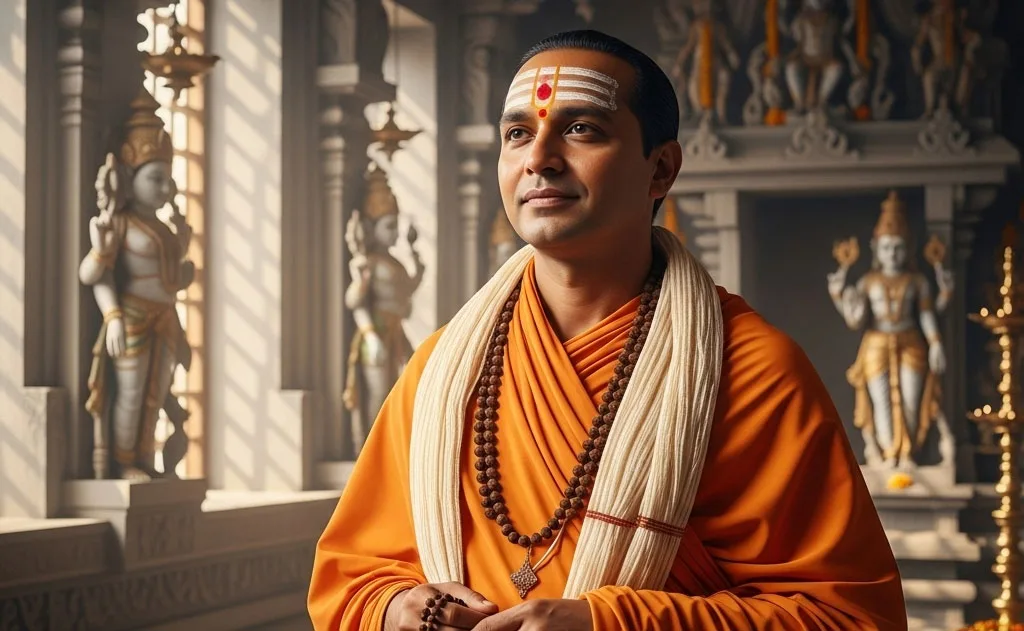
Hindu Temple Priest (Pujari) Vacancy – Multiple Positions Open
Hindu Temple Priest (Pujari) Vacancy – Multiple Positions Open Organization: Australian Nepalese Multicultural Centre (ANMC) Location: Diggers Rest, Melbourne,…

Hindu Temple Priest (Pujari) Vacancy – Multiple Positions Open Organization: Australian Nepalese Multicultural Centre (ANMC) Location: Diggers Rest, Melbourne,…
Hindu Temple Priest (Pujari) Vacancy – Multiple Positions Open
Organization: Australian Nepalese Multicultural Centre (ANMC) Location: Diggers Rest, Melbourne, Victoria, Australia (ANMC Temple premises at 100 Duncan’s Lane, Diggers Rest, VIC 3427) Positions: Multiple full-time contractual roles Contract Duration: Minimum 1 year, renewable based on performance and mutual agreement Start Date: December 2025 or as mutually agreed
About ANMC
The Australian Nepalese Multicultural Centre (ANMC) is a not-for-profit community organization established in 2014 to preserve and promote Nepali culture and heritage in Australia. The ANMC Temple serves as a spiritual hub for the Nepali and broader multicultural community, hosting daily worship services and major Nepali Hindu festivals.
Key Responsibilities
- Performing daily morning and evening worship, including puja and aarti, on time and with proper Vedic procedures.
- Officiating religious ceremonies and leading major festivals such as Dashain, Tihar, Teej, Janai Purnima, Janmashtami, Shivaratri, and others.
- Conducting special rituals, homams, and community religious services as required.
- Maintaining the temple’s cleanliness, spiritual purity, and care of idols, altars, and prayer materials.
- Working closely with the ANMC Executive Committee to ensure operations align with Hindu traditions and organizational policies.
- Supporting community engagement through cultural and religious education.
Requirements and Qualifications
- Demonstrated expertise in Hindu rituals and Vedic traditions, particularly those practiced in Nepal.
- Strong knowledge of Sanskrit (for chanting and rituals).
- Fluency in Nepali and English (reading, writing, and speaking).
- Familiarity with Nepali cultural practices and festival observances.
- Prior experience as a temple priest (pujari) or community religious officiant is preferred.
- Valid Victorian Working With Children Check (WWCC).
- Current National Police Check.
- Australian Business Number (ABN) and Public Liability Insurance.
Compensation and Conditions
- Paid at an hourly rate on ABN for temple services.
- Additional payments for specific religious rituals conducted.
- All fees, dakshina, and donations received at the temple are the property of ANMC.
How to Apply
Applications close on Friday, December 12, 2025. Submit your application (including resume, cover letter, and any supporting documents demonstrating qualifications and experience) via the official vacancy page: https://anmcinc.org.au/vacancy-anmc-temple-priest-pujari-multiple-positions/
For more information about ANMC, visit https://anmcinc.org.au/.
What Vedic and Tantric traditions underpin the daily worship performed at a Nepali Hindu temple?
Nepali Hindu temple worship draws on a rich synthesis of Vedic ritual (yajna-based procedures codified in the Grihyasutras and Shrautasutras) and Tantric Agamic practice. The daily puja follows the Shodashopachara — sixteen forms of service to the deity — including Avahana (invocation), Asana (offering of a seat), Abhisheka (ritual bathing), Vastra (clothing), and Naivedya (food offering), culminating in Aarti with a lamp. A pujari fluent in these procedures treats the deity not as a symbolic image but as a living presence (pratishthita murti), following consecration rites (prana pratishtha) that have imbued the idol with divine energy.
Nepal's temple traditions are particularly shaped by the Shakta and Shaiva Agamas, alongside Vaishnavite practices, reflecting the country's syncretic religious heritage. Major temples in Kathmandu's Pashupatinath complex, for instance, follow Shaiva procedures rooted in the Shiva Agamas, while Kumari worship blends Tantric Shakta elements. A pujari trained in Nepal will typically be versed in mantra pronunciation using the Vedic svaras (udatta, anudatta, svarita), ensuring ritual efficacy (kriyashakti) consistent with scriptural prescription.
Which festivals on the ANMC calendar carry the deepest religious significance and what do they involve?
Dashain (also called Vijaya Dashami) is the most important Nepali Hindu festival, spanning fifteen days during the Shukla Paksha of Ashvin month. It commemorates the goddess Durga's victory over the buffalo-demon Mahishasura, as narrated in the Devi Mahatmya (Markandeya Purana). The pujari's role during Dashain is central: daily Durga puja from Pratipada through Navami, performance of the Navaratri havan, preparation and distribution of Tika (a mixture of yoghurt, rice, and vermilion), and the bestowal of Jamara (barley sprouts grown ritually in darkness over the nine days).
Tihar (the Nepali equivalent of Deepavali) is a five-day festival honoring Yama, the crow, the cow, the dog, and Lakshmi in successive daily rituals — each day carrying its own specific puja, mantra, and offering. Janai Purnima (Raksha Bandhan) is equally significant in the Nepali context: the pujari performs a formal change of the sacred thread (janai/yajnopavita) for twice-born men and ties Raksha threads for all devotees, a procedure rooted in the Vedic concept of raksha-bandha for spiritual protection. For Maha Shivaratri, night-long vigil worship (jagarana) with Vedic Shiva mantras such as the Sri Rudram from the Krishna Yajurveda is customary.
What is the role of Sanskrit proficiency in conducting homams and community ceremonies?
Sanskrit is the liturgical backbone of any Vedic ritual, and a pujari's mastery of correct pronunciation (uchcharana shuddhi) is not merely academic — according to the Mimamsa school of Hindu philosophy, the potency of a mantra is inseparable from its precise phonetic form. In homams (fire offerings), the pujari recites specific samidha (oblation) mantras drawn from the Rigveda or Yajurveda, coordinates the havan kund construction according to Sulbasutras proportions, and maintains the sequence of ahutis (offerings) in strict order to invoke the intended deity.
Community ceremonies such as Satyanarayan Katha, Bratabandha (the Nepali sacred-thread ceremony), Namkaran (naming ceremony), and Vivaha (marriage) each have their own set of Grihyasutra prescriptions. For a multicultural congregation in Melbourne that may include devotees from varied Hindu regional backgrounds, a pujari who can explain the Sanskrit mantras in Nepali and English bridges the gap between ritual performance and congregational understanding — deepening spiritual engagement beyond mere ceremonial observance.
Why does the position require an Australian Business Number (ABN) and public liability insurance?
In Australia, religious and cultural organizations engaging independent contractors are required under the Australian Taxation Office (ATO) framework to ensure that contractors hold a valid ABN. This enables the ANMC to make payments without withholding tax under the PAYG system and clarifies that the engagement is a contractual (rather than employee) relationship. For a pujari taking up this role, registering for an ABN as a sole trader or through an appropriate business structure is a standard administrative step that does not affect their religious or cultural standing.
Public liability insurance is a practical requirement that protects both the pujari and the ANMC organization in the event of accidental injury or property damage during the performance of rituals — for example, the use of open flames in havan and aarti, the handling of hot liquids during abhisheka, or the management of large crowds during festival days. The Victorian Working With Children Check (WWCC) and National Police Check are mandatory safeguards consistent with Australian community-organization standards, especially given that temple programs often include children's religious education and youth cultural activities.
What is the broader spiritual and cultural significance of a Hindu temple for diaspora communities in Australia?
For Hindu diaspora communities, a consecrated temple is far more than a place of worship — it functions as a tirtha, a sacred crossing point where the divine is made locally accessible. The Agama Shastras teach that once prana pratishtha (consecration) is performed correctly, the deity's presence is continuous and the temple becomes a living spiritual institution obligated to maintain daily rituals without interruption. For Nepali Australians settled in Melbourne and surrounding regions including Diggers Rest, the ANMC Temple at Duncan's Lane fulfills this function, anchoring religious identity across generations.
Diaspora temples also serve as cultural repositories, preserving language, music, folklore, and ritual arts that might otherwise erode in a secular Western environment. A knowledgeable pujari at such a temple becomes a cultural custodian — teaching children the meanings of Dashain tika, guiding young men through Bratabandha, and ensuring that the oral-liturgical tradition (shruti and smriti) is transmitted intact. This aligns with ANMC's founding mission of preserving Nepali culture and heritage in Australia, making the pujari role central not only to spiritual life but to the long-term cultural resilience of the community.
Frequently Asked Questions
Where is Hindu Temple Priest (Pujari) Vacancy – Multiple located?
Hindu Temple Priest (Pujari) Vacancy – Multiple Positions Open Organization: Australian Nepalese Multicultural Centre (ANMC) Location: Diggers Rest, Melbourne, Victoria, Australia (ANMC Temple premises at 100 Duncan’s Lane, Diggers Rest, VIC 3427) Positions: Multiple full-time contractual roles Contract Duration: Minimum 1 year, renewable based on performanc
Who is the presiding deity of Hindu Temple Priest (Pujari) Vacancy – Multiple?
The temple's presiding deity and its significance are described in the guide above.
What are the timings and how do I reach Hindu Temple Priest (Pujari) Vacancy – Multiple?
Temples typically open early morning and evening; confirm current darshan timings before visiting. The nearest airport, railway station and road routes are covered in the guide above.
What is the best time to visit Hindu Temple Priest (Pujari) Vacancy – Multiple?
Major festival days and the cooler months are popular, though weekday mornings offer a calmer darshan. Plan around the temple's key festivals for the most vibrant experience.
You might also like
Hindu Priest Jobs in Canada 2026: Pandit Vacancy Guide for Toronto, Vancouver & Calgary
Hindu Temple Jobs Abroad (June 2026): Worldwide Priest, Pujari, Madapalli & Cook Openings
Hindu Priest (Pujari) Job 2026 — Sanatan Dharm Hindu Temple Society, Coventry, UK