
Vacancy: Hindu Priest For Sanatan Dharma Rituals
Vacancy: Hindu Priest For (Sanatan Dharma Rituals) Organization: South Florida Hindu Temple (SFHT) Location: South Florida, USA (specific address available on…

Vacancy: Hindu Priest For (Sanatan Dharma Rituals) Organization: South Florida Hindu Temple (SFHT) Location: South Florida, USA (specific address available on…
Vacancy: Hindu Priest For (Sanatan Dharma Rituals)
Organization: South Florida Hindu Temple (SFHT) Location: South Florida, USA (specific address available on the temple website: https://www.sfht.org/) Position: Full-time Hindu Priest Employment Type: Full-time (ongoing, as the temple is actively seeking to fill the role)
About South Florida Hindu Temple (SFHT)
The South Florida Hindu Temple is a vibrant, inclusive Hindu temple serving the diverse Indian and broader community in South Florida. It hosts weekly collective prayers (with hundreds attending on Sunday mornings), celebrates festivals from across India, and offers regular rituals such as Rudra Abhishekam, Hanuman Chalisa, Lakshmi Puja, and Saraswati Puja, along with monthly havans. The temple emphasizes education in Sanatan Dharma values through English-language programs for children, puja services (at temple or home), hall rentals, and community volunteering opportunities. It promotes an auspicious, sacred environment rooted in Hindu traditions.
Key Responsibilities
- Perform all rituals in accordance with Sanatan Dharma, including daily pujas, special ceremonies, festivals, and other religious services.
Requirements and Qualifications
- Proficient and experienced in performing all rituals in accordance with Sanatan Dharma.
- Commitment to temple service and adherence to Hindu traditions.
- (Additional details such as language proficiency, visa status for USA work, or specific Vedic knowledge are not explicitly listed but may be discussed during the application process.)
Compensation and Conditions
- Not publicly specified (likely discussed with selected candidates).
How to Apply
The position is currently open. Interested candidates should fill out the online application form directly at: https://www.sfht.org/pages/working-at-sfht
The temple will contact suitable applicants promptly.
For more information about the South Florida Hindu Temple, visit https://www.sfht.org/.
(Note: This is the official and complete job posting as per the temple's website. The role appears to be for a dedicated priest to support ongoing temple activities.)
What does a full-time Hindu priest's daily schedule typically look like at a diaspora temple?
A full-time temple priest (purohita) in a diaspora setting like South Florida generally observes three to five nitya puja cycles each day — Suprabhata (dawn awakening of the deity), Abhisheka (ritual bathing), Alankara (adornment), Naivedya (food offering), and Shayana (evening rest ritual). These follow the Agamic prescriptions used in South Indian Shaiva and Vaishnava temples, though many North American community temples blend Shaiva, Shakta, and Vaishnava traditions to serve an ethnically diverse congregation.
Beyond the fixed daily schedule, the priest at a community temple like SFHT is frequently called upon for individual puja bookings — griha pravesham (housewarming), namakarana (naming ceremony), upanayana, and vivaha samskara (wedding). Balancing these personal bookings against the temple's congregational calendar requires strong organizational discipline and the ability to shift fluidly between intimate home settings and the larger, festival-scale rituals that draw hundreds of devotees.
Which Vedic and Agamic qualifications does a priest serving Sanatan Dharma rituals need?
Traditional training for a purohita begins with adhyayana — the oral recitation and memorization of one's shakha (branch) of the Veda. For priests performing Rudra Abhishekam, mastery of the Sri Rudram (Taittiriya Samhita, Krishna Yajurveda, chapters 4.5 and 4.7) and Chamakam is considered foundational. Competency in the Purusha Sukta, Sri Sukta, and Durga Sukta is additionally expected for a temple that celebrates Lakshmi Puja and Saraswati Puja as stated in SFHT's liturgical calendar.
For monthly havans, the priest must be familiar with homa vidhi — the correct construction of the homa kunda, selection of samidha (sacrificial wood), and recitation of the relevant ahutis with svaha. Many diaspora temples also expect the purohita to be conversant with the Grihya Sutras (such as the Apastamba or Baudhayana Grihya Sutra) that govern domestic sacraments, enabling seamless conduct of the sixteen samskaras requested by temple families.
Priests trained at institutions such as the Rashtriya Sanskrit Vidyapeetha (Tirupati), the Veda Vijnana Gurukulam (Bengaluru), or state-government-recognised Agama pathshalas typically bring verifiable credentials. A candidate applying to SFHT would be well served to present documentation of their gurukula training, years of active temple service, and any specialized diksha received.
How does the Hanuman Chalisa and weekly collective prayer fit into congregational Hindu worship?
The Hanuman Chalisa, composed in Awadhi by Goswami Tulsidas in the 16th century, is a forty-verse stotra (chalisa means forty) drawn from the Ramcharitmanas tradition. Its recitation is a centerpiece of Hanuman veneration across virtually all regional traditions in India, making it one of the most ecumenical elements a diaspora temple can offer — equally familiar to devotees from Gujarat, Maharashtra, Uttar Pradesh, and Tamil Nadu.
Sunday morning collective worship, as practiced at SFHT with hundreds of attendees, mirrors the satsanga model described in the Srimad Bhagavata Purana (11.12.1-2), where communal chanting and hearing of the divine name are held to be among the most accessible paths to moksha in the Kali Yuga. A skilled purohita facilitates this gathering not merely as a ritual technician but as a communicator — explaining the significance of the mantras, leading call-and-response chanting, and creating an atmosphere of collective devotion (samuhika bhakti).
What makes South Florida a distinctive location for Hindu temple service?
South Florida's Hindu community encompasses immigrants and second-generation families from across the Indian subcontinent, including significant populations from Gujarat, Andhra Pradesh, Tamil Nadu, Kerala, and the Indo-Caribbean diaspora (particularly from Trinidad and Guyana). This demographic diversity means a temple priest at SFHT must be liturgically versatile — capable of performing both Agamic South Indian rituals and the Puranic North Indian puja styles that different families expect for their samskaras.
The region's climate allows for year-round outdoor and semi-outdoor festival celebrations — Diwali, Navaratri, Holi, and Ganesh Chaturthi can be conducted at a scale rarely possible in colder northern states. For a purohita, this translates into a rich and continuously active ritual calendar, requiring both physical stamina and a deep reservoir of festival-specific liturgical knowledge such as the Devi Mahatmyam recitation during Navaratri and Ganapati Atharvashirsha during Ganesh Chaturthi.
What is the broader significance of temple priest roles in preserving Sanatan Dharma in the diaspora?
Temples in the diaspora serve as what scholars of religion call 'portable sacred geography' — they recreate the tirtha experience for communities far from Varanasi, Tirupati, or Vrindavan. The purohita is the living custodian of this sacred geography, and his role extends beyond ritual performance to cultural transmission. SFHT's explicit emphasis on English-language Sanatan Dharma education for children underscores this — the priest is also expected to be a teacher (acharya) who can explain the why behind each ritual act.
The Dharmashastra tradition, codified in texts like Manusmriti and Yajnavalkya Smriti, places the purohita at the center of community spiritual life as an advisor, ritual specialist, and moral exemplar. In a diaspora context, this responsibility deepens: the priest often becomes the primary anchor connecting second and third-generation Hindus to their heritage, making fluency in English (alongside Sanskrit) not merely a convenience but a vocational necessity for a position like the one advertised at SFHT.
Filling such roles with properly trained, committed priests is increasingly recognized as a strategic priority by Hindu organizations across North America. The presence of a knowledgeable, full-time purohita signals institutional stability for the congregation and ensures that complex rituals — from Shodashopachara puja to Satyanarayan Katha — are performed with fidelity to tradition, giving families the confidence that their samskaras are being conducted correctly and meaningfully.
Frequently Asked Questions
Where is the Hindu priest vacancy and who is hiring?
South Florida Hindu Temple (SFHT) in South Florida, USA is seeking a full-time Hindu priest. The role is ongoing and the position is currently open.
How do I apply for the SFHT Hindu priest position?
Fill out the online application form at https://www.sfht.org/pages/working-at-sfht. The temple will contact suitable applicants promptly.
What rituals does the SFHT priest perform?
The priest performs all rituals in accordance with Sanatan Dharma, including daily pujas, special ceremonies and festivals. The temple also hosts Rudra Abhishekam, Hanuman Chalisa, Lakshmi Puja, Saraswati Puja and monthly havans.
What qualifications does a priest need for this role?
Applicants must be proficient and experienced in performing all rituals per Sanatan Dharma and committed to temple service. Documents of gurukula training, years of temple service and any diksha received would strengthen an application.
Is English important for a temple priest in the diaspora?
Yes. SFHT runs English-language Sanatan Dharma programs for children, so a priest who can explain the reason behind each ritual in English alongside Sanskrit is a real advantage.
Is the salary listed in the SFHT priest vacancy?
No. Compensation is not publicly specified and is likely discussed with selected candidates. Visa status and language proficiency may also be discussed during the application process.
You might also like

Job Opportunity: Hindu Priest (Sanatan Dharma Tradition)

Full-Time Hindu Priest — Sanatan Mandir (Wellingborough District Hindu Association), Wellingborough UK | Religious Worker 2026
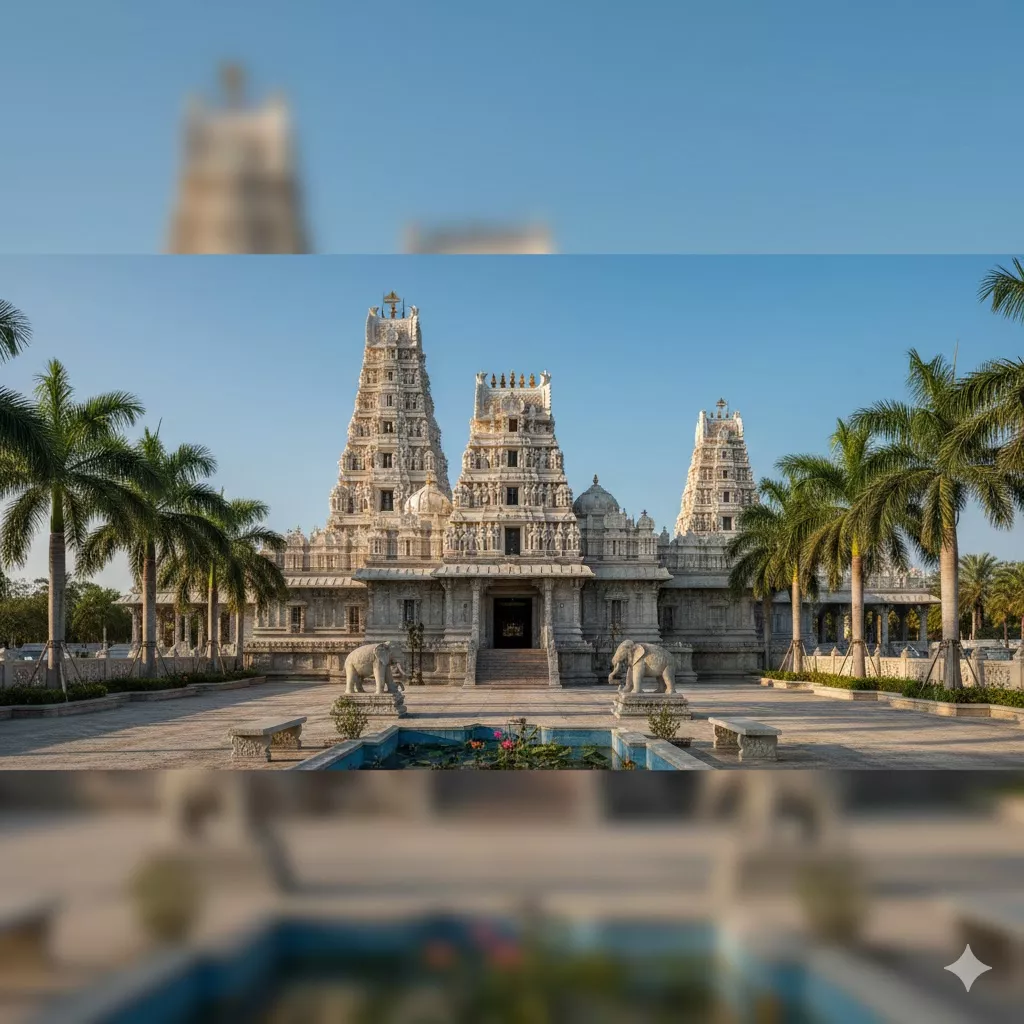
Full-Time Hindu Priest Job Opening at South Florida Hindu Temple
