Hindu Beliefs That Have Been Proven by Modern Science
Introduction: When Ancient Wisdom and Modern Science Converge For centuries, Western science and Eastern spirituality were considered opposites — one grounded…
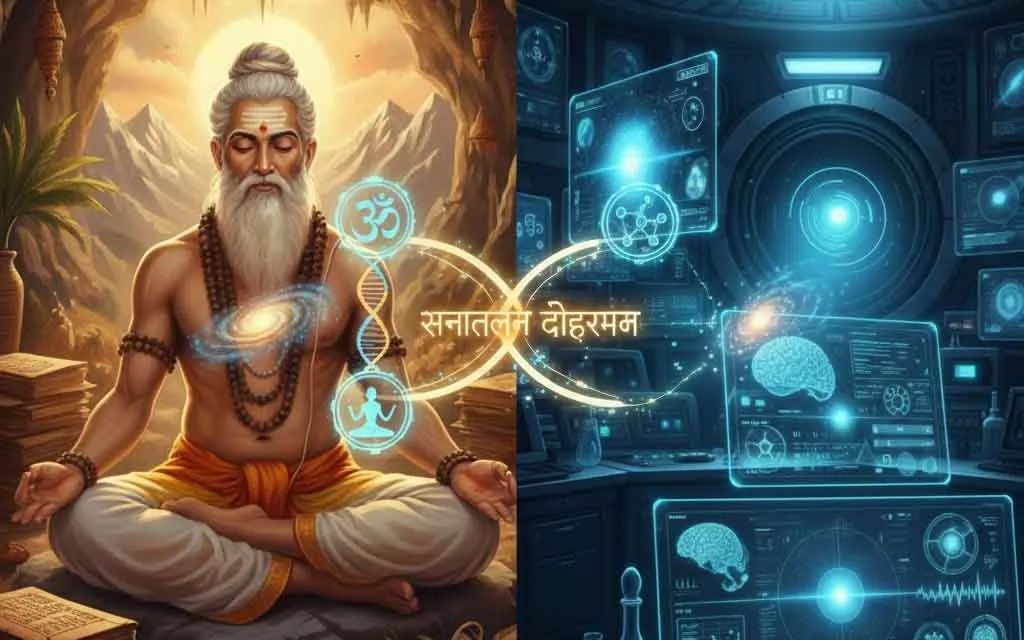
Introduction: When Ancient Wisdom and Modern Science Converge For centuries, Western science and Eastern spirituality were considered opposites — one grounded…
Introduction: When Ancient Wisdom and Modern Science Converge
For centuries, Western science and Eastern spirituality were considered opposites — one grounded in evidence and experiment, the other in faith and tradition. Yet in the 20th and 21st centuries, something extraordinary has happened: modern science has begun catching up with what Hindu sages recorded thousands of years ago.
From quantum physics to neuroscience, from cosmology to psychology, peer-reviewed research is now confirming the profound truth embedded in Vedic and Hindu teachings. The rishis (seers) of ancient India did not have electron microscopes or particle accelerators — yet through deep meditation, inner inquiry, and rigorous philosophical reasoning, they arrived at insights about the nature of reality, consciousness, the cosmos, and the human body that modern science is only now beginning to validate.
This is not coincidence. This is the power of Sanatana Dharma — the Eternal Science of Life.
In this article, we explore the most compelling Hindu beliefs and practices that have been scientifically proven or strongly supported by modern research.
1. Yoga — The Ancient Practice That Science Confirms Transforms Mind and Body
The Hindu Teaching
Yoga is one of the six orthodox schools of Hindu philosophy (Shad Darshanas). Codified by the sage Patanjali in the Yoga Sutras around 400 CE (but rooted in far older Vedic tradition), yoga is described as a complete science of human consciousness — a systematic path to unite the individual self (jivatman) with the universal self (Paramatman).
What Science Says
Modern science has generated an extraordinary body of research on yoga's measurable benefits:
Physical Health: Research published in the European Journal of Preventive Cardiology confirms that yoga significantly reduces blood pressure, cholesterol, and heart rate — lowering cardiovascular disease risk. A landmark study from Harvard Medical School found that yoga reduces inflammatory markers including C-reactive protein, linked to cancer, heart disease, and diabetes.
Mental Health: A comprehensive meta-analysis published in JAMA Internal Medicine reviewing 47 studies found that meditation and yoga meaningfully reduce symptoms of anxiety, depression, and chronic pain. The American Psychological Association now formally recognizes yoga as an evidence-based complementary therapy for depression and PTSD.
Brain Structure: Neuroimaging research from Harvard University found that long-term yoga and meditation practitioners have measurably thicker cortical regions in the brain associated with attention, interoception, and sensory processing — physically demonstrating that yoga reshapes the brain.
The Science Confirms: Yoga is not merely exercise. It is — exactly as Hindu sages described — a comprehensive technology for physical, mental, and spiritual transformation.
2. Meditation — The Science of Consciousness the Vedas Always Knew
The Hindu Teaching
The Vedas and Upanishads describe meditation (dhyana) as the supreme tool for self-realization. The Mandukya Upanishad maps four states of consciousness — waking, dreaming, deep sleep, and turiya (pure awareness beyond the three) — a classification system with no parallel in any other ancient tradition.
The Bhagavad Gita (Chapter 6) describes meditation as the path to samadhi — a state of unified, transcendent consciousness where the meditator, the act of meditation, and the object of meditation dissolve into one.
What Science Says
Modern neuroscience has produced some of its most astonishing findings in the study of meditation:
The Relaxation Response: Harvard cardiologist Dr. Herbert Benson's landmark research identified the "relaxation response" triggered by meditation — a measurable physiological state opposite to the stress response, reducing cortisol, adrenaline, heart rate, and blood pressure. This is precisely what Hindu texts describe as the shift from rajas (agitation) to sattva (peace).
Gamma Brain Waves: A groundbreaking study by neuroscientist Richard Davidson at the University of Wisconsin found that Tibetan Buddhist monks (trained in traditions directly derived from Hindu-Vedic practices) produce extraordinarily high levels of gamma brain wave activity during meditation — a frequency associated with peak consciousness, heightened perception, and deep compassion. This was the highest gamma activity ever recorded in research history.
Telomere Lengthening: Research published in Cancer journal and by Nobel Prize-winning scientist Dr. Elizabeth Blackburn found that meditation practices increase telomerase activity — the enzyme that repairs and lengthens telomeres, the protective caps on DNA that determine cellular aging. In other words, meditation measurably slows biological aging.
Default Mode Network: Neuroscientists have discovered the brain's "default mode network" (DMN) — the neural system responsible for mind-wandering, rumination, and the ego-narrative (the "I, me, mine" mental chatter). Meditation deactivates the DMN — precisely matching the Hindu description of meditation dissolving the ego (ahamkara) and revealing the pure self (Atman).
The Science Confirms: The Hindu map of consciousness — including states of awareness beyond ordinary waking life — is now a serious subject of neuroscientific research. The ancient is meeting the cutting-edge.
3. The Cosmic Universe and Hindu Cosmology — The Big Bang Was Known to the Vedas
The Hindu Teaching
Hindu cosmology presents a vision of the universe of breathtaking scale and sophistication. The Bhagavata Purana and Vishnu Purana describe:
- A universe that is cyclically created, sustained, and dissolved — a process repeated endlessly through vast cosmic time cycles called Kalpas and Yugas
- The concept of multiple universes (Brahmandas — literally "Brahma's eggs") existing simultaneously
- Time measured in units so large they were not matched by Western astronomy until the 20th century. One Kalpa (a single day of Brahma) = 4.32 billion years — remarkably close to the current scientific estimate of Earth's age at 4.54 billion years
- The universe beginning from a single point of pure sound and energy — a concept expressed in the primordial Om, described in the Vedas as the first vibration from which creation emerged
What Science Says
The Big Bang: Modern cosmology's consensus — that the universe originated approximately 13.8 billion years ago from an infinitely dense singularity — mirrors the Hindu cosmological description of creation emerging from a single, formless, vibratory source. Carl Sagan himself noted in his television series Cosmos: "The Hindu religion is the only one of the world's great faiths dedicated to the idea that the Cosmos itself undergoes an immense number of deaths and rebirths. It is the only religion in which the time scales correspond to those of modern scientific cosmology."
Cyclic Universe Theory: Princeton physicist Paul Steinhardt and Neil Turok's "Cyclic Universe" model — in which the universe undergoes endless cycles of expansion, contraction, and rebirth — is a direct scientific parallel to the Hindu concept of cosmic cycles (Srishti, Sthiti, Pralaya — creation, preservation, dissolution).
The Multiverse: Modern physics' "many-worlds" interpretation and multiverse theories echo the Vedic description of infinite universes coexisting simultaneously within the divine consciousness of Brahman.
The Science Confirms: Hindu cosmology was not primitive mythology. It was, as physicist Fritjof Capra argued in his landmark book The Tao of Physics, a sophisticated intuitive understanding of the cosmos that anticipated modern physics by millennia.
4. The Power of Om (Aum) — Primordial Sound Meets Quantum Physics
The Hindu Teaching
The Vedas declare Om (Aum) to be the primordial sound — the first vibration from which the entire universe emerged. The Mandukya Upanishad is devoted entirely to the sacred syllable Om, describing it as the sound of all existence: past, present, and future. Every Hindu ritual, prayer, and meditation begins with Om for this reason.
The Vedas further teach that sound (Shabda) is the fundamental nature of reality — a teaching elaborated in the philosophy of Spanda (divine vibration) within Kashmir Shaivism.
What Science Says
String Theory: The most ambitious theory in modern physics — String Theory — proposes that the most fundamental constituents of the universe are not particles but tiny, vibrating strings of energy. Reality, at its most basic level, is vibration. This is precisely what the Vedas asserted thousands of years ago.
The Resonance of Om: Researchers at the IIT (Indian Institute of Technology) and other institutions have used brain imaging to study the effect of chanting Om. Results show that chanting Om activates the vagus nerve — the primary parasympathetic nerve governing rest, digestion, and emotional regulation — producing measurable deactivation of the limbic system (the brain's fear and stress center). The same deactivation pattern is seen in vagal nerve stimulation (VNS) therapy, a cutting-edge medical treatment for epilepsy and depression.
Cymatics — Sound Creates Form: Swiss scientist Hans Jenny's research in Cymatics demonstrated that sound vibrations produce precise geometric patterns in physical matter. The geometric forms produced by certain Vedic sound frequencies (mantras) closely resemble the sacred geometric diagrams (yantras) used in Hindu ritual for thousands of years — strongly suggesting that ancient Hindu sound science was grounded in real physical phenomena.
The Science Confirms: Om is not merely a religious symbol. It is — as modern physics is beginning to reveal — a description of the fundamental vibratory nature of reality itself.
5. Ayurveda — The 5,000-Year-Old Medical System That Modern Science Is Validating
The Hindu Teaching
Ayurveda ("the Science of Life") is Hinduism's ancient system of medicine, rooted in the Atharva Veda. It describes the human body as composed of five elements (Pancha Mahabhutas) and three metabolic principles (Doshas — Vata, Pitta, Kapha) whose balance determines health, and whose imbalance produces disease.
Ayurveda prescribed individualized treatments using herbs, diet, lifestyle, yoga, meditation, and detoxification (Panchakarma) thousands of years before modern personalized medicine became a concept.
What Science Says
Turmeric (Curcumin): Ayurveda prescribed turmeric for thousands of years as an anti-inflammatory, antimicrobial, and wound-healing agent. Modern research has identified curcumin as the active compound, with over 12,000 peer-reviewed studies confirming its potent anti-inflammatory, antioxidant, anti-cancer, and neuroprotective properties. The US National Institutes of Health lists curcumin among the most researched natural compounds in the world.
Ashwagandha: This ancient Ayurvedic adaptogenic herb is now one of the world's most studied botanical compounds. Research in the Journal of the American Nutraceutical Association and multiple clinical trials confirm it significantly reduces cortisol, improves stress resilience, enhances thyroid function, and increases muscle strength and recovery — exactly as Ayurvedic texts described.
Triphala: This three-herb Ayurvedic formula has been validated in modern research as a powerful antioxidant, gut microbiome modulator, and immune-system support — confirming what Ayurvedic practitioners prescribed for millennia.
Mind-Body Connection: Ayurveda's core premise — that mental and emotional states directly affect physical health — is now the cornerstone of modern psychoneuroimmunology (PNI), a field that studies the interaction between psychological processes, the nervous system, and immune function. Ayurveda understood this connection 5,000 years ago.
The Science Confirms: Ayurveda is not superstition — it is an extraordinarily sophisticated empirical medical system whose insights are being systematically validated by 21st-century biomedical research.
6. Karma and the Law of Cause and Effect — Confirmed by Physics
The Hindu Teaching
Karma — the law that every action produces a corresponding reaction — is the moral-metaphysical backbone of Hindu philosophy. "As you sow, so shall you reap" is the simplest expression of this eternal law, which governs not just human destiny but the entire fabric of existence.
What Science Says
Newton's Third Law of Motion: Every action has an equal and opposite reaction — this is the physical expression of karma at the level of matter and energy.
The Law of Conservation of Energy: Physics confirms that energy is never created or destroyed — it only transforms. This is the scientific parallel to the Hindu teaching that karmic impressions (samskaras) are never lost but continue to shape reality until fully resolved.
Quantum Entanglement: Perhaps the most astonishing confirmation of karma's universal scope comes from quantum physics. Quantum entanglement — confirmed experimentally and recognized with the 2022 Nobel Prize in Physics — demonstrates that particles that have interacted remain fundamentally connected regardless of distance. A change in one instantaneously affects the other. This non-local interconnectedness of all things is precisely what Hindu philosophy describes as the karmic web linking all beings.
Epigenetics: Modern epigenetics research shows that our thoughts, emotions, and behaviors literally change our gene expression — and these changes can be passed on to subsequent generations. This is the biological mechanism of what Hinduism calls samskara — the impressions of our actions shaping not just our own lives but those of our descendants.
The Science Confirms: Karma is not a mystical abstraction. At every level — from the quantum to the cosmic — the law of cause and effect governs reality exactly as the Vedas described.
7. Fasting — Ekadashi and the Science of Autophagy
The Hindu Teaching
Hindu tradition prescribes fasting on Ekadashi (the 11th day of the lunar fortnight) — twice monthly — as a spiritual and physical purification practice. Fasting is considered a way to purify the body, calm the mind, and elevate spiritual awareness. Many Hindu fasts also involve specific dietary restrictions and prayer, aligning physical cleansing with devotional practice.
What Science Says
In 2016, Japanese cell biologist Yoshinori Ohsumi won the Nobel Prize in Physiology or Medicine for his discovery of autophagy — the process by which the body's cells break down and recycle damaged components during fasting. Autophagy is now recognized as one of the body's most powerful anti-aging, anti-cancer, and regenerative mechanisms — and it is triggered by fasting.
Research published in Cell Metabolism and Nature Reviews confirms that periodic fasting:
- Triggers cellular autophagy and detoxification
- Reduces insulin resistance and blood sugar
- Lowers inflammation markers
- Supports gut microbiome diversity
- Enhances brain function and mental clarity
- Reduces risk of metabolic disease, cancer, and neurodegeneration
The Hindu tradition of Ekadashi fasting twice per month aligns remarkably well with the intermittent and periodic fasting protocols now prescribed by leading longevity researchers.
The Science Confirms: The Hindu practice of regular sacred fasting is one of the most scientifically validated health practices in the world — and it was prescribed not for health reasons alone, but as a path of spiritual purification.
8. The Five Elements (Pancha Mahabhutas) — Mirrored in Modern Science
The Hindu Teaching
Hindu philosophy describes all of physical reality as composed of five elements — Prithvi (earth), Jal (water), Agni (fire), Vayu (air), and Akasha (ether/space). These are not merely physical elements but fundamental states and qualities of matter and energy that compose both the external universe and the human body.
What Science Says
Modern physics describes matter in terms of four fundamental states — solid, liquid, plasma, and gas — along with a fifth domain of quantum fields and the vacuum of space (quantum vacuum), which functions remarkably like the Hindu concept of Akasha — the all-pervading, invisible medium in which all phenomena arise.
The Hindu Akasha — described in the Vedas as the subtlest element, the medium of sound, and the substrate of all creation — corresponds strikingly to the modern concept of the quantum field or the quantum vacuum — a seething field of pure potential energy from which particles spontaneously arise and into which they dissolve.
The Science Confirms: The ancient Hindu five-element framework, while expressed in pre-scientific language, captures fundamental truths about the states and organization of matter that modern physics is independently confirming.
9. Interconnectedness of All Life — The Vedic Advaita and Modern Ecology
The Hindu Teaching
The Advaita Vedanta school of Hindu philosophy — most fully articulated by the 8th-century sage Adi Shankaracharya — teaches that all of reality is One. Brahman — pure, infinite consciousness — is the only true reality. All individual beings, all phenomena, all of the universe is Brahman experiencing itself in infinite forms. The apparent separateness of individual selves and objects is Maya (illusion).
The Vedic declaration "Aham Brahmasmi" (I am Brahman) and "Tat Tvam Asi" (Thou art That) are not metaphors — they are descriptions of the ultimate nature of reality.
What Science Says
Quantum Non-Locality: As described above, quantum entanglement demonstrates that at the deepest level of physical reality, separation is an illusion. Particles that have interacted remain fundamentally connected regardless of space and time.
Systems Biology and Ecology: Modern ecology and systems biology reveal that ecosystems function as integrated wholes — every organism is deeply connected to every other through webs of energy, matter, and information exchange that make strict individual separateness a biological fiction.
The Overview Effect: Astronauts who have seen Earth from space consistently describe a profound experience of the unity of all life — a collapse of the sense of separateness that many describe in terms nearly identical to Vedantic descriptions of Brahman-realization.
The Science Confirms: The Advaita Vedanta teaching that all is One is not philosophical poetry — it is increasingly the conclusion of physics, ecology, and the deepest human experiences of consciousness.
10. Namaste — The Science Behind the Sacred Greeting
The Hindu Teaching
The greeting Namaste — hands pressed together at the heart, a slight bow — is one of the most iconic expressions of Hindu culture. It means: "The divine in me bows to the divine in you." It is an acknowledgment of the sacred presence in every human being, rooted in the Vedantic understanding that Atman (the divine soul) dwells in all.
What Science Says
The Anjali Mudra (the hands-pressed-together gesture of Namaste) activates acupressure points at the tips of the fingers corresponding to the eyes, ears, and mind — stimulating awareness and presence. Research in psychophysiology confirms that the gesture of bringing the hands together at the heart center activates the parasympathetic nervous system, promoting calm and reducing stress reactivity.
Beyond the gesture, the intention of Namaste — recognizing the dignity and sacredness of every person — is now strongly supported by positive psychology research. Studies by Dr. Martin Seligman and others confirm that practices of recognition, gratitude, and seeing others' inherent worth are among the most powerful promoters of psychological wellbeing and social cohesion.
The Science Confirms: Namaste is a scientifically sound act of physical, psychological, and social wellbeing — encoded in a single ancient gesture.
Conclusion: Sanatana Dharma — The Eternal Science
The convergence of ancient Hindu wisdom and modern science is one of the most profound intellectual developments of our time. Again and again, in laboratory after laboratory, the insights of the Vedic rishis — arrived at through millennia of inner inquiry, philosophical reasoning, and spiritual experience — are being independently confirmed by the instruments and methods of 21st-century science.
This should not surprise us. The rishis did not speculate idly. They were rigorous investigators of reality — only their laboratory was consciousness itself, and their instruments were meditation, mantra, and the clarity of a purified mind.
Sanatana Dharma was always a science — the supreme science of consciousness, life, and the cosmos. Modern science is not replacing it. Modern science is, step by step, discovering what the ancient seers of India already knew.
As physicist Niels Bohr, one of the fathers of quantum mechanics, said: "When it comes to atoms, language can only be used as in poetry... I hope that is not too great a poetic licence." He had a picture of the Hindu symbol of Shiva Nataraja — the cosmic dancer — on the wall of his office at the Institute for Theoretical Physics in Copenhagen. It was no coincidence.
The dance of Shiva is the dance of the cosmos. And science is finally learning its steps.
Explore more articles on Hindu philosophy, Vedic science, and spirituality at HinduTone.com
Tags: Hindu beliefs proven by science, Vedic science, yoga benefits science, meditation neuroscience, Ayurveda modern research, Om vibration quantum physics, Hindu cosmology Big Bang, karma quantum physics, fasting Ekadashi autophagy, Advaita Vedanta science, Sanatana Dharma, Hinduism and modern science, ancient Hindu wisdom
Focus Keyword: Hindu beliefs proven by science
Secondary Keywords: science and Hinduism, Vedic science, yoga science, meditation science, Hindu practices scientifically proven, ancient Hindu wisdom modern science, Ayurveda science, sound vibration science, Hindu cosmology Big Bang
Frequently Asked Questions
What is Hindu Beliefs That Have Been Proven by Modern?
Introduction: When Ancient Wisdom and Modern Science Converge For centuries, Western science and Eastern spirituality were considered opposites — one grounded in evidence and experiment, the other in faith and tradition. Yet in the 20th and 21st centuries, something extraordinary has happened: modern science has begun catching up with what Hindu sages record
What are the key points about Hindu Beliefs That Have Been Proven by Modern?
From quantum physics to neuroscience, from cosmology to psychology, peer-reviewed research is now confirming the profound truth embedded in Vedic and Hindu teachings. The rishis (seers) of ancient India did not have electron microscopes or particle accelerators — yet through deep meditation, inner inquiry, and rigorous philosophical reaso
Why does Hindu Beliefs That Have Been Proven by Modern matter in Hinduism?
It reflects core values of Sanatana Dharma and offers practical and spiritual guidance that remains relevant across generations.
How can devotees apply Hindu Beliefs That Have Been Proven by Modern in daily life?
By reflecting on its teaching, incorporating the related practices or observances into daily routine, and approaching it with sincere devotion and understanding.
You might also like
Purushottam Maas 2026: Lord Vishnu's Sacred Gift of Spiritual Multiplication & Divine Grace
Shani Jayanti 2026: Date, Significance, Rituals & Powerful Mantras

Hindu Priest Jobs New Zealand 2026 — Auckland, Wellington, Christchurch Vacancies & NZ Religious Worker Visa Guide