Vishnu’s Avatars: From Matsya to Kalki – A Comprehensive Exploration of the Dashavatara
Hindu mythology is a treasure trove of divine narratives, and at its heart lies the concept of Lord Vishnu’s Dashavatara—his ten primary incarnations.

Hindu mythology is a treasure trove of divine narratives, and at its heart lies the concept of Lord Vishnu’s Dashavatara—his ten primary incarnations.
Hindu mythology is a treasure trove of divine narratives, and at its heart lies the concept of Lord Vishnu’s Dashavatara—his ten primary incarnations. As the preserver of the universe, Vishnu descends to Earth in various forms to restore dharma (cosmic order) whenever chaos threatens to prevail. Each avatar, from Matsya the fish to Kalki the prophesied warrior, addresses a unique crisis, embodying timeless lessons in resilience, justice, and compassion. This in-depth exploration, crafted for Hindutone, delves into the stories, symbolism, and philosophical significance of all ten avatars, offering devotees and enthusiasts a comprehensive guide to Vishnu’s divine interventions. Optimized for spiritual seekers and mythology enthusiasts, this article unravels the profound wisdom encoded in these sacred tales.
The Dashavatara: An Overview
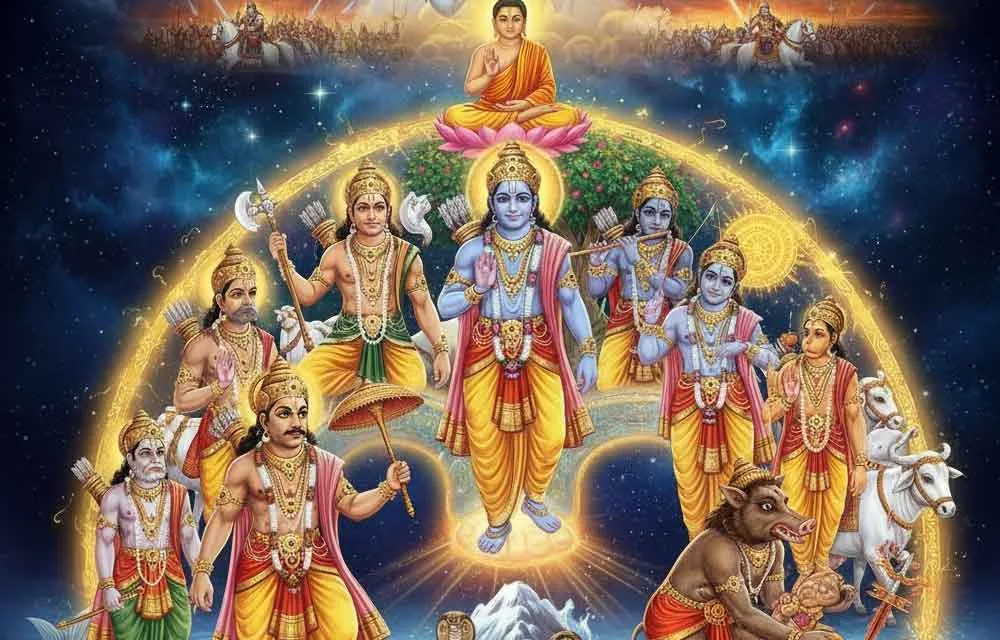
The Dashavatara, as described in texts like the Bhagavata Purana, Vishnu Purana, and Garuda Purana, represents Vishnu’s ten key incarnations, each tailored to a specific cosmic challenge. These avatars span the four yugas (cosmic ages—Satya, Treta, Dvapara, and Kali), reflecting an evolutionary progression from aquatic life to human forms and culminating in a future savior. The traditional list includes:
- Matsya (The Fish)
- Kurma (The Tortoise)
- Varaha (The Boar)
- Narasimha (The Man-Lion)
- Vamana (The Dwarf)
- Parashurama (The Warrior Sage)
- Rama (The Ideal King)
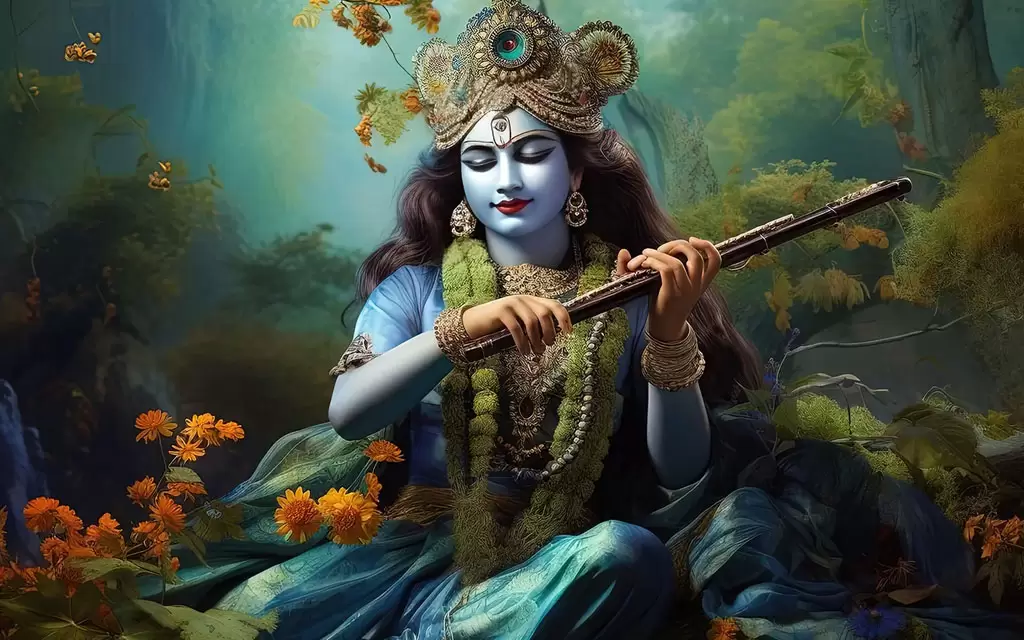
- Krishna (The Divine Strategist)
- Buddha (The Enlightened Teacher)
- Kalki (The Future Warrior)
Each avatar carries profound symbolism, addressing moral, spiritual, and societal dilemmas. Below, we explore each incarnation in detail, weaving their narratives with lessons for modern devotees.
1. Matsya Avatar: The Fish and the Great Flood
The Prelude: A World in Peril
In the Satya Yuga, the world was steeped in corruption. The demon Hayagriva, born of Brahma’s yawn, stole the sacred Vedas—scriptures embodying divine knowledge—and hid them in the ocean’s depths. Without the Vedas, dharma faltered, and chaos loomed. Meanwhile, Brahma’s cosmic cycle neared its end, signaling a great deluge to reset creation.
The Encounter with Manu
King Manu, the progenitor of mankind, was performing penance by a river when a tiny fish swam into his hands, pleading for protection: “O noble king, save me from the bigger fish!” Moved by compassion, Manu placed the fish in a small pot. To his astonishment, the fish grew overnight, outgrowing the pot, then a pond, a river, and finally the ocean itself.
The Divine Revelation
Realizing its divine nature, Manu bowed before the fish, which revealed itself as Vishnu. Matsya warned: “In seven days, a great flood will engulf the world. Build a massive ark, gather the seeds of all life, the Saptarishis (seven sages), and await my guidance.” Manu obeyed, constructing an ark and preparing for the deluge.
The Deluge and Salvation
As torrential rains submerged the Earth, Matsya, now a colossal fish with a golden horn, appeared. Manu tied the ark to Matsya’s horn using Vasuki, the serpent king, as a rope. For years, Matsya guided the ark through the turbulent waters, protecting Manu, the sages, and the seeds of creation. After the flood receded, Matsya slew Hayagriva, retrieved the Vedas, and restored them to Brahma. Manu repopulated the Earth, re-establishing dharma.
Symbolism and Lessons
- Preservation of Knowledge: The Vedas symbolize divine wisdom, essential for cosmic order. Matsya’s mission underscores the importance of safeguarding knowledge through crises.
- Divine Protection: Matsya’s guidance during the flood reflects Vishnu’s role as a protector, offering hope in catastrophic times.
- Global Parallels: The Matsya story shares striking similarities with flood myths worldwide, such as Noah’s Ark (Judeo-Christian) and Utnapishtim (Mesopotamian), suggesting a universal archetype of divine salvation.
Devotional Insight: Chant “Om Matsyaya Namah” during challenges to invoke Vishnu’s protective grace, trusting in divine guidance to navigate life’s storms.
2. Kurma Avatar: The Tortoise and the Churning of the Ocean
The Context: A Cosmic Quest
In the Satya Yuga, the Devas (gods) and Asuras (demons) sought the nectar of immortality (Amrita) to restore their power. The only way to obtain it was through the Samudra Manthan, the churning of the cosmic ocean. However, the task required a stable base for the churning rod—Mount Mandara.
Vishnu’s Intervention as Kurma
As the Devas and Asuras began the churning, using Vasuki as the rope, Mount Mandara sank into the ocean’s depths. Vishnu incarnated as Kurma, a giant tortoise, diving beneath the mountain to support it on his back. With Kurma’s stability, the churning resumed, yielding treasures like the goddess Lakshmi, the wish-fulfilling tree, and finally, the Amrita. When the deadly poison Halahala emerged, Shiva consumed it to protect creation, earning the name Neelkanth.
The Outcome
Vishnu, as Kurma, ensured the success of the churning. When the Asuras stole the Amrita, Vishnu took the form of Mohini, the enchantress, to retrieve it for the Devas, ensuring cosmic balance.
Symbolism and Lessons
- Stability in Chaos: Kurma’s steady support symbolizes the need for a strong foundation during turbulent endeavors, such as teamwork in crises.
- Collaborative Effort: The Devas and Asuras, despite their rivalry, united for a common goal, teaching the value of cooperation across differences.
- Divine Support: Vishnu’s dual role (Kurma and Mohini) highlights his multifaceted intervention to uphold dharma.
Devotional Insight: Meditate on Kurma during teamwork challenges, chanting “Om Kurmaya Namah” to invoke resilience and unity.
3. Varaha Avatar: The Boar and the Rescue of Earth
The Crisis: Earth in Peril
The demon Hiranyaksha, seeking dominance, dragged Bhumi Devi (Mother Earth) into the cosmic ocean’s depths. The gods appealed to Vishnu for rescue.
Vishnu as Varaha
Vishnu incarnated as Varaha, a mighty boar with immense strength. Diving into the ocean, Varaha battled Hiranyaksha for a thousand years. With his tusks, he lifted Bhumi Devi from the depths and slew the demon, restoring Earth to her rightful place.
Symbolism and Lessons
- Environmental Stewardship: Varaha’s rescue of Bhumi Devi symbolizes the duty to protect the Earth from exploitation.
- Strength in Righteousness: Varaha’s battle reflects the triumph of dharma over destructive forces.
- Divine Compassion: Vishnu’s intervention highlights his love for creation, inspiring devotees to act with care for the planet.
Devotional Insight: Offer prayers to Varaha during environmental initiatives, chanting “Om Varahaya Namah” to seek strength in protecting nature.
4. Narasimha Avatar: The Man-Lion and Divine Justice
The Tyranny of Hiranyakashipu
After Varaha killed his brother Hiranyaksha, Hiranyakashipu sought revenge through penance to Brahma, securing a boon: he could not be killed by man or beast, inside or outside, day or night, on earth or in the sky, by weapon or hand. Declaring himself god, he terrorized the universe. His son, Prahlada, a devout Vishnu follower, defied him, sparking his fury.
Prahlada’s Trials
Hiranyakashipu tried to kill Prahlada through fire, poison, elephants, and snakes, but Vishnu protected him each time. Enraged, Hiranyakashipu challenged: “Is your Vishnu in this pillar?”
Narasimha’s Emergence
Vishnu burst from the pillar as Narasimha, a half-man, half-lion being. At twilight, on the threshold, Narasimha placed Hiranyakashipu on his lap and tore him apart with his claws, fulfilling the boon’s conditions. Prahlada was saved, and dharma restored.
Symbolism and Lessons
- Divine Justice: Narasimha’s loophole shows that evil cannot escape cosmic law.
- Unshakable Faith: Prahlada’s devotion teaches resilience in the face of adversity.
- Liminality: Narasimha’s form transcends binaries, symbolizing divine adaptability.
Devotional Insight: Chant “Om Narasimhaya Namah” during challenges to invoke courage and divine protection.
5. Vamana Avatar: The Dwarf and the Conquest of Ego
The Rise of Bali
King Bali, a benevolent yet ambitious demon, conquered the three worlds through penance and generosity. The Devas sought Vishnu’s help to restore balance.
Vishnu as Vamana
Vishnu appeared as Vamana, a humble dwarf Brahmin, at Bali’s grand sacrifice. Requesting three steps of land, Vamana grew into the cosmic giant Trivikrama. With one step, he covered the Earth; with the second, the heavens. Bali, recognizing Vishnu’s divinity, offered his head for the third step. Pleased, Vishnu granted Bali dominion over the netherworld and immortality.
Symbolism and Lessons
- Humility Over Ego: Vamana’s small form humbles Bali’s pride, teaching the value of modesty.
- Generosity and Dharma: Bali’s surrender reflects the power of righteousness.
- Cosmic Balance: Vishnu ensures no single force dominates the universe.
Devotional Insight: Meditate on Vamana to cultivate humility, chanting “Om Vamanaya Namah.”
6. Parashurama Avatar: The Warrior Sage and the Cleansing of Kshatriyas
The Corruption of Kshatriyas
In the Treta Yuga, Kshatriya kings became tyrannical, oppressing the weak. Vishnu incarnated as Parashurama, a Brahmin warrior wielding an axe, born to sage Jamadagni.
Parashurama’s Mission
When the evil king Kartavirya Arjuna stole Jamadagni’s divine cow and killed him, Parashurama vowed to eradicate corrupt Kshatriyas. He cleansed the Earth 21 times, restoring dharma. Later, he mentored figures like Bhishma and Drona, passing on his wisdom.
Symbolism and Lessons
- Justice Through Action: Parashurama’s mission emphasizes correcting systemic wrongs.
- Dual Identity: As a Brahmin-warrior, he bridges knowledge and action.
- Discipline: His austerity teaches the value of self-control.
Devotional Insight: Chant “Om Parashuramaya Namah” to seek strength in confronting injustice.
7. Rama Avatar: The Ideal King and the Ramayana
The Exile and Battle
Born in the Treta Yuga as Rama, prince of Ayodhya, Vishnu incarnated to defeat Ravana, the demon king. Exiled for 14 years, Rama, with his wife Sita and brother Lakshmana, faced numerous trials. When Ravana abducted Sita, Rama allied with Sugriva and Hanuman, leading an army to Lanka. After a fierce battle, Rama slew Ravana, rescued Sita, and returned to rule Ayodhya.
Symbolism and Lessons
- Duty (Dharma): Rama’s adherence to duty, even in exile, is a model for righteous living.
- Loyalty and Devotion: Sita and Hanuman exemplify unwavering loyalty.
- Leadership: Rama’s compassion and strategy inspire ethical governance.
Devotional Insight: Chant “Om Ramaya Namah” to embody duty and compassion.
8. Krishna Avatar: The Divine Strategist
Krishna’s Multifaceted Role
In the Dvapara Yuga, Vishnu incarnated as Krishna to guide the Pandavas in the Mahabharata and deliver the Bhagavad Gita. Born to Devaki and Vasudeva, Krishna defeated his uncle Kansa, guided Arjuna in the Kurukshetra war, and shared divine wisdom on duty, detachment, and devotion.
Symbolism and Lessons
- Wisdom and Diplomacy: Krishna’s strategies teach balanced leadership.
- Universal Love: His playful yet profound nature reflects divine accessibility.
- Spiritual Guidance: The Gita offers timeless insights into life’s purpose.
Devotional Insight: Chant “Om Krishnaya Namah” to seek wisdom and divine love.
9. Buddha Avatar: The Enigmatic Reformer
The Controversy
The inclusion of Buddha as an avatar is debated. Some Puranas claim Vishnu incarnated as Buddha to curb corrupt Vedic practices, particularly animal sacrifices, by preaching ahimsa (non-violence). Others view Siddhartha Gautama, the historical Buddha, as distinct.
The Puranic Narrative
Vishnu as Buddha taught compassion and detachment, leading some away from Vedic rituals to weaken demonic forces. His teachings reshaped spiritual thought, emphasizing mindfulness and ethical living.
Symbolism and Lessons
- Reform Through Subversion: Buddha’s approach shows the need for adaptive change.
- Non-Violence: His emphasis on ahimsa influenced Hindu ethics.
- Universal Truth: Buddha’s teachings transcend religious boundaries.
Devotional Insight: Reflect on Buddha’s compassion, chanting “Om Buddhavya Namah” for peace.
10. Kalki Avatar: The Future Warrior
The Prophecy
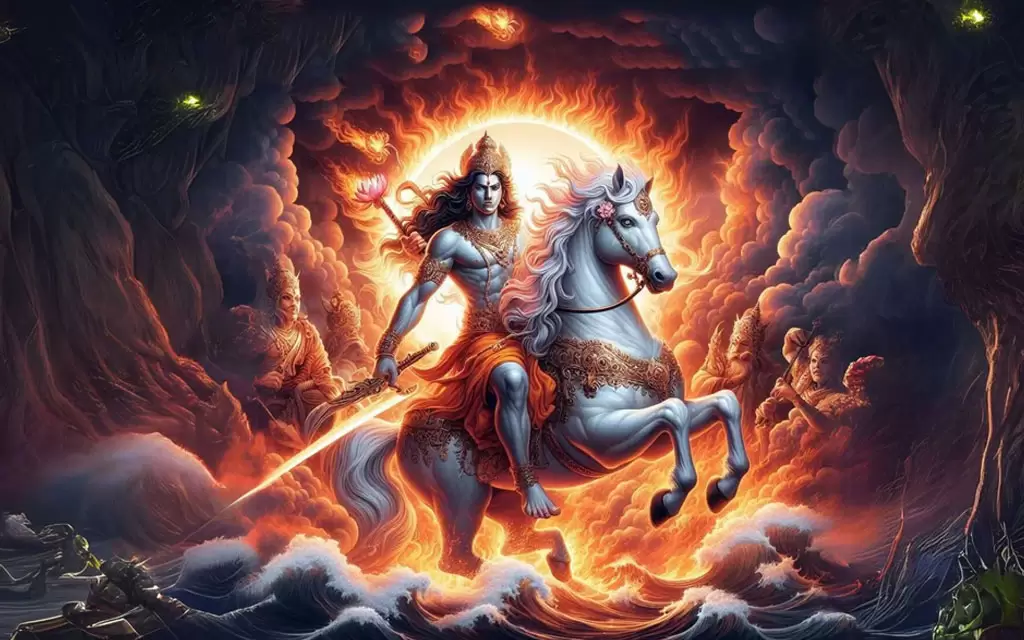
In the Kali Yuga, when adharma (unrighteousness) peaks, Vishnu will incarnate as Kalki, a warrior on a white horse, wielding a blazing sword. Born to a Brahmin family, Kalki will eradicate corruption, restore dharma, and usher in a new Satya Yuga.
Symbolism and Lessons
- Hope for Renewal: Kalki represents divine intervention in dark times.
- Justice and Purification: His mission underscores the inevitability of cosmic balance.
- Faith in the Future: Kalki inspires optimism amid chaos.
Devotional Insight: Pray to Kalki for strength in turbulent times, chanting “Om Kalkaye Namah.”
The Timeless Wisdom of the Dashavatara
The Dashavatara encapsulates Vishnu’s multifaceted role as the preserver, adapting to each era’s challenges. From Matsya’s rescue to Kalki’s prophesied return, these avatars teach resilience, justice, humility, and devotion. They remind devotees that dharma prevails, no matter the odds, and that divine grace is ever-present.
Key Takeaways for Devotees
- Adaptability: Each avatar tailors solutions to specific crises, inspiring flexibility.
- Moral Courage: From Prahlada to Rama, faith triumphs over adversity.
- Cosmic Balance: Vishnu’s interventions ensure harmony, encouraging ethical living.
Conclusion
The Dashavatara is more than mythology—it’s a spiritual guide for navigating life’s complexities. Whether facing personal floods (Matsya), tyranny (Narasimha), or moral dilemmas (Krishna), Vishnu’s avatars offer timeless wisdom. At Hindutone, we invite you to explore these divine stories, chant Vishnu’s names, and embrace dharma in your journey.
Frequently Asked Questions
What is Vishnu’s Avatars?
Hindu mythology is a treasure trove of divine narratives, and at its heart lies the concept of Lord Vishnu ’s Dashavatara—his ten primary incarnations. As the preserver of the universe, Vishnu descends to Earth in various forms to restore dharma (cosmic order) whenever chaos threatens to prevail.
What are the key points about Vishnu’s Avatars?
Each avatar, from Matsya the fish to Kalki the prophesied warrior, addresses a unique crisis, embodying timeless lessons in resilience, justice, and compassion. This in-depth exploration, crafted for Hindutone , delves into the stories, symbolism, and philosophical significance of all ten avatars, offering devotees and enthusiasts a compr
Why does Vishnu’s Avatars matter in Hinduism?
It deepens a devotee's connection with Lord Vishnu and with the values of Sanatana Dharma — clarity, devotion and dharmic living.
How can devotees apply Vishnu’s Avatars in daily life?
By reflecting on its teaching, incorporating the related practices or observances into daily routine, and approaching it with sincere devotion and understanding.
You might also like
Dasavataram: The Ten Divine Incarnations of Lord Vishnu - A Comprehensive Exploration
Kalki Avatar: The Future Savior and the End of the Dark Age
Buddha Avatar: Vishnu’s Embrace of Compassion and Non-Violence