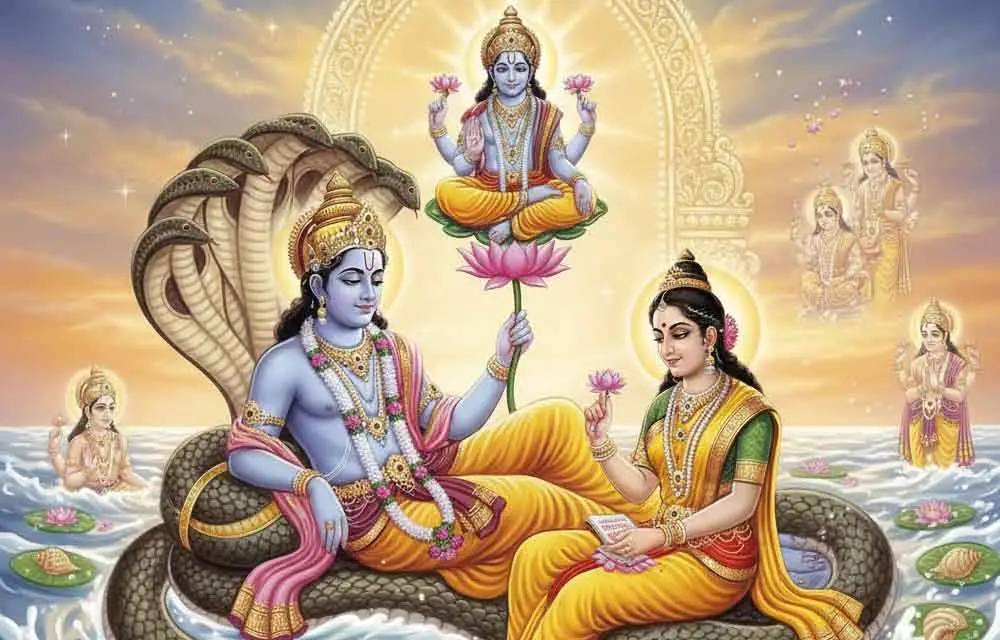
Dasavataram: The Ten Divine Incarnations of Lord Vishnu - A Comprehensive Exploration
Introduction The concept of Dasavataram, or the ten principal avatars of Lord Vishnu, stands as one of the most profound and captivating doctrines in Hindu…
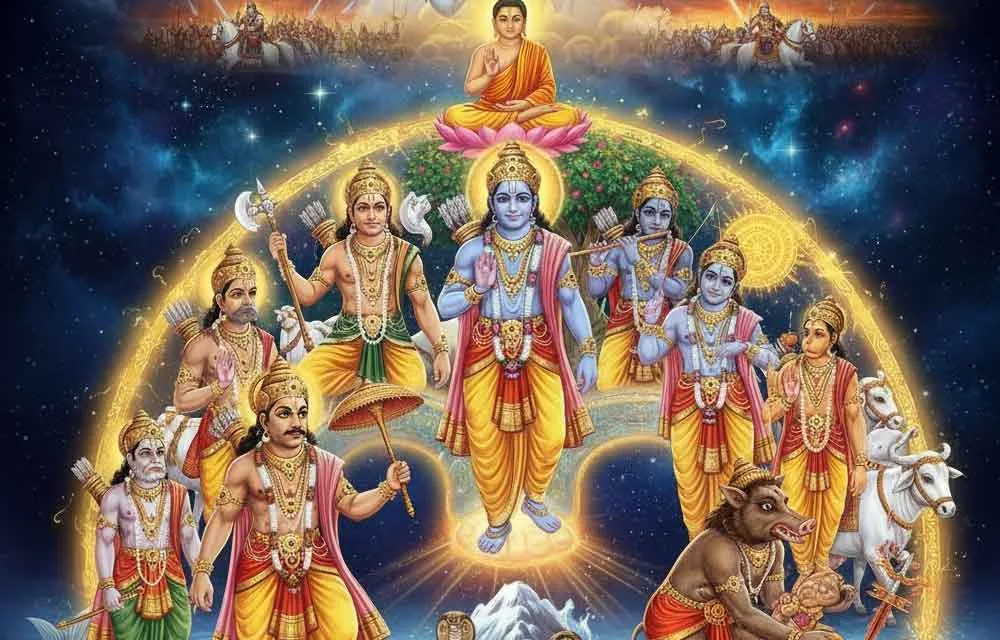
Introduction The concept of Dasavataram, or the ten principal avatars of Lord Vishnu, stands as one of the most profound and captivating doctrines in Hindu…
Introduction
The concept of Dasavataram, or the ten principal avatars of Lord Vishnu, stands as one of the most profound and captivating doctrines in Hindu philosophy and mythology. The Sanskrit term "Dasavataram" is derived from "dasa" (ten) and "avatar" (incarnation or descent), representing the divine manifestation of the Supreme Being who descends to Earth in various forms to restore cosmic balance, protect dharma (righteousness), and vanquish evil forces that threaten the universe's harmony.
These divine incarnations are not merely mythological tales but embody deep philosophical truths, evolutionary concepts, and moral teachings that have guided Hindu civilization for millennia. Each avatar represents a specific era, addresses particular cosmic challenges, and carries profound symbolic significance that resonates with seekers and devotees across generations.
The Philosophical Foundation of Avatar Doctrine
The Concept of Avatar
The avatar doctrine is fundamentally rooted in the Bhagavad Gita, where Lord Krishna declares:
"Yada yada hi dharmasya glanir bhavati bharata Abhyutthanam adharmasya tadatmanam srjamy aham Paritranaya sadhunam vinasaya ca duskrtam Dharma-samsthapanarthaya sambhavami yuge yuge"
This translates to: "Whenever there is a decline of righteousness and rise of unrighteousness, O Bharata, then I manifest Myself. For the protection of the good, for the destruction of the wicked, and for the establishment of dharma, I appear in every age."
This fundamental principle establishes that the Supreme Lord, though beyond birth and death, voluntarily assumes various forms to intervene in worldly affairs when cosmic balance is disturbed. The avatar is not bound by karma like ordinary beings but descends through divine will (sankalpa) to fulfill specific purposes.
Theological Significance
In Vaishnavite theology, the avatar doctrine illustrates several profound truths:
Divine Accessibility: The transcendent Brahman becomes accessible to human understanding through tangible forms. This makes the infinite comprehensible to finite minds and hearts.
Divine Compassion: The willingness of the Supreme to descend from His eternal abode demonstrates infinite compassion (karuna) for creation and all living beings.
Cosmic Maintenance: The avatars represent the active principle of cosmic preservation (sthiti), one of the trinity of creation, preservation, and dissolution.
Progressive Revelation: Each avatar reveals different aspects of divine nature, from the raw power of survival to the refined wisdom of enlightenment.
The Ten Principal Avatars: Detailed Exploration
1. Matsya Avatar (The Fish Incarnation)
The Story
The Matsya avatar is the first incarnation of Lord Vishnu and represents the dawn of creation and consciousness. According to the Matsya Purana and other sacred texts, during the end of the previous cosmic cycle (kalpa), a great deluge threatened to destroy all creation. A pious king named Manu (Satyavrata), the progenitor of humanity, was performing his morning ablutions in a river when a tiny fish approached him, pleading for protection from larger predators.
Moved by compassion, Manu placed the fish in a small vessel. However, the fish grew rapidly, necessitating transfer to increasingly larger containers - from a pot to a tank, then to a lake, and finally to the ocean. The fish then revealed itself as Lord Vishnu and warned Manu of an impending catastrophic flood that would destroy all life.
Following divine instructions, Manu built a massive boat and gathered the Saptarishis (seven great sages), seeds of all plants, specimens of all animals, and the Vedas. When the deluge arrived, the gigantic fish appeared with a horn on its head. Manu tied the boat to this horn using the serpent Vasuki as a rope. The Matsya avatar navigated the boat through the tumultuous waters, protecting all life forms and sacred knowledge.
During this journey, Lord Vishnu in his Matsya form also battled and defeated the demon Hayagriva, who had stolen the Vedas from Lord Brahma during his cosmic sleep, thereby recovering the sacred scriptures and preserving divine wisdom.
Symbolic Significance
The Matsya avatar carries multiple layers of meaning:
- Evolutionary Perspective: It represents the first stage of life emerging in water, corresponding to the aquatic phase of evolution on Earth.
- Preservation of Knowledge: The protection of Vedas symbolizes the importance of preserving sacred wisdom through catastrophic changes.
- Divine Guidance: The fish guiding the boat represents divine providence leading humanity through turbulent times.
- Consciousness Awakening: The progression from tiny fish to cosmic form symbolizes the expansion of consciousness.
Worship and Cultural Impact
Matsya Jayanti is celebrated on the third day of the bright fortnight of Chaitra month. The Matsya temple in Kerala and several other shrines dedicated to this avatar attract devotees seeking protection from calamities and preservation of wisdom. The imagery of Matsya appears frequently in ancient coins, seals, and temple architecture across India.
2. Kurma Avatar (The Tortoise Incarnation)
The Story
The Kurma avatar manifested during the famous Samudra Manthan (churning of the cosmic ocean), one of the most celebrated events in Hindu mythology. After the deluge, the devas (celestial beings) and asuras (demons) sought to obtain amrita (the nectar of immortality) from the ocean of milk.
To accomplish this monumental task, they used Mount Mandara as the churning rod and the serpent Vasuki as the rope. However, as the churning began, Mount Mandara started sinking into the ocean floor due to its immense weight and the absence of a stable base. The churning would have failed, and cosmic balance would have been disrupted.
At this critical juncture, Lord Vishnu assumed the form of an enormous tortoise and positioned himself at the ocean's bottom. He bore the weight of Mount Mandara on his back, providing the stable foundation necessary for the churning to continue. The avatar remained steadfast for thousands of years while the ocean was churned, ultimately leading to the emergence of numerous celestial treasures, including the nectar of immortality, Goddess Lakshmi, the moon, the celestial elephant Airavata, the divine horse Ucchaihshravas, and various other precious objects.
The Kurma avatar's support was not merely physical; it represented the stable foundation required for any cosmic or spiritual endeavor to succeed.
Symbolic Significance
The Kurma avatar embodies several profound concepts:
- Evolutionary Stage: Represents amphibious life, the transition between aquatic and terrestrial existence.
- Foundation of Dharma: The stable base symbolizes the firm foundation required for dharma to flourish.
- Patient Endurance: The tortoise's ability to withdraw into its shell represents meditation and inner stability.
- Support System: Illustrates that divine support undergirds all cosmic activities and achievements.
- Balance Between Opposites: The cooperation between devas and asuras represents the need for balanced forces in creation.
Cultural Reverence
The Kurmanathaswamy Temple in Andhra Pradesh is the primary shrine dedicated to this avatar. The Kurma Purana, one of the eighteen major Puranas, elaborates on this incarnation's significance. Artists throughout history have depicted the cosmic scene of Samudra Manthan, making it one of the most visually represented avatars in Hindu art.
3. Varaha Avatar (The Boar Incarnation)
The Story
The Varaha avatar addresses one of the most dire threats to creation - the submergence of the Earth (Bhudevi) into the cosmic waters. The demon Hiranyaksha, having obtained immense powers through severe penance, grew arrogant and decided to demonstrate his might by hiding the Earth at the bottom of the cosmic ocean, plunging the world into darkness and chaos.
Lord Vishnu assumed the form of a magnificent boar (Varaha), powerful and determined. He plunged into the cosmic waters, diving to the unfathomable depths where Hiranyaksha had hidden the Earth. The battle between Varaha and Hiranyaksha lasted for a thousand years, with the demon employing all his powers and weapons to defeat the divine boar.
Finally, Varaha defeated Hiranyaksha and rescued the Earth, lifting her on his tusks and emerging from the cosmic waters. He placed the Earth back in her proper position in the cosmos, restoring stability and allowing life to flourish once again. Some texts describe Varaha as also creating new geographical features and continents, essentially reshaping the Earth after her rescue.
Symbolic Significance
The Varaha avatar is rich in symbolism:
- Evolutionary Progression: Represents the emergence of land mammals, the next stage after amphibious life.
- Rescue from Ignorance: The Earth submerged in dark waters symbolizes consciousness buried in ignorance; rescue represents enlightenment.
- Restoration of Balance: Demonstrates divine intervention to restore cosmic equilibrium when displaced.
- Strength and Determination: The boar's power represents the strength required to combat entrenched evil.
- Foundation of Civilization: The stable Earth represents the solid ground needed for civilization to develop.
Worship Traditions
Several ancient temples, including the famous Varaha Temple in Khajuraho and Simhachalam Temple, feature Varaha prominently. The magnificent sculptures of Varaha lifting Bhudevi are masterpieces of Indian art. The Varaha Purana details this incarnation's exploits and significance. Many devotees worship Varaha seeking stability, prosperity, and protection from environmental calamities.
4. Narasimha Avatar (The Man-Lion Incarnation)
The Story
The Narasimha avatar is perhaps the most dramatic and fierce incarnation, manifesting to protect the young devotee Prahlada and destroy the demon king Hiranyakashipu. Hiranyakashipu, the brother of Hiranyaksha, had obtained a powerful boon from Lord Brahma through severe austerities. His boon made him virtually invincible: he could not be killed by man or beast, during day or night, inside or outside, on earth or in sky, by any weapon, by any god or demon.
Emboldened by this boon, Hiranyakashipu declared himself God and demanded worship from all beings. However, his own son Prahlada remained an unwavering devotee of Lord Vishnu, constantly chanting His name and refusing to acknowledge his father as supreme. Enraged by this defiance, Hiranyakashipu subjected Prahlada to numerous tortures - throwing him off cliffs, into fires, under elephant feet, and into seas with poisonous serpents. Yet, protected by divine grace, Prahlada survived every attempt unharmed.
Finally, in supreme arrogance, Hiranyakashipu challenged Prahlada, asking if his Vishnu existed in a palace pillar. When Prahlada affirmed that Vishnu existed everywhere, the demon king struck the pillar with his mace. At that moment, Lord Vishnu emerged from the pillar in the fearsome form of Narasimha - half-man, half-lion.
Narasimha seized Hiranyakashipu at twilight (neither day nor night), carried him to the threshold (neither inside nor outside), placed him on his lap (neither earth nor sky), and tore him apart with his claws (neither weapon nor any conventional means). Thus, the demon's boon was circumvented through divine intelligence, and dharma was protected.
After destroying the demon, Narasimha's fury could not be calmed. Finally, young Prahlada approached fearlessly and sang hymns of devotion, upon which the Lord's anger subsided, revealing His compassionate nature.
Symbolic Significance
The Narasimha avatar conveys powerful messages:
- Divine Protection: Represents God's promise to protect devotees from all harm, regardless of circumstances.
- Triumph of Devotion: Prahlada's unwavering faith demonstrates that pure devotion transcends all worldly powers.
- Paradox Resolution: The form itself (man-lion) and the circumstances of killing represent how divine power transcends logical limitations.
- Anger Transformed: The fierce form calmed by devotion shows how even divine wrath can be pacified by love.
- Good Over Evil: Demonstrates that no matter how powerful evil becomes, divine justice ultimately prevails.
Worship and Celebrations
Narasimha Jayanti, celebrated on the fourteenth day of the bright fortnight of Vaishakha month, is observed with great fervor. Major temples like Simhachalam in Andhra Pradesh, Ahobilam (with nine shrines), and Yoga Narasimha Temple in Karnataka are important pilgrimage sites. The Narasimha Purana and numerous stotras (hymns) are dedicated to this avatar. Devotees worship Narasimha for courage, protection from enemies, and removal of obstacles.
5. Vamana Avatar (The Dwarf Incarnation)
The Story
The Vamana avatar represents divine strategy and the importance of humility. The demon king Mahabali, grandson of Prahlada, had become the righteous emperor of all three worlds through his valor, generosity, and adherence to dharma. However, his growing power threatened the celestial order, and the devas approached Lord Vishnu for help.
Lord Vishnu incarnated as Vamana, a dwarf Brahmin boy of extraordinary charm and learning. During one of Mahabali's grand yajnas (sacrificial ceremonies), Vamana approached the king and requested a gift. The generous Mahabali, known for never refusing any request from Brahmins, agreed to grant whatever Vamana desired.
The dwarf Brahmin made a seemingly modest request: just three paces of land measured by his feet. Despite warnings from his guru Shukracharya, who recognized the divine nature of Vamana, Mahabali insisted on keeping his word, considering it his dharma to fulfill his promise.
As soon as Mahabali agreed, Vamana began to grow into a cosmic form (Trivikrama). With his first step, he covered the entire Earth. With his second step, he covered all of heaven and the celestial realm. There was no space left for the third step. Realizing the divine nature of Vamana and to fulfill his promise, Mahabali offered his own head for the third step.
Pleased by Mahabali's humility and adherence to truth despite losing everything, Lord Vishnu granted him rulership of the netherworld (Patala) and the boon to visit his subjects once a year (celebrated as Onam festival in Kerala). Mahabali's devotion and sacrifice were honored, and cosmic order was restored.
Symbolic Significance
The Vamana avatar teaches several lessons:
- Importance of Humility: Despite being all-powerful, God appears in a humble form, teaching that greatness doesn't require outward show.
- Adherence to Truth: Mahabali's commitment to his word, even at personal cost, is celebrated as the highest dharma.
- Divine Strategy: Shows that wisdom and strategy can achieve what force cannot.
- Pride's Limitation: Even righteous power must be checked when it disrupts cosmic balance.
- Reward for Virtue: Mahabali's righteousness was ultimately rewarded, showing that true virtue never goes unrecognized.
Cultural Celebrations
The Vamana Jayanti falls on the twelfth day of the bright fortnight of Bhadrapada month. The Onam festival in Kerala is directly connected to this avatar, celebrating Mahabali's annual return to visit his subjects. The Ulagalantha Perumal temples showcase Vishnu's cosmic form. The story is extensively narrated in the Vamana Purana and Bhagavata Purana.
6. Parashurama Avatar (The Warrior Sage)
The Story
Parashurama, meaning "Rama with the axe," is unique among avatars as an immortal being who still walks the Earth according to tradition. He was born as the son of sage Jamadagni and Renuka, combining the qualities of a Brahmin sage and a Kshatriya warrior.
The primary narrative of Parashurama concerns his conflict with the corrupt Kshatriya class. The sage's father possessed a divine wish-fulfilling cow (Kamadhenu), which attracted the covetousness of King Kartavirya Arjuna. When Jamadagni refused to give up the cow, the king forcibly took it and, in later confrontation, killed the sage.
Enraged by his father's murder, Parashurama vowed to cleanse the Earth of unrighteous Kshatriyas. According to texts, he circled the Earth twenty-one times, eliminating corrupt warriors and establishing dharma. His actions were not motivated by vengeance alone but by the divine purpose of restoring balance when the warrior class had become oppressive and deviated from their dharmic duties.
Parashurama is also known for his role as a guru, training several legendary warriors including Bhishma, Drona, and Karna. His encounter with Lord Rama (the next avatar) is significant - during Sita's swayamvara, when Rama broke Shiva's bow, Parashurama appeared to challenge him, but recognizing the supreme divinity in Rama, he eventually surrendered and returned to meditation.
Symbolic Significance
Parashurama's incarnation carries important messages:
- Justice and Balance: Represents divine intervention when one social class oppresses others, maintaining societal equilibrium.
- Righteous Anger: Shows that anger directed toward establishing dharma is appropriate and divine.
- Brahmin-Kshatriya Unity: Combines spiritual knowledge with warrior prowess, representing the ideal integration of wisdom and strength.
- Immortality of Purpose: His ongoing presence symbolizes that the fight for justice is eternal and continuous.
- Guru Principle: Emphasizes the importance of proper education and transmission of knowledge across generations.
Worship and Legacy
Parashurama Jayanti is celebrated on the third day of the bright fortnight of Vaishakha month. Several temples and sites associated with him exist along the western coast of India, particularly in Kerala and Konkan region, which according to legend, he reclaimed from the sea. The Parashurama Kalpa Sutra and numerous references in epics preserve his teachings. He represents the philosophical principle that knowledge without action and action without knowledge are both incomplete.
7. Rama Avatar (The Ideal King)
The Story
Lord Rama, the hero of the epic Ramayana, is perhaps the most beloved avatar of Vishnu. Born as the eldest son of King Dasharatha of Ayodhya and Queen Kausalya, Rama embodies the ideal man, son, husband, brother, warrior, and king - the complete manifestation of dharma in human form.
The Ramayana, composed by sage Valmiki and retold by numerous poets including Sant Tulsidas in the Ramcharitmanas, narrates Rama's life story in exquisite detail. The epic encompasses his idyllic childhood, his marriage to Sita through the breaking of Shiva's bow, his willing acceptance of fourteen years of exile to honor his father's word, Sita's abduction by the demon king Ravana, the building of the bridge to Lanka, the great war that culminated in Ravana's defeat, and finally, his return to Ayodhya and reign as the ideal king.
Each episode of Rama's life offers profound lessons. His unhesitating acceptance of exile, despite being the rightful heir, demonstrates subordination of personal desire to family honor and given word. His treatment of all beings - from the tribal woman Shabari to the eagle Jatayu to the squirrel in his army - reveals his inclusive compassion. His grief at Sita's abduction and relentless pursuit to rescue her showcase devoted love. His alliance with Sugriva and the vanaras (monkey warriors) led by Hanuman demonstrates leadership and the ability to unite diverse forces for a righteous cause.
Rama's character is often summed up in the phrase "Raghukul riti sada chali aayi, pran jaye par vachan na jaai" - "It has always been the tradition of the Raghu clan that life may go but the given word cannot." This unwavering commitment to truth and dharma, even at tremendous personal cost, makes Rama the epitome of righteousness.
Symbolic Significance
The Rama avatar represents:
- Maryada Purushottam: The ideal man who perfectly follows all limits and boundaries of proper conduct.
- Dharma in Practice: Every action serves as a template for righteous living in various life situations.
- Duty Over Desire: Consistently choosing dharmic duty over personal happiness or convenience.
- Universal Brotherhood: Accepting help from all sections of society without discrimination.
- Ideal Governance: His reign (Ram Rajya) became synonymous with perfect, just, and prosperous governance.
- Devotion Principle: Through his relationship with Hanuman, establishes the glory of pure devotion (bhakti).
Cultural Impact and Worship
Rama Navami, celebrating his birth on the ninth day of the bright fortnight of Chaitra month, is one of the most widely celebrated Hindu festivals. The Ramayana has been adapted into countless languages, art forms, dance traditions, theater, and modern media. Major pilgrimage sites include Ayodhya (birthplace), Chitrakoot (exile period), Rameshwaram (bridge to Lanka), and numerous temples across India and Southeast Asia.
The chanting of "Jai Shri Ram" and recitation of Ramcharitmanas are integral to Hindu devotional practice. Ramlila performances during Dussehra bring the epic to life in communities across India. The influence of Rama extends beyond India to Thailand, Indonesia, Cambodia, and other Southeast Asian nations where Ramayana traditions remain strong.
8. Krishna Avatar (The Divine Statesman)
The Story
Lord Krishna is perhaps the most complete and complex avatar, displaying the full spectrum of divine personality - from playful child to enchanting youth, from strategic statesman to supreme teacher of philosophy. Born in Mathura to Devaki and Vasudeva while they were imprisoned by the tyrant king Kamsa, Krishna's birth itself was miraculous, and he was immediately transferred to Gokul to be raised by foster parents Yashoda and Nanda.
Krishna's childhood in Vrindavan is filled with enchanting leelas (divine play) - stealing butter, subduing serpents like Kaliya, lifting Govardhan mountain to protect villagers from Indra's wrath, and engaging in the divine dance of Raas Leela with the gopis (cowherd girls), particularly Radha. These episodes, while appearing as simple childhood mischief or romantic play, contain profound spiritual symbolism about the soul's relationship with the divine.
As a youth, Krishna returned to Mathura, defeated Kamsa, and restored dharma. He then established the city of Dwarka and became its king. His role in the Mahabharata epic is central - as friend, counselor, and charioteer to Arjuna. The Bhagavad Gita, spoken by Krishna to Arjuna on the battlefield of Kurukshetra, is considered one of the most important philosophical and spiritual texts in world literature.
In the Gita, Krishna reveals his universal form (Vishvarupa) and expounds on multiple paths to liberation - karma yoga (path of action), bhakti yoga (path of devotion), jnana yoga (path of knowledge), and raja yoga (path of meditation). He teaches that performing one's duty without attachment to results, surrendering to divine will, and seeing the divine in all beings constitutes the essence of dharma.
Krishna's life also includes his role as a diplomat attempting to prevent the Mahabharata war, his strategic counsel during the war, his establishment of righteous rule, and his eventual departure from Earth, marking the end of Dwapara Yuga and the beginning of Kali Yuga.
Symbolic Significance
Krishna avatar embodies multiple profound meanings:
- Complete Divinity: Unlike other avatars with specific purposes, Krishna displays the full range of divine qualities and roles.
- Leela Philosophy: His playful approach teaches that life is divine play and should be engaged with joy rather than grim seriousness.
- Practical Spirituality: Through the Gita, offers practical wisdom for living spiritually while engaged in worldly duties.
- Love and Devotion: The relationship between Krishna and devotees, especially the gopis, represents the soul's longing for union with the divine.
- Strategic Wisdom: His role in Mahabharata demonstrates that establishing dharma sometimes requires wise strategy and difficult decisions.
- Universal Vision: His teaching that all paths lead to him represents religious inclusivity and unity.
Worship and Cultural Significance
Krishna Janmashtami, celebrating his birth on the eighth day of the dark fortnight of Bhadrapada month, is celebrated with enormous enthusiasm across India and globally. Major pilgrimage sites include Mathura and Vrindavan (birthplace and childhood), Dwarka (kingdom), and Kurukshetra (Gita's setting).
The Bhagavata Purana, devoted primarily to Krishna, is one of Hinduism's most important texts. Countless poets, from Jayadeva (Gita Govinda) to Surdas to Meerabai, have composed devotional poetry to Krishna. The ISKCON movement has spread Krishna consciousness globally. Classical dance forms like Bharatanatyam, Kathak, and Manipuri have extensive repertoires of Krishna-themed compositions.
Krishna's influence extends to art, music, literature, philosophy, and daily life. His teachings in the Bhagavad Gita have inspired leaders, philosophers, and seekers worldwide, from Gandhi to Thoreau to countless others seeking wisdom for navigating life's complexities.
9. Buddha Avatar (The Enlightened One)
The Story and Theological Significance
The inclusion of Buddha as an avatar of Vishnu is unique and reflects Hinduism's remarkable capacity for assimilation and reinterpretation. According to Puranic literature, particularly the Bhagavata Purana, Buddha appeared to divert people following demonic tendencies from Vedic practices, thereby leading them toward compassion and non-violence, which would ultimately facilitate their spiritual evolution.
Historical Buddha, Siddhartha Gautama, was born as a prince in Lumbini (modern-day Nepal) around the 6th century BCE. Shielded from worldly suffering in his youth, he eventually encountered old age, disease, and death, which prompted his spiritual quest. Renouncing royal life, he practiced severe austerities before realizing the Middle Path and attaining enlightenment under the Bodhi tree in Bodh Gaya.
Buddha's teachings emphasized the Four Noble Truths (life contains suffering; suffering has a cause; suffering can end; there is a path to end suffering) and the Eightfold Path (right understanding, intention, speech, action, livelihood, effort, mindfulness, and concentration). He taught compassion for all beings, non-violence, mindfulness, and the impermanent nature of all phenomena.
From a Hindu perspective, some traditions view Buddha's role as temporarily leading people away from ritualistic practices that had become corrupt and mechanical, toward ethical living and compassion. Others see him as teaching preliminary stages of spiritual practice suitable for the degraded age of Kali Yuga, where more direct paths might prove too difficult.
Symbolic Significance
The Buddha avatar represents:
- Compassion and Non-violence: Emphasizes ahimsa (non-violence) as the highest dharma.
- Middle Path: Teaches balance between extremes of indulgence and asceticism.
- Inner Transformation: Focuses on mental purification and meditation over external rituals.
- Universal Accessibility: Offers teachings accessible to all, regardless of birth or social status.
- Questioning Spirit: Encourages personal investigation and experience over blind faith.
- Reform and Evolution: Represents dharma's ability to reform itself when practices become rigid or corrupt.
Integration and Worship
While Buddha established a distinct religion, his recognition as an avatar demonstrates Hinduism's inclusive philosophy. Some temples include Buddha among the Dasavatara images. The Mahabodhi Temple in Bodh Gaya, while primarily a Buddhist pilgrimage site, is also visited by Hindus who recognize Buddha's divine status.
The avatar concept has facilitated peaceful coexistence and mutual respect between Hindu and Buddhist traditions in many regions. It represents a philosophical bridge recognizing that different paths and teachings serve different purposes in the cosmic scheme of spiritual evolution.
10. Kalki Avatar (The Future Incarnation)
The Prophecy
Unlike the previous nine avatars, Kalki is yet to appear. According to the Puranas, particularly the Kalki Purana, Vishnu Purana, and Bhagavata Purana, Kalki will manifest at the end of Kali Yuga, the current age of darkness and degradation, to destroy evil, restore dharma, and initiate a new Satya Yuga (age of truth).
The texts describe Kalki as appearing in the village of Shambhala (sometimes identified with modern Sambhal in Uttar Pradesh) to a Brahmin named Vishnuyasha. He will be a fierce warrior riding a white horse named Devadatta and wielding a blazing sword. Kalki will destroy the wicked, eliminate corruption, and re-establish righteous civilization.
The prophecies describe the conditions preceding Kalki's appearance: complete breakdown of dharma, rampant materialism, widespread dishonesty, absence of true spiritual knowledge, oppression by rulers, environmental degradation, and general chaos in society. When these conditions reach their peak and the righteous have nearly vanished, Kalki will manifest.
After destroying the corrupt civilization, Kalki will gather the remaining righteous people, purify the Earth, and establish a new golden age. This cyclical view of time - with ages of increasing degradation followed by renewal - reflects the Hindu cosmological understanding of eternal cosmic cycles.
Symbolic Significance
The Kalki avatar represents:
- Eschatological Hope: Provides assurance that no matter how dark times become, divine intervention will ultimately restore righteousness.
- Cyclical Time: Embodies the Hindu concept of eternal cosmic cycles rather than linear history ending in apocalypse.
- Warrior Aspect: Unlike some compassionate avatars, represents the fierce form necessary to combat extreme evil.
- Purification: Symbolizes the cleansing necessary before renewal can occur.
- Completion: As the tenth avatar, represents completion of the avatar cycle before renewal.
- Future Orientation: Keeps devotees looking forward to ultimate justice and restoration of dharma.
Cultural Impact
Though yet to appear, Kalki holds significant place in Hindu consciousness. References appear in art, literature, and contemporary discussions about societal decline and hope for renewal. Some modern movements have claimed various figures as Kalki, though traditional scholarship maintains the avatar is yet to come.
The Kalki Purana provides detailed narratives of the future avatar's exploits. Temple art often depicts Kalki on horseback, and iconography includes him in Dasavatara panels. The concept influences Hindu apocalyptic thought and provides framework for understanding current times as preparatory for eventual divine intervention.
The Evolutionary Interpretation
Scientific Parallels
One of the most fascinating aspects of the Dasavatara sequence is its apparent parallel with evolutionary theory, which many scholars have noted:
Matsya (Fish): Represents life originating in water, corresponding to the aquatic phase of evolution.
Kurma (Tortoise): Represents amphibious life capable of existing both in water and on land, marking the transition from aquatic to terrestrial existence.
Varaha (Boar): Represents fully terrestrial mammalian life, the next evolutionary stage.
Narasimha (Half-man, Half-lion): Represents the transitional form between animals and humans, the emergence of human-like characteristics.
Vamana (Dwarf human): Represents early human forms, perhaps corresponding to prehistoric human species of shorter stature.
Parashurama (Warrior with axe): Represents early humans with tools and weapons, the Stone Age human.
Rama (Ideal human): Represents civilized humanity with fully developed ethics, culture, and societal organization.
Krishna (Complete human): Represents humanity at its intellectual and spiritual peak, with mastery over all domains.
Buddha (Enlightened human): Represents the next stage of mental and spiritual evolution through complete inner transformation.
Kalki (Future superhuman): Represents humanity's future evolutionary potential, transcending current limitations.
This interpretation, while not traditionally emphasized in classical texts, demonstrates the profound intuitive wisdom embedded in ancient narratives. Whether intentional or coincidental, this sequence remarkably mirrors our scientific understanding of life's progression on Earth.
Theological Variations and Different Lists
While the Dasavatara list presented above is most commonly accepted, particularly in North India and in Vaishnavite traditions following the Bhagavata Purana, variations exist across different regions, texts, and sampradayas (traditions):
Some lists include Balarama (Krishna's brother) instead of Buddha, particularly in traditions that developed before Buddhism or in regions with less Buddhist influence.
The Dhanvantari incarnation, who emerged during the churning of the ocean carrying the nectar of immortality and is considered the divine physician, is sometimes included in expanded lists.
Some traditions mention Mohini, the enchantress form Vishnu assumed during the distribution of amrita, as a significant avatar.
The Hayagriva avatar, with a horse's head, who recovered the Vedas from demons, appears in some regional traditions.
Certain South Indian traditions and the Pancharatra texts provide different enumerations, sometimes including 24 or even 39 avatars. These expanded lists include various sages, kings, and teachers considered as divine manifestations.
These variations demonstrate the living, evolving nature of Hindu tradition, adapting to regional cultures and historical developments while maintaining core theological principles.
Philosophical and Spiritual Teachings
The Progressive Revelation
The sequence of avatars represents a progressive revelation of divine nature and an increasingly sophisticated relationship between the divine and humanity:
The early avatars (Matsya, Kurma, Varaha) represent divine intervention in elemental cosmic affairs - survival, foundational stability, and physical rescue. The interaction is primarily physical and demonstrates raw divine power.
The middle avatars (Narasimha, Vamana, Parashurama) show increasing complexity in divine-human interaction. These avatars engage with devotion, ethical dilemmas, and social justice, introducing psychological and moral dimensions.
The later avatars (Rama, Krishna, Buddha) represent full divine participation in human life, complete with emotional complexity, philosophical teaching, and ethical refinement. These avatars live complete human lives, experiencing relationships, governance, warfare, and teaching complex spiritual truths.
The final avatar (Kalki) represents transcendence of current human limitations and the cyclical renewal of cosmic order, pointing toward humanity's ultimate evolutionary and spiritual destiny.
The Concept of Dharma
Central to understanding all avatars is the concept of dharma, which they come to establish and protect. Dharma is a multifaceted concept encompassing:
Cosmic Law: The fundamental order that maintains the universe's functioning, similar to natural laws but extending into moral and spiritual dimensions.
Righteousness: Right conduct according to one's nature, station in life, and circumstances.
Duty: Obligations arising from one's relationships, roles, and position in society.
Truth: Alignment with ultimate reality and honest conduct in all dealings.
Justice: Fair treatment of all beings according to their nature and needs.
Virtue: Cultivation of noble qualities like compassion, courage, honesty, and self-control.
Each avatar demonstrates different aspects of dharma relevant to their specific context. Rama exemplifies dharma as duty and righteous conduct within social relationships. Krishna presents dharma as skillful action without attachment. Buddha emphasizes dharma as mental purification and compassionate conduct. Together, they provide a comprehensive understanding of righteous living across all dimensions of existence.
The Devotional Dimension
The avatars serve as focal points for bhakti (devotion), making the infinite accessible to finite human hearts. The principle is beautifully expressed in the Bhagavad Gita where Krishna declares that however devotees approach Him, He reciprocates accordingly.
Madhurya Bhava: Sweet devotion, exemplified in the love between Krishna and the gopis, represents the soul's intimate longing for union with the divine.
Vatsalya Bhava: Parental affection, as Yashoda felt for Krishna, represents viewing the divine as one's beloved child to be nurtured and protected.
Sakhya Bhava: Friendship, as between Krishna and Arjuna, represents approaching the divine as an equal companion and confidant.
Dasya Bhava: Servant attitude, as Hanuman displayed toward Rama, represents offering oneself completely in divine service.
Shanta Bhava: Peaceful reverence, as sages approach truth, represents tranquil contemplation of divine majesty.
The avatar concept enables devotees to relate to God through natural human emotions and relationships, transforming ordinary love into spiritual practice. This accessibility is perhaps the doctrine's greatest practical gift to spiritual seekers.
The Problem of Evil and Divine Intervention
The avatars address a fundamental theological question: Why does a benevolent God permit evil to exist? The avatar doctrine provides several answers:
Free Will: Beings must have freedom to choose between dharma and adharma for moral development to be meaningful. Evil arises from misuse of this freedom.
Karmic Law: Suffering often results from past actions (karma), providing opportunities for spiritual growth and karmic resolution.
Cyclical Time: Ages naturally decline from perfection to degradation before renewal. Evil increases in later ages but will be eliminated in cyclical renewal.
Divine Intervention: While allowing freedom, God doesn't abandon creation but intervenes through avatars when evil becomes overwhelming, ensuring ultimate justice.
Teaching Function: The conflicts between avatars and demons provide moral lessons about the consequences of different actions and attitudes.
This framework maintains both divine compassion and cosmic justice while explaining historical suffering and evil without denying individual responsibility.
Cultural and Artistic Expressions
Temple Architecture and Iconography
The Dasavatara has profoundly influenced Hindu temple architecture and iconography. Most major Vishnu temples feature Dasavatara panels depicting all ten incarnations, usually in sequential order. These appear as:
Sculptural Panels: Elaborate relief sculptures adorning temple walls, pillars, and entrances, narrating the stories of each avatar. The famous Dasavatara Temple in Deogarh (5th century CE) is one of the earliest examples of such architectural celebration.
Sanctum Imagery: The main deity is often surrounded by smaller representations of the ten avatars, signifying the single divine source manifesting in multiple forms.
Painted Ceilings: Many temples feature painted ceiling murals depicting the avatars in vibrant colors, particularly in South Indian and Rajasthani temples.
Processional Images: During festivals, portable images (utsava murtis) of different avatars are carried in procession, allowing devotees to worship specific forms.
The iconographic conventions for each avatar are precisely defined in texts like the Shilpa Shastras (treatises on art and architecture):
- Matsya: Large fish with prominent scales, often carrying the Vedas or with Manu's boat tied to the horn
- Kurma: Tortoise with mandara mountain on its back, surrounded by devas and asuras
- Varaha: Boar with Bhudevi (Earth goddess) seated on the tusk or held in arms
- Narasimha: Fierce form with lion's head and mane, often showing the act of destroying Hiranyakashipu
- Vamana: Small Brahmin boy with umbrella, water pot, and sacred thread
- Parashurama: Sage-warrior holding an axe (parashu) and bow
- Rama: Noble prince with bow and arrow, often with Sita, Lakshmana, and Hanuman
- Krishna: Dancing with flute, or as charioteer with Arjuna, or showing the universal form
- Buddha: Meditating in lotus posture or teaching mudra
- Kalki: Warrior on white horse wielding a sword
Literary Traditions
The avatars have inspired an enormous body of literature across languages and centuries:
Sanskrit Classics: The Ramayana and Mahabharata serve as primary sources for Rama and Krishna. The eighteen Puranas elaborate on all avatars, with specific Puranas dedicated to individual incarnations (Matsya Purana, Kurma Purana, Varaha Purana, etc.).
Regional Literature: Every Indian language has produced magnificent avatar literature. Tulsidas's Ramcharitmanas in Hindi, Kamban's Ramavataram in Tamil, Krittibas's Ramayana in Bengali, and countless others have made the stories accessible and beloved in regional cultures.
Devotional Poetry: The Bhakti movement produced thousands of poets who composed verses to various avatars. Surdas, Meerabai, Tukaram, Tyagaraja, Purandaradasa, and many others created immortal devotional poetry that remains sung in temples and homes.
Modern Literature: Contemporary writers continue engaging with avatar themes. R.K. Narayan's "Gods, Demons, and Others," Devdutt Pattanaik's retellings, Amish Tripathi's Shiva Trilogy and Ram Chandra series, and many others reinterpret these stories for modern audiences.
Philosophical Commentaries: Great acharyas (teachers) like Shankaracharya, Ramanujacharya, Madhvacharya, and others wrote extensive commentaries on the Bhagavad Gita and avatar-related texts, establishing different philosophical schools' interpretations.
Performing Arts
The avatars have been the primary subject matter for Indian classical arts:
Classical Dance: Bharatanatyam, Kathak, Odissi, Kuchipudi, Manipuri, and other dance forms have extensive repertoires depicting avatar stories. The Raslila of Krishna, the tribhanga (three-bend) pose associated with Krishna, and numerous dance dramas of Rama's story form core content.
Classical Music: Carnatic and Hindustani classical music traditions include thousands of compositions on avatars. The pancharatna kritis (five gem compositions) of Tyagaraja on Rama, Jayadeva's Ashtapadi from Gita Govinda on Krishna, and countless other compositions form the bedrock of classical music.
Theatre Traditions: Traditional theatre forms like Kathakali (Kerala), Yakshagana (Karnataka), Nautanki (North India), and others primarily perform avatar stories. The Ramlila tradition, where Rama's story is enacted during Dussehra, involves entire communities and continues for generations.
Puppet Theatre: Shadow puppetry in Kerala and Andhra Pradesh, string puppets in Rajasthan, and rod puppets in West Bengal extensively depict avatar stories, making them accessible to rural audiences.
Visual Arts
Miniature Paintings: The Pahari, Rajput, and Mughal miniature painting traditions created exquisite illustrations of avatar stories, particularly of Krishna's leelas and Rama's exploits. The Mewar Ramayana and Bhagavata Purana manuscripts contain stunning visual narratives.
Folk Arts: Regional folk art forms like Madhubani (Bihar), Pattachitra (Odisha), Warli (Maharashtra), and Phad (Rajasthan) depict avatar stories in distinctive styles, maintaining living artistic traditions.
Modern Art: Contemporary Indian artists like Raja Ravi Varma, Jamini Roy, M.F. Husain, and others have created powerful interpretations of avatars, bridging traditional themes with modern artistic sensibilities.
Regional Variations and Cultural Adaptations
South Indian Traditions
South Indian Vaishnavism, particularly the Sri Vaishnava tradition founded by Ramanujacharya, has its own rich interpretations of the Dasavatara:
Alvar Saints: The twelve Alvar saints composed the Nalayira Divya Prabandham, 4,000 verses in Tamil glorifying Vishnu's avatars, particularly focusing on Krishna and Rama. These compositions are considered equivalent to Vedas in Tamil Vaishnavite tradition.
Temple Traditions: The 108 Divya Desams (divine abodes) mentioned by Alvars are major pilgrimage sites, many associated with specific avatar manifestations. The Srirangam temple complex contains elaborate sculptural narratives of all avatars.
Philosophical Schools: The Vishishtadvaita (qualified non-dualism) of Ramanuja provides a specific philosophical framework for understanding avatars as real manifestations of the supreme Brahman with qualities (saguna), not mere appearances.
Festivals: South India celebrates avatar-related festivals with particular grandeur. Vaikunta Ekadashi, Panguni Uthiram, and other festivals specifically honor Vishnu's avatars with elaborate rituals and processions.
North Indian Traditions
North Indian traditions, influenced by the Bhakti movement and texts like Tulsidas's Ramcharitmanas, emphasize personal devotion:
Rama Bhakti: The worship of Rama as the supreme deity is particularly strong in North India. The concept of "Ram Rajya" (Rama's kingdom) as the ideal society influences political and social discourse.
Krishna Leela: Braj region (Mathura-Vrindavan) maintains living traditions of Krishna worship. The Raslila performances, temple rituals, and daily worship revolve around Krishna's childhood and youth.
Sant Tradition: Saints like Kabir, Tukaram, and others wrote vernacular poetry making avatar devotion accessible beyond Sanskrit-knowing elites, democratizing spiritual practice.
Southeast Asian Influence
The Dasavatara concept traveled with Indian culture to Southeast Asia, profoundly influencing the region:
Ramayana Traditions: Thailand's Ramakien, Indonesia's Ramayana ballet, Cambodia's Reamker, and Myanmar's Yama Zatdaw are major cultural treasures based on Rama avatar.
Temple Architecture: Angkor Wat in Cambodia, Prambanan in Indonesia, and numerous other temples feature elaborate Dasavatara sculptures and murals.
Royal Ideology: Southeast Asian kings historically identified themselves with Rama, using avatar imagery to legitimize rule and establish dharmic governance ideals.
Living Traditions: These traditions remain vibrant, with regular performances, festivals, and artistic productions maintaining the connection to avatar narratives.
Contemporary Relevance and Modern Interpretations
Psychological Interpretations
Modern psychology and Jungian analysis have found deep meaning in avatar symbolism:
Archetypal Patterns: The avatars represent universal archetypes of human consciousness - the savior (Rama), the lover (Krishna), the warrior (Parashurama), the trickster (Vamana), etc.
Developmental Stages: The sequence can represent stages of human psychological development from instinctual survival (Matsya) through socialization (Rama) to self-actualization (Buddha).
Shadow Integration: Fierce avatars like Narasimha represent the need to integrate and channel anger and aggression constructively rather than suppressing them.
Transcendence: The progression toward Buddha and Kalki represents humanity's evolutionary trajectory toward higher consciousness and transcendence of ego limitations.
Environmental Lessons
The avatars contain ecological wisdom relevant to contemporary environmental crises:
Matsya: Reminds us of life's aquatic origins and the importance of protecting water bodies and marine ecosystems.
Kurma: Emphasizes the need for stable foundations and sustainable development that doesn't sacrifice long-term stability for short-term gains.
Varaha: Represents rescue of the Earth itself, highlighting humanity's responsibility as Earth's protectors rather than exploiters.
Krishna Lifting Govardhan: The story of Krishna protecting villagers from Indra's wrath by lifting a mountain represents standing against natural disasters, but also teaches respect for nature (Govardhan mountain) over appeasing temperamental divine forces.
Social Justice Perspectives
Several avatars directly address social justice themes:
Parashurama: While extreme in methodology, represents divine intervention against oppressive ruling classes and the restoration of social balance.
Vamana-Mahabali: Teaches that even righteous power must be checked, and that true greatness lies in humility and sharing, not accumulation.
Rama's Inclusive Kingdom: Rama's acceptance of help from forest dwellers, his friendship with Sugriva and Guha, represent ideal governance that doesn't discriminate based on birth or social status.
Buddha's Teachings: Explicitly rejected caste discrimination and opened spiritual practice to all, regardless of birth, gender, or social position.
Interfaith Dialogue
The avatar concept facilitates interfaith understanding:
Inclusivity: The recognition of Buddha as an avatar demonstrates Hinduism's capacity to honor other spiritual traditions while maintaining its own framework.
Comparative Theology: Scholars compare the avatar concept with Christian incarnation, Islamic prophets, and other traditions' divine manifestation concepts, finding both similarities and instructive differences.
Universal Principles: The avatar stories convey universal values - truth, compassion, justice, courage - that resonate across religious boundaries.
Modern Media and Popular Culture
Avatars continue evolving in contemporary expression:
Television and Film: Epic serials like Ramanand Sagar's "Ramayan" and B.R. Chopra's "Mahabharat" reached hundreds of millions, becoming cultural phenomena. Modern films continue exploring avatar themes with updated production values.
Animation: Animated series and films make avatar stories accessible to children, ensuring generational transmission of cultural narratives.
Comic Books: Amar Chitra Katha comics have introduced millions of children to avatar stories through visual narratives.
Digital Media: YouTube channels, podcasts, and apps provide avatar stories and teachings in formats suited to contemporary consumption patterns.
Video Games: Games based on Ramayana and Mahabharata allow interactive engagement with avatar narratives, appealing to younger generations.
Theological Debates and Philosophical Questions
Nature of Avatar
Scholars and theologians have debated the precise nature of avatars:
Real vs. Apparent: Do avatars truly take human form with all limitations, or merely appear to do so while remaining transcendent? Different philosophical schools provide different answers.
Full vs. Partial: Are all avatars complete manifestations (purna avatar) or partial manifestations (amsha avatar) of the divine? Krishna is generally considered purna avatar while others may be partial.
Purpose vs. Play: Do avatars descend solely to accomplish specific purposes, or is the entire manifestation divine play (leela) without ultimate necessity?
Human Experience: Do avatars genuinely experience human emotions and limitations, or is their experience qualitatively different from ordinary humans?
Free Will vs. Predestination
The avatar doctrine raises questions about destiny:
If avatars predestinedly appear to destroy specific demons, do those demons have genuine free will, or are they merely playing predestined roles in cosmic drama? How does divine foreknowledge interact with human freedom?
The Problem of Violence
Some avatars engage in significant violence - Parashurama's elimination of Kshatriyas, Rama's killing of Ravana, Krishna's role in the Mahabharata war. This raises ethical questions:
How do we reconcile divine violence with principles of non-violence (ahimsa) emphasized in Hindu philosophy? Is violence justified when undertaken to establish dharma? What distinguishes righteous violence from ordinary aggression?
Traditional answers emphasize context, intention, and the unique responsibility of those maintaining cosmic order, but these questions continue generating philosophical discussion.
Exclusivity vs. Inclusivity
Are avatars exclusively Hindu, or do other traditions' great figures represent divine manifestations? Progressive interpretations suggest great spiritual teachers across traditions might be considered divine manifestations, while traditional views maintain the avatar concept as specifically related to Vishnu.
Practical Spiritual Applications
Choosing an Ishta Devata
In Hindu practice, individuals often choose a particular form of God (Ishta Devata) as their primary devotional focus. The avatars provide multiple entry points:
Temperament Matching: Those inclined toward righteousness and duty might resonate with Rama. Those seeking divine love and intimacy might prefer Krishna. Those on intellectual paths might connect with Buddha.
Life Situation: Different avatars offer guidance for different life circumstances - Rama for family life, Parashurama for confronting injustice, Buddha for inner transformation.
Progressive Practice: Some practitioners engage with different avatars as their spiritual practice evolves, each revealing new dimensions of divinity.
Festival Observances
Avatar-related festivals provide structure for spiritual life:
Regular Remembrance: Monthly Ekadashi fasts and devotions to Vishnu keep avatar consciousness alive in daily life.
Annual Celebrations: Major festivals like Rama Navami, Janmashtami, and others create intensive periods of devotion, story-telling, and community bonding.
Life Cycle Integration: Avatar stories are told during pregnancy, childbirth, naming ceremonies, and throughout life, integrating them into personal biography.
Ethical Guidance
The avatars provide practical ethical guidance:
WWRD (What Would Rama Do): Devotees contemplating difficult decisions ask what their chosen avatar would do in similar circumstances, using avatar behavior as ethical compass.
Scriptural Study: Regular study of texts like Bhagavad Gita, Ramayana, and Bhagavata Purana provides continuous ethical education and refinement.
Community Discussion: Satsangs (spiritual gatherings) discussing avatar stories and their contemporary applications create collective wisdom and support.
Meditation and Visualization
Avatars serve as meditation objects:
Form Meditation: Visualizing the specific form of an avatar with detailed attention to iconographic features.
Story Contemplation: Deeply reflecting on specific avatar narratives, extracting personal meaning and guidance.
Mantra Practice: Chanting names and mantras associated with specific avatars (Ram Nam, Hare Krishna, etc.).
Quality Cultivation: Meditating on specific qualities exemplified by avatars to cultivate those qualities in oneself.
The Dasavatara in Times of Crisis
Throughout history, communities have turned to avatar narratives during difficult times:
During Oppression
Colonized peoples found strength in Rama's fourteen-year exile and eventual triumph, seeing parallels to their own struggles and hoping for eventual justice. Freedom fighters drew inspiration from Krishna's strategic wisdom and Parashurama's confrontation with corrupt rulers.
During Natural Disasters
Matsya's rescue from the deluge and Varaha's rescue of Earth provided comfort and hope during floods, earthquakes, and other calamities, reminding people that divine protection exists even in catastrophic circumstances.
During Moral Confusion
When societies face ethical ambiguity and moral relativism, the clear dharmic principles exemplified by Rama and taught by Krishna in the Gita provide moral clarity and guidance.
During Personal Crisis
Individuals facing betrayal, exile, loss, or injustice find solace in avatar stories that acknowledge life's hardships while demonstrating that dharma ultimately prevails and divine grace supports the righteous.
Conclusion: The Living Tradition
The Dasavatara is not merely a collection of ancient myths but a living, breathing tradition that continues shaping Hindu consciousness, culture, and practice. These ten divine incarnations provide:
Comprehensive Divine Revelation: Together, they reveal the full spectrum of divine nature - fierce and gentle, playful and serious, transcendent and immanent.
Practical Guidance: They offer models for navigating every human situation with wisdom, courage, and grace.
Evolutionary Vision: They present humanity's journey from primitive survival to enlightened consciousness, both collectively and individually.
Cultural Foundation: They form the bedrock of Hindu civilization's art, literature, music, philosophy, and ethics.
Devotional Focus: They make the infinite personal and accessible, enabling loving relationships with the divine.
Hope and Assurance: They promise that no matter how dark times become, divine intervention will restore righteousness and cosmic balance.
As we navigate the complexities of the modern world - environmental crises, social injustice, technological disruption, and spiritual hunger - the wisdom embedded in the Dasavatara remains profoundly relevant. The avatars remind us that:
- Survival requires adaptation (Matsya)
- Great achievements need stable foundations (Kurma)
- The Earth must be rescued and protected (Varaha)
- Evil cannot stand before righteous fury (Narasimha)
- Humility conquers pride (Vamana)
- Justice must be actively pursued (Parashurama)
- Duty transcends personal desire (Rama)
- Divine love infuses all existence (Krishna)
- Inner transformation is essential (Buddha)
- Ultimate renewal awaits (Kalki)
- Rama Navami (9th day, bright fortnight): Celebrates Rama's birth with fasting, temple visits, and Ramayana recitation
- Parashurama Jayanti (3rd day, bright fortnight): Honors the warrior-sage
- Narasimha Jayanti (14th day, bright fortnight): Celebrates the man-lion avatar with special prayers for protection
- Buddha Purnima (full moon): Commemorates Buddha's birth, enlightenment, and passing
- Krishna Janmashtami (8th day, dark fortnight): Celebrates Krishna's birth with fasting, midnight celebrations, and devotional singing
- Vamana Jayanti (12th day, bright fortnight): Honors the dwarf avatar
- Dussehra/Vijayadashami: Celebrates Rama's victory over Ravana with Ramlila performances and effig burning
- Gita Jayanti (11th day, bright fortnight): Commemorates Krishna's teaching of the Bhagavad Gita
- Ekadashi (11th day of each lunar fortnight): Dedicated to Vishnu, involves fasting and special devotions
Frequently Asked Questions
What is Dasavataram?
Introduction The concept of Dasavataram, or the ten principal avatars of Lord Vishnu , stands as one of the most profound and captivating doctrines in Hindu philosophy and mythology. The Sanskrit term "Dasavataram" is derived from "dasa" (ten) and "avatar" (incarnation or descent), representing the divine manifestation of the Supreme Being who descends to Ea
What are the key points about Dasavataram?
These divine incarnations are not merely mythological tales but embody deep philosophical truths, evolutionary concepts, and moral teachings that have guided Hindu civilization for millennia. Each avatar represents a specific era, addresses particular cosmic challenges, and carries profound symbolic significance that resonates with seeker
Why does Dasavataram matter in Hinduism?
It deepens a devotee's connection with Lord Vishnu and with the values of Sanatana Dharma — clarity, devotion and dharmic living.
How can devotees apply Dasavataram in daily life?
By reflecting on its teaching, incorporating the related practices or observances into daily routine, and approaching it with sincere devotion and understanding.
You might also like
Angkor Wat: Divine Mysteries & Soul-Stirring Miracles of Lord Vishnu's Cosmic Temple
Badrinath: Divine Mysteries & Soul-Stirring Miracles of Lord Vishnu's Himalayan Abode
Sree Padmanabhaswamy: Divine Mysteries & Soul-Stirring Miracles of Lord Ananta Padmanabha