28 August 2026: Raksha Bandhan, Varalakshmi Vratam and Jandhyala Purnima on One Day
A practical sequencing and logistics guide for households observing Raksha Bandhan, the later-date Varalakshmi Vratam and Jandhyala Purnima (Veda Upakarma) all on Friday 28 August 2026 — what to do first, how to run one kitchen, and what can be simplified with respect.
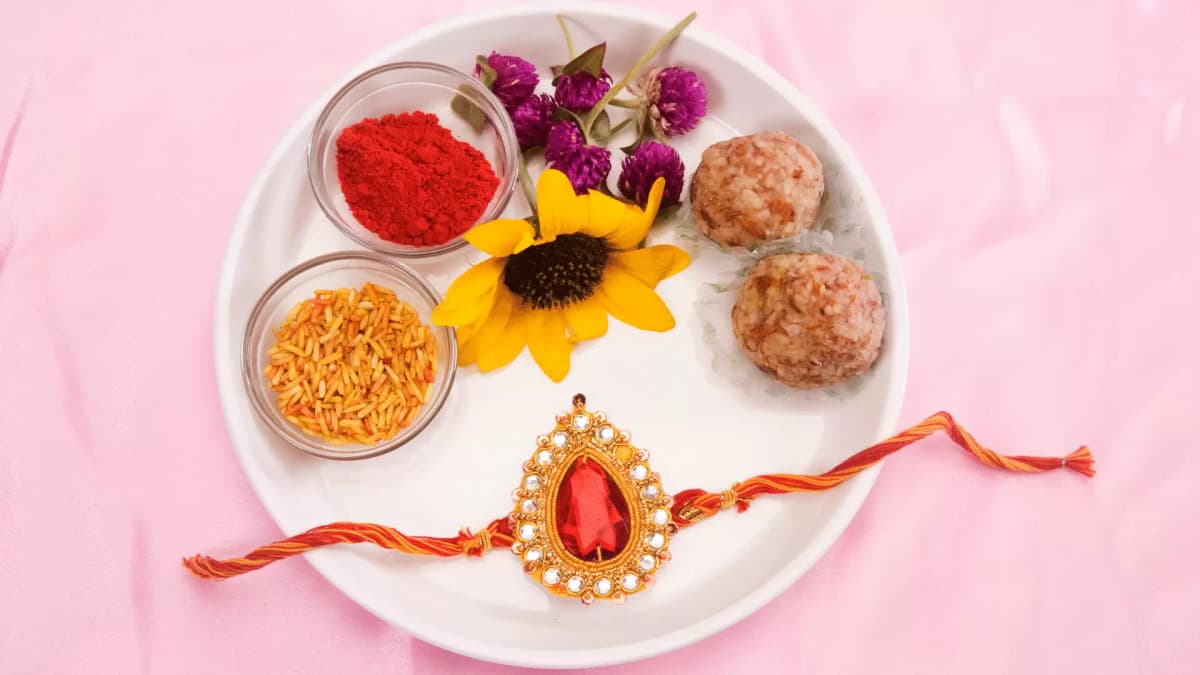
A practical sequencing and logistics guide for households observing Raksha Bandhan, the later-date Varalakshmi Vratam and Jandhyala Purnima (Veda Upakarma) all on Friday 28 August 2026 — what to do first, how to run one kitchen, and what can be simplified with respect.
Quick answer: On Friday 28 August 2026, some Telugu and Tamil households keep three observances on one day: Raksha Bandhan, the later-date Varalakshmi Vratam and Jandhyala Purnima (Veda Upakarma). This guide is only about sequencing and logistics — how to order the pujas, share one kitchen and simplify with respect, not the details of each festival.
If your family follows the 28th for all three, Friday 28 August 2026 becomes an unusually full morning. Raksha Bandhan, a later-date Varalakshmi Vratam and Jandhyala Purnima (Veda Upakarma / Avani Avittam) can land together, and a household that normally spreads these across separate days must now run them back to back from a single kitchen and shrine. This page does not repeat the meaning or story of each festival — it is purely a calm plan for the order of the day.
Two things to settle before you read further. First, the Raksha Bandhan date itself: 2026 falls on Friday 28 August because the Purnima tithi is present at sunrise and the inauspicious Bhadra period falls on the 27th, so most panchangs place the tying of the rakhi on the 28th. Second, the Varalakshmi Vratam date is genuinely contested — many keep it on 21 August, others on the 28th — so this triple-day scenario applies only to families holding the 28th for Varalakshmi. If your family keeps Varalakshmi on the 21st, you have a normal two-observance morning instead.
- Date: Friday, 28 August 2026
- Observances: Raksha Bandhan + Varalakshmi (28th only) + Jandhyala Purnima
- Applies to: Families keeping the 28th for Varalakshmi
- This page: Sequencing and logistics only
- Tithi note: Purnima at sunrise governs the 28th; Bhadra is on the 27th
- Confirm windows: Your own city panchang
Why all three can share the 28th
Varalakshmi Vratam is a Friday vratam of Sravana month; when the auspicious Friday is read as the 28th rather than the 21st, it coincides with the Sravana Purnima that carries both Raksha Bandhan and the annual Veda Upakarma (Jandhyala Purnima / Avani Avittam) for those who change the sacred thread. Because the three rest on the same lunar day for these families, they cannot be pushed apart — the task is to sequence, not to reschedule. Confirm your exact tithi and vratam Friday from your local panchang before finalising anything.
The morning at a glance
The broad principle most elders follow is: household deity and vratam first, then thread and family rites, then rakhi and social visiting. Treat the following as a shape for the morning by time-of-day, not as fixed clock muhurats — take the precise windows from your city panchang.
| Time of day | Observance | Notes |
|---|---|---|
| Pre-dawn to early morning | Snana, cleaning, kalasham setup | Bathe, tidy the puja space, arrange the Varalakshmi kalasham and rakhi thali |
| Early morning | Jandhyala Purnima / Veda Upakarma | Sankalpam and changing of the yajnopavitam, ideally in the earlier window |
| Mid-morning | Varalakshmi Vratam puja | Kalasha puja, kankanam, offerings — the longest single item |
| Late morning / midday | Raksha Bandhan | Tie the rakhi once Bhadra is clear and after the vratam |
| Afternoon | Meal, visiting, gifts | Shared festive lunch and family rounds |
Hour-by-hour: a workable sequence
- Wake early and bathe before anyone else needs the bathroom — with three rites there is real pressure on the morning. Do the household deity's brief daily puja first.
- Complete the Veda Upakarma / Jandhyala Purnima portion early. Those changing the sacred thread do the sankalpam and yajnopavita-dharanam in the earlier part of the morning as the tradition prefers.
- Move to the Varalakshmi Vratam. This is usually the longest observance — kalasha setup, kankanam tying, ashtottara or the vratam katha — so give it the largest single block.
- Keep the rakhi thali ready but tie the rakhi after the vratam and once the Bhadra window has passed. Because Bhadra sits on the 27th this year, the 28th is comfortable for tying; still confirm your local timing.
- Serve the festive meal once the pujas are done, so the kitchen is not fighting the shrine for attention.
- Do social visiting, gifts and phone calls to siblings in the afternoon, when the ritually time-bound parts are behind you.
Running one kitchen for three occasions
The kitchen is where a triple-day most often strains. A few decisions the night before remove almost all of the pressure.
- Cook a single festive menu that serves all three rather than three separate spreads — one payasam, one set of savouries, plain rice and a couple of curries cover Varalakshmi naivedyam, the Upakarma meal and the Raksha Bandhan lunch.
- Prep the night before: soak, grind, chop and set out puja plates so the morning is assembly, not cooking.
- Keep naivedyam simple and pure rather than elaborate — a modest, cleanly-made offering is fully traditional; scale is not devotion.
- Assign roles: one person on the shrine, one on the kitchen, one minding children and the door, so no single person is stretched across all three.
- Stagger the stove: prepare the vratam naivedyam first since that puja runs longest, then finish the shared lunch while the pujas conclude.
What can be simplified with respect
Simplifying under a crowded morning is not disrespect — restraint done cleanly is itself traditional. Reasonable simplifications many families make:
- Do the shorter stotra or ashtottara instead of a very long recitation when time is tight, keeping bhava intact.
- Use a smaller, well-kept kalasham rather than an elaborate one you cannot attend to properly.
- Merge the naivedyam into one thoughtfully prepared offering shared across the observances.
- Keep rakhi-tying brief and warm rather than staged, especially if siblings are joining by video.
What most elders would not drop is the core: the sankalpam, the change of the sacred thread for those who observe it, the vratam's central kalasha puja, and the act of tying the rakhi itself. Trim the surrounding elaboration, not the heart.
If your household looks different
Not every reader is tying a rakhi at all. If you have no sibling, an estranged one, or a brother or sister who has passed away, this day can carry a quieter weight. There is nothing incomplete about keeping only Varalakshmi and Upakarma, or remembering an absent sibling with a lamp and a silent wish. Cousins, chosen family and close friends are embraced by the same spirit of protection and care. Keep whichever parts of the day are yours, and let the rest be gentle.
For families abroad
In the diaspora, the same three observances raise the familiar panchang question. Two approaches are both traditionally defensible: convert India's tithi window to your local clock (so you act when India acts), or follow a locally-calculated panchang for your own city so the vratam Friday and Purnima are read from your sunrise. Neither is wrong; households differ. Let your family elders or your temple priest settle which your household follows, and keep it consistent for all three so the sequencing above still holds.
Related reading
- Raksha Bandhan 2026 date — 27 or 28 August
- Raksha Bandhan 2026 muhurat timings
- Bhadra Kaal and Raksha Bandhan 2026
- Varalakshmi Vratam 2026 date — 21 or 28 August
- Veda Upakarma / Avani Avittam 2026
- Which panchang should NRIs follow?
Frequently Asked Questions
Are all three festivals really on 28 August 2026?
For families who keep the 28th for Varalakshmi Vratam, yes — Raksha Bandhan (Friday 28 August 2026), the later-date Varalakshmi Vratam and Jandhyala Purnima / Veda Upakarma can share the day. Families keeping Varalakshmi on 21 August have only a two-observance morning instead.
Is Raksha Bandhan on 27 or 28 August 2026?
Most panchangs place it on Friday 28 August 2026. The Purnima tithi is present at sunrise on the 28th, and the inauspicious Bhadra period falls on the 27th, so the tying of the rakhi is generally kept on the 28th. Confirm your exact window from your city panchang.
What is Bhadra and does it affect the 28th?
Bhadra is a period traditionally avoided for tying the rakhi. In 2026 it falls on the 27th, which is one reason many keep Raksha Bandhan on the 28th. It is a matter of preferred timing and reasoning, not a warning that harm follows — do not let it cause anxiety; simply confirm your local timing.
Which observance should we do first on the morning of the 28th?
Most elders keep household deity and the early rites first: the Veda Upakarma / Jandhyala Purnima thread-change in the earlier morning, then the Varalakshmi Vratam, and the rakhi later once Bhadra is clear. Treat this as time-of-day guidance and confirm exact windows locally.
Why is the Varalakshmi date contested for 2026?
Varalakshmi Vratam is a Sravana Friday vratam, and different panchangs read the auspicious Friday as 21 or 28 August 2026. This triple-festival day only applies to families holding the 28th; those on the 21st keep Varalakshmi separately from Raksha Bandhan and Upakarma.
Can we cook one menu for all three?
Yes. A single clean festive menu — one payasam, a few savouries, rice and curries — can serve the Varalakshmi naivedyam, the Upakarma meal and the Raksha Bandhan lunch. Prep the night before and keep the offering modest; simplicity done with care is fully traditional.
What can we simplify without disrespect?
Shorten a long stotra to an ashtottara, use a smaller well-kept kalasham and merge the naivedyam into one thoughtful offering. Keep the core intact: the sankalpam, the sacred-thread change, the central kalasha puja and the tying of the rakhi. Trim the elaboration, not the heart.
We live abroad — how do we time all three across a different time zone?
Two approaches are both defensible: convert India's tithi window to your local clock, or follow a locally-calculated panchang for your own city. Neither is wrong. Let your family elders or temple priest decide which your household follows, and apply the same choice to all three so the sequence stays consistent.
You might also like

Manipuri Raas Leela 2026: Kartik Purnima Maha Raas & the Dance of Devotion

Jagaddhatri Puja 2026: Dates, Chandannagar's Dazzling Lights & Significance

Champa Shashthi 2026: Date, Khandoba Worship & Jejuri's Golden Festival