Akshaya Tritiya – The Eternal Promise of Prosperity and Success
Akshaya Tritiya stands as one of the most sacred and spiritually significant days in the Hindu calendar.
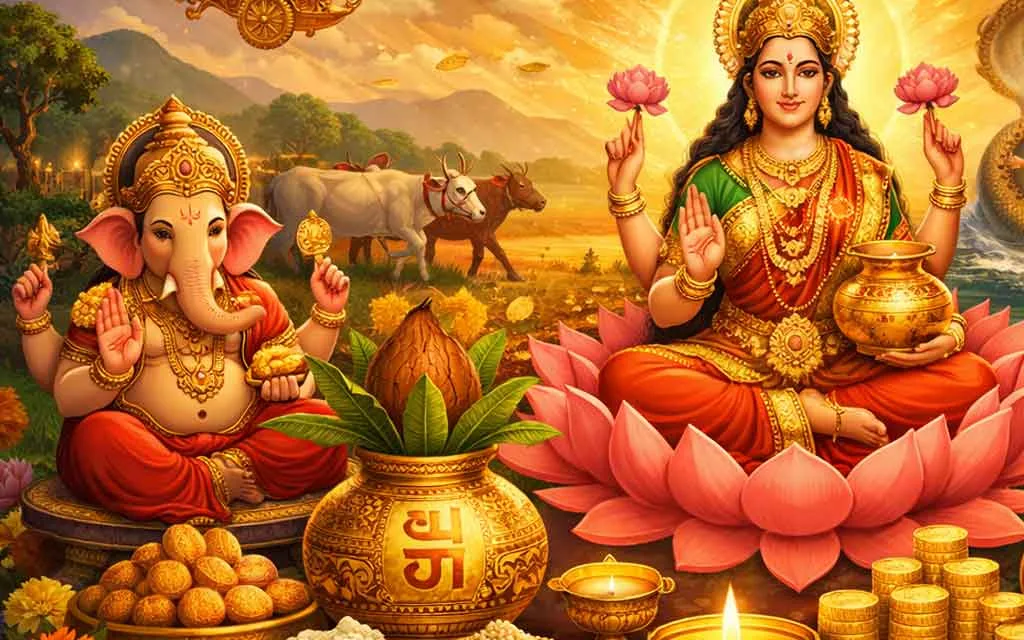
Akshaya Tritiya stands as one of the most sacred and spiritually significant days in the Hindu calendar.
Akshaya Tritiya stands as one of the most sacred and spiritually significant days in the Hindu calendar. The word “Akshaya” means never diminishing, symbolizing wealth, success, and good fortune that grows endlessly. Celebrated with deep devotion and faith, this auspicious day brings hope, positivity, and divine blessings into the lives of millions.
The Spiritual Essence of Akshaya Tritiya
Akshaya Tritiya is not just a festival—it is a divine opportunity. It is believed that any good deed, prayer, or investment made on this day multiplies manifold and remains everlasting. The energies of the universe are said to be in perfect harmony, making it an ideal time to begin new ventures, embark on spiritual journeys, and invite abundance into life.
Devotees wake up early, take holy baths, and offer prayers with pure hearts. The day is often associated with charity, kindness, and selfless giving, as acts of generosity performed today are believed to bring eternal rewards.
A Day Blessed by Divine Events
According to sacred traditions, several significant events are believed to have occurred on Akshaya Tritiya:
- The beginning of Treta Yuga
- The birth of Lord Parashurama
- The day when the holy river Ganga descended to Earth
- The divine blessing of the Pandavas with the Akshaya Patra, a vessel that never ran empty
These timeless stories reinforce the spiritual importance of this day as a gateway to divine grace and limitless blessings.
Why Buying Gold on Akshaya Tritiya is Special
One of the most popular traditions associated with Akshaya Tritiya is purchasing gold. Gold symbolizes wealth, purity, and prosperity. Buying it on this sacred day is believed to invite continuous growth in wealth and safeguard financial stability.
However, beyond material wealth, the true essence lies in inviting abundance in all aspects of life—peace, happiness, health, and spiritual fulfillment.
Perfect Time to Start New Beginnings
Akshaya Tritiya is considered highly favorable for:
- Starting new businesses or ventures
- Making long-term investments
- Buying property or valuable assets
- Beginning new relationships or commitments
- Initiating spiritual practices or learning
The day carries an energy that supports growth, success, and positive outcomes, making it a powerful moment to take meaningful steps forward.
Devotional Practices to Observe
To fully embrace the blessings of Akshaya Tritiya, devotees can:
- Offer prayers with sincerity and gratitude
- Chant mantras and meditate
- Donate food, clothes, or money to the needy
- Perform Lakshmi and Vishnu puja at home
- Maintain a positive mindset and pure intentions
Even the smallest act of devotion performed today is believed to yield eternal rewards.
The Deeper Meaning of True Prosperity
While Akshaya Tritiya is often linked with wealth and success, its deeper message is about spiritual richness. True prosperity lies in contentment, compassion, and inner peace. This sacred day reminds us to align our actions with righteousness and cultivate a life filled with purpose and devotion.
Conclusion
Akshaya Tritiya is a celebration of endless possibilities and divine blessings. It is a reminder that when faith meets action, prosperity flows abundantly and eternally. Whether through prayer, charity, or new beginnings, this sacred day offers a chance to transform life with positivity and grace.
May this Akshaya Tritiya bring everlasting prosperity, success, and spiritual fulfillment into your life.
What Do the Scriptures Say About Akshaya Tritiya?
The Bhavishya Purana and the Skanda Purana both describe Akshaya Tritiya — also known as Akha Teej — as one of the three and a half most auspicious 'muhurtas' of the entire Hindu year, a rare class called 'Saade Teen Muhurta.' Unlike ordinary festival days that require an astrologer to identify an auspicious window, Akshaya Tritiya is considered 'Swayam Siddha Muhurta,' meaning it is inherently and self-evidently auspicious without any additional calculation.
The Mahabharata references the day most vividly through the gift of the Akshaya Patra. When the Pandavas entered their twelve-year forest exile, the sage Dhaumya advised Yudhishthira to worship Surya, the Sun God. Surya, moved by the king's devotion on this Tritiya, bestowed the miraculous vessel — 'akshaya' because it produced food without ceasing until Draupadi ate last each day. This narrative from the Vana Parva encodes the theological core of the day: sincere devotion on Akshaya Tritiya draws concrete, material abundance from the divine.
The Connection Between Akshaya Tritiya and Lord Vishnu
Akshaya Tritiya falls on the Shukla Paksha (waxing moon fortnight) Tritiya of the month of Vaishakha, which is itself considered the most sacred month for Vishnu worship. It is no coincidence, therefore, that the day is strongly aligned with Vaishnava tradition. Lord Vishnu is worshipped in his form as 'Lakshmi-Narayana' on this day, inviting both spiritual wisdom and material well-being simultaneously. Tulsi leaves, yellow flowers, and chandan are offered at Vishnu shrines across the country.
The birth of Lord Parashuram, celebrated on this day, holds special weight in Vaishnavism because Parashuram is the sixth of the Dashavatara — the ten principal avatars of Vishnu. His appearance on earth was to restore cosmic order (dharma) by curtailing the abuse of power by corrupt Kshatriyas. Devotees visiting famous Vishnu temples such as the Badrinath Dham in Uttarakhand or the Sri Ranganathaswamy Temple in Srirangam (Tamil Nadu) on Akshaya Tritiya believe their prayers carry the combined merit of the tirtha and the tithi.
How Is Akshaya Tritiya Observed Across Different Regions of India?
In Odisha, Akshaya Tritiya is called 'Akhi Teej' and marks the beginning of the chariot-building season for the Jagannath Rath Yatra at Puri. Carpenters begin the sacred construction of the three great chariots — Nandighosa, Taladhwaja, and Devadalana — on this very day, linking cosmic abundance with devoted service. In Rajasthan and Gujarat, young girls are married or betrothed on this day, since it is considered one of the few 'abhujha muhurtas' (dates requiring no horoscope consultation) for weddings.
In the Deccan and coastal Karnataka, fishing communities perform special pujas and launch new boats into the sea on Akshaya Tritiya, praying for a prosperous catch throughout the year. In West Bengal, merchants and traders perform 'Hali Puja' — the ceremonial commencement of new business ledgers called 'Hali Khata' — seeking Lakshmi's blessings for their accounts. This regional diversity reveals that Akshaya Tritiya is not a monolithic festival but a living tradition that has organically merged with local livelihoods and calendars across the subcontinent.
What Is the Significance of Charity and Annadanam on This Day?
Classical dharmashastra texts emphasize that 'daana' (charitable giving) performed on Akshaya Tritiya generates 'ananta phala' — fruit without end. Among the most meritorious forms of giving cited is 'annadanam,' the donation of food. The Padma Purana states that feeding even one hungry person on this Tritiya earns merit equivalent to a thousand ordinary acts of charity, because the day itself amplifies the intention behind the act.
Traditionally, items offered in charity on Akshaya Tritiya include earthen water pots (ghatas) filled with water and topped with seasonal fruits, sesame seeds (tila), barley, and new cloth — all of which carry symbolic associations with cooling abundance in the heat of summer and providing for others what one hopes to receive in return. Many temple trusts and dharmic organizations today continue this tradition by organizing large-scale community feeding drives on this day, connecting ancient injunction with present-day service.
The philosophical underpinning is rooted in the concept of 'tyaga' — joyful relinquishment — which paradoxically multiplies rather than reduces what one possesses. The Bhagavad Gita (Chapter 17, verse 20) classifies such unconditional giving, done without expectation of return, as 'sattvic daana,' the highest quality of charity. Akshaya Tritiya thus becomes not merely an occasion for personal prosperity but a collective spiritual exercise in cultivating a generous and trusting heart.
The Cosmic Alignment That Makes Akshaya Tritiya Unique
From a Vedic jyotisha (astrology) standpoint, Akshaya Tritiya is remarkable because the Sun and the Moon are said to be simultaneously in a state of exaltation (uchcha) during this period. The Sun is exalted in Mesha (Aries) and the Moon moves through Taurus — a position of stability and material well-being — around this time. This rare dual exaltation is interpreted by jyotishis as the two most important luminaries in the zodiac lending their full strength to any intention set on this day.
Additionally, the Vaishakha Shukla Tritiya coincides with the peak of solar energy in the Indian subcontinent, just before the summer solstice. Ancient rishis recognized that concentrated solar energy on this day is particularly beneficial for beginning agricultural, commercial, and spiritual endeavors. This is why the ritual of 'Surya Arghya' — offering water to the rising sun while chanting the Aditya Hridayam or the Surya Ashtakam — is prescribed as the very first act of devotion on Akshaya Tritiya morning, grounding cosmic symbolism in a daily physical practice.
Frequently Asked Questions
What does Akshaya Tritiya mean?
'Akshaya' means never diminishing. The day symbolizes wealth, success and good fortune that grows endlessly, and good deeds or prayers done on it are believed to multiply and last.
When is Akshaya Tritiya observed?
It falls on the Shukla Paksha Tritiya of the month of Vaishakha, so the exact date follows the Hindu calendar. Check the local panchang for the date each year.
Why do people buy gold on Akshaya Tritiya?
Gold symbolizes wealth, purity and prosperity, and buying it on this day is believed to invite continuous growth in wealth. The deeper message is abundance in peace, happiness, health and spiritual fulfillment.
What events are believed to have happened on Akshaya Tritiya?
As commonly told, the Treta Yuga began, Lord Parashurama was born, and the Ganga descended to Earth. The Pandavas also received the Akshaya Patra, a vessel that never ran empty.
How is Akshaya Tritiya celebrated in different parts of India?
In Odisha, chariot-building for the Jagannath Rath Yatra at Puri begins on this day. West Bengal merchants perform Hali Puja to start new ledgers, and coastal Karnataka fishing communities launch new boats.
What should one do or donate on Akshaya Tritiya?
Devotees take an early holy bath, perform Lakshmi and Vishnu puja, chant mantras and give charity. Traditional gifts include food, earthen water pots with fruits, sesame seeds, barley and new cloth.
You might also like
Akshaya Tritiya 2026 — The Eternal Wealth Day of the Hindu Calendar
Akshaya Tritiya 2026 in Canada – Timings, Puja Muhurat & Rituals for Toronto, Vancouver, Calgary, Montreal & More
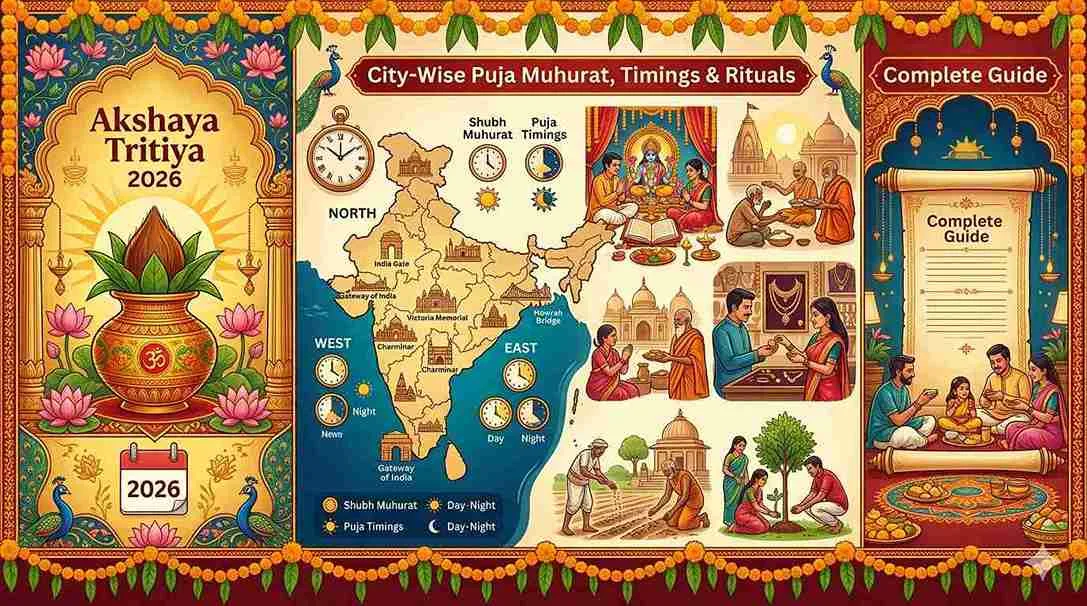
Akshaya Tritiya 2026 in India – Date, City-Wise Puja Muhurat, Timings & Rituals | Complete Guide