Almora Dussehra 2026, Uttarakhand: The Neighbourhood Effigies, the Bazaar Procession and Kumaoni Ramlila
Almora celebrates Dussehra unlike anywhere else in the hills: each neighbourhood builds its own effigy of Ravana, his family or his generals, the figures are paraded through the old bazaar and then burned on Vijayadashami. Add the sung, raga-based Kumaoni Ramlila and you have one of Uttarakhand's best-loved festivals. Here is what to know for 2026.
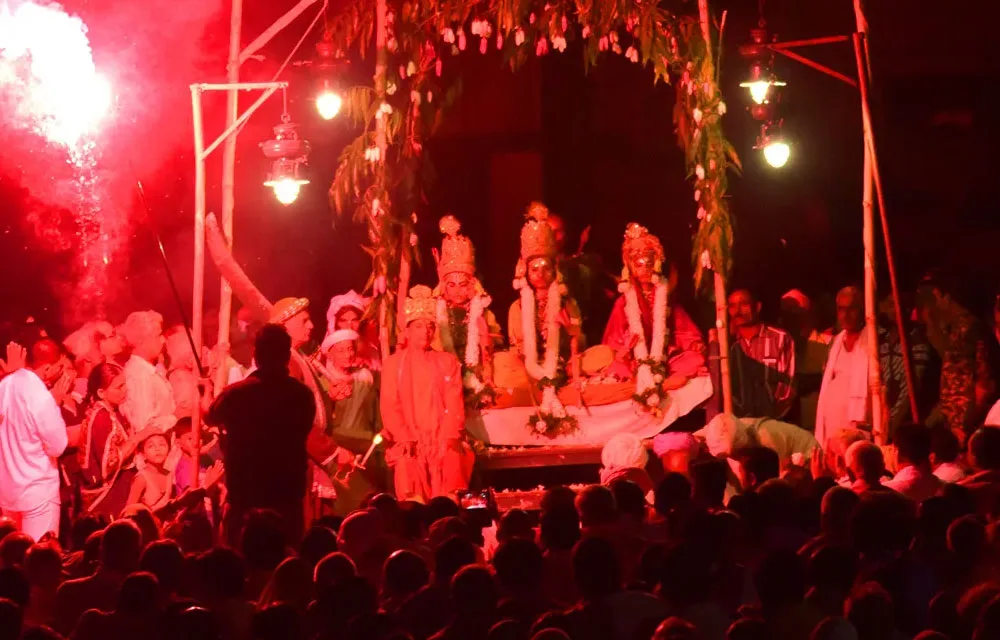
Almora celebrates Dussehra unlike anywhere else in the hills: each neighbourhood builds its own effigy of Ravana, his family or his generals, the figures are paraded through the old bazaar and then burned on Vijayadashami. Add the sung, raga-based Kumaoni Ramlila and you have one of Uttarakhand's best-loved festivals.
Quick answer: Almora Dussehra falls on Tuesday 20 October 2026 (Drik Panchang, India). The town is known for its many effigies (putle) of Ravana's family and generals, each made by a different neighbourhood, which are paraded through the bazaar and burned on Vijayadashami, and for the sung, raga-based Kumaoni Ramlila in the evenings before. Navratri runs from Sunday 11 to Monday 19 October. Almora is not in our muhurat list; for reference, Dehradun's Vijay Muhurat is 1:55 to 2:41 PM.
Almora Dussehra at a glance
| What | Details |
|---|---|
| Where | Almora town, Kumaon, Uttarakhand |
| Navratri 2026 | Sun 11 to Mon 19 Oct (India, Drik Panchang) |
| Dussehra 2026 | Tue 20 Oct |
| Signature tradition | Effigies made by neighbourhoods, paraded through the bazaar and burned |
| Also famous for | The sung Kumaoni Ramlila |
| 2026 arrangements | Announced by local organisers and the administration |
A town of effigies
In most of North India, Dussehra evening means three giant figures, Ravana, Kumbhakarna and Meghnad, burning on a single ground. Almora does it differently. As commonly described, different mohallas (neighbourhoods) of the town each take responsibility for an effigy, or putla, of a character from Ravana's side of the Ramayana. Alongside Ravana and his brothers and son, groups have made figures of demons and demonesses such as Tadaka and Surpanakha and other rakshasa warriors, each with its own expression, colours and costume.
The effigies are made over several weeks before Dussehra by local volunteers and artisans, using bamboo frames, paper, cloth and paint. Making them is a community affair: young people learn the craft from older hands, neighbourhoods take pride in their work, and families walk around in the evenings to see how each figure is coming along. Because each group designs its own, the effigies have become known for their artistry and variety, and for many visitors they are the highlight of a trip to Almora in October.
The procession through the bazaar
On Dussehra, the effigies are brought out and carried in procession through the narrow lanes and the old bazaar of Almora, accompanied by drums, music and crowds. As commonly described, the procession winds through the heart of the town before the figures are taken to an open ground and set alight in the evening.
The sight of a long line of towering, colourful figures moving through a hill town's bazaar, with balconies and rooftops packed with onlookers, is what sets Almora apart. The meaning is the familiar one: the burning of pride, anger, greed and other inner demons, symbolised by Ravana and his allies. Read why we burn Ravana and the ten heads of Ravana explained.
The Kumaoni Ramlila: the Ramayana in song
The nights before Dussehra in Almora belong to the Kumaoni Ramlila. Unlike the spoken, dramatic Ramlilas of the plains, the Kumaoni form is largely sung: characters deliver their lines in melodies based on Hindustani classical ragas, accompanied by harmonium and tabla, with the text rooted in Tulsidas's Ramcharitmanas. Performers rehearse for weeks, learning the tunes by heart, and audiences in Kumaon are known for following every song.
As commonly told, this musical style took shape in Almora in the nineteenth century and spread from there to Nainital, Pithoragarh, Bageshwar and other Kumaoni towns, and later to Kumaoni communities in the plains. It also absorbed influences from local folk and theatre traditions over time. When UNESCO inscribed "Ramlila, the traditional performance of the Ramayana" in 2008, its description of the tradition mentioned Almora among the notable centres. For more on Ramlila across India, see Ramlila: a vibrant retelling of the Ramayana and the Ramnagar Ramlila of Varanasi.
Navratri in Almora
Navratri (11 to 19 October 2026) is also a time of Devi worship in Almora and across Kumaon. The town's goddess temples, including the shrine of Nanda Devi, the revered goddess of Kumaon and Garhwal, draw devotees through the festival. Families fast, keep a lamp burning, sow barley (jau) in pots in many homes, and honour young girls in Kanya Pujan. In 2026, Ashtami and Navami both fall on Monday 19 October in India. See our Kanya Pujan 2026 guide.
Vijay Muhurat for Uttarakhand, 20 October 2026
Almora is not in our calculated list. For reference, here are the Vijay Muhurat timings for the Uttarakhand cities we have, local time on Tuesday 20 October 2026, calculated by the Drik Panchang method:
| City | Vijay Muhurat (Tue 20 Oct 2026) |
|---|---|
| Dehradun | 1:55–2:41 PM |
| Haridwar | 1:55–2:40 PM |
The Dashami tithi runs from 12:50 PM IST on 20 October to 2:11 PM IST on 21 October. Use a local panchang for Almora's exact window. More in the Dussehra 2026 Uttarakhand guide and the Dussehra / Vijayadashami 2026 pillar guide.
Tips for visiting Almora at Dussehra
- Almora is reached by road; the nearest railhead is commonly Kathgodam, from where the drive climbs into the hills.
- Book accommodation early, as the town fills up around Dussehra.
- October days are pleasant but evenings turn cool; carry warm layers.
- The bazaar lanes are narrow and crowded during the procession; keep children and elders close and agree a meeting point.
- Watch the effigy making in the days before Dussehra if you can, and ask before photographing people at work.
- Check traffic and parking arrangements announced by the local administration for Dussehra day.
For Kumaoni families abroad
Kumaoni families abroad often keep the season with a Navratri puja, Kanya Pujan and a visit to a temple Ravan Dahan. Singing a few Kumaoni Ramlila songs at a community gathering, or helping children make a small paper effigy at home, is a lovely way to pass on Almora's traditions. Always use a panchang for your own city for muhurat timings; Indian times do not apply abroad. See the Dussehra 2026 Canada guide and the Dussehra 2026 USA guide.
Frequently asked questions
When is Almora Dussehra 2026?
Dussehra (Vijayadashami) is on Tuesday 20 October 2026 in India (Drik Panchang). The effigy procession and burning in Almora are held on Dussehra; the local organisers announce the 2026 arrangements, so check their announcements before you travel.
What is special about Almora Dussehra?
Instead of a single set of Ravana, Kumbhakarna and Meghnad effigies, many neighbourhoods (mohallas) of Almora each make their own effigy of a character from Ravana's family or army. As commonly described, these are paraded through the town's bazaar on Dussehra before being burned.
Which characters are made as effigies in Almora?
Besides Ravana, Kumbhakarna and Meghnad, local groups have traditionally made figures of other characters from the Ramayana's demon side, such as Tadaka, Surpanakha and various rakshasa warriors. The exact figures differ from year to year and group to group.
What is the Kumaoni Ramlila?
It is the Ramlila tradition of the Kumaon hills, in which the dialogue is largely sung rather than spoken, set to melodies based on Hindustani classical ragas and accompanied by harmonium and tabla. Almora is closely associated with its development; UNESCO's description of the Ramlila tradition also mentions Almora.
What is the Vijay Muhurat for Almora on Dussehra 2026?
Almora is not in our calculated list. For reference, the Vijay Muhurat on Tuesday 20 October 2026 is 1:55 to 2:41 PM in Dehradun and 1:55 to 2:40 PM in Haridwar (local time, Drik Panchang). Use a local panchang for Almora's exact window.
Is Almora Dussehra good for a family trip?
Yes, it is a festive time in a pleasant hill town. Book stays early, carry warm clothes for October evenings, and keep children close in the bazaar crowds during the procession.
Editor's note (9 October 2026)
This guide was written in October 2026. Dates and the Vijay Muhurat timings for Dehradun and Haridwar are from Drik Panchang calculations for India; Almora is not in our calculated list. The effigy and procession traditions and the history of the Kumaoni Ramlila are described as commonly told. We do not give schedules, routes or the number of effigies, which vary each year.
Related guides
You might also like
Ramnagar Ramlila, Varanasi 2026: The Month-Long Ramlila of Banaras, Its Traditions and Dussehra in Kashi
Kota Dussehra Mela 2026, Rajasthan: History, Ravana Effigies, Fair Grounds and Vijay Muhurat
Navratri vs Durga Puja vs Dussehra vs Dasara vs Vijayadashami: The Differences Explained (2026)