A Mindful Diwali: 5 Ways to Focus on Inner Light Over Materialism
Introduction: The Lost Light of Modern Celebrations As Diwali approaches, our homes glow with diyas, our streets sparkle with lights, and our hearts fill with…
Introduction: The Lost Light of Modern Celebrations As Diwali approaches, our homes glow with diyas, our streets sparkle with lights, and our hearts fill with…
Introduction: The Lost Light of Modern Celebrations
As Diwali approaches, our homes glow with diyas, our streets sparkle with lights, and our hearts fill with the joy of togetherness. Yet, amidst the glittering decorations and endless shopping lists, one question arises — have we forgotten the inner light that Diwali truly celebrates?
In today’s fast-paced, consumer-driven world, Diwali often becomes a festival of buying rather than being, of noise rather than peace. But the essence of Diwali lies much deeper — it is a time to awaken the divine flame within, to cleanse the mind of ignorance, and to rediscover spiritual clarity and balance.
In this devotional guide, let’s explore five mindful and spiritual practices to focus on inner light over materialism, blending ancient Hindu wisdom with modern mindfulness and mental wellness principles.
1. Light the Lamp Within: The Symbolism of the Diya
Every diya we light during Diwali carries a timeless message:
“Let my inner darkness be dispelled, and may divine wisdom illuminate my path.”
In the Rig Veda, light represents truth (Satya) and consciousness (Chaitanya) — the eternal flame of awareness that shines even in the darkest moments of life. Lighting a lamp is not merely a ritual; it’s an act of awakening — an invitation for the inner self to rise above ego, anger, and desire.
Mindful Practice: The Inner Diya Meditation
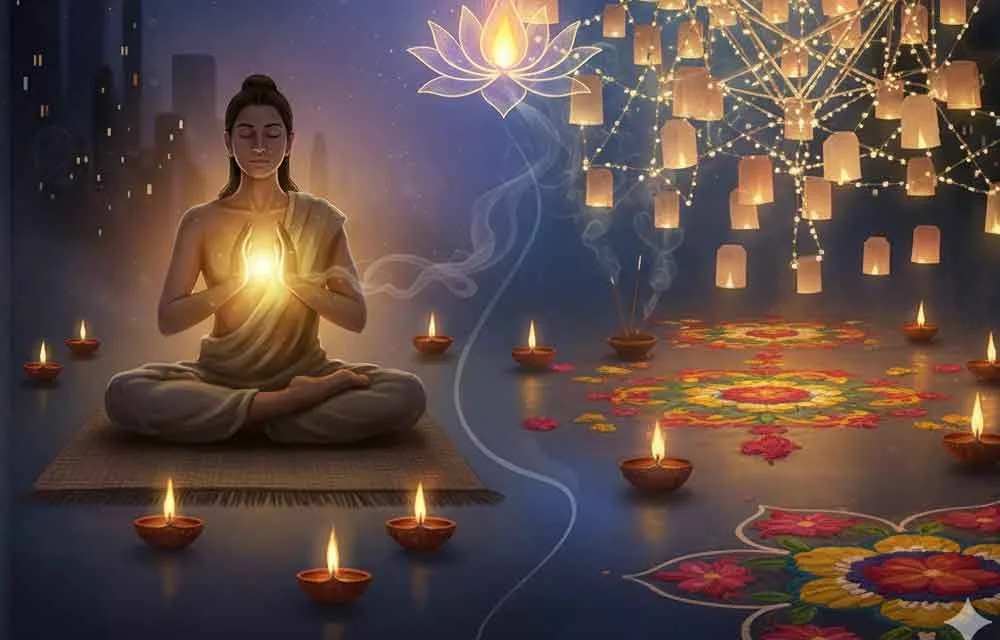
- Sit quietly in front of a diya or candle.
- Take a deep breath and gaze at the flame.
- With each inhale, imagine the flame entering your heart.
- With each exhale, release a negative thought, fear, or attachment.
This simple 10-minute meditation reconnects you to your inner light — your consciousness — helping reduce anxiety, enhance focus, and cultivate emotional balance.
Spiritual Affirmation:
“I am the light that no darkness can extinguish. I shine with the energy of peace, clarity, and divine purpose.”
2. Simplify and Sanctify: Declutter for the Soul
Cleaning and decorating homes before Diwali is an ancient tradition rooted not only in hygiene but also in energetic and spiritual purification. However, the deeper intention is to clear mental clutter — our worries, attachments, and regrets — that dim our inner brilliance.
Ancient Wisdom
In the Bhagavad Gita (6.5), Lord Krishna advises:
“Let a man lift himself by his own mind; let him not degrade himself. For the mind is the friend and also the enemy of the self.”
Just as we sweep dust from our homes, we must also cleanse the mental dust — negative thoughts, grudges, and overthinking — that prevent spiritual clarity.
Modern Mindfulness Connection
Psychologists now confirm what ancient yogis always knew — decluttering your environment declutters your mind. A clean, sacred space reduces mental chaos, lowers cortisol (stress hormone), and enhances mindfulness.
Mindful Practice: The Sacred Space Ritual
- Begin by cleaning a corner of your home where you pray or meditate.
- Light incense or sandalwood to purify the air.
- Decorate the space with flowers and symbols of the Divine.
- As you clean, mentally repeat:
“As I purify this space, I purify my mind.”
By simplifying your surroundings, you create a peaceful inner sanctuary — where the true Diwali light can shine.
3. Practice Gratitude: The Key to Lasting Abundance
In Hindu philosophy, Goddess Lakshmi represents not just material wealth but spiritual abundance — peace, compassion, and gratitude. When we cultivate thankfulness, we invite Lakshmi’s blessings in their purest form.
Vedic Insight
The Atharva Veda describes gratitude as the foundation of prosperity. True wealth flows not from possessions but from appreciation of what we already have.
“Those who see the divine grace in every small thing are never poor in heart.”
Modern Mental Health Connection
Gratitude is one of the most effective practices for mental wellness. Studies show it reduces depression, enhances resilience, and creates a lasting sense of fulfillment.
Mindful Practice: The Diwali Gratitude Lamp
- Each evening of Diwali, light a diya dedicated to gratitude.
- Reflect on five things you are thankful for — health, family, lessons learned, challenges overcome.
- Offer a silent prayer:
“O Lakshmi Devi, may I value your blessings with humility and share them with love.”
By practicing gratitude daily, we move away from material obsession toward spiritual abundance — the wealth of the heart.
4. Silence Amidst Celebration: The Power of Mauna (Sacred Quietude)
Diwali nights are filled with joy, laughter, and often noise — from conversations to crackers. While celebration is beautiful, silence is transformative. In that sacred silence, the voice of the soul can be heard.
The Ancient Practice of Mauna
In Vedic tradition, Mauna (silence) was considered a powerful form of sadhana (spiritual practice). Sages would observe silence to conserve prana (life force) and cultivate inner awareness. Lord Shiva, the great Yogi, is the eternal symbol of this meditative silence.
Modern Mindfulness Parallel
Today’s mindfulness movement echoes this ancient wisdom. Regular moments of quiet reflection can:
- Lower blood pressure
- Reduce anxiety and overthinking
- Deepen self-awareness
- Enhance creativity and emotional regulation
Mindful Practice: Diwali Night Meditation
- After the puja and celebrations, sit quietly for 15 minutes.
- Focus on your breath and the sound of the flickering lamps.
- Let your mind rest in stillness, absorbing the peace of the moment.
In this silence, you experience the true essence of Diwali — the victory of light (consciousness) over darkness (ignorance).
Spiritual Insight:
When silence becomes your inner celebration, you no longer seek external noise for happiness.
5. Serve and Share: The Diwali of Compassion
The true spirit of Diwali lies in sharing joy and light with others, especially those who live in darkness — not just physical, but emotional and spiritual darkness.
The Dharma of Giving
According to the Manusmriti, the act of Dana (charitable giving) is among the highest virtues. It purifies the heart and aligns one’s karma with divine energy.
“When one gives selflessly, Lakshmi and Dharma both enter their home.”
Modern Mental Health Connection
Acts of kindness release oxytocin and endorphins, the “happiness hormones,” reducing loneliness and stress. Charity nurtures empathy, which modern psychologists identify as a cornerstone of emotional intelligence and mental peace.
Mindful Practice: The Lamp of Compassion
- Donate food, clothes, or time to the needy before or during Diwali.
- Cook an extra meal for someone less fortunate.
- Offer help to elders, neighbors, or stray animals.
Each act of kindness becomes a diya — a living light in someone’s life. This form of seva (selfless service) turns Diwali into a celebration of universal love.
The Mindful Diwali Routine: Integrating Ancient and Modern Wisdom
Here’s a simple mindful Diwali routine that unites spiritual practice with mental wellness:
This blend of devotion and mindfulness ensures that your Diwali isn’t just celebrated — it’s experienced deeply.
Conclusion: Return to the Light Within
The outer lamps of Diwali fade with time, but the inner flame of awareness must keep burning. True Diwali is not found in expensive gifts or crowded markets but in the stillness of the heart, where divine light forever glows.
As you celebrate this year, remember —
Lakshmi may bless your home, but Saraswati blesses your mind, and both dwell where compassion resides.
So, choose mindfulness over materialism, gratitude over greed, and silence over noise. Let this Diwali mark the illumination of your inner being, where peace, wisdom, and joy shine eternally.
Wishing you a spiritually abundant and mindful Diwali from HinduTone!
Frequently Asked Questions
When is A Mindful Diwali?
A Mindful Diwali is observed on its traditional tithi in the Hindu lunar calendar; refer to the year's panchang for the exact date in your region.
What is the significance of A Mindful Diwali?
Introduction: The Lost Light of Modern Celebrations As Diwali approaches, our homes glow with diyas, our streets sparkle with lights, and our hearts fill with the joy of togetherness. Yet, amidst the glittering decorations and endless shopping lists, one question arises — have we forgotten the inner light that Diwali truly celebrates?
How is A Mindful Diwali celebrated?
Devotees observe it with puja, fasting or special offerings, visiting temples, chanting mantras, and gathering with family. Customs vary by region and tradition.
What should devotees do on A Mindful Diwali?
Take a sacred bath, perform the day's puja and charity (dana), observe any prescribed fast, and chant mantras with sincere devotion.
You might also like
Gita Jayanti 2026 Prasad Recipes — Tulsi-Honoring Sweets, Krishna's Favourites & December 20 Bhog Plate
Shani Deva Temples Worldwide & Must-Performed Rituals — Complete Devotee's Guide
Maha Shivratri 2026 Vrat Recipes — Sabudana Khichdi, Singhada Halwa, Phalahara Foods Complete Fasting Guide