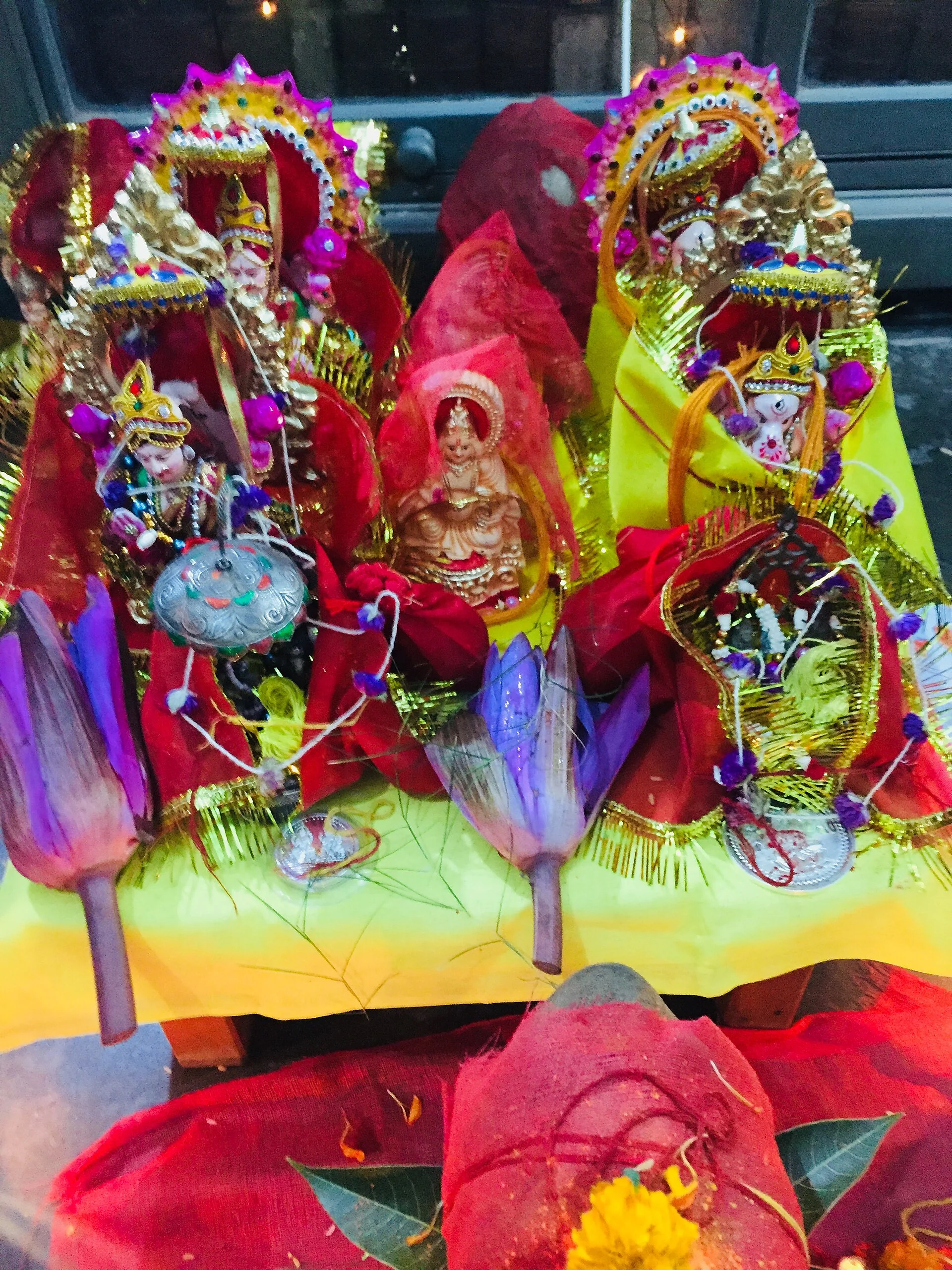
The 5 Days of Diwali: Rituals, Poojas & Mantras
Diwali, the Festival of Lights, is celebrated over five days, each with its own unique significance, rituals, and spiritual practices.
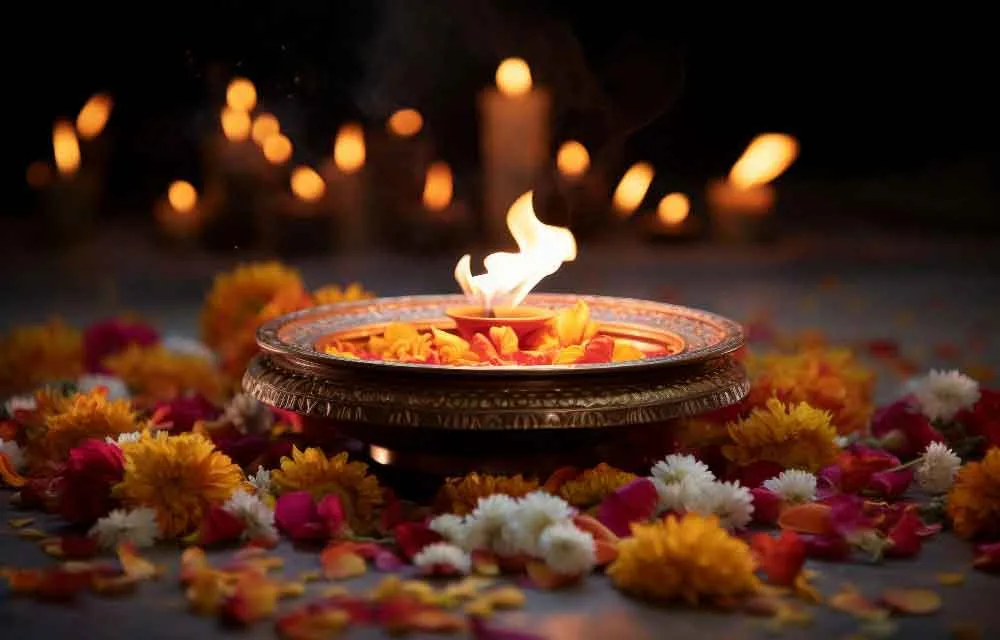
Diwali, the Festival of Lights, is celebrated over five days, each with its own unique significance, rituals, and spiritual practices.
Diwali, the Festival of Lights, is celebrated over five days, each with its own unique significance, rituals, and spiritual practices. Here's a detailed guide to help you observe each day with devotion and understanding.
Day 1: Dhanteras (October 18, 2025)
Significance:
Marks the beginning of Diwali; dedicated to Lord Dhanvantari (god of health), Lord Kubera (god of wealth), and Goddess Lakshmi.
Rituals:
- Lakshmi Puja: Perform evening prayers to invite wealth and prosperity.
- Purchasing Precious Metals: Buy gold, silver, or utensils to symbolize the welcoming of wealth.
- Lighting Diyas: Illuminate your home with diyas to dispel darkness and negativity.
- Rangoli Decoration: Create designs at the entrance to welcome positive energy.
- Tulsi Puja: Worship the sacred Tulsi plant for family health and well-being.
- Charitable Acts: Donate to the needy to accumulate positive karma.
- ॐ श्रीं महालक्ष्म्यै नमः (Om Shreem Mahalakshmyai Namah)
- ॐ गं गणपतये नमः (Om Gam Ganapataye Namah)
Day 2: Narak Chaturdashi (Choti Diwali) (October 19, 2025)
Significance:
Commemorates Lord Krishna's victory over the demon Narakasura, symbolizing the triumph of good over evil.
Rituals:
- Abhyang Snan (Oil Bath): Apply oil, take a bath before sunrise to purify the body and soul.
- Lighting Diyas: Place diyas to ward off evil spirits.
- Recite Mantras: Chant prayers for protection and well-being.
Mantras:
- ॐ यमदीपाय नमः (Om Yamadeepaya Namah)
- ॐ नरकासुराय नमः (Om Narakasuraya Namah)
Day 3: Diwali (Lakshmi Puja) (October 20, 2025)
Significance:
The main Diwali day; honors Goddess Lakshmi for wealth, prosperity, and well-being.
Rituals:
- Kalash Sthapana: Place a sacred pot with water, mango leaves, and a coconut.
- Ganesha Puja: Worship Lord Ganesha to remove obstacles.
- Lakshmi Puja: Offer prayers to Goddess Lakshmi with sweets, fruits, and flowers.
- Aarti: Perform aarti with incense and camphor.
- Lighting Diyas: Illuminate the home to invite divine blessings.
Mantras:
- ॐ श्रीं महालक्ष्म्यै नमः (Om Shreem Mahalakshmyai Namah)
- ॐ गं गणपतये नमः (Om Gam Ganapataye Namah)
Day 4: Govardhan Puja (Annakut) (October 21, 2025)
Significance:
Celebrates Lord Krishna's lifting of Mount Govardhan to protect villagers from Indra's wrath.
Rituals:
- Chappan Bhog: Prepare 56 or 108 different food items as offerings.
- Govardhan Hill Worship: Create a replica of Mount Govardhan and offer prayers.
- Community Feasts: Share prasad with family and community.
Mantras:
- ॐ गोवर्धनाय नमः (Om Govardhanaya Namah)
- ॐ कृष्णाय गोवर्धनाय नमः (Om Krishnaya Govardhanaya Namah)
Day 5: Bhai Dooj (October 22, 2025)
Significance:
Honors the bond between brothers and sisters; sisters pray for brothers' well-being.
Rituals:
- Tilak Ceremony: Sisters apply tilak on brothers' foreheads.
- Prayers: Offer prayers for brothers' health and prosperity.
- Gifts: Exchange gifts as a token of love and affection.
Mantras:
- ॐ यमुनायै नमः (Om Yamunaye Namah)
- ॐ यमराजाय नमः (Om Yamarajaya Namah)
What is the scriptural origin of the five-day Diwali sequence?
The five-day arc of Diwali is not a later folk invention but is rooted in multiple Puranic narratives and the Vedic lunar calendar. Dhanteras falls on the Trayodashi tithi of Krishna Paksha in the month of Kartika, a time when the Skanda Purana prescribes worship of Dhanvantari — the divine physician who emerged from the churning of the cosmic ocean (Samudra Manthan) carrying the pot of amrita. This same Kartika month is described in the Padma Purana as especially sacred for lamps (deepa-dana), because lighting a lamp during this period is said to dispel the darkness of ignorance across all fourteen worlds.
Narak Chaturdashi draws from the Bhagavata Purana's account (Skandha 10, Chapters 59–60), where Lord Krishna, alongside Satyabhama, slays the asura Narakasura and frees 16,100 captive women. The Vishnu Purana links the main Diwali night to the return of Lord Rama to Ayodhya after fourteen years of exile, with the citizens of Ayodhya lighting rows of clay diyas — deepavali literally meaning 'row of lights' — to guide him home. These distinct mythological threads converge to give each of the five days its own devotional personality.
Day 4 — Govardhan Puja and Annakut: what is the full observance?
The fourth day, known as Govardhan Puja or Annakut (literally 'mountain of food'), falls on Kartika Shukla Pratipada — the first day of the bright fortnight immediately after the main Diwali night. It commemorates Lord Krishna's act of lifting the Govardhan Hill (Govardhana Parvata) with his little finger for seven continuous days to shelter the residents of Vrindavana from the torrential rains sent by a wrathful Indra, as narrated in the Bhagavata Purana (Skandha 10, Chapter 24–25). The episode marked a pivotal theological shift: Krishna redirected communal worship from Indra toward Govardhan as a living form of the divine.
The central ritual is the preparation of Annakut — a grand offering of 56 (chappan bhog) or more food items arranged to represent the Govardhan Hill. Devotees at the Shri Nathji temple in Nathdwara, Rajasthan, and the Sri Radha Raman temple in Vrindavana perform this offering on a magnificent scale visible to thousands of pilgrims. At home, families prepare a mound of cooked rice, dal, vegetables, and sweets, worship it as Govardhan, and then distribute the prasad. The bija mantra chanted is: ॐ गोवर्धनाय नमः (Om Govardhanaya Namah). In Maharashtra and Gujarat, this day also celebrates the New Year (Bestu Varas), making it a day of account books, fresh ledgers, and prayers to Lakshmi and Kubera for business prosperity.
Day 5 — Bhai Dooj: the Vedic and Puranic roots of the sibling bond
The fifth and final day is Bhai Dooj (also called Yama Dwitiya or Bhai Tika), observed on Kartika Shukla Dwitiya. According to the Puranic tradition, on this day Yama — the god of death — visited his sister Yamuna (the sacred river goddess) at her home. She welcomed him with a tilak on his forehead, offered him food, and prayed for his long life. Yama, moved by her love, declared that any brother who receives a tilak from his sister on this day would be protected from untimely death and blessed with long life. The Skanda Purana records this narrative as the basis for the day's sanctity.
The ritual centers on the sister applying a vermillion or kumkuma tilak on her brother's forehead, waving an aarti lamp, and offering him sweets, particularly mathri and kheer. The brother reciprocates with gifts and a pledge of protection. The mantra recited during the tilak ceremony is: ॐ यमाय धर्मराजाय मृत्यवे चान्तकाय च, वैवस्वताय कालाय सर्वभूतक्षयाय च नमः. Bhai Dooj shares a spiritual kinship with Raksha Bandhan but carries deeper soteriological weight — it is specifically a prayer for liberation from the fear of death (mrityu-bhaya), not merely brotherly protection.
How should Lakshmi Puja be performed with correct Vedic procedure on the main Diwali night?
The Pradosh Kaal — the 2.5-hour window after sunset — is the prescribed muhurta for Lakshmi Puja on the Amavasya night of Diwali, as specified in the Dharmasindhu and Nirnayasindhu, authoritative digests of Hindu ritual law. During Pradosh Kaal, Lakshmi is said to move freely through the world, entering homes that are clean, illuminated, and fragrant. The puja space should face east or north, with a wooden chowki (pitha) covered in a red or yellow cloth. The Kalash (sacred pot) installed represents the cosmic womb — it should be filled with Ganga water or clean water, topped with mango leaves (five or seven), and a whole coconut wrapped in a red thread.
The Shodashopachara puja (sixteen-service worship) is the classical framework: Avahana (invocation), Asana (offering a seat), Padya (water for feet), Arghya (water for hands), Achamana (water for sipping), Snana (bath with panchamrita — milk, curd, ghee, honey, sugar), Vastra (offering cloth), Abharana (ornament), Gandha (sandalwood paste), Pushpa (fresh flowers, especially white lotus and marigold), Dhupa (incense — frankincense and guggul are traditional), Deepa (ghee lamp), Naivedya (sweets including kheel-batasha, the traditional rice-puff and sugar offering specific to Diwali Lakshmi Puja), Tambula (betel leaf and nut), Dakshina (monetary offering), and Visarjana (respectful farewell). Reciting the Sri Sukta (Rigveda Khila, 16 verses) during the flower offering is the most authoritative Vedic component of Lakshmi Puja.
Regional variations: how do different parts of India observe the five days differently?
In Bengal and Odisha, the main Diwali night (Kali Puja or Shyama Puja) is dedicated entirely to Goddess Kali rather than Lakshmi. The Tantric tradition, especially prominent around the Kalighat temple in Kolkata, holds that the Amavasya night of Kartika is when Kali's power is most accessible. Elaborate midnight pujas with red hibiscus flowers, fish, and rice offerings are performed, and Mahanirvana Tantra and Tantrasara prescribe specific nyasa and dhyana procedures for this worship.
In Tamil Nadu, the festival focus falls almost entirely on Narak Chaturdashi (locally called Deepavali), celebrated at dawn with the ritual oil bath (gingelly oil mixed with turmeric) taken before sunrise, followed by wearing new clothes and bursting firecrackers. The main Diwali night receives comparatively less ritual emphasis in this region. In Rajasthan and among Marwari communities nationwide, Dhanteras is the commercial and spiritual peak — families open fresh account books (bahi-khata), worship them alongside Lakshmi and Kubera, and the mantra ॐ यक्षाय कुबेराय वैश्रवणाय धनधान्याधिपतये धनधान्यसमृद्धिं मे देहि दापय स्वाहा is recited specifically for Kubera's blessings on new business ventures.
The spiritual significance of the diya: why ghee lamps hold priority over oil lamps
In the Vedic tradition, the diya is not merely decorative — it is a direct representation of Brahman, the self-luminous consciousness. The Brihadaranyaka Upanishad's celebrated dialogue (3.9.1) in which Yajnavalkya ultimately describes Atman as 'light itself' (jyoti) gives the lamp its deepest philosophical resonance during Diwali. The act of lighting a diya is thus understood as awakening the inner light of awareness, not merely dispelling external darkness.
Dharmashastra texts and the Agni Purana both specify that a ghee (clarified butter) lamp is superior to a sesame oil lamp for deity worship, because ghee is a product of the sacred cow and carries Sattva guna — it purifies the atmosphere when burned and is said to attract sattvik devas. Sesame oil lamps, however, are specifically prescribed for Yama (the deity of death) on Narak Chaturdashi and for ancestral offerings (pitru-tarpana), because sesame (tila) is the grain associated with the realm of the ancestors in the Garuda Purana. This is why on Dhanteras and the main Diwali night, ghee diyas are placed inside the home for Lakshmi, while a single sesame-oil diya is traditionally placed outside or facing south — the direction of Yama — as a protective offering.
Frequently Asked Questions
What is the The 5 Days of Diwali?
Diwali , the Festival of Lights, is celebrated over five days, each with its own unique significance, rituals, and spiritual practices. Here's a detailed guide to help you observe each day with devotion and understanding.
How many times should the The 5 Days of Diwali be chanted?
It is traditionally chanted 108 times using a rudraksha or tulsi mala. Even 11 or 21 sincere repetitions daily are considered beneficial — steady, focused practice matters more than the count.
What is the best time to chant the The 5 Days of Diwali?
Dawn (Brahma Muhurta) after a bath is considered ideal, though it may be chanted any time with a calm, focused mind. Many devotees keep a fixed daily time to build consistency.
Who can chant the The 5 Days of Diwali?
Anyone may chant it with faith and a pure mind, regardless of age, gender or background. Beginners benefit from first hearing the correct pronunciation and understanding its meaning.
What are the benefits of chanting the The 5 Days of Diwali?
It is believed to calm the mind, dissolve negativity, and draw divine grace, protection and clarity to the devotee.
You might also like
Gita Jayanti 2026 Prasad Recipes — Tulsi-Honoring Sweets, Krishna's Favourites & December 10 Bhog Plate
Maha Shivratri 2026 Vrat Recipes — Sabudana Khichdi, Singhada Halwa, Phalahara Foods Complete Fasting Guide
Shani Deva Temples Worldwide & Must-Performed Rituals — Complete Devotee's Guide