The Connection Between Dhanteras and Diwali: Myths and Tales
Introduction Dhanteras, also known as Dhanatrayodashi, marks the auspicious beginning of the five-day Diwali festival.
Introduction Dhanteras, also known as Dhanatrayodashi, marks the auspicious beginning of the five-day Diwali festival.
Introduction
Dhanteras, also known as Dhanatrayodashi, marks the auspicious beginning of the five-day Diwali festival. Celebrated on the thirteenth lunar day (trayodashi) of Krishna Paksha in the Hindu month of Kartik, this day holds immense spiritual and cultural significance. The word "Dhanteras" combines "Dhan" (wealth) and "Teras" (thirteenth), symbolizing the celebration of prosperity, health, and divine blessings.
The Divine Connection: From Dhanteras to Diwali
Dhanteras initiates the grand festival of lights, setting the spiritual tone for the celebrations that follow. While Diwali commemorates Lord Rama's victorious return to Ayodhya and the triumph of light over darkness, Dhanteras lays the foundation by invoking divine blessings of wealth, health, and prosperity. Together, these festivals create a sacred journey from material abundance to spiritual enlightenment.
The Sacred Myths of Dhanteras
1. The Churning of the Ocean (Samudra Manthan)
The most celebrated legend of Dhanteras revolves around the cosmic event of Samudra Manthan, the churning of the celestial ocean.
In ancient times, the Devas (gods) and Asuras (demons) joined forces to churn the ocean of milk to obtain Amrita, the nectar of immortality. Using Mount Mandara as the churning rod and the serpent Vasuki as the rope, they churned the ocean for centuries.
From the depths of this cosmic ocean emerged fourteen precious treasures (ratnas). On the thirteenth day of this momentous event, Lord Dhanvantari, the divine physician of the gods, appeared carrying a golden pot filled with Amrita. His four hands held the pot of nectar, a conch shell, a discus, and medicinal herbs. His emergence brought the promise of health, healing, and immortality to the world.
Lord Dhanvantari is considered an incarnation of Lord Vishnu and is revered as the father of Ayurveda. His appearance on this day established Dhanteras as a celebration of health and well-being. Devotees worship him for freedom from disease and for the blessing of a long, healthy life.
On Dhanteras, along with Goddess Lakshmi, Lord Dhanvantari is worshipped with equal devotion. Lighting a lamp for him is believed to keep illness and untimely death at bay.
2. The Legend of King Hima's Son
A profound tale from the Puranas narrates the story of King Hima's sixteen-year-old son, whose horoscope predicted death by snakebite on the fourth day of his marriage.
The young prince's devoted wife refused to accept this fate. On the fateful night, she gathered all her gold and silver ornaments and coins, creating a large heap at the entrance of their bedroom. She then lit countless oil lamps around the treasure, ensuring that every corner blazed with light throughout the night.
To keep her husband awake and alert, she sang melodious songs and narrated fascinating stories. When Yama, the God of Death, arrived in the form of a serpent, he was blinded by the dazzling brilliance of the gold, silver, and lamps. Unable to enter the chamber, he climbed atop the heap of ornaments and spent the entire night listening to the princess's enchanting songs.
At dawn, Yama quietly departed, unable to fulfill his purpose. The young prince's life was saved by his wife's intelligence, devotion, and unwavering determination. Since that day, Dhanteras has been celebrated as a day to ward off untimely death and invite prosperity through the worship of wealth and light.
This is why Dhanteras is also called "Yamadeepdaan" – the day when lamps are lit to honor Yama and seek protection from premature death.
3. Goddess Lakshmi's Emergence
Another beautiful legend connects Dhanteras to Goddess Lakshmi herself. According to this tradition, Goddess Lakshmi emerged from the cosmic ocean during Samudra Manthan on the day of Dhanteras, accompanied by Lord Kubera, the treasurer of the gods.
She appeared seated on a lotus, radiating divine beauty and benevolence, holding lotus flowers in her hands. The gods and sages welcomed her with Vedic hymns and prayers. Her emergence symbolized the arrival of prosperity, abundance, and auspiciousness in the universe.
Since that divine moment, Dhanteras has been dedicated to welcoming Goddess Lakshmi into homes and hearts. Devotees believe that worshipping her on this day with devotion brings wealth, fortune, and divine grace throughout the year.
Dhanteras Traditions and Rituals
Cleaning and Decoration
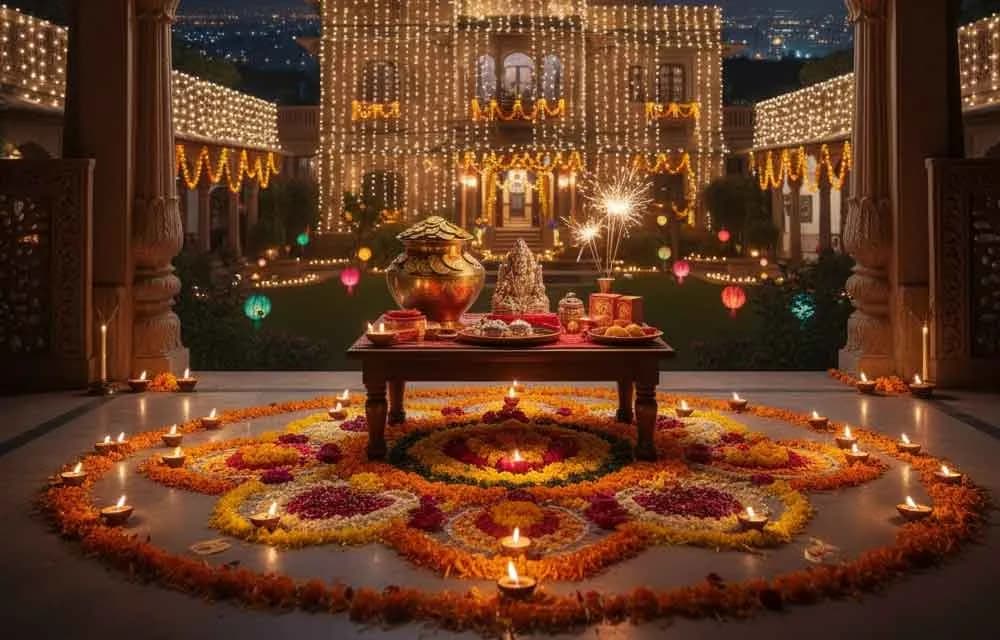
Days before Dhanteras, homes are thoroughly cleaned, representing the removal of negativity and stagnation. Doorways are adorned with colorful rangoli designs and mango leaves. The entrance is decorated to welcome Goddess Lakshmi into the home.
Purchasing Metals
The most prominent tradition is buying gold, silver, or new utensils on Dhanteras. This practice symbolizes inviting Lakshmi's blessings and is considered highly auspicious. Even a small purchase, such as a silver coin with Lakshmi's image, is believed to multiply prosperity.
Lakshmi-Kubera Puja
In the evening, families perform Lakshmi-Kubera puja with deep devotion. Clay or silver idols of Goddess Lakshmi and Lord Kubera are worshipped with flowers, incense, sweets, and fruits. The puja room and entrance are illuminated with oil lamps and diyas.
Lighting the Yama Diya
A special lamp called "Yama Diya" is lit outside the home, usually facing south (the direction associated with Lord Yama). This lamp burns throughout the night to honor Yama and protect the family from untimely death and misfortune.
Dhanvantari Puja
Many devotees, especially those seeking good health, worship Lord Dhanvantari on this day. Offerings of tulsi leaves, flowers, and prayers are made for well-being and freedom from ailments.
The Spiritual Journey from Dhanteras to Diwali
Dhanteras begins a five-day spiritual journey:
Day 1 - Dhanteras: Inviting wealth, health, and removing obstacles Day 2 - Naraka Chaturdashi (Choti Diwali): Purification and victory over evil Day 3 - Diwali (Lakshmi Puja): Celebrating light, goodness, and prosperity Day 4 - Govardhan Puja: Honoring nature and Lord Krishna's divine play Day 5 - Bhai Dooj: Celebrating sibling bonds and family love
Each day builds upon the previous, creating a complete cycle of spiritual cleansing, material prosperity, and familial harmony.
The Timeless Message
The myths and traditions of Dhanteras carry profound wisdom for modern times. They teach us that:
- True wealth encompasses both material prosperity and good health
- Light and wisdom can conquer darkness and ignorance
- Devotion and determination can overcome even the most dire predictions
- Divine grace flows when we prepare our hearts and homes with purity and love
Dhanteras reminds us that prosperity is not merely about accumulating wealth but about honoring the divine sources of abundance and using our resources wisely and compassionately.
Conclusion
As Dhanteras lights the first lamp in the festival of Diwali, it illuminates our path toward both material and spiritual fulfillment. The ancient tales of Lord Dhanvantari's emergence, Goddess Lakshmi's blessing, and the young prince's miraculous survival continue to inspire millions of devotees across the world.
When we celebrate Dhanteras with faith and reverence, we connect ourselves to these timeless divine energies, inviting health, wealth, and prosperity into our lives. This sacred day serves as a beautiful reminder that when we honor the divine with pure hearts, blessings flow abundantly, lighting our way through life's journey.
May this Dhanteras bring you and your loved ones abundant health, prosperity, and divine blessings. May your homes be filled with the radiance of countless diyas and your hearts with the warmth of devotion.
Shubh Dhanteras! Shubh Diwali!
For more devotional stories, rituals, and spiritual wisdom, visit www.hindutone.com
Frequently Asked Questions
When is The Connection Between Dhanteras and Diwali?
The Connection Between Dhanteras and Diwali is observed on its traditional tithi in the Hindu lunar calendar; refer to the year's panchang for the exact date in your region.
What is the significance of The Connection Between Dhanteras and Diwali?
Introduction Dhanteras , also known as Dhanatrayodashi, marks the auspicious beginning of the five-day Diwali festival. Celebrated on the thirteenth lunar day (trayodashi) of Krishna Paksha in the Hindu month of Kartik, this day holds immense spiritual and cultural significance.
How is The Connection Between Dhanteras and Diwali celebrated?
Devotees observe it with puja, fasting or special offerings, visiting temples, chanting mantras, and gathering with family. Customs vary by region and tradition.
What should devotees do on The Connection Between Dhanteras and Diwali?
Take a sacred bath, perform the day's puja and charity (dana), observe any prescribed fast, and chant mantras with sincere devotion.
You might also like
Hindu Festival Calendar 2026 — Complete Guide for NRIs (Dates, Tithis, Puja)
June 2026 Hindu Festival Calendar — Complete Dates, Vrat & Puja Guide for NRIs
Shani Deva Temples Worldwide & Must-Performed Rituals — Complete Devotee's Guide