

Dussehra: The Significance of 9 Days in Hinduism – Significance to Hindus
Dussehra, also known as Vijayadashami, is a major Hindu festival celebrated over 9 days, known as Navaratri.
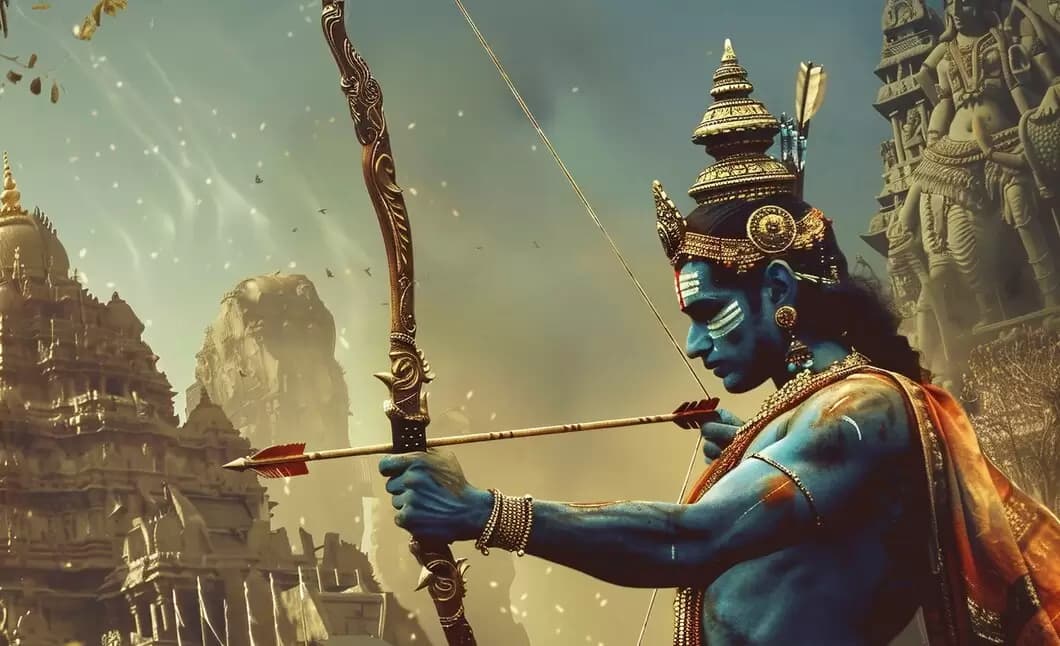
Dussehra, also known as Vijayadashami, is a major Hindu festival celebrated over 9 days, known as Navaratri.
Dussehra, also known as Vijayadashami, is a major Hindu festival celebrated over 9 days, known as Navaratri. Each day holds deep spiritual meaning and cultural significance, marking the victory of good over evil. Here's why Dussehra is celebrated over 9 days and its importance to Hindus:
- Navaratri – Nine Nights of Worship
Navaratri, meaning "nine nights," is dedicated to the worship of Goddess Durga and her nine divine forms. Each of these forms symbolizes different virtues such as strength, wisdom, wealth, courage, and compassion. Hindus believe that by worshiping these nine forms, they are invoking the goddess to destroy negativity and evil forces in their lives. - Victory of Goddess Durga over Mahishasura
One of the central stories associated with Dussehra is the battle between Goddess Durga and the buffalo demon Mahishasura. The nine days symbolize the fierce battle that took place, culminating in Durga’s victory on the tenth day, Dussehra. This triumph signifies the destruction of evil and the establishment of righteousness. - Ramayana – Lord Rama’s Victory
Another important legend connected with Dussehra is the victory of Lord Rama over the demon king Ravana. The 9 days are believed to symbolize Rama's preparation for battle, and Dussehra marks the day when Lord Rama finally defeated Ravana, restoring peace and dharma (righteousness). - Spiritual Cleansing and Growth
Hindus view these nine days as a time for spiritual cleansing, meditation, and devotion. By fasting, praying, and performing rituals, devotees aim to purify their minds and rid themselves of negative tendencies. The festival encourages self- discipline, focus, and personal growth, allowing individuals to emerge stronger and more virtuous. - Celebration of Feminine Power
Navaratri is dedicated to honoring the divine feminine, celebrating the Shakti(power) of the goddess in various forms such as Durga, Lakshmi, and Saraswati. These nine days celebrate the empowerment of women and the divine energy they bring to the world. - Social and Cultural Importance
Dussehra and Navaratri are also occasions for community gatherings, dances like Garba and Dandiya, and the enactment of Ramlila (plays depicting the Ramayana). It's a time for families and communities to come together, offering prayers, sharing meals, and celebrating shared cultural values.
The Nine Forms of Goddess Durga: Who Are the Navadurga?
The Devi Bhagavata Purana and the Markandeya Purana detail the nine manifestations of Goddess Durga collectively called the Navadurga. Each form is worshipped on a specific day of Navaratri: Shailaputri on the first day, Brahmacharini on the second, Chandraghanta on the third, Kushmanda on the fourth, Skandamata on the fifth, Katyayani on the sixth, Kalaratri on the seventh, Mahagauri on the eighth, and Siddhidatri on the ninth.
Each manifestation carries distinct attributes and symbolism. Shailaputri, daughter of the Himalayas, represents rootedness and steadfast devotion. Kushmanda is said to have created the cosmos with her radiant smile, while Siddhidatri is the bestower of all eight supernatural powers (ashta siddhis) described in the Devi Purana. Worshipping each form in sequence is understood as a progressive spiritual journey from earthly purification toward divine realization.
Devotees in different regions of India may offer specific flowers, colors, and food to each form. In Varanasi, the Durga Kund Mandir conducts elaborate Navadurga puja with distinct satvika offerings for each day, reflecting the layered theological depth behind what appears to be a single festival.
How Is Navaratri Observed Differently Across India?
India's geographical and cultural breadth gives Navaratri and Dussehra strikingly different regional expressions. In West Bengal and Odisha, the festival takes the form of Durga Puja, where enormous clay idols of Goddess Durga — sculpted according to the iconographic rules laid down in the Shilpa Shastras — are worshipped over five days and then immersed in rivers on Vijayadashami. The streets of Kolkata transform into open-air galleries of devotional art.
In Gujarat, the festival is synonymous with Garba and Dandiya Raas, circular folk dances performed around a lit lamp symbolising the goddess. These dances, performed nightly for nine consecutive nights, are rooted in the Bhakti tradition and serve as a form of moving meditation. In Mysuru (Karnataka), the Mysore Dasara, dating back to the Vijayanagara Empire, sees a grand royal procession on Vijayadashami where the idol of Goddess Chamundeshwari is carried atop a caparisoned elephant to the Banni Mantapa, where the Banni (Shami) tree is traditionally worshipped.
In the northern states of Uttar Pradesh and Delhi, Ramleela — a dramatic enactment of the Ramayana — is staged publicly every evening during Navaratri. On Dussehra, giant effigies of Ravana, Kumbhakarna, and Meghnad are filled with firecrackers and burned. The Ramleela of Ramnagar, near Varanasi, is among the oldest and most elaborate, performed over a month with a cast of hundreds following the Tulsidas Ramcharitmanas script.
What Is the Scriptural Basis for Vijayadashami as the Tenth Day?
The designation of the tenth day as Vijayadashami — Vijaya meaning victory and Dashami meaning the tenth lunar day — is grounded in both Shaiva-Shakta scripture and the Valmiki Ramayana. The Devi Mahatmya, the 700-verse hymn embedded in the Markandeya Purana, records that after nine nights of fierce combat, Goddess Durga slew Mahishasura on the tenth day at dawn, restoring cosmic order. The text explicitly associates this day with universal victory over Tamas (darkness and inertia).
The Ramayana tradition adds another layer: the sage Agastya is said to have revealed to Lord Rama the Aditya Hridayam, a hymn to the sun-god, on the eve of his final battle with Ravana. The Uttara Kanda of Valmiki's Ramayana places Ravana's defeat on this same tenth day, creating a convergence of two epic victories in a single sacred moment.
The Shami tree (Prosopis spicigera) holds special importance on Vijayadashami. The Mahabharata records that the Pandavas concealed their divine weapons in a Shami tree during their year of incognito exile (Agyatavasa) and retrieved them on this very day before the Kurukshetra war. Worshipping the Shami on Vijayadashami is therefore a tradition that connects devotees symbolically to all three great narratives — the Devi Mahatmya, the Ramayana, and the Mahabharata.
Fasting, Rituals, and Practices: What Do Devotees Actually Do During Navaratri?
Fasting (upavasa) during Navaratri is one of its most widely practised observances. The Sanskrit term upavasa literally means 'to dwell near' — the intent is to dwell closer to the divine by reducing bodily preoccupations. Devotees typically abstain from grains, onion, garlic, and non-vegetarian food, instead eating satvika foods such as fruits, milk, and foods made from buckwheat (kuttu) or water chestnut flour (singhare ka atta). The fast is understood not merely as dietary restriction but as a means of redirecting energy toward spiritual practice.
The ritual of Ghatasthapana or Kalash Sthapana marks the beginning of Navaratri. A clay pot filled with water, topped with a coconut and mango leaves, is installed on a bed of soil where barley seeds are sown. By Vijayadashami, the barley has sprouted — this sprouting is called Navami Patrika or Khetri and symbolises the regeneration of life and prosperity. The Akhand Jyoti, an unbroken flame kept burning for all nine days, is maintained in millions of homes and temples as a symbol of the goddess's perpetual presence.
Kanya Puja, performed on Ashtami or Navami (the eighth or ninth day), is among the most moving of Navaratri rituals. Young girls, typically between the ages of two and ten, are invited into homes and temples, their feet washed, and they are offered a meal of puri, chana, and halwa, along with small gifts. These girls are honoured as living embodiments of the Navadurga, and the ritual draws directly from the Devi Bhagavata's teaching that the goddess resides in all feminine forms.
Why Is Dussehra Considered an Auspicious Day for New Beginnings?
Vijayadashami is traditionally regarded as one of the three-and-a-half most auspicious moments (Sade Teen Muhurtas) in the Hindu calendar — days on which any enterprise begun needs no additional astrological consultation because the time is inherently auspicious. The other such moments are Gudhi Padwa, Akshaya Tritiya, and the first half of Diwali's Kartika Shukla Pratipada. This status makes Dussehra an ideal day to launch businesses, sign agreements, purchase vehicles, begin construction, or initiate the education of children.
The tradition of Vidyarambha — formally introducing young children to letters and learning — is widely observed on Vijayadashami, particularly in Kerala and Karnataka. Children trace the Malayalam or Kannada alphabet in a plate of raw rice or sand, guided by a teacher or elder, under the blessings of Goddess Saraswati. This connects the festival's theme of Shakti to the specific power of Vak (divine speech) and Vidya (knowledge), attributes of Saraswati worshipped on the ninth day.
Warriors and craftsmen have historically worshipped their tools and weapons (Ayudha Puja) on the ninth day, Navami, offering flowers and turmeric to the instruments of their livelihood. The practice acknowledges that skill and craft are gifts of the divine and that the tools enabling one's dharmic work deserve reverence. In modern times, this tradition continues in many South Indian households, offices, and factories, where vehicles, computers, and machinery are cleaned and briefly taken out of service as an act of grateful worship.
Frequently Asked Questions
When is Dussehra?
Dussehra is observed on its traditional tithi in the Hindu lunar calendar; refer to the year's panchang for the exact date in your region.
What is the significance of Dussehra?
Dussehra, also known as Vijayadashami, is a major Hindu festival celebrated over 9 days, known as Navaratri . Each day holds deep spiritual meaning and cultural significance, marking the victory of good over evil.
How is Dussehra celebrated?
Devotees observe it with puja, fasting or special offerings, visiting temples, chanting mantras, and gathering with family. Customs vary by region and tradition.
What should devotees do on Dussehra?
Take a sacred bath, perform the day's puja and charity (dana), observe any prescribed fast, and chant mantras with sincere devotion.
You might also like
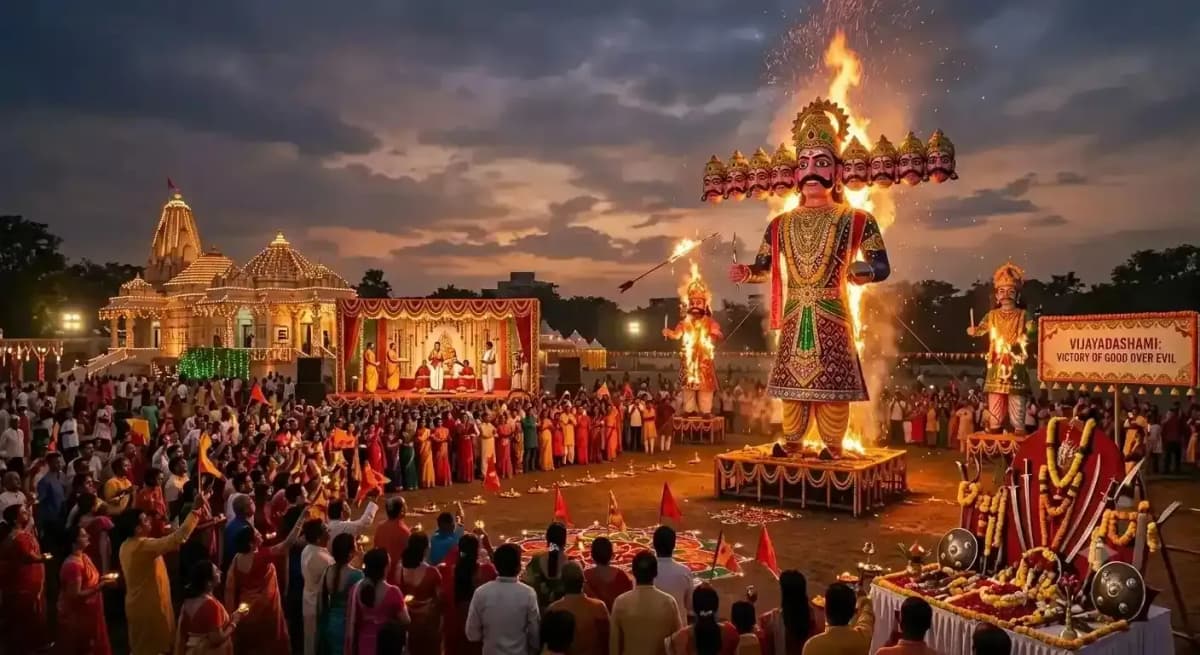
Dussehra / Vijayadashami 2026: Complete Guide — Date, Muhurat, Rituals & Meaning
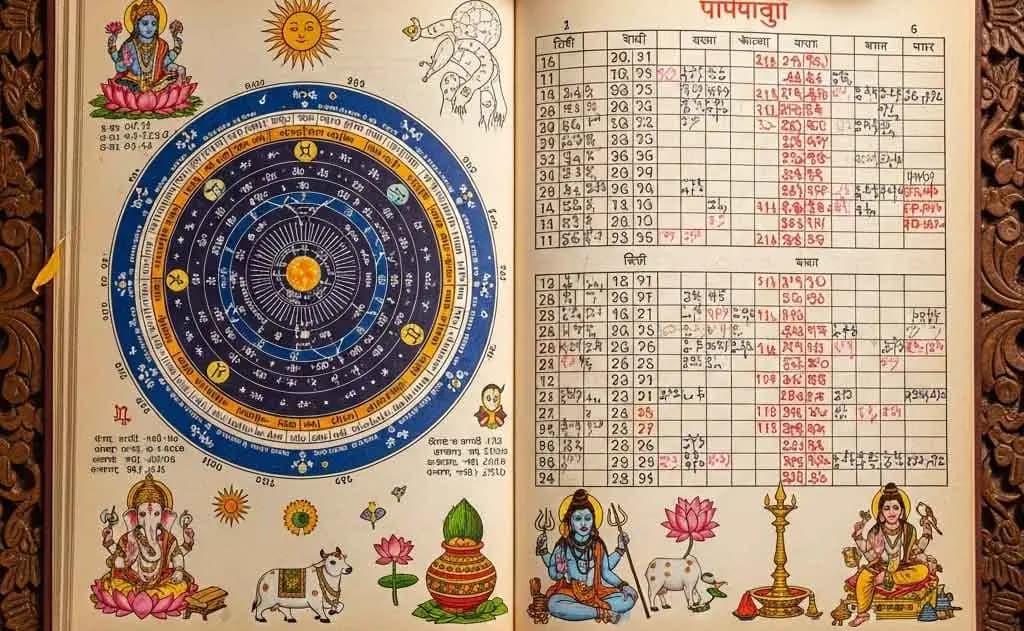
Hindu Festival Calendar 2026 — Complete Guide for NRIs (Dates, Tithis, Puja)
Gayatri Jayanti 2026: Date, Gayatri Mantra, Puja Vidhi & Significance
