
Ganesh Chaturthi 21 Patri Guide: The 21 Sacred Leaves, Names and How to Offer Them
A complete guide to the 21 patri (Ekavimshati Patra Puja) of Vinayaka Chavithi: each leaf with its Sanskrit, Telugu and botanical name, the Ganesha name chanted with it, how to perform the offering, safety warnings and what NRI families can do abroad.
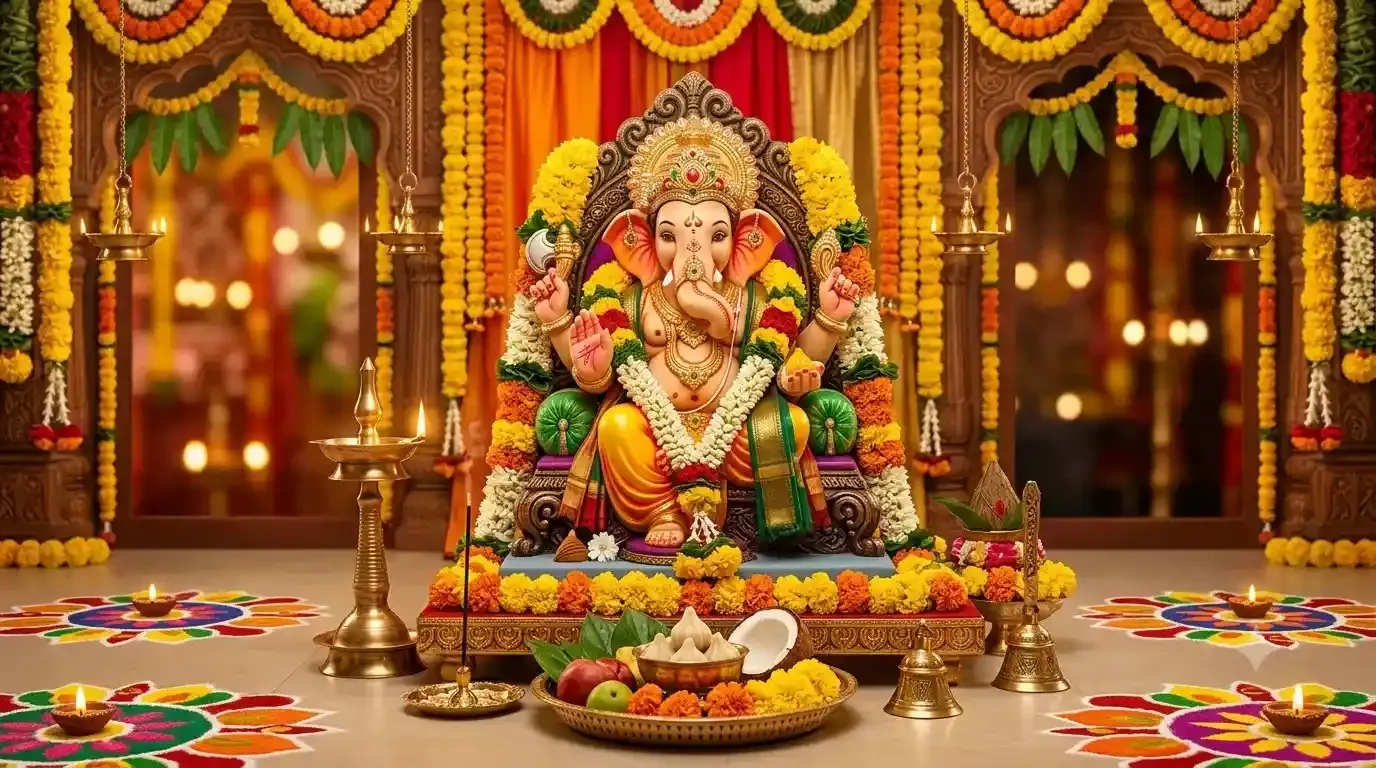
A complete guide to the 21 patri (Ekavimshati Patra Puja) of Vinayaka Chavithi: each leaf with its Sanskrit, Telugu and botanical name, the Ganesha name chanted with it, how to perform the offering, safety warnings and what NRI families can do abroad.
Quick answer: The 21 patri (Ekavimshati Patra Puja) is the offering of 21 different sacred leaves to Lord Ganesha during the Vinayaka Chavithi puja, especially in Telugu homes. Each leaf is offered while chanting one of Ganesha's names, for example 'Om Sumukhaya namah, machi patram pujayami'. The leaves include machi patri, bilva, durva, tulasi, mango, shami, peepal and arka. If some are unavailable, especially abroad, offer what you have and substitute akshata or flowers for the rest.
This guide, restored at its original hindutone.com address, lists all 21 leaves with their Sanskrit, Telugu and botanical names, explains how to offer them, and gives honest, practical advice for NRI families. Ganesh Chaturthi 2026 fell on Monday 14 September; the next Vinayaka Chavithi is on Saturday 4 September 2027, so this is a good time to plan.
Why 21 leaves?
Leaves are among the simplest and oldest offerings in Hindu worship. In the Bhagavad Gita (9.26) Krishna says that whoever offers him a leaf, a flower, a fruit or water with devotion, he accepts it. Vinayaka Chavithi falls at the end of the monsoon, when plants are at their most abundant, and the patri puja turns this seasonal abundance into worship.
Many of the 21 plants are also used in Ayurveda and folk medicine, and elders often say the festival was a way of teaching each generation to recognise useful plants. The number 21 is closely associated with Ganesha: 21 durva blades, 21 modaks and 21 names are common offerings across India.
The 21 patri: names and the chant for each
The table follows the order printed in many Telugu Vinayaka Vrata Kalpam editions. For each leaf, the priest or head of the family chants 'Om [name] namah, [leaf] patram pujayami' and offers the leaf at the idol's feet. Editions differ slightly, so if your book gives a different pairing, follow your book. Botanical identifications are the commonly accepted ones; for a few plants, regional identification varies.
| # | Ganesha name chanted | Leaf (Sanskrit) | Telugu / common name | Usual botanical identification |
|---|---|---|---|---|
| 1 | Om Sumukhaya namah | Machi patram | Machipatri | A fragrant Artemisia species |
| 2 | Om Ganadhipaya namah | Brihati patram | Vakudu / Mulaka | A wild Solanum (nightshade) species |
| 3 | Om Umaputraya namah | Bilva patram | Maredu | Aegle marmelos (bael) |
| 4 | Om Gajananaya namah | Durvayugmam | Garika | Cynodon dactylon (offered in pairs) |
| 5 | Om Harasunave namah | Dattura patram | Ummetta | Datura species (toxic) |
| 6 | Om Lambodaraya namah | Badari patram | Regu | Ziziphus (jujube / ber) |
| 7 | Om Guhagrajaya namah | Apamarga patram | Uttareni | Achyranthes aspera |
| 8 | Om Gajakarnaya namah | Tulasi patram | Tulasi | Ocimum tenuiflorum (holy basil) |
| 9 | Om Ekadantaya namah | Chuta patram | Mamidi | Mangifera indica (mango) |
| 10 | Om Vikataya namah | Karavira patram | Ganneru | Nerium oleander (toxic) |
| 11 | Om Bhinnadantaya namah | Vishnukranta patram | Vishnukranta | Evolvulus alsinoides |
| 12 | Om Vatave namah | Dadimi patram | Danimma | Punica granatum (pomegranate) |
| 13 | Om Sarveshvaraya namah | Devadaru patram | Devadaru | Cedrus deodara (varies regionally) |
| 14 | Om Phalachandraya namah | Maruvaka patram | Maruvam | Origanum majorana (sweet marjoram) |
| 15 | Om Herambaya namah | Sindhuvara patram | Vavili | Vitex negundo |
| 16 | Om Shurpakarnaya namah | Jaji patram | Jaji | Jasminum grandiflorum |
| 17 | Om Suragrajaya namah | Gandaki patram | Gandaki | Identification varies by region |
| 18 | Om Ibhavaktraya namah | Shami patram | Jammi | Prosopis cineraria |
| 19 | Om Vinayakaya namah | Ashvattha patram | Raavi | Ficus religiosa (peepal) |
| 20 | Om Surasevitaya namah | Arjuna patram | Maddi | Terminalia arjuna |
| 21 | Om Kapilaya namah | Arka patram | Jilledu | Calotropis gigantea (toxic sap) |
After the 21st leaf, many families offer a final handful of all the leaves together with the words 'ekavimshati patrani pujayami' (I offer the twenty-one leaves). Use the exact closing line printed in your vrata book.
How to perform the patri puja step by step
- Collect the leaves a day before or early on Chavithi morning. Wash them gently and let them dry on a clean cloth.
- Sort them into 21 small heaps on a plate or banana leaf, in the order of the table, so you do not lose your place during the puja.
- Perform the main Vinayaka Chavithi puja as given in your vrata kalpam: dhyanam, avahanam and the sixteen upacharas, followed by anga puja.
- For the patri puja, take each heap in turn, chant 'Om [name] namah, [leaf] patram pujayami', and place the leaves at the idol's feet.
- Offer durva in pairs (yugmam); many families also offer 21 separate durva blades with 21 names.
- Continue with dhupa, deepa, naivedyam, the Vinayaka katha (including the Syamantaka story) and aarti.
For the full sequence of the vratam, see our guide to the Vinayaka vrata vidhanam.
Safety first: three of the leaves are poisonous
Datura (ummetta), oleander (ganneru) and arka (jilledu) are toxic if eaten, and arka's milky sap irritates skin and eyes. Their inclusion in worship is traditional, but take care:
- Wear gloves or wash your hands thoroughly after handling them; do not rub your eyes.
- Keep them out of reach of small children and pets, and never let them mix with prasad.
- After the festival, dispose of them where animals cannot eat them.
- If you cannot source these safely, it is entirely acceptable to offer akshata or a flower in their place while chanting the name.
Finding the leaves outside India
Gathering all 21 leaves is hard even in Indian cities today. Abroad it is often impossible, and that is fine. Here is what is realistic in the USA, UK, Canada, Australia and similar countries:
- Durva (garika): Cynodon dactylon is the same species as Bermuda grass, common in lawns in warm regions of the USA and Australia. Pick it from a lawn you know has not been sprayed with chemicals.
- Tulasi: Many diaspora families grow tulasi in pots indoors; it is the easiest leaf to keep at home.
- Mango leaves: Indian grocery stores often stock mango leaves, especially before festivals.
- Pomegranate, jasmine and oleander: These grow as garden plants in warm areas such as California, Texas, Florida and parts of Australia.
- Maruvam: Sweet marjoram is sold as a fresh or potted herb in many supermarkets and garden centres.
- Patri kits: Some Indian stores and temples sell patri bundles before Vinayaka Chavithi. Availability changes each year, so ask locally.
- Do not import plant material: Bringing fresh leaves into most countries from India is restricted by agricultural rules. Source locally instead.
Avoid substituting a look-alike species simply because it shares a name. If you are unsure, use akshata for that leaf. The vrata itself values devotion over completeness.
Patri puja for children
The 21 patri is a wonderful way to involve children. Give each child a few leaves to find, wash and arrange; let them read the Ganesha names aloud from the table. Explain one plant's use or story each year. Keep the toxic leaves with adults only.
Frequently asked questions
What if I cannot find all 21 leaves?
Offer the leaves you can find with full devotion, and offer akshata (turmeric-coloured rice) or flowers while chanting the name for any leaf you do not have. Priests and vrata books commonly allow this substitution. Durva grass, tulasi, mango and bilva are worth prioritising.
Is tulasi offered to Ganesha? I heard it is not allowed.
Many North Indian traditions avoid offering tulasi to Ganesha, citing a story in which Tulasi and Ganesha cursed each other. The Telugu Vinayaka Vrata Kalpam, however, includes tulasi in the 21 patri and specifically permits it on Chavithi. Follow your family's tradition.
When should the 21 patri be offered?
During the Vinayaka Chavithi puja, after the shodashopachara (sixteen-step) worship of the idol and the anga puja, and before the dhupa, deepa and naivedyam. Your vrata kalpam book or priest will show the exact place.
What do I do with the leaves after the festival?
Traditionally the leaves are immersed with the clay idol. Abroad, place them in a garden, compost bin or a pot of soil, or immerse them with the idol in a bucket at home and pour the water into the garden. Do not put leaves from toxic plants where pets or children can reach them.
Are the 21 patri only a Telugu tradition?
Ekavimshati Patra Puja is most strongly associated with Telugu households on Vinayaka Chavithi, and also followed in parts of Karnataka and elsewhere. Many other regions offer 21 durva blades, 21 modaks or 21 flowers instead. The number 21 itself is widely associated with Ganesha worship.
Editor's note
Editor's note (5 October 2026): This guide has been restored at its original address after the earlier version was lost. The name-leaf pairing follows widely printed Telugu vrata kalpam editions, which vary slightly; botanical names are the commonly accepted identifications, and we have marked those (Gandaki, Devadaru) where regional usage differs. Dates are from Drik Panchang: Ganesh Chaturthi was Monday 14 September 2026 and falls on Saturday 4 September 2027.
Related guides
You might also like

Ganesh Chaturthi Wishes and Quotes: Messages, Shlokas and Captions
Ganesh Chaturthi & Vinayaka Chavithi Wishes for NRIs in the USA
Who Started Public Ganesh Chaturthi? Lokmanya Tilak and the Story of 1893