

Ganesh Mandapam Rules in the UK: City-by-City Compliance Guide
A city-by-city guide to setting up a temporary Ganesh Mandapam (marquee) in the UK — the 28-day permitted-development rule, Temporary Event Notices, fire risk assessments, London’s Section 30 and Scotland’s Section 89, noise, insurance, eco-friendly immersion and organiser checklists for London, Leicester, Birmingham, Manchester, Glasgow, Edinburgh and Cardiff.
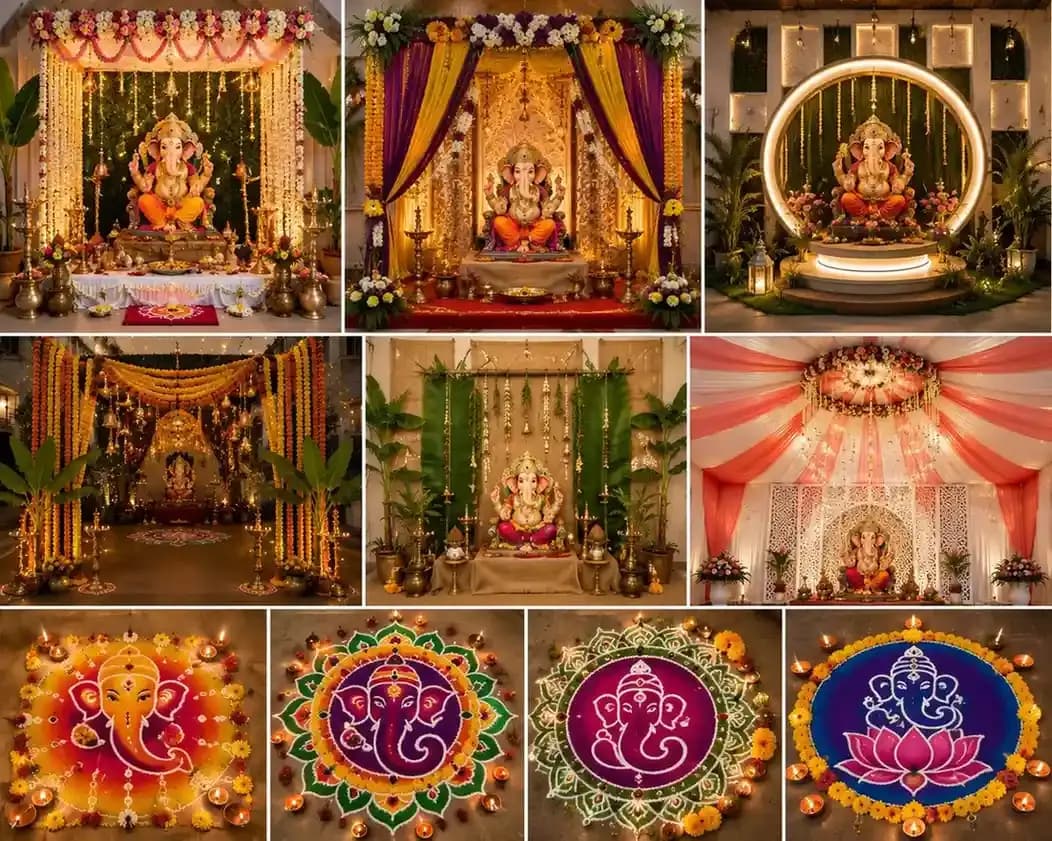
A city-by-city guide to setting up a temporary Ganesh Mandapam (marquee) in the UK — the 28-day permitted-development rule, Temporary Event Notices, fire risk assessments, London’s Section 30 and Scotland’s Section 89, noise, insurance, eco-friendly immersion and organiser checklists for London, Leicester, Birmingham, Manchester, Glasgow, Edinburgh and Cardiff.
Quick answer: The UK has no dedicated "Ganesh Mandapam" law. Temporary marquees are covered by the 28-day permitted-development rule, Temporary Event Notices (TENs, max 499 people) for licensable activities, the Fire Safety Order 2005 risk assessment, and — for raised structures — London’s Section 30 or Scotland’s Section 89. Always confirm with your local council.
Ganesh Chaturthi celebrations in the United Kingdom bring Hindu communities together through home pujas, temple events and community mandapams (temporary marquees, tents or structures housing the murti of Lord Ganesha). Unlike India, the UK has no dedicated national "Ganesh Mandapam" legislation. Organisers must comply with planning rules for temporary uses and structures, licensing for entertainment/alcohol/food, fire safety, health and safety, noise, highways and environmental regulations — administered mainly by local councils, with differences across England, Wales, Scotland and Northern Ireland.
This guide covers general UK principles and practical requirements for major cities with significant Hindu populations (London and its boroughs, Leicester, Birmingham, Manchester, Glasgow, Edinburgh, Cardiff and others). Always check the latest rules with your local council, as details vary and can change. Contact the relevant licensing, planning, building control and environmental health teams early — ideally several weeks or months ahead for larger events.
Why compliance matters
Temporary structures for public or semi-public religious gatherings fall under assembly and event regulations. Non-compliance can lead to enforcement action, event cancellation, fines or liability issues. Religious activities benefit from certain exemptions or sensitivities in licensing and public-order contexts, but life-safety, fire and planning rules still apply.
General UK framework for temporary mandapams
Planning permission and temporary use
In England, the Town and Country Planning (General Permitted Development) (England) Order 2015 (as amended) often allows temporary use of land for events with moveable structures (marquees/tents) under Part 4 Class B for up to 28 days in any calendar year (reduced to 14 days for markets or certain racing). The structure must be temporary/moveable (no permanent foundations) and removed within the period. Longer stays, repeated annual use that effectively becomes permanent, sensitive locations (listed buildings, conservation areas, Article 4 Directions) or a material change of use typically require full planning permission. Wales, Scotland and Northern Ireland follow similar permitted-development principles with local variations (e.g. Scotland’s own GPDO equivalents; longer-duration structures may need Building Warrants). Private residential gardens have more flexibility for short-term domestic use; public land, parks or highways almost always need additional council permission.
Licensing — Temporary Event Notices (TENs) and equivalents
In England and Wales, a Temporary Event Notice (TEN) under the Licensing Act 2003 is required for "licensable activities" on unlicensed premises: sale of alcohol, regulated entertainment (live/recorded music, dancing, plays, films) or late-night refreshment (hot food/drink 11pm–5am). Key limits: maximum 499 people at any time (including staff), maximum 168 hours (7 days) per notice, notice periods (standard TEN at least 10 clear working days; late TEN 5–9 days with restrictions), and annual caps (generally 5 TENs for non-personal licence holders, 50 for personal licence holders). The fee is typically £21; police and environmental health can object on crime, disorder, nuisance, safety or child-protection grounds. Larger events (500+) or longer durations need a full premises licence. Pure religious worship or private events without licensable activities may not require a TEN, but amplified music, public cultural performances or food sales often do. Scotland uses Occasional Licences under the Licensing (Scotland) Act 2005; Northern Ireland has its own regime.
Fire safety and structural requirements
The Regulatory Reform (Fire Safety) Order 2005 (England and Wales) requires a fire risk assessment for non-domestic premises and events. Temporary structures must have adequate means of escape, fire extinguishers, clear signage and flame-retardant materials where appropriate. Competent persons should erect structures; larger or raised structures (stages, platforms) often need structural calculations, certification and inspection. In Scotland, Section 89 of the Civic Government (Scotland) Act 1982 requires local-authority approval for temporary raised structures (platforms, stages, stands or certain raised tents) used for seating/standing accommodation, typically for up to 28 days (longer needs a Building Warrant).
Other key requirements
- Noise and nuisance: local environmental health enforce noise controls. Quiet hours (often evening/night) apply; face speakers away from residences; some events agree specific decibel limits with the council.
- Highways and processions: road closures, traffic management or processions need council/highways permission and often police notification under the Public Order Act 1986.
- Health, safety and insurance: risk assessments, first aid, crowd management, public-liability insurance (commonly £5–10 million+ for larger events) and sanitation are essential; food handling requires hygiene compliance.
- Environmental and Visarjan: prefer eco-friendly clay/natural idols. Natural-water immersion is heavily restricted — use artificial tanks, temple facilities or approved methods, and follow waste and water-pollution rules.
- Public land/parks: separate event permissions, fees and conditions from the landowner (council parks teams).
Document everything, use reputable marquee suppliers familiar with UK codes, and prepare an event-management plan covering weather, evacuation and contingencies.
Major cities and regions — practical guidance
Regulations are local. Below are key considerations for major centres; always confirm with the specific council’s licensing, planning, building control and events teams. Temples and Hindu organisations often have experience and established contacts.
London (incl. Brent, Ealing, Harrow, Newham, Southwark, Westminster, City of London)
London has the largest and most diverse Hindu population, and borough councils handle TENs, planning, noise and most event permissions. The City of London and some Inner London areas require a Section 30 licence under the London Building Acts (Amendment) Act 1939 for special and temporary structures (marquees, stages) the public can interact with — apply to Building Control well in advance; fees apply and structural/fire standards must be met. Parks and open spaces need separate permissions. Noise is a frequent concern in residential areas; councils may impose start times, decibel limits and complaint lines. Processions or road use require highways and police coordination. Major temples (Neasden, Wembley/Southall, East London) regularly navigate these systems; private temple grounds are simpler than public parks. Apply early for TENs and any Section 30 or parks licences.
Leicester
Leicester has one of the UK’s largest and most established Hindu communities (Belgrave Road and surrounding areas). The city council manages TENs, temporary-event permissions, planning for longer structures, noise and parks. Community celebrations are well-supported but must still follow standard rules on capacity, fire risk assessments and neighbour impact. Private community halls or temple land simplify matters, and immersion typically uses controlled/artificial methods. Coordinate with licensing and environmental health; established local mandals provide practical guidance.
Birmingham and the West Midlands
Birmingham hosts vibrant celebrations (Soho Road and other areas). Birmingham City Council (and neighbouring authorities) handle TENs, event licences for public spaces, planning and fire-related requirements via Building Control or licensing. Temporary marquees on private land under the 28-day rule are often straightforward if no licensable activities trigger a TEN; larger public or entertainment-focused events need full coordination. Noise, traffic and waste management are key, and local Hindu associations have significant experience.
Manchester and Greater Manchester
Manchester City Council requires details of all temporary structures (including marquees) as part of event bookings — design documentation, structural calculations where needed, competent erection and independent inspection certification, with high public-liability and professional-indemnity insurance expectations. TENs follow standard England rules; parks and public land need separate permissions, and road closures have specific processes and fees. Noise and residential amenity are closely monitored; Rusholme and other community hubs host regular events.
Glasgow and Edinburgh (Scotland)
Scotland has distinct rules. Temporary raised structures generally require local-authority approval under Section 89 of the Civic Government (Scotland) Act 1982 (platforms, stages, certain raised tents/marquees used for accommodation); longer durations may need Building Warrants. Licensing for alcohol/entertainment uses Occasional Licences rather than TENs, and planning follows Scottish permitted-development rules (temporary uses often limited to around 28 days). Fire safety and risk assessments remain essential — contact the council’s Building Standards/Public Safety and licensing teams.
Cardiff and Wales
Wales follows a similar framework to England for TENs and planning (28-day temporary-use principles apply, with local variations). Local authorities handle event permissions, noise and structures; check for any additional Welsh Government or council-specific guidance on temporary events and environmental protection. Early engagement with Cardiff Council (or your local council) is recommended.
Other notable areas
- Bradford, Leeds, Coventry, Nottingham, Southampton and Southend-on-Sea: follow the national England framework with local council variations — check parks/event teams and any Article 4 restrictions.
- Northern Ireland (e.g. Belfast): separate licensing and planning regimes — contact local councils and the licensing authority early.
- Rural or smaller towns: often lighter administrative burdens on private land, but fire safety, insurance and basic planning rules still apply.
Practical checklist for organisers
- Confirm location (prefer private temple/community land).
- Assess size, duration, expected numbers and activities (music, food, alcohol, processions).
- Check planning status (28-day rule eligibility or need for permission).
- Determine if a TEN (or Scottish/NI equivalent) is needed and serve notices on time.
- Prepare a fire risk assessment, structural details (if raised/large) and competent-contractor documentation.
- Arrange public-liability insurance and any required certifications.
- Notify/consult environmental health (noise), highways (if relevant) and police (if processions).
- Plan eco-friendly idols, waste, sanitation, accessibility and controlled Visarjan.
- Create an event-management plan (weather, evacuation, first aid, stewards).
- Apply for parks/public-land permissions if needed; erect, inspect and certify structures before use; dismantle promptly and keep records.
Eco-friendly and community best practices
Use natural clay or dissolvable idols and avoid materials that pollute waterways. Prefer temple or artificial immersion facilities. Minimise single-use plastics, manage waste responsibly and restore sites fully. Communicate with neighbours about timings and noise — many UK temples already model excellent practice.
Common pitfalls
- Assuming religious status automatically exempts you from TENs, fire rules or planning.
- Missing notice periods for TENs or underestimating lead times for parks/Section 30 licences.
- Inadequate structural or fire documentation for larger marquees.
- Exceeding capacity or noise limits, or using public land without permission.
- Work with experienced UK marquee-hire companies and local Hindu organisations who understand council processes.
This guide is a strong foundation based on current UK frameworks. Rules are local and subject to update, so always verify with your council’s official channels and seek professional advice for complex events. With careful planning, Ganesh Mandapams across the UK can continue to foster devotion, culture and community harmony safely and lawfully. 🙏
Frequently Asked Questions
Do small home or private temple-courtyard setups need permissions?
Often minimal if under planning thresholds, on private land and without licensable activities — but still follow fire safety and neighbour considerations.
Is amplified music or cultural performance allowed?
Yes, within local noise rules, and with a Temporary Event Notice (TEN) if it constitutes regulated entertainment open to the public.
What about processions or street celebrations?
These require highways permissions and police notification/conditions under public-order laws, in addition to any event licences.
How should Visarjan (immersion) be handled in the UK?
Use controlled/artificial methods or approved temple arrangements; natural water bodies are heavily restricted. Eco-friendly clay idols are strongly preferred.
What is a Temporary Event Notice (TEN)?
A notice under the Licensing Act 2003 for licensable activities (alcohol, regulated entertainment, late-night refreshment) on unlicensed premises — max 499 people, up to 7 days, served at least 10 working days ahead, fee ~£21.
Who is responsible for compliance?
Organisers bear primary responsibility for compliance, safety and insurance; property owners and vendors may share liability.
Does Scotland follow the same rules as England?
No. Scotland uses Occasional Licences (not TENs) and Section 89 of the Civic Government (Scotland) Act 1982 for raised structures, with Building Warrants for longer durations.
When is Ganesh Chaturthi 2026?
Ganesh Chaturthi 2026 falls on Monday, 14 September, with Visarjan on Anant Chaturdashi, Friday 25 September — plan marquee planning notices and TENs well ahead of these dates.
You might also like
Ganesh Chaturthi in India: Celebrations Across the Country (2026 Guide)
How the UK Celebrated Ganesh Chaturthi & Visarjan 2026: A City-Wise Guide
Vinayak Chavithi (Ganesh Chaturthi) 2027: Date, Tithi & Visarjan