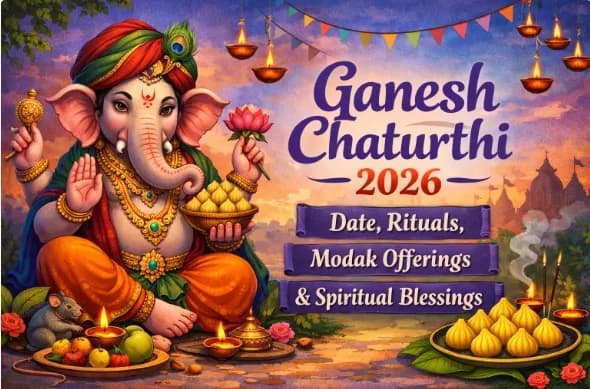
Ganesh Mandapam Rules in the USA: State-Wise Compliance Guide
A complete state-wise guide to setting up a temporary Ganesh Mandapam (pandal/tent) in the United States — building and fire-code permits, flame-resistance, insurance, noise ordinances, eco-friendly immersion and organiser checklists for CA, NY, NJ, TX, IL, FL and beyond.

A complete state-wise guide to setting up a temporary Ganesh Mandapam (pandal/tent) in the United States — building and fire-code permits, flame-resistance, insurance, noise ordinances, eco-friendly immersion and organiser checklists for CA, NY, NJ, TX, IL, FL and beyond.
Quick answer: The USA has no single "Ganesh Mandapam" law. Temporary pandals/tents are governed by local building and fire codes (usually IFC Chapter 31): tents over ~400 sq ft need a permit, fabric must meet NFPA 701, and special-event, insurance, noise and immersion rules apply. Always confirm with your local fire marshal / AHJ.
Ganesh Chaturthi celebrations among Hindu communities in the United States have grown significantly, with temples, cultural associations and local mandals organising community pujas, cultural programs and temporary mandapams (also called pandals or tents) to house the murti of Lord Ganesha. Unlike India, where municipal corporations and police issue specific festival permissions, the USA has no nationwide or state-specific "Ganesh Mandapam" statute. Instead, organisers must navigate a patchwork of local building codes, fire codes (often based on the International Fire Code), zoning/temporary-use ordinances, noise rules, special-event permits and environmental regulations.
This guide explains the key requirements for setting up a temporary Ganesh Mandapam in the United States — general nationwide principles, state-wise considerations, checklists, eco-friendly practices and compliance tips. Always verify current rules with your local Authority Having Jurisdiction (AHJ) — typically the fire marshal, building department or special-events office — because regulations vary by city and county and can change.
Why compliance matters
Temporary structures used for religious gatherings fall under assembly-occupancy rules. Non-compliance can result in permit denial, forced shutdown, fines, liability for injuries or insurance issues. Proper planning protects devotees, neighbours and the environment. Most jurisdictions treat religious temporary structures like other special events, though the Religious Land Use and Institutionalized Persons Act (RLUIPA) provides some protection against discriminatory zoning of religious uses.
Nationwide core requirements for temporary mandapams
Most U.S. jurisdictions follow or adapt the International Fire Code (IFC) Chapter 31 and related building codes for tents and membrane structures. Common rules include:
- Permit size thresholds: tents/membrane structures larger than 400 sq ft (or open canopies larger than 700 sq ft) typically require a permit. Multiple close tents may be aggregated. Small pop-ups may still need flame-resistance documentation or a special-event permit on public property.
- Duration: temporary structures are generally limited to 180 days within a 12-month period on the same site.
- Flame resistance: fabric must meet NFPA 701 flame-propagation criteria, with certificates available on site (decorative materials too).
- Fire safety: adequate ABC fire extinguishers, clear exits and aisles, no-smoking signs, separation from buildings/vehicles/other tents (often 10–20 ft), and accessible fire lanes. Cooking/open flames need extra clearance and permits.
- Structural stability and anchoring: must withstand expected wind loads; larger/taller structures often need engineered plans, especially in high-wind or seismic areas. Anchoring (staking or ballast) must be approved.
- Egress and occupancy: site/floor plans showing exits and calculated occupant load (usually required for 50+ people); exit signs and emergency lighting for enclosed or night use.
- Electrical and generators: temporary power must meet electrical codes; generators often need separate permits, placement and fuel-storage rules.
- Insurance and liability: certificates of insurance (often $1 million+ general liability) naming the city or property owner as additional insured.
- Special-event / temporary-use permits: required for public property, street closures, amplified sound, food service or large crowds. Apply well in advance (often 2–8 weeks or more).
- Noise ordinances: quiet hours often restrict amplified music/aarti loudspeakers in the evening (common ~10 p.m. cutoffs in residential areas). Decibel limits apply; face speakers away from homes, hospitals and schools.
- Zoning and location: private property is easier; public parks, streets or sidewalks almost always need special permission. Keep clear access, parking and emergency routes.
- Sanitation and accessibility: portable toilets (ADA-compliant as required), waste management and ADA accessibility.
- Environmental and immersion (Visarjan): eco-friendly clay/natural idols are strongly preferred or required; natural-water immersion usually needs permits and is restricted or prohibited in many places — artificial tanks or temple-organised immersions are the practical solution.
- Food service: temporary food permits from the health department if serving the public.
- Crowd management and security: for larger events, trained personnel, first-aid, and sometimes CCTV or police coordination.
Always submit site plans, flame certificates, structural details (if required), insurance and owner authorisation. Inspections are common before occupancy.
State-wise guidelines
Regulations are enforced at the city or county level. Below are practical overviews for key states — contact local fire marshals, building departments and special-events offices early. Temples and Hindu organisations often have established relationships and can advise on precedents.
California
California follows the California Fire Code (based on the IFC) with local amendments. Tents/membrane structures over 400 sq ft generally require a permit and fire-code-official approval; detailed site/floor plans are needed for occupant loads of 50+. Temporary use is limited to 180 days in 12 months, and flame-resistance documentation (NFPA 701 or California State Fire Marshal standards) is essential. High wildfire-risk areas impose stricter rules. Los Angeles and nearby cities often require Temporary Special Event Permits for larger installations; San Francisco requires Temporary Place of Assembly permits for certain outdoor tent events; counties such as Monterey use tiered systems by size, duration and location. Apply early in Bay Area, Los Angeles and Sacramento metros.
New York
New York State Fire Code and local amendments (including NYC) require operating permits for tents/temporary membrane structures exceeding 400 sq ft, with exceptions for small open-sided canopies. In New York City, the Department of Buildings handles temporary-structure permits; larger tents, stages or props often need plans by a NY-licensed PE or RA, and Temporary Place of Assembly permits apply to larger gatherings. The event process involves multiple agencies (DOB, FDNY, DOT, Parks). Noise ordinances are strict; street closures/processions require DOT coordination. Major temples in Queens have long experience navigating these systems.
New Jersey
New Jersey’s Uniform Construction Code and Uniform Fire Code set specific thresholds. Construction permits are generally not required for tents/canopies 140 ft or less in any dimension, 16,800 sq ft or less, used fewer than 180 days, occupied only April–November, without permanent foundations or high platforms. Fire-code Type 1 permits apply to larger or certain configurations (commonly over 900 sq ft or 30 ft in a dimension). Local fire-prevention bureaus handle many tent permits; site plans, NFPA 701 certificates and floor plans for higher occupant loads are standard. Edison, Jersey City and other active Hindu communities have established practices — coordinate with local temples and municipal clerks.
Texas
Texas cities adopt versions of the International codes with local amendments. In Houston and Harris County, tents exceeding certain sizes (often 400 or 1,200 sq ft depending on the rule) or used for assembly require permits from the fire marshal or building official; special-event permits are needed for public property or large gatherings. San Antonio and other cities list religious meetings among temporary uses eligible for tent permits in appropriate zoning, often with time/hour restrictions. Engineered structural verification is frequently required for higher occupant loads; food, propane and generator rules are strictly enforced. Houston, Dallas and Austin host vibrant celebrations — local Hindu associations provide practical guidance.
Illinois (Chicago)
Chicago has a well-defined temporary-tent process. Tents 400 sq ft or less and 15 ft or less in height generally do not require a building permit (though codes still apply). Larger tents need permits — the Express Permit Program for certain mid-size installations or standard plan review for bigger ones; grouped tents within specified distances are aggregated. Special Event Permits from DCASE are required for many outdoor festivals involving tents over 400 sq ft, stages, food, alcohol or public impact. Flame resistance (NFPA 701), anchoring, site plans and contractor licensing matter; Park District approvals apply for public land.
Florida
Florida follows the Florida Building Code and Florida Fire Prevention Code. Permit thresholds vary but often start around 120–900 sq ft depending on use and local rules. Assembly/special-event tents commonly require building and/or fire permits, flame-resistance certificates, site plans and structural details for wind resistance (critical in hurricane-prone areas). Miami-Dade, Hillsborough (Tampa), Orange (Orlando) and other counties have specific checklists. Coastal and high-wind zones impose stricter anchoring and design — apply early and use licensed contractors familiar with local wind-load rules.
Other states and general notes
- Pennsylvania (Philadelphia): tent permits for larger tents (over 400 sq ft or certain park sizes); site/floor plans, insurance, flame certificates and installer qualifications are standard.
- Massachusetts, Virginia, Georgia, Michigan, Washington and others: similar IFC-based rules with local variations — always check the specific city/county fire and building departments.
- Rural or smaller municipalities may have lighter requirements but still enforce basic fire and safety codes.
- Federal land or national parks have their own special-use permit processes.
Step-by-step process for organisers
- Choose location (private temple/community property is simplest).
- Determine size, duration, expected attendance and amenities (sound, food, lighting, stages).
- Contact the local fire marshal/building department and special-events office early (ideally 4–8+ weeks ahead).
- Prepare documents: site plan, floor plan, flame certificates, structural info if needed, insurance, owner permission, event description.
- Apply for all required permits (building/fire, special event, temporary use, food, electrical).
- Arrange inspections; do not occupy until approved.
- Implement safety measures: extinguishers, clear exits, trained volunteers, weather monitoring, first aid.
- Manage noise and neighbour relations proactively.
- Use eco-friendly materials and plan responsible immersion.
- Dismantle and restore the site promptly, and document everything for future years and insurance.
Eco-friendly and community best practices
Prefer natural clay or dissolvable idols; avoid Plaster of Paris and chemical paints. Coordinate group immersions in approved tanks or locations. Minimise single-use plastics, manage waste and recycling, and keep the site clean. Engage neighbours with information and prasadam sharing to build goodwill — many temples already follow these practices successfully.
Common pitfalls and tips
- Underestimating lead time for multi-agency permits.
- Ignoring aggregation of multiple small tents.
- Insufficient wind anchoring or flame documentation.
- Amplified sound after quiet hours.
- Serving food without health permits.
- Assuming religious status automatically waives life-safety codes (it does not).
- Work with experienced tent-rental companies that understand local codes; consult established Hindu temples and cultural organisations, which often share institutional knowledge and sometimes hold group permits.
This guide is a solid foundation based on prevailing codes and practices. Because rules are local and can be updated, treat it as a starting point and always confirm with current official sources in your jurisdiction. With careful planning, Ganesh Mandapams across the United States can continue to bring communities together in devotion, culture and safety. 🙏
Frequently Asked Questions
Do small home or temple-courtyard mandaps need permits?
Often not, if under size thresholds and on private property without public impact — but confirm locally and maintain basic fire safety (extinguishers, clear exits, flame-resistant fabric).
Can we play dhol-tasha or loudspeakers?
Yes, within local noise ordinances and permitted hours; obtain noise exemptions if available for cultural events. Common residential cutoffs are around 10 p.m.
What about processions or street events?
Separate parade / street-closure permits from the transportation department are usually required, in addition to any tent or special-event permits.
Who is liable for a community mandapam?
Organisers, property owners and sometimes vendors share responsibility — adequate general-liability insurance (often $1 million or more) is essential.
How do we handle Visarjan (immersion) in the USA?
Prefer temple or community artificial ponds/tanks; never immerse in prohibited natural waters without explicit environmental or park permits. Eco-friendly clay idols are strongly preferred.
Does religious status exempt us from permits?
No. RLUIPA protects against discriminatory zoning of religious uses, but life-safety fire and building codes still apply to temporary assembly structures.
How far in advance should we apply?
For multi-agency permits, apply 4–8+ weeks ahead (sometimes more in large metros). Underestimating lead time is the most common mistake organisers make.
When is Ganesh Chaturthi 2026?
Ganesh Chaturthi 2026 falls on Monday, 14 September, with Ganesh Visarjan on Anant Chaturdashi, Friday 25 September — plan mandapam permits and immersion arrangements around these dates.
You might also like
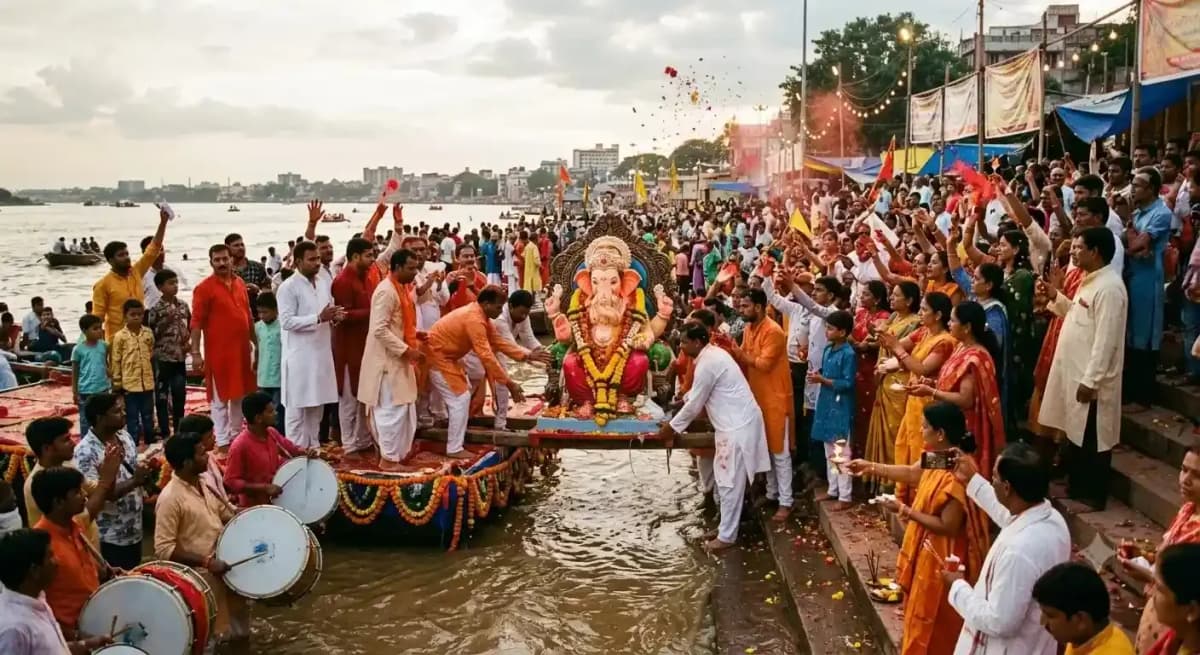
How the USA Celebrated Ganesh Chaturthi & Visarjan 2026: A City-Wise Guide
Ganesh Chaturthi in India: Celebrations Across the Country (2026 Guide)
How the UK Celebrated Ganesh Chaturthi & Visarjan 2026: A City-Wise Guide