
Guru Purnima 2026: Date, Tithi, Vidhi & Mantras | HinduTone
Guru Purnima 2026 falls on Wednesday, 29 July. Verified Drik Panchang Purnima tithi, the Vyasa-puja vidhi, the Guru Gita mantras and the major living sampradayas to honour your acharya.
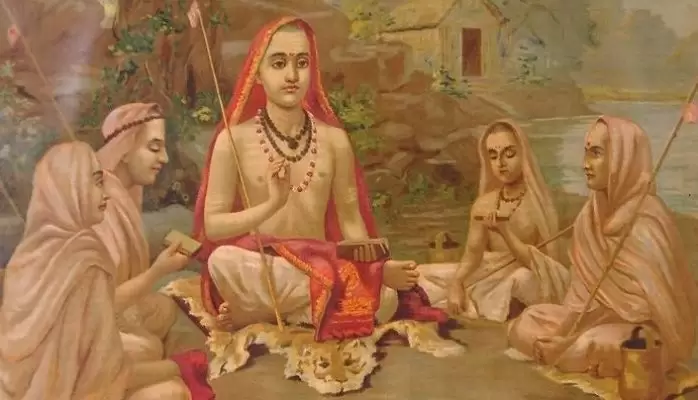
Guru Purnima 2026 falls on Wednesday, 29 July — the full moon of Ashadha, the same Purnima on which Veda Vyasa is said to have been born and on which he completed the four Vedas. For one who has had the grace of a guru, this is the most consequential day of the year. This guide gives you the verified Drik Panchang Purnima tithi timings, the practical home and temple vidhi, the mantras, the Person of Shri Dakshinamurthy who is the original Adi-Guru, and a respectful tour of the major contemporary sampradayas where you can pranam your living acharya — whether at Sringeri or in suburban Houston.
Reviewed for date accuracy by Sreekanth Bathalapalli, Founder, HinduTone — based on Drik Panchang Panchang for 2026, Skanda Purana, Mundaka Upanishad and Guru Gita.
Guru Purnima 2026: Date, Tithi & Muhurat
- Date: Wednesday, 29 July 2026
- Other names: Vyasa Purnima · Ashadha Purnima · Guru Pournami
- Purnima Tithi begins: Tuesday 28 July 2026, 18:18 IST
- Purnima Tithi ends: Wednesday 29 July 2026, 20:05 IST
- Snan-daan muhurat (most auspicious): 04:15 to 06:42 IST on 29 July (Brahma muhurta + Vyasa-puja kala)
- Vyasa-puja preferred time: between sunrise and noon — 06:00 to 12:00 IST
NRI quick conversion (29 July 2026 sunrise IST): approximately 18:30 EDT 28 Jul (US East), 15:30 PDT 28 Jul (US West), 23:00 BST 28 Jul (UK), 09:00 AEST 29 Jul (Sydney). The tithi spans nearly two of your local days — pick whichever fits your work day, ideally between Tuesday evening and Wednesday morning local time.
What Is Guru Purnima — and Why This Specific Full Moon?
Of the twelve Purnimas in the Hindu year, Ashadha Purnima is set apart for one reason: Veda Vyasa, whose name literally means "the arranger," was born on this day to the rishi Parashara and Satyavati. Five thousand years later, on the very same Purnima, Vyasa completed the work of dividing the eternal Veda into the four parts we still call Rig, Yajur, Sama and Atharva — and authored the Mahabharata, the eighteen Maha-Puranas and the Brahma Sutras.
In the Skanda Purana, Sage Markandeya recounts that on Ashadha Purnima the disciples of Vyasa conducted the first Vyasa-puja — a worship of the guru-tattva, the principle of inner illumination that shines through the form of one's own teacher. The festival has carried that name ever since.
In the Buddhist tradition, the same Ashadha Purnima is called Asalha Puja — the day Gautama Buddha gave his first sermon at Sarnath. In Jainism it is the day Mahavira accepted his first ganadhara (chief disciple), Indrabhuti Gautama. Three sampradayas, one Purnima, one universal recognition that there is no path to truth without a teacher who has walked it before us.
Why Honor a Guru? The Shastric Foundations
Three Upanishadic and Puranic threads make the case.
1. The Mundaka Upanishad — knowledge passes only by transmission
Mundaka 1.2.12 declares: "Tad-vijñānārtham sa gurum-evābhigacchet samit-pāṇiḥ śrotriyaṃ brahma-niṣṭham" — "In order to know That, one must approach a guru, with sacred fuel in hand, who is well-versed in the scriptures and established in Brahman." The text is unambiguous: even the most diligent self-study cannot replace the lit-from-within transmission of a realised teacher.
2. The Guru Gita — the guru as the cosmic principle
The Guru Gita, a section of the Skanda Purana, contains the most-quoted Sanskrit verse on this subject:
गुरुर्ब्रह्मा गुरुर्विष्णुः गुरुर्देवो महेश्वरः ।
गुरुः साक्षात् परब्रह्म तस्मै श्रीगुरवे नमः ॥
Gurur Brahmā Gurur Viṣṇuḥ Gurur-devo Maheśvaraḥ | Guruḥ sākṣāt Para-Brahma tasmai Śrī Gurave namaḥ || · "The guru is Brahma, the guru is Vishnu, the guru is Lord Maheshvara himself; the guru is verily the Supreme Brahman — to that revered guru I prostrate." Recite this verse 11 times at sunrise on Guru Purnima, facing the direction of your own teacher's residence.
3. Adi Shankaracharya's Dakshinamurthy Stotram — the original guru
Lord Shiva, in His youthful aspect of Dakshinamurthi (the South-Facing One), is considered the Adi Guru — the first teacher. He sits silently under the banyan tree, and four ancient rishis at his feet receive the highest knowledge in pure silence. Adi Shankaracharya's Dakshinamurthy Stotram celebrates this. On Guru Purnima, many traditional households place a Dakshinamurthi photograph at the centre of the puja altar — even devotees who do not have a personal living guru can offer worship to the principle of guru-tattva through Him.
Guru Purnima Vidhi — Step-by-Step Home Puja
A Guru Purnima vidhi is intentionally simple. The shastras emphasise the inner offering of bhava far above any outer formality. The eight-step procedure below is suitable for any household, NRI or domestic.
1. Sankalpa at sunrise
Bathe before sunrise on 29 July 2026. Wear clean clothes — preferably saffron, white, or yellow. Sit facing east in front of your home altar. Take a small spoon of water in your right palm and resolve: "Today, on Vyasa Purnima 2026, I undertake the Guru-puja for the welfare of my family, the long life of my guru, and the steady deepening of my own sadhana." Pour the water on a tulasi plant or copper vessel.
2. Set up the altar
- [object Object]
- [object Object]
- [object Object]
- [object Object]
3. Padya, Arghya, Achamana
Symbolically wash the guru's feet with water in a small bowl in front of the photograph (this is called Padya). Offer water to the mouth (Arghya). Offer water to drink (Achamana). These three steps mirror what a disciple would do if the guru were physically present.
4. Vastra, Pushpa, Naivedya
Offer a piece of unstitched white or saffron cloth at the foot of the photograph (Vastra). Offer fresh flowers — preferably white or yellow (Pushpa). Place fruits, milk, and a sweet (kheer or laddu) as Naivedya. Mango, banana, and coconut are traditional first choices.
5. Mantra recitation
Recite, in this order:
- 11 recitations of the Guru Gita verse "Gurur Brahma Gurur Vishnu…" (above)
- 108 recitations of Om Gurave Namaha (the simplest possible Guru-mantra; suitable even if you do not have a personal guru)
- your own guru's mool mantra (initiation mantra) — only if you have received one. Otherwise, do not improvise.
6. Vyasa-puja
Read aloud the opening verses of the Bhagavad Gita Chapter 4 — "Imam vivasvate yogam" — where Krishna explains the unbroken Param-para of teachers. Five minutes of slow recitation is sufficient.
7. Dana — the gift
Give a dakshina (offering). If your guru is alive and accessible, send a money order or transfer to the ashram. If you do not have a personal guru, the most meritorious dana on this day is to a Veda-pathshala (a school where children are taught the Vedas) — donate the equivalent of one day's meal. Several reputable pathshalas accept online donations: Sringeri Math, Kanchi Kamakoti Peetham, and the Veda-Bharati centres of Delhi and Tirupati.
8. Pranam
Conclude with a full prostration before the altar. If the floor is unsuitable, a kneeling pranam with hands folded is acceptable. Sit silently for two minutes. The day is complete.
The Most Important Mantras for Guru Purnima
1. The simplest universal mantra
ॐ गुरवे नमः
Oṃ Gurave Namaḥ · Salutations to the Guru. Recite at least 108 times. This mantra requires no initiation and is open to anyone.
2. The Guru Stotram (Skanda Purana)
अखण्डमण्डलाकारं व्याप्तं येन चराचरम् ।
तत्पदं दर्शितं येन तस्मै श्रीगुरवे नमः ॥
Akhaṇḍa-maṇḍalākāraṃ vyāptaṃ yena carā-caram | Tat-padaṃ darśitaṃ yena tasmai śrī-gurave namaḥ || · "The unbroken sphere that pervades all moving and unmoving things — He who has shown me that supreme reality, to that revered guru I bow." A favourite at Sringeri and Kanchi Maths.
3. Saraswati-prarthana — for students and seekers of knowledge
या कुन्देन्दुतुषारहारधवला या शुभ्रवस्त्रावृता
Yā kunden-dutuṣāra-hāra-dhavalā yā śubhra-vastrāvṛtā… · The opening line of the famous Saraswati Stotra. The full eight verses are recited by Vedic schools across India on the morning of Guru Purnima before classes begin. Suitable also for diaspora children preparing for school exams.
The Major Living Sampradayas — Where Devotees Honour Their Acharya
In a Hindu household, the question "who is my guru?" is usually settled by family tradition or sampradaya. Below is a respectful, non-comparative list of the most-recognised contemporary lineages where NRI devotees can pranam their acharya on 29 July 2026 — either at the headquarters or at a global centre. Verify the current head of each lineage on the official ashram website before making any travel commitment, as leadership changes do happen.
Advaita / Smarta — the four Sankaracharya peethams
- Sringeri Sharada Peetham (Karnataka): the southern peetha founded by Adi Shankaracharya in the 8th century; the most accessible and globally networked.
- Dakshinamnaya Sri Kanchi Kamakoti Peetham (Tamil Nadu): deep ritual traditions, very active outreach in the diaspora.
- Govardhan Math Puri (Odisha): the eastern peetha; close ties to Jagannath worship.
- Dwarka Sharada Peetham (Gujarat): the western peetha.
- Jyotirmath (Uttarakhand): the northern peetha; high in the Himalayas at Joshimath.
Vaishnava sampradayas
- Sri Sampradaya / Ramanuja-sampradaya: centred at Srirangam, Tirupati and Ahobilam; very large NRI following in the United States and Singapore.
- Madhva-sampradaya: Udupi Krishna Math and the Ashta Mathas; the dwaita lineage of Madhvacharya.
- Gaudiya-sampradaya / ISKCON: founded in 1966 by A.C. Bhaktivedanta Swami Prabhupada; over 700 centres worldwide. The GBC (Governing Body Commission) acts as collective spiritual leadership.
- Pushti-Marga (Vallabha-sampradaya): the Krishna-bhakti tradition of Vallabhacharya; very prominent among Gujarati diaspora.
- Swaminarayan tradition: BAPS Swaminarayan Sanstha, Akshar Purushottam Sampradaya, and others; a unifying force across Gujarati-speaking diaspora households globally.
Shaiva and Shakta lineages
- Lingayata / Veerashaiva tradition: centred at Kudala-sangama and the various mathas across Karnataka.
- Nath sampradaya: the lineage of Matsyendra-nath and Goraksha-nath; active centres in Maharashtra and Nepal.
- Kashmir Shaivism (Trika): transmitted in the modern era through Swami Lakshmanjoo and his disciples; small but influential.
- Kanchi Kamakoti / Sringeri / Kashi Sankara Math: the Smarta acharyas also serve Shaiva-Shakta upasaks.
Modern Vedanta and yoga lineages
- Ramakrishna Math & Mission: founded by Swami Vivekananda in 1897; the original "world Hinduism" institution; global presence in 230+ centres.
- Chinmaya Mission: founded by Swami Chinmayananda in 1953; a Vedanta-centred missionary tradition active in 30+ countries.
- The Divine Life Society / Sivananda Yoga: founded by Swami Sivananda; large yoga and study centres worldwide.
- Vedanta Society: the same Ramakrishna-Vivekananda lineage organised under Belur Math's western branch.
- Self-Realization Fellowship: the lineage of Paramahansa Yogananda; very active across North America.
- Art of Living: founded by Sri Sri Ravi Shankar; large social-service and meditation programmes.
- Isha Foundation: founded by Sadhguru Jaggi Vasudev; major centres at Coimbatore and Tennessee.
- Mata Amritanandamayi Math: the Amma sampradaya; centres on five continents.
On Guru Purnima 2026, every one of the above sampradayas hosts public Vyasa-puja and Padapuja at their main ashrams and at most diaspora centres. Pranam your own lineage; do not try to pranam every guru in this list. The Guru Gita itself warns: "Eka guruh sevaniyah" — serve one guru.
Where to Celebrate Guru Purnima as an NRI
- USA: BAPS Swaminarayan Mandir Robbinsville NJ; ISKCON New York/Atlanta/Houston/Chicago/LA; Chinmaya Mission centres in Princeton and Chicago; Sringeri Vidya Bharati Foundation NJ.
- UK: BAPS Neasden London; Bhaktivedanta Manor (ISKCON UK headquarters); Chinmaya Mission UK at Hounslow; Ramakrishna Vedanta Centre, London.
- Canada: BAPS Toronto; ISKCON Toronto; Vedanta Society of Toronto; Chinmaya Mission Toronto.
- Australia: Sri Venkateswara Temple, Helensburgh NSW; Chinmaya Mission Sydney; ISKCON Sydney and Melbourne; Sai Baba centres.
- UAE & Singapore: BAPS Hindu Mandir, Abu Dhabi; ISKCON Singapore; Hindu Temple Bur Dubai.
Most chapters live-stream their Vyasa-puja for devotees who cannot attend in person. Subscribe to your local centre's YouTube the week before.
Five Lesser-Known Facts About Guru Purnima
- 1. The Buddhist parallel: Ashadha Purnima is the day Gautama Buddha gave his first sermon at Sarnath, called the Asalha Puja. Buddhists observe it as the start of Vassa, the three-month rains retreat.
- 2. The Jain parallel: Lord Mahavira accepted his first chief disciple, Indrabhuti Gautama, on Ashadha Purnima 543 BCE — making this the day the Jain dharma began its institutional transmission.
- 3. The Sikh parallel: While Sikhs do not formally celebrate Guru Purnima, many Sikh families observe Ashadha Purnima as a day of seva and gurdwara visit, in honour of the line of ten Gurus.
- 4. Vyasa's real name: Veda Vyasa's birth name was Krishna Dvaipayana — Krishna because of his dark complexion, Dvaipayana because he was born on an island in the Yamuna. The title Vyasa ("the arranger") was given after he completed his work on the Vedas.
- 5. Why "Purnima" specifically: The full moon symbolises completed knowledge — the moon receives all the sun's light and reflects it back. The guru, similarly, receives the light of the Vedas from his guru and reflects it to the disciple. Hence the festival of teaching takes the symbol of the perfectly-full moon.
Frequently Asked Questions
What is the date of Guru Purnima in 2026?
Wednesday, 29 July 2026. The Purnima tithi begins on 28 July 2026 at 18:18 IST and ends on 29 July 2026 at 20:05 IST. The traditional Vyasa-puja is performed between sunrise and noon on the 29th.
I do not have a personal guru. Can I still observe Guru Purnima?
Yes. The most authoritative shastric position is that even without an initiated guru, one may worship Veda Vyasa, Adi Shankaracharya, or Dakshinamurthi as the universal guru-principle. The Skanda Purana, Guru Gita, explicitly addresses this: "Yo guruh sa svayam Brahma" — "the Guru is verily Brahman itself," and offering pranam to the guru-tattva fulfils the vrat.
Is fasting required on Guru Purnima?
No vrat-fast is mandated, unlike Ekadashi or Sawan Somwar. Many traditional households take only one sattvic meal in the afternoon, after the Vyasa-puja is complete. Follow your family practice.
Can I begin a new spiritual practice on Guru Purnima?
Yes — Guru Purnima is regarded across all sampradayas as the most auspicious day to begin a Veda-path, learn a new mantra, start a yoga sadhana, or take initiation if your guru offers it. The Mundaka Upanishad explicitly recommends "samit-paniḥ" — approaching a teacher with sacred fuel — and Guru Purnima is the canonical day.
What dakshina (offering) should I give my guru?
Whatever you can give without diminishing your basic family responsibilities. The shastras explicitly forbid giving so much that you compromise your dharma to family. Money, books, fruit, clothing, and seva (service hours) all count as dakshina. The guru receives bhava more than the form of the gift.
What if my guru has passed away?
The relationship continues. Place his photo on the altar, perform the same vidhi as if he were alive, and offer your pranam to his successor (if the lineage continues) or to his samadhi if you can visit. The Mahanirvana Tantra states: "Guru is not the body — guru is the consciousness that has illumined yours." The day-to-day instruction is internal from then on.
Are non-Hindus welcome at sampradaya Guru Purnima events?
Yes. Most modern sampradayas — ISKCON, Chinmaya Mission, Ramakrishna Math, BAPS, Art of Living, Isha — explicitly welcome devotees of every background to their public Guru Purnima programmes. Where the celebration includes initiation (diksha), that part is reserved for those formally accepting the lineage.
How is Guru Purnima different from a teacher's birthday?
Guru Purnima honours the guru-tattva, the universal principle of teaching, on the cosmic Purnima of Veda Vyasa's birth. A guru's personal birthday (jayanti) is celebrated separately each year. Devotees of a sampradaya typically observe both — Guru Purnima for the lineage, jayanti for the specific acharya.
Related Reading
- Hindu Festivals 2026 — Full Calendar
- Famous Hindus — Saints, Yogis & Modern Acharyas
- Bhagavad Gita — Verse-by-Verse Commentary
- Slokas & Mantras Library
- Hinduism — Philosophy, Vedas & Upanishads
Last reviewed by Sreekanth Bathalapalli, Founder of HinduTone, on 28 April 2026. Date verification source: Drik Panchang 2026 Panchang. Scriptural references: Skanda Purana (Guru Gita), Mundaka Upanishad 1.2.12, Brahma Sutras (introductory commentary by Adi Shankaracharya), Mahanirvana Tantra. The list of contemporary sampradayas is illustrative, not exhaustive; lineage leadership can change between editions of this article — please verify on the official ashram website before any travel commitment.
गुरुर्ब्रह्मा गुरुर्विष्णुः 🙏
Share this with family and friends
Send it on WhatsApp, post it, or copy the link.
More from Festivals
- Mirabai Jayanti 2026: A Living Symbol of Krishna Bhakti – Life, Significance and Bhajans
- Masik Shivaratri 2027 Dates: Monthly Shivaratri List, Nishita Kaal Times and Dates Abroad
- Sankashti Chaturthi 2027 Dates and Moonrise Times: Full List for India and Abroad
- Pradosh Vrat 2027 Dates: All 25 Pradosham Days, Pradosh Kaal Times and Dates Abroad
- Amavasya 2027 Dates: New Moon Days, Darsha Amavasya, Tithi Times and Dates Abroad
You might also like
Ashadha Masam 2026 — Start Date, End Date, Complete Festivals List & Devshayani Ekadashi Guide
Jagannath Rath Yatra 2026: Date, Puri Live & ISKCON | HinduTone
Tirumala July 2026 Events & Festivals — Anivara Asthanam, Darshan & NRI Guide
