Hanuman Jayanti 2026: Date, Muhurat, Significance, Puja Vidhi & Complete Celebration Guide
"Manojavam Marutatulyavegam, Jitendriyam Buddhimatam Varishtham,Vatatmajam Vanarayuthmukhyam, Shriramadutam Sharanam Prapadye"— Manojavam Stotram Hanuman…
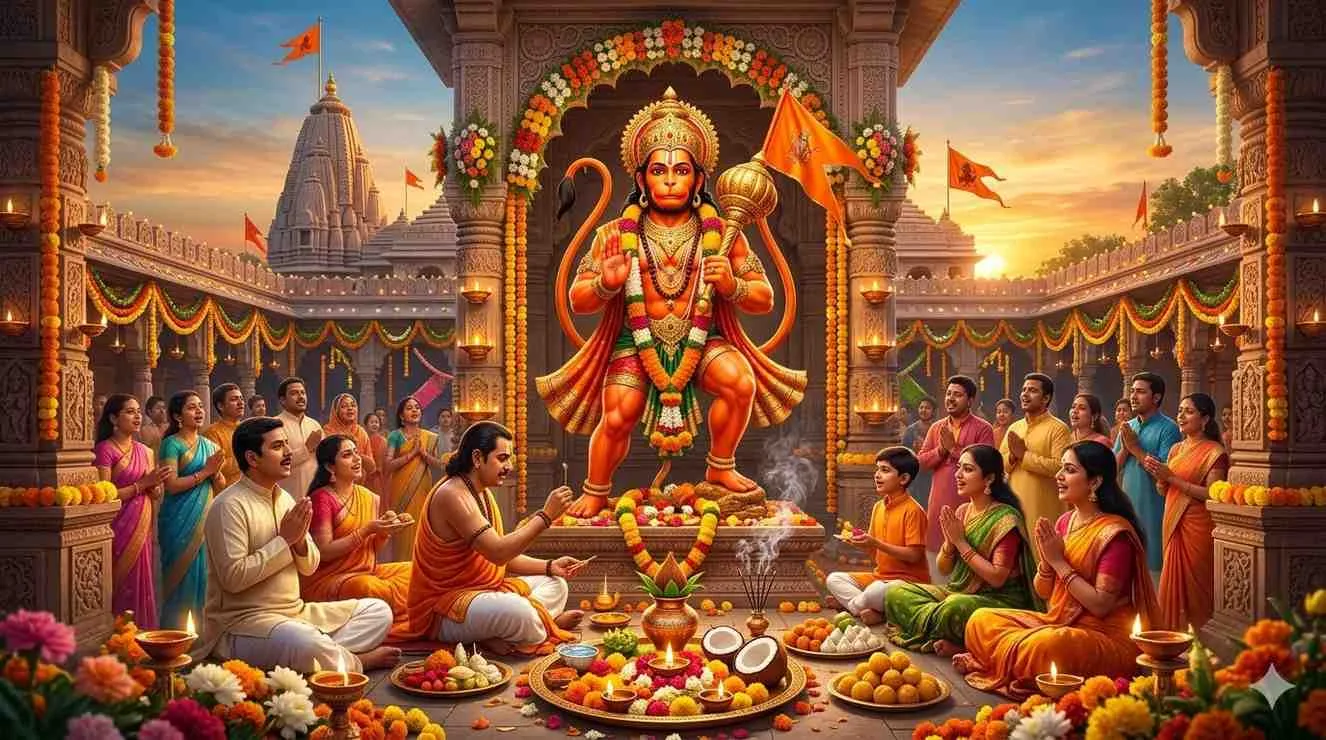
"Manojavam Marutatulyavegam, Jitendriyam Buddhimatam Varishtham,Vatatmajam Vanarayuthmukhyam, Shriramadutam Sharanam Prapadye"— Manojavam Stotram Hanuman…
"Manojavam Marutatulyavegam, Jitendriyam Buddhimatam Varishtham,
Vatatmajam Vanarayuthmukhyam, Shriramadutam Sharanam Prapadye"
— Manojavam Stotram
Hanuman Jayanti is the sacred celebration of the birth of Pawanputra Shri Hanuman — the mightiest devotee in all of creation, the son of the Wind God Vayu, and the eternal servant of Lord Shri Rama. No other deity in Hinduism unites such extraordinary qualities — boundless strength, supreme wisdom, absolute humility, fearless courage, and unwavering devotion — in one divine form. It is this incomparable combination that makes Hanuman the most widely worshipped deity in the Kali Yuga.
In 2026, Hanuman Jayanti falls on Thursday, April 2, the full moon day (Purnima) of the Hindu month of Chaitra. This complete HinduTone guide gives you everything — exact dates and muhurat timings, the sacred birth story, step-by-step puja vidhi, the 12 divine names of Hanuman, powerful mantras, fasting rules, prasad recipes, regional celebrations, and the 41-day Telangana Hanuman Jayanthi tradition.
Hanuman Jayanti 2026 — Date & Key Timings
Hanuman is believed to have been born at sunrise. Temples across India begin their spiritual discourses before dawn and conclude celebrations at sunrise — making the early morning hours of April 2, 2026 the most sacred window for puja, Chalisa recitation, and darshan.
Why April 2 and Not April 1?
The Purnima Tithi (full moon) begins at 7:06 AM on April 1 but extends through 7:41 AM on April 2. Since Purnima is still prevailing at sunrise on April 2, 2026 (Udaya Tithi principle), the main Hanuman Jayanti observance falls on Thursday, April 2, 2026. However, many devotees begin continuous chanting, bhajan sessions, and temple vigils from the evening of April 1 through sunrise on April 2.
Who is Lord Hanuman? — Spiritual Identity & Divine Names
Lord Hanuman is one of the most magnificent beings ever described in any scripture. He is simultaneously:
- The 11th Rudra Avatara — a direct incarnation of Lord Shiva
- The son of Anjana (an apsara) and Kesari (a Vanara king) — thus called Anjaneya and Kesarinandana
- Sired by Vayu Deva, the Wind God — thus called Vayu Putra, Pawanputra, and Maruti
- The greatest devotee and eternal servant of Lord Shri Rama — thus called Ramdoot (Rama's messenger)
- A Brahmachari (eternal celibate) who has been blessed with immortality (Chiranjivi)
The 12 Sacred Names of Lord Hanuman (Dwaadasha Nama)
Chanting these 12 names daily destroys all sins and fulfills all desires:
Dwaadashaitani Namaani Kapindrasya Mahatmanah, Svapne Jagrannapi Satatam Yah Pathet Sa Sukhi Bhavet
(One who chants these twelve names of the great Vanara Lord, whether asleep or awake, shall always be happy.)
The Sacred Birth of Lord Hanuman — Janmotsav Katha
The birth of Lord Hanuman is described across several sacred texts — the Valmiki Ramayana, Ananda Ramayana, Shiva Purana, and Skanda Purana. The most widely accepted version is as follows:
Anjana, a celestial apsara, was born on earth as a female Vanara due to a curse. To be freed from the curse, she was told that she would give birth to an incarnation of Lord Shiva. She performed intense tapasya (penance) on a mountain called Anjaneri (in present-day Maharashtra) to obtain divine grace.
Meanwhile, King Dasharatha of Ayodhya was performing the Putrakameshti Yajna for a son. As the divine payasam (sacred nectar) emerged from the fire, a portion was carried away by a kite (Garuda) and dropped into Anjana's cupped hands as she sat in meditation. Vayu Deva, the Wind God, guided the drop into Anjana's hands — and through his divine agency, Anjana conceived.
Lord Hanuman was born on Chaitra Purnima, at the moment of sunrise, at the precise midday (some traditions say Svati Nakshatra). As an infant, mistaking the rising sun for a fruit, he leapt toward it — an act so powerful that even the mighty Indra was alarmed, striking Hanuman on the jaw with his thunderbolt. This gave Hanuman his iconic name — "Hanu" (jaw) + "Man" (prominent/broken) = Hanuman.
As compensation for the injustice, all the gods collectively blessed the child with extraordinary powers:
- Vayu Deva blessed him with swiftness equal to the wind
- Indra made him impervious to all weapons
- Brahma gave him immunity from the Brahmastra and the power to travel anywhere at will
- Surya gave him the brilliance of ten million suns
- Shiva blessed him with longevity and indestructibility
- Vishwakarma made him immune to all his creations
- Varuna gave him immunity from water and death by drowning
- Agni gave him immunity from fire
- Yama granted him freedom from disease and death
Hanuman Jayanti 2026 — Complete Puja Vidhi (Step-by-Step)
Preparation the Night Before (April 1 Evening)
- Clean your home completely and set up a dedicated Hanuman mandir or altar.
- Place the idol or framed image of Lord Hanuman — ideally the Panchamukhi Hanuman (five-faced) or the classic Vira Hanuman (standing form with gada and Ramayana).
- Decorate with red cloth, marigold garlands, and red or orange flowers.
- Light an Akhand Diya (uninterrupted lamp) with sesame or ghee oil from the previous night — let it burn through sunrise on April 2.
- Begin a midnight Hanuman Chalisa path — ideally 11, 21, or 108 recitations through the night.
Puja Samagri (Items Required)
Step-by-Step Morning Puja Vidhi on April 2, 2026
Step 1: Brahma Muhurta Rise (4:38 AM)
Wake up during Brahma Muhurta. Take a ritual bath with water mixed with a pinch of turmeric and sesame seeds. Wear red or saffron clothes — Hanuman's divine colors.
Step 2: Sankalpa (Sacred Resolve)
Sit before the altar facing east. Pour water into the right palm and resolve:
"Om Vishnu, Vishnu, Vishnu — Adya Chaitra Purnima Tithau, Sri Hanuman Janmotsav Nimitte, Hanuman Pujam Karikhye."
("Today, on Chaitra Purnima, I perform this puja on the occasion of Hanuman's birth anniversary.")
Step 3: Ganesh Puja
Offer a brief prayer to Lord Ganesha to remove all obstacles before beginning the main puja.
Step 4: Lamp Invocation
Light the sesame oil or ghee lamp. Offer red hibiscus flowers and marigold garland to the Hanuman idol. Chant:
"Namah Sri Hanumate, Namah Sri Anjaneya, Namah Sri Mahavira"
Step 5: Panchamrit Abhishekam (Sacred Bath)
Bathe the Hanuman idol in the five sacred liquids in this sequence:
- Milk (dugdha)
- Curd (dadhi)
- Pure honey (madhu)
- Sugar syrup (sharkara)
- Pure ghee (ghrita)
Then rinse with pure water. Pat dry with a clean cloth.
Step 6: The Sacred Sindoor Application (Most Important Ritual)
The single most iconic ritual of Hanuman puja — applying sindoor (vermilion) to the deity.
The Story of Sindoor: Once, Sita was applying sindoor to her hair. Hanuman asked the reason. Sita replied that it ensured her husband Lord Rama's long life. Moved by devotion, Hanuman covered his entire body with sindoor to ensure Rama's immortal life — which is why Hanuman idols are often coated in red vermilion. Applying sindoor to Hanuman's idol on Jayanti is the highest form of devotion.
- Apply sindoor to Hanuman's forehead, chest, and limbs.
- Offer a tika of sindoor mixed with jasmine oil.
- Some devotees offer sindoor from the idol back to themselves as prasad.
Step 7: Shodashopachara Puja
Perform all 16 steps of worship — from Avahana (invocation) to Sashtanga Pranam (full prostration) — offering flowers, incense, lamp, food, and betel leaves at each step.
Step 8: Hanuman Chalisa Recitation (Core Practice)
Recite the Hanuman Chalisa — 40 divine verses composed by Goswami Tulsidas. On Hanuman Jayanti, recite it at minimum 7 times (considered protection for 7 generations). For maximum benefit, complete 108 recitations.
Tip: Temples across India host continuous relay Hanuman Chalisa recitations on this day — join your local temple if possible, or participate in an online stream.
Step 9: Sundara Kanda Path
The Sundara Kanda is the fifth chapter of the Valmiki Ramayana describing Hanuman's solo mission to Lanka. It is Hanuman's own chapter. Reciting it on Hanuman Jayanti is considered the most powerful scripture reading of the day — it destroys all obstacles, removes fear, and brings prosperity.
Step 10: Bajrang Baan & Hanuman Ashtottara
- Recite the Bajrang Baan — the invincible hymn that calls on Hanuman as a warrior deity to destroy all negative forces.
- Chant the Hanuman Ashtottara Shatanamavali — the 108 sacred names of Lord Hanuman.
Step 11: Sunrise Aarti (6:10–6:20 AM) — The Birth Moment
At sunrise, perform the grand aarti with a 5-wick camphor lamp, circling it 7 times around the idol clockwise while singing:
"Aarti Kije Hanuman Lala Ki, Dusht Dalan Raghunath Kala Ki"
Ring the bell loudly, blow the conch (shankha) three times, and shower flowers on the idol. This is the symbolic re-enactment of the divine birth of Hanuman.
Step 12: Prasad Distribution
Distribute boondi laddoo, jaggery-chana (gur-chana), and banana to all family members and neighbors as prasad.
Step 13: Evening Aarti & Lamp
In the evening at dusk, re-light the lamp, chant Hanuman Chalisa once more, and perform a brief aarti. Break your fast after this evening worship.
Hanuman Jayanti 2026 Fasting (Vrat) Rules
Fasting on Hanuman Jayanti with devotion is believed to grant protection from enemies, removal of Saturn's malefic effects (Shani dosha), release from fear and anxiety, and fulfillment of long-pending desires.
Fasting Schedule
- Begin: At sunrise on April 2, 2026
- Break fast: After evening aarti at sunset OR the following morning at sunrise
Types of Fasts
Permitted Vrat Foods
- All fresh and dry fruits — banana, mango, guava, grapes, dates, raisins
- Milk, curd, buttermilk, paneer, makhana (fox nuts)
- Sabudana (tapioca) khichdi and kheer
- Kuttu (buckwheat) and singhare (water chestnut) flour dishes
- Potatoes, sweet potatoes, arbi
- Rock salt (sendha namak) only
- Coconut water and lassi
Prohibited Foods
- All grains — wheat, rice, barley, corn
- Onion and garlic
- Non-vegetarian food, eggs
- Alcohol and tamasic substances
- Common table salt
- Packaged / processed foods
Special Spiritual Discipline on Hanuman Jayanti
- Observe Brahmacharya (celibacy) on this day
- Avoid cutting hair or nails
- Speak truthfully and avoid gossip or anger
- Offer oil to Shani Dev in the evening — Hanuman is the protector of his devotees from Saturn's malefic influence
Powerful Hanuman Mantras to Chant in 2026
Moola Mantra (Root Mantra)
"Om Hanumate Namah"
Chant 108 times during puja for strength and protection.
Hanuman Gayatri Mantra
"Om Anjaneyaya Vidmahe, Vayuputraya Dhimahi,
Tanno Hanumat Prachodayat"
Chant for wisdom, mental clarity, and divine inspiration.
Manojavam Mantra (Invocation of Speed and Power)
"Manojavam Marutatulyavegam, Jitendriyam Buddhimatam Varishtham,
Vatatmajam Vanarayuthamukhyam, Shriramadutam Sharanam Prapadye"
Recited for protection during travel, before starting new ventures, or for removing fear.
Sankat Mochan Mantra
"Om Namo Hanumate Rudravataraya, Sarvavidya Siddhi, Sarvaroha Nasha, Sarvakarya Siddhi Kuru Kuru Swaha"
For resolution of crises, removal of obstacles, and success in all endeavors.
Panchamukhi Hanuman Mantra
"Om Shri Panchamukha Hanumate Namah"
For powerful protection against all forms of black magic and negative forces.
Bajrang Baan (Opening Verse)
"Nishtapadak Karo Hanumana, Aur Meto Kasht Vidana,
Dush Dalan Raghunatha Kela Ki, Hamri Karo Hath Pela Ki"
The most potent protective hymn — recited when facing extreme difficulties or danger.
Traditional Hanuman Jayanti Prasad
1. Boondi Laddoo (Lord Hanuman's Favorite)
The single most iconic prasad associated with Hanuman Jayanti. Boondi laddoos are offered by the thousands at major Hanuman temples on this day.
- 2 cups gram flour (besan)
- Oil for frying
- 2 cups sugar syrup (one-string consistency)
- ½ tsp cardamom powder
- Saffron strands (optional)
Fry the boondi, drain, mix into warm syrup, and roll into laddoos.
2. Jaggery & Roasted Chana (Gur-Chana)
The simplest and most sattvic prasad — small amounts of jaggery and roasted chickpeas. Offered directly and distributed immediately. Every Hanuman temple offers this prasad on Tuesdays and Saturdays throughout the year.
3. Panchamrit (Sacred Five-Nectar Drink)
The liquid from the Abhishekam (sacred bath) — a mixture of milk, curd, honey, sugar, and ghee — is collected and distributed as prasad. It is believed to be powerfully blessed.
4. Banana Bhog
Bananas are considered dear to Lord Hanuman. Offer a bunch (ideally in odd numbers — 5, 7, or 11) and distribute as prasad.
5. Panchkajjaya (South Indian Prasad)
A popular South Indian offering made from jaggery, dry coconut, roasted sesame, banana, and ghee — a traditional Hanuman temple prasad in Karnataka, Tamil Nadu, and Telangana.
Hanuman Jayanti 2026 — Regional Celebrations Across India
Andhra Pradesh & Telangana — 41-Day Hanuman Jayanthi Festival
In the Telugu states, Hanuman Jayanthi is not a single day but a 41-day grand festival — making it one of the longest festival observances in Hindu tradition. It begins on Chaitra Purnima (April 2, 2026) and concludes on Vaishakha Krishna Dashami (May 12, 2026).
The 41-day period mirrors Hanuman's own devotion — it is said that Hanuman spent 41 days in Lanka on his mission to find Sita. Throughout this period:
- Deeksha Muhurat: Devotees begin a 41-day spiritual discipline (deeksha) on April 2, taking a vow of celibacy, Satvik diet, and daily Hanuman puja.
- Hanuman Vahanam Seva is performed in temples with elaborate processions.
- Sundarakanda Parayanam (recitation of Sundara Kanda) is done daily in homes and temples.
- The Hanumanth Vahanalu (float processions of decorated Hanuman chariots) pass through towns and villages.
- Massive Hanuman Melas are held at famous temples like Kondagattu Anjaneya Swamy Temple (Telangana) and Annavaram Satyanarayana Temple compound areas.
Uttar Pradesh & Ayodhya — Hanumangarhi Janmotsav
The legendary Hanumangarhi Temple in Ayodhya is one of the most sacred Hanuman shrines in the world. On Hanuman Jayanti:
- A spectacular Shri Hanuman Janmotsav is organized from the night before.
- Lakhon Bhakton (hundreds of thousands of devotees) throng the 76-step staircase leading to the shrine.
- The entire temple is illuminated with oil lamps from dusk to dawn.
- Special midnight aarti is performed at the precise Purnima moment.
- A grand Bhajan Sandhya with eminent devotional singers draws pilgrims from across North India.
Maharashtra — Maruti Temples & Flag Hoisting
In Maharashtra, Lord Hanuman is called Maruti and is worshipped in thousands of temples across the state. On Hanuman Jayanti:
- Kesariya (Saffron) flags are hoisted atop every Maruti temple.
- Abhanga (Marathi devotional poetry) by saints like Tukaram and Namdev is recited.
- Community Sundarakanda patha sessions are organized in sabha mandaps (community halls).
- Famous temples like Chafal Maruti (Pune) and Theur's Hanuman Temple draw massive crowds.
Tamil Nadu & Karnataka — Hanumath Jayanthi (Margashirsha)
While many South Indian temples also celebrate Chaitra Purnima Hanuman Jayanti, the main Hanumath Jayanthi in Tamil Nadu and Karnataka is observed in Margashirsha month (December–January). At temples like the Nanganallur Hanuman Temple (Chennai) — one of the tallest Hanuman statues in India — Jayanthi celebrations span multiple days with:
- Full Veda Parayanam (Vedic chanting) sessions
- Abhishekam to the 32-foot Hanuman idol
- Classical dance-drama performances on Hanuman's exploits
Gujarat — Bajrangbali Processions
In Gujarat, Hanuman Jayanti sees massive ratha yatras (chariot processions) with Hanuman idols decorated in flowers and saffron cloth, accompanied by dhol (drum) beats and loud chants of "Jai Bajrang Bali!"
Delhi — Connaught Place Hanuman Temple
The Shri Hanuman Mandir at Connaught Place, New Delhi, is one of the oldest Hanuman temples in Delhi (over 550 years old) and draws lakhs of devotees on Jayanti. The 24-hour non-stop Hanuman Chalisa relay at this temple on Jayanti is a spiritual spectacle that attracts people from across the capital.
Hanuman Chalisa — 40 Verses, Infinite Grace
The Hanuman Chalisa (40 sacred verses) was composed by Goswami Tulsidas in the 16th century in Awadhi (eastern Hindi dialect). It begins with two Dohas (couplets) and contains 40 Chaupais (quatrains), followed by one final Doha.
Why Hanuman Chalisa Has 40 Verses
The number 40 (chalis in Hindi) carries deep significance. It mirrors the 40-day period of Hanuman's mission to Lanka — he spent precisely 40 days searching for Sita — and the 40 days of intense spiritual discipline (chilla) recognized in many Sufi and Hindu traditions as the period required to attain the highest divine connection.
Benefits of Reciting Hanuman Chalisa on Jayanti
The Most Powerful Verse (Chaupai 18)
"Bhoot Pishach Nikat Nahin Aave, Mahavir Jab Naam Sunave"
(Evil spirits and ghosts dare not come near the one in whose name Mahavir Hanuman is invoked.)
This verse is recited for protection against all malefic forces, fear, and negative energies.
Hanuman's Connection to Shani (Saturn) — Why Tuesdays & Saturdays Are Sacred
One of the most beloved stories in Shani mythology tells how Lord Shani Dev (Saturn) was captured by Ravana and imprisoned in Lanka. When Hanuman stormed Lanka to find Sita, he also freed Shani from captivity. Grateful, Shani Dev promised Hanuman that his devotees would always be protected from Saturn's malefic influence.
This is why:
- Saturdays are special for Hanuman puja — offering sesame oil, sesame laddoos, and black sesame seeds at Hanuman temples on Saturdays pacifies Shani dosha.
- Tuesdays are Hanuman's primary day — offering sindoor, red flowers, and boondi laddoo on Tuesdays brings Hanuman's special blessings.
- Reciting Hanuman Chalisa on Hanuman Jayanti is considered the most powerful antidote to all 7.5-year Shani Sade Sati (Saturn transit) troubles.
Frequently Asked Questions — Hanuman Jayanti 2026
Q1. When is Hanuman Jayanti 2026?
Hanuman Jayanti 2026 is on Thursday, April 2, 2026 — the full moon day (Purnima) of the Hindu month of Chaitra.
Q2. What time is the Hanuman Jayanti 2026 puja muhurat?
The Shubh Muhurat is from 6:10 AM to 12:00 PM IST on April 2, 2026. Since Hanuman is believed to have been born at sunrise, the 6:10–6:20 AM window (exact sunrise) is considered the most sacred moment.
Q3. Why is Hanuman Jayanti celebrated?
Hanuman Jayanti commemorates the divine birth anniversary of Lord Hanuman — the 11th Rudra Avatara of Lord Shiva, eternal devotee of Lord Rama, and the supreme protector of his devotees against fear, evil, and obstacles.
Q4. What is the best thing to do on Hanuman Jayanti?
The most meritorious practices on Hanuman Jayanti are: Hanuman Chalisa recitation (minimum 7 times), Sundara Kanda path, visiting a Hanuman temple at sunrise, offering sindoor and boondi laddoo, fasting, and applying sindoor tilak from Hanuman's idol.
Q5. Is Hanuman Jayanti April 1 or April 2 in 2026?
The main observance is on Thursday, April 2, 2026 (Udaya Tithi principle — Purnima prevails at sunrise). However, many devotees begin celebrations from the evening of April 1 with overnight bhajans and Chalisa recitation.
Q6. What is the 41-day Hanuman Jayanthi in Telangana?
In Andhra Pradesh and Telangana, Hanuman Jayanthi is a 41-day festival starting on Chaitra Purnima (April 2, 2026) and ending on Vaishakha Krishna Dashami (May 12, 2026). Devotees observe a 41-day deeksha (spiritual discipline) mirroring the 41 days Hanuman spent in Lanka.
Q7. What color should I wear on Hanuman Jayanti?
Red and Saffron (orange) are Lord Hanuman's sacred colors. Wearing these colors and decorating the puja space with red cloth, red flowers, and saffron flags is considered most auspicious.
Q8. Can women observe Hanuman Jayanti fast and visit temples?
Yes, absolutely. Women can fully observe the Hanuman Jayanti fast, perform puja at home, and visit Hanuman temples with complete devotion. There is no religious restriction.
Q9. What is the significance of offering Sindoor to Hanuman?
Sindoor is the most important and unique offering to Lord Hanuman. The tradition comes from the story of Hanuman covering his entire body with sindoor out of love for Lord Rama. Applying sindoor to the deity and then receiving it back as tilak prasad is believed to bestow strength, long life, and protection on the devotee.
Q10. Why is Hanuman Jayanti particularly important in Kali Yuga?
Hindu scriptures state that in the Kali Yuga (the current age), Lord Hanuman is the only deity who remains fully active and accessible on earth (Chiranjivi — immortal). He is said to be present wherever the name of Rama is sung. This makes devotion to Hanuman the most direct, powerful, and accessible path to divine blessings in this age.
The 8 Siddhis & 9 Nidhis — What Hanuman Grants His Devotees
The Hanuman Chalisa famously declares:
"Ashta Siddhi Nau Nidhi Ke Daata, Asa Bara Dinha Janaki Mata"
(Sita conferred upon you the power to grant the eight divine powers and nine treasures.)
The 8 Siddhis (Divine Powers)
The 9 Nidhis (Nine Cosmic Treasures)
Final Blessings — Jai Bajrang Bali!
Hanuman Jayanti is more than a festival — it is a spiritual transmission. In a world filled with fear, uncertainty, and chaos, Hanuman stands as the ultimate symbol that devotion dissolves all obstacles, strength is born from humility, and love for the divine gives us powers beyond imagination.
On this auspicious Thursday, April 2, 2026, wake before sunrise, light your lamp, open the Hanuman Chalisa, and let those 40 verses carry your heart straight into the presence of the Maha Vira, the Great Hero, who said:
"Wherever the name of Rama is sung, I am there."
May Bajrangbali shower his blessings on you, your family, and all beings. May fear leave your heart, obstacles leave your path, and Rama's name never leave your lips.
** Jai Shri Ram! Jai Bajrang Bali! Jai Hanuman!**
Published by HinduTone — Your complete guide to Hindu festivals, rituals, mantras, and spiritual living.
Share this article and spread the divine energy of Hanuman Jayanti 2026 with family and friends!
Jai Bajrang Bali! 🙏 If you'd like any further tweaks to spacing, font emphasis, or section breaks (still without changing content), just let me know.
You might also like
Gita Jayanti 2026 Prasad Recipes — Tulsi-Honoring Sweets, Krishna's Favourites & December 10 Bhog Plate
Maha Shivratri 2026 Vrat Recipes — Sabudana Khichdi, Singhada Halwa, Phalahara Foods Complete Fasting Guide
Hanuman Worship on Saturday: Powerful Rituals & Remedies for Shani Dosha